Skip to content
Metal legs vs wooden legs in shorebird design is an argument that comes up in almost every trade show conversation, sample request email, and first-time buyer call. Importers always ask: “Why metal legs? Why not just carve the legs from wood?” It’s a fair question. A wooden bird with wooden legs looks more “pure” and “artisan.” For a chunky duck decoy or a fat owl, we do exactly that. But for shorebirds — sandpipers, herons, curlews, egrets — metal wire legs are an engineering necessity.
This isn’t a cost shortcut. Metal wire legs actually cost us more in labor than carving integral wooden legs would. The insertion has to be precise. The angle has to be right. The epoxy has to cure. It’s a slower, fussier process. We do it because the alternative fails in the field. Let me show you exactly how, with side-by-side comparisons from our own testing.
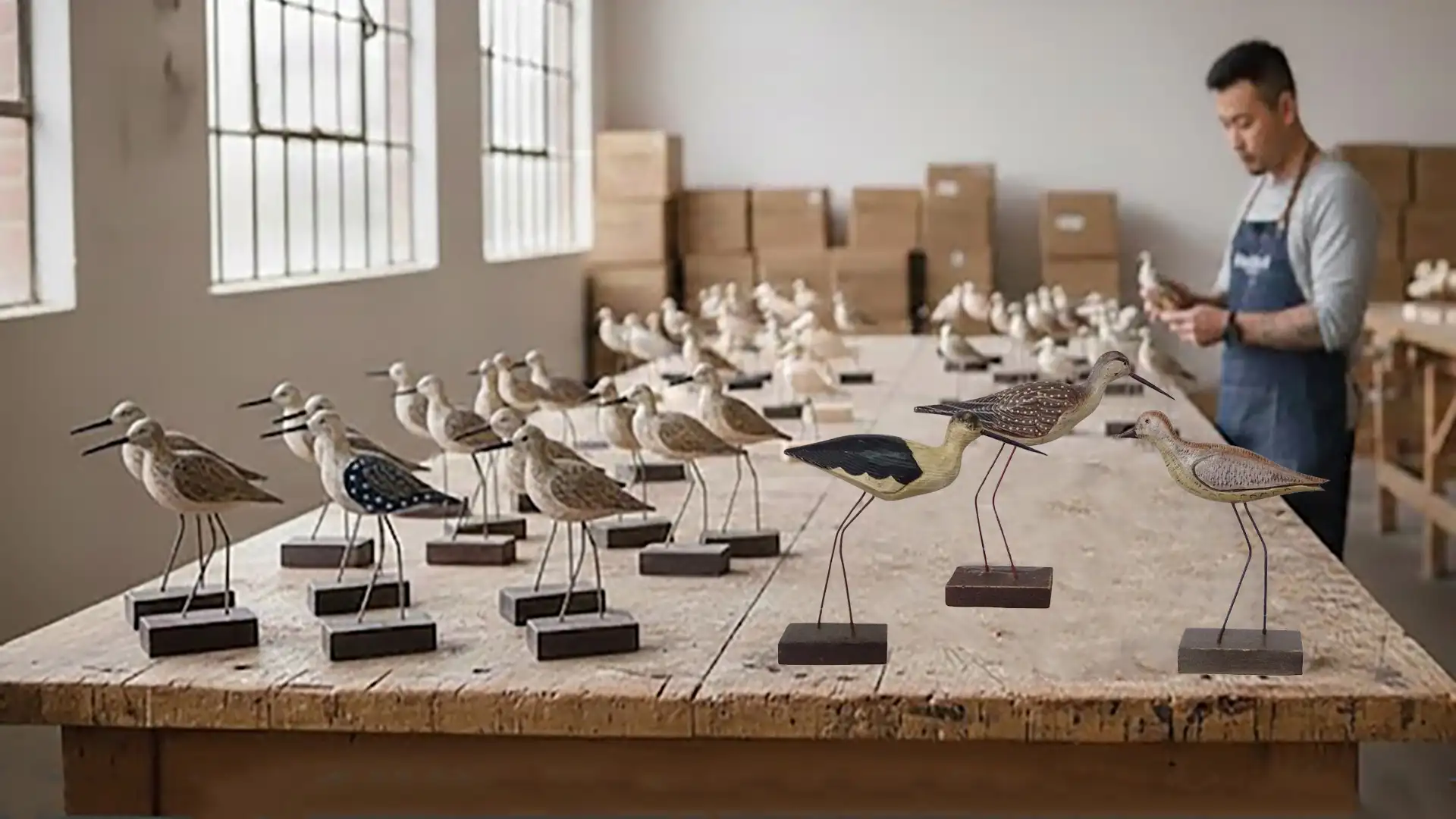
The Core Problem: Shorebird Proportions Are Structurally Hostile to Wood
Look at a real sandpiper. The legs are roughly the same length as the body. They’re thin — maybe 2mm in diameter on a bird that’s 15cm long. Now try to carve that from basswood. You’ve got a 2mm wooden rod, 7cm long, supporting a body that weighs 30–50 grams. The grain runs along the length. Any lateral force — a bump, a shelf vibration, a customer picking it up by the body — puts cross-grain stress on a 2mm wooden pin.
Wood is strong along the grain. It’s weak across it. A 2mm wooden leg snaps at roughly 1.5–2 kg of lateral force. A 1.2mm steel wire leg bends at about 4–5 kg and doesn’t break at all — it deforms. That’s the fundamental difference. Wood fails catastrophically (snap, gone, bird on the floor). Metal fails gracefully (bend, still standing, fixable with your fingers).
On a retail shelf, “graceful failure” is everything. A bird that gets bumped and bends a leg slightly can be straightened. A bird that gets bumped and snaps a leg is a return, a complaint, a negative review.
Side-by-Side: Metal Wire vs. Carved Wood Legs
| Factor | Metal Wire Legs | Carved Wooden Legs |
|---|---|---|
| Diameter achievable | 1.0–1.5 mm (realistic shorebird scale) | 3–4 mm minimum (looks chunky, inaccurate) |
| Lateral break point | Bends at ~4-5 kg, doesn’t fracture | Snaps at ~1.5-2 kg, catastrophic |
| Failure mode | Gradual bend (repairable) | Sudden snap (unrepairable) |
| Vibration resistance | Excellent — wire flexes and absorbs | Poor — repeated stress fatigues grain |
| Moisture sensitivity | None (coated wire) | Swells/shrinks with humidity → joint loosens |
| Shipping survival | High — flexes under impact, springs back | Low — rigid, snaps under point impact |
| Visual accuracy | High — thin wire reads as “bird leg” | Low — thick wood reads as “stump |
| Weight added | Negligible (~2g per bird) | Integral (no addition) |
| Rust risk | Minimal (zinc-coated or painted wire) | N/A |
| Production speed | Slower (drill, insert, epoxy, cure) | Faster (carved in one pass) |
| Cost to factory | Slightly higher (wire + epoxy + labor) | Slightly lower (no extra material) |
Read that table again. The only advantages wooden legs have are production speed and slightly lower material cost. Every performance metric — durability, accuracy, shipping survival, moisture resistance — favors metal. For a product that’s going to sit on a shelf for months, get picked up by customers, survive ocean freight, and live in environments ranging from dry Arizona to humid Florida, the performance metrics matter more than saving two cents on material.
“But Will They Rust?” — The Humidity Question
This is the objection I hear most, especially from buyers in coastal areas. “It’s a seaside shop. The air is salty. Won’t the legs rust?” Fair concern. Here’s why it’s not a practical problem:
Our wire is zinc-coated (galvanized) steel. The zinc layer is a sacrificial coating — it oxidizes before the steel underneath does. In normal indoor conditions, even coastal humidity, a zinc-coated wire will show no visible rust for years. We’ve had product in shops in Charleston, in Cornwall, in tropical Queensland, and rust complaints are essentially zero.
Where rust CAN happen: if the wire is cut and the raw steel end is exposed to sustained moisture. That’s why we seal the cut ends with a dab of clear epoxy during assembly. The insertion point (where wire meets wood) is also epoxy-filled, which seals it from both sides. The only exposed metal is the very tip of the foot, which is a tiny surface area and zinc-protected.
For buyers who want extra assurance, we offer painted legs — the wire is coated in matte black or dark brown paint before insertion. This adds a second barrier layer. It also makes the legs less visually prominent, which some buyers prefer for a cleaner silhouette. No upcharge for standard colors.

The Insertion Process: Why It’s Not Just “Stick a Wire In”
The most common failure point in a metal-leg bird isn’t the wire itself — it’s the joint where wire meets wood. If the hole is too big, the leg wobbles. If the angle is wrong, the bird leans. If the epoxy is insufficient, the leg pulls out when a customer lifts the bird by its body (and they will — everyone picks up a bird by the body, never by the base).
Our process:
1. Drill. Two holes, 1.3mm diameter, drilled at a precise 8-degree forward angle. The angle matters — it positions the feet slightly ahead of the center of gravity, which makes the bird stable when standing. Vertical legs make a bird feel tippy. The forward angle creates a natural “stance.”
2. Insert with epoxy. Two-part epoxy goes into the hole first, then the wire is pushed in to full depth (12mm into the body). The epoxy fills the gap between wire and wood, creating a mechanical AND chemical bond. It’s not just glue — the epoxy locks into the wood grain and grips the wire’s surface texture simultaneously.
3. Cure and test. 24-hour cure at room temperature. Then every bird gets a pull test — we grip the body and pull upward on the legs with moderate force. If a leg shifts, the bird is rejected. No sampling. Every single one. This adds time. It also means that when a customer picks up a sandpiper by its body in a shop in Maine, the legs don’t come out in their hand.
4. Bend to stance. After curing, the legs are hand-adjusted to the correct standing angle. Wire is forgiving here — you can bend it slightly to perfect the posture. Try that with wooden legs. You can’t adjust them. They’re either right from the carving or they’re wrong forever.

When Wooden Legs ARE the Right Choice
I don’t want to oversell this. There are products where wooden legs (or no legs at all) are correct:
Chunky-bodied birds. Ducks, owls, puffins, robins — anything where the body sits close to the ground and the legs are short and thick. A carved wooden leg at 5mm diameter and 15mm length is structurally fine. The proportions work. Metal would look wrong — too spindly for a fat little owl.
Flat-base designs. Birds that sit directly on a base with no visible legs (like our “perched on a driftwood” series). No legs, no problem. The body is carved integral with the perch.
Primitive / decoy style. The “stick bird” primitive market uses wooden dowels, not wire. That’s an aesthetic choice — the dowel IS the style. It’s meant to look rough, handmade, folk-art. Wire would break the visual language. The finish and material choices serve the design intent.
The rule of thumb: if the visible leg length exceeds 3× the leg diameter, use metal. If it’s under that ratio, wood is fine. Sandpipers, herons, egrets, curlews — all exceed the ratio. They get wire. Everything else is case-by-case.
What This Means for Your Returns and Reviews
If you sell online — Amazon, Etsy, your own Shopify — leg breakage is the number one negative review driver for wooden bird products. I’ve read hundreds of one-star reviews for competitors’ products. “Legs snapped in the box.” “One leg was already broken when I opened it.” “Bird falls over constantly.”
These are wooden-leg problems. Every single one. The legs snap in transit because they’re rigid and brittle. The bird falls over because the legs are too thick (inaccurate proportions) or the angle is wrong (no post-carving adjustment possible).
Metal wire legs don’t snap in transit — they flex. If a carton gets crushed, the worst case is a bent leg, which the customer straightens with their fingers in two seconds. That’s not a return. That’s not a one-star review. That’s a non-event. The difference in return rates between wire-leg and wooden-leg shorebirds is significant enough that several of our Amazon clients specifically cite it as the reason they switched suppliers.
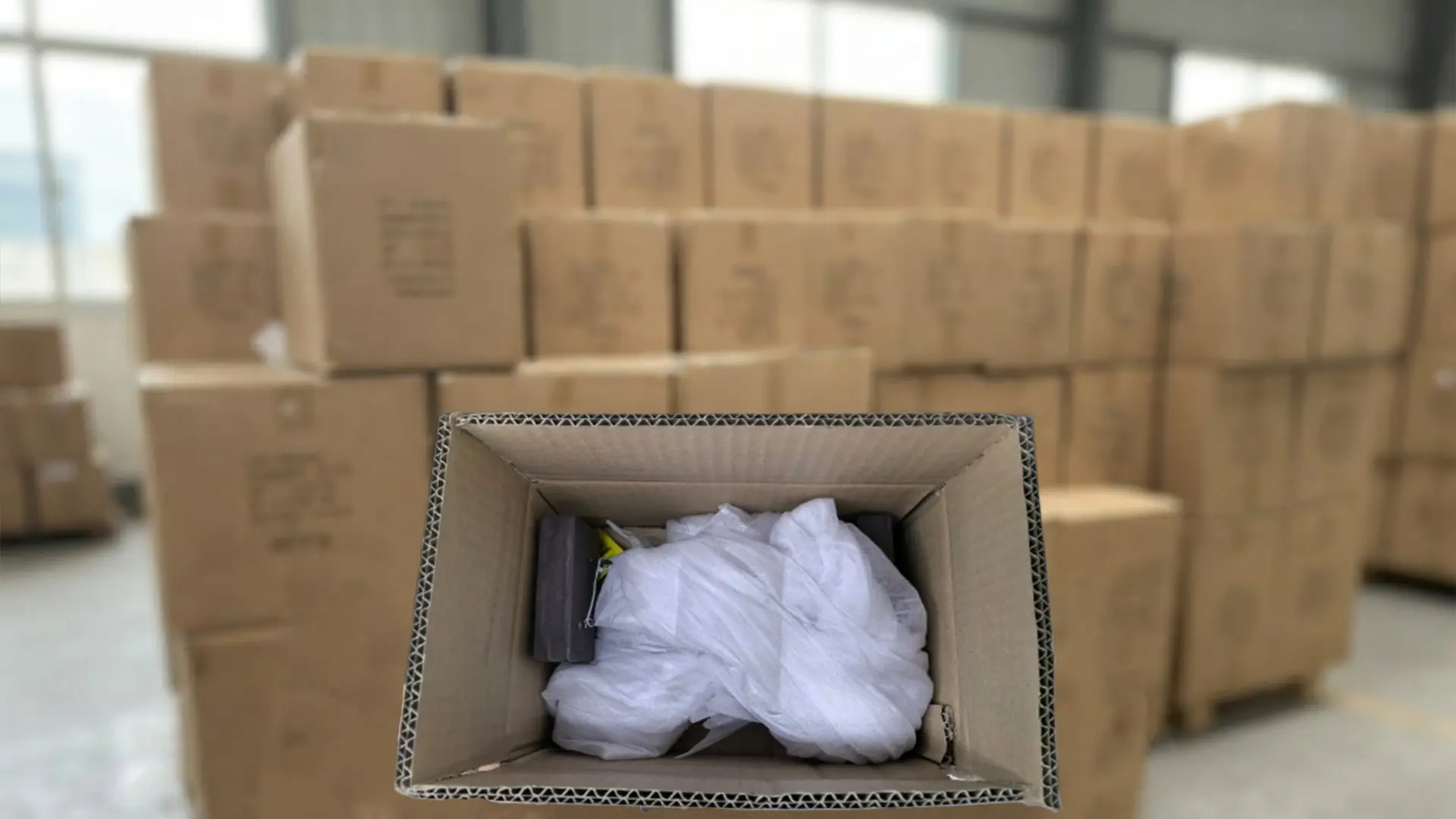
If you’re sourcing for e-commerce and you’ve been burned by breakage complaints, ask us about our quality control process — the leg pull test is just one step. We also drop-test packed cartons and inspect every bird’s stance before boxing.
Spec Reference
| Detail | Spec |
|---|---|
| Wire material | Zinc-coated (galvanized) steel, 1.2–1.5 mm diameter |
| Optional coating | Matte black or dark brown paint over zinc (no upcharge) |
| Insertion depth | 12 mm into body, two-part epoxy bonded |
| Leg angle | 8° forward from vertical (adjustable post-cure) |
| Pull-test standard | Every bird tested. 3 kg upward force minimum before any movement. |
| Rust warranty | No visible rust in normal indoor conditions for 5+ years (zinc + sealed ends) |
| Applicable products | Sandpipers, herons, egrets, curlews, flamingos — any bird with leg length > 3× diameter |
| Not applicable | Owls, ducks, puffins, decoy-style stick birds (these use wood or no legs) |
Leg construction is one of those details that separates the 60% core tier from the bargain bin in the 20/60/20 merchandising framework — a bird that wobbles on the shelf doesn’t sell at any price. Wire-leg engineering is also where quality control matters most: drill angle, insertion depth, and adhesive consistency determine whether legs survive retail handling. The finish around the leg joint is another tell — sloppy paint lines there signal a factory cutting corners.
Birds That Stand Up. On the Shelf, in Transit, and in Reviews.
Epoxy-bonded metal legs. Pull-tested individually. Bend-don’t-break engineering.
Order a sample and try to snap one. You can’t.
Frequently Asked Questions
Why do hand-carved sandpipers use metal legs instead of wood?
Shorebird legs are long and thin relative to body size — roughly 1-1.5mm diameter at realistic scale. Wood at that diameter snaps under lateral force (1.5-2 kg breaks it). Metal wire at the same diameter bends at 4-5 kg and doesn’t fracture. On a retail shelf where birds get bumped and handled, “bends” means the product survives. “Snaps” means a return. Metal also allows visually accurate thin legs — carved wooden legs need to be 3-4mm minimum, which looks chunky and wrong for a sandpiper.
Will the metal legs rust in a high-humidity coastal shop?
No, not in normal indoor conditions. The wire is zinc-coated (galvanized), which provides a sacrificial corrosion barrier. Cut ends are sealed with epoxy during assembly. The insertion point is epoxy-filled from both sides. We’ve supplied shops in Charleston, Cornwall, and tropical Australia with zero rust complaints over years. For extra assurance, we offer painted legs (matte black or brown over the zinc) at no upcharge — this adds a second barrier layer.
How do you ensure the wooden bird doesn’t tip over on a shelf?
Three things work together. First, the legs are inserted at an 8-degree forward angle, positioning the feet ahead of the center of gravity — this creates a natural stable stance. Second, after epoxy curing, each bird’s legs are hand-adjusted to perfect the balance. Third, every bird gets a “tilt test” at final inspection — if it doesn’t stand stable on a flat surface with a gentle nudge, it’s rejected. Wire legs are adjustable; wooden legs are not. This is a significant advantage for quality consistency across thousands of pieces.
Are the legs glued securely? What if a customer picks up the bird by the body?
They will pick it up by the body — everyone does. That’s why we use two-part epoxy (not hot glue, not white glue) and insert the wire 12mm into the body. The epoxy creates both a chemical bond with the wood grain and a mechanical grip on the wire’s surface. After 24-hour cure, every single bird is pull-tested: 3 kg upward force on the legs with zero movement allowed. If a leg shifts, the bird is rejected. This isn’t a sampling protocol — it’s 100% inspection. The legs will outlast the paint.
Can the metal legs be bent to adjust the bird’s posture?
Yes — and this is actually a feature, not a flaw. We adjust every bird’s stance during production by gently bending the legs to the perfect angle. If a leg gets slightly bent in shipping (rare, but possible under heavy carton stacking), the customer or shop staff can straighten it with their fingers in seconds. No tools, no glue, no repair needed. Try that with a wooden leg — if it’s off-angle, it’s off-angle forever. The adjustability of wire is one of its underrated advantages for retail environments.
Does the metal wire add significant weight to shipping?
Negligible. Two legs of 1.2mm galvanized steel wire, each about 7cm long, weigh approximately 2 grams total. On a bird that weighs 30-50g, that’s a 4-7% addition. Across an entire container of thousands of birds, it adds maybe 10-15 kg to the total shipment weight — invisible against a container payload capacity of 22 tonnes. Weight is never the constraint with wooden crafts (you cube out long before you weigh out). The wire adds essentially nothing to your freight cost.