Skip to content
The global wellness economy is reshaping how retailers think about product categories — and few materials have benefited more from this shift than Himalayan salt. Once confined to specialty crystal shops and alternative health stores, Himalayan salt products now appear in mainstream home décor chains, premium grocery retailers, spa supply catalogs, and even hospitality procurement lists. For B2B buyers, the question is no longer whether to stock Himalayan salt products, but how to identify the highest-margin opportunities within a rapidly expanding market.
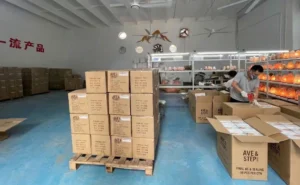
This article examines the key himalayan salt market trends driving wholesale demand in 2026, drawing on industry data, regional retail patterns, and sourcing intelligence from a factory with over two decades of export manufacturing experience. Whether you are an importer evaluating new product lines, a retailer expanding into wellness décor, or a spa operator planning facility upgrades, understanding these trends is essential for making informed purchasing decisions.
The Wellness Economy as a Growth Engine for Salt Products
The global wellness economy has grown substantially over the past decade, with consumers increasingly investing in products that promote relaxation, air quality, and mindful living. The Global Wellness Institute has tracked this expansion across multiple sectors — personal care, healthy environments, and wellness real estate among them — and Himalayan salt sits at the intersection of several of these categories simultaneously.
Salt lamps, salt walls, cooking salt blocks, and bath salt products all benefit from the consumer migration toward natural, mineral-based wellness. Unlike synthetic air purifiers or electronic devices, Himalayan salt products offer a passive, electricity-free (or low-energy) approach to ambient wellness — a positioning that resonates with the growing “slow living” and “biophilic design” movements in Western markets. This convergence of wellness trends is the primary macro-driver behind increasing wholesale demand.
Market Size and Growth Trajectory
Industry analysts project the global Himalayan salt market to grow at a compound annual growth rate (CAGR) of approximately 6.9% through the early 2030s. While exact revenue figures vary between research firms — due to differing definitions of market scope (some include only food-grade salt, others include décor and therapeutic applications) — the directional signal is consistent: demand is outpacing general retail growth by a significant margin.
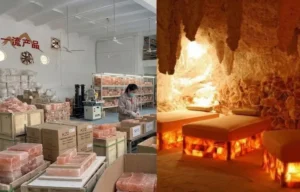
Several factors underpin this trajectory. First, the post-pandemic consumer focus on home environments has not reverted to pre-2020 patterns; instead, it has stabilized at a higher baseline of investment in home wellness infrastructure. Second, the hospitality sector — particularly boutique hotels and wellness resorts — has adopted Himalayan salt as a design and wellness differentiator, creating a B2B demand channel that did not exist at scale a decade ago. Third, the expansion of halotherapy (salt therapy) as a recognized wellness service has opened a project-based revenue stream for salt suppliers, with individual spa installations requiring dozens of salt bricks and specialized-cut panels.
Key Product Segments Driving Wholesale Demand
The Himalayan salt market is not monolithic. Different product categories serve different retail channels, and growth rates vary by segment. Understanding this segmentation helps buyers allocate their purchasing budget more effectively.
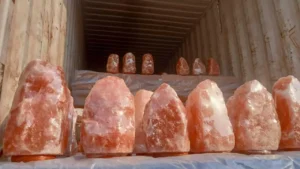
Salt lamps and night lights: This remains the largest single product segment by unit volume. The salt lamp category has matured in some markets but continues to grow in others — particularly Southern Europe, Southeast Asia, and Latin America, where consumer awareness of salt lamps as a wellness product is still building. For retailers, the opportunity lies in differentiated designs (geometric shapes, dimmable models with certified electrical components) rather than commodity natural-shape lamps.

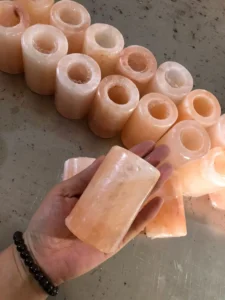
Cooking salt blocks and slabs: The culinary segment has experienced strong growth, driven by the premiumization of home cooking and the popularity of salt-block grilling, sushi presentation, and charcuterie styling in food media. Food-grade Himalayan salt blocks require specific density and purity standards — importers must verify that suppliers source from recognized mines (the Khewra Salt Mine in Pakistan is the industry benchmark) and can provide documentation for food-contact compliance. Importers weighing edible against decorative SKUs can walk through the document differences in the food-grade vs decorative Himalayan salt guide.

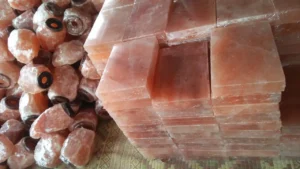
Salt bricks for wellness construction: This is the fastest-growing segment in terms of value per order. Salt walls, salt caves, and halotherapy rooms require large volumes of precisely cut salt bricks — often hundreds of square meters per project. The buyer profile here is different: spa operators, wellness center developers, and hospitality groups rather than traditional retail. Orders tend to be larger, specifications more exacting, and the relationship more project-based.

Salt licks for animals: A niche but steadily growing segment. Himalayan salt licks for horses, livestock, and wildlife have gained traction among animal nutrition suppliers and agricultural retailers. The appeal centers on the mineral content and natural purity compared to pressed industrial salt licks. This segment often benefits from mixed-container loading alongside other salt products to optimize freight costs.
Regional Demand Patterns: Where the Growth Is
Himalayan salt demand is global, but growth is not evenly distributed. Regional patterns reflect differences in wellness culture maturity, retail infrastructure, and regulatory environments.
North America: The United States and Canada remain the largest import markets by value. Demand is driven by a well-established wellness retail sector, strong e-commerce penetration (Amazon FBA sellers are a significant buyer segment), and growing hospitality adoption. Compliance requirements include UL-certified electrical cords for salt lamps and FDA food-contact standards for cooking blocks.
Europe: Western Europe — particularly Germany, the UK, France, Switzerland, and the Nordic countries — is a mature market with strong demand for certified, compliant products. CE marking and RoHS compliance for electrical salt lamps are non-negotiable. European buyers tend to prioritize quality certifications and supply chain traceability over price alone. The EU’s emphasis on ESG and sustainable sourcing also creates an advantage for factories that can document their material provenance.
Asia-Pacific: Australia, Japan, South Korea, and Southeast Asian markets represent high-growth territories. Consumer awareness of Himalayan salt wellness benefits is rising rapidly, and retail infrastructure is expanding. In Australia, salt lamps have become a mainstream home décor item. In Japan and South Korea, the halotherapy trend is driving demand for salt bricks and salt room construction materials.
Emerging markets: Latin America (particularly Mexico, Chile, and Brazil) and the Middle East are emerging as growth regions. These markets are at an earlier stage of wellness adoption, which means opportunity for first-mover retailers and importers looking to establish category presence.

From Niche to Mainstream: The Retail Channel Shift
Perhaps the most significant himalayan salt market trend is the channel shift from specialty crystal shops to mainstream retail. Five years ago, a typical Himalayan salt lamp buyer might have been a wellness enthusiast visiting a metaphysical store. Today, the same product is just as likely to be purchased through a home décor chain, a hotel gift shop, an Amazon search, or a boutique pharmacy.
This channel broadening has several implications for B2B buyers. First, packaging requirements have evolved: retail-ready color boxes with professional branding, barcoding, and product information are now expected rather than optional. Second, compliance standards have tightened — mainstream retailers require the certifications (CE, UL, UKCA, EN71, RoHS) that specialty shops might not have asked for. Third, volume expectations have increased as larger retail chains place orders that dwarf what small specialty stores typically purchase.
For importers and distributors, this means the competitive advantage has shifted from simply having access to salt to being able to supply compliant, well-packaged, consistently manufactured products at scale. Factories with established quality management systems (ISO 9001), social compliance audits (BSCI), and experience serving major retail chains are increasingly preferred by buyers who cannot afford the reputational risk of non-compliant products.
Quality and Compliance: The Non-Negotiable Baseline
As the market grows and products reach more mainstream shelves, quality and compliance have moved from differentiators to baseline requirements. The himalayan salt market trends of 2026 reflect a maturing supply chain where buyers increasingly filter suppliers on compliance credentials before discussing price.
Key compliance requirements vary by product and market but generally include: CE and RoHS certification for electrical salt lamps sold in the EU; UKCA marking for the UK market; UL certification for the US market; EN71-1/-2/-3 toy safety standards for salt products marketed to or accessible by children; and food-contact documentation for cooking salt blocks. Beyond product-specific certifications, buyers are also asking for factory-level credentials: ISO 9001 quality management, BSCI social compliance audits, and documentation of salt sourcing from recognized mines.

Factories that invest in these certifications gain access to a broader buyer pool and can command premium pricing. Those that cut corners on compliance risk being locked out of the most lucrative retail channels — and potentially facing product recalls or liability claims. For buyers, the message is clear: verify certifications independently, request documentation before placing orders, and work only with suppliers who can demonstrate traceability from mine to finished product.
Strategic Sourcing: How Smart Buyers Are Responding
The retailers and importers gaining the most from the expanding Himalayan salt market share common strategic approaches to sourcing.
Diversification across product segments: Rather than stocking only salt lamps, successful buyers build a multi-category range that includes cooking blocks, salt bricks, bath salts, and animal licks. This approach spreads risk, increases average order value, and creates cross-selling opportunities. A spa retailer, for example, might stock salt lamps for retail display, salt bricks for their treatment rooms, and cooking blocks for their café — all sourced from a single supplier to simplify logistics.
Investment in private-label and OEM packaging: Buyers who develop their own branded salt product lines build asset value that generic reselling cannot match. Custom packaging, branded product stories, and exclusive designs create switching costs and customer loyalty. The MOQ threshold for custom packaging (typically 500 pieces per design) is accessible for most established retailers, and the margin uplift from branded products versus generic ones is substantial.
Mixed-container optimization: Himalayan salt products are dense and heavy, making freight a significant cost factor. Smart buyers combine multiple product types — lamps, blocks, bricks, licks — in mixed containers to maximize utilization and reduce per-unit shipping costs. This approach requires a supplier with broad product capabilities rather than a single-product specialist.
Compliance-first supplier selection: As documented in our guide to wholesale Himalayan salt products, leading buyers now treat compliance verification as a pre-qualification step rather than a post-order concern. This means requesting BSCI audit reports, ISO certificates, and product-specific test results before engaging in price negotiations.
Looking Ahead: What’s Next for the Himalayan Salt Market
The trajectory of the Himalayan salt market points toward continued expansion, driven by several reinforcing trends. The wellness economy shows no signs of contraction. Consumer preference for natural, mineral-based products continues to strengthen. The hospitality sector’s adoption of salt as a design and wellness element is accelerating. And the geographic expansion of demand into emerging markets adds new volume on top of established Western markets.
For B2B buyers, the strategic imperative is to position now — building supplier relationships, establishing compliant product lines, and developing branded offerings — before the market becomes more crowded. The factories and suppliers investing in capacity, certification, and product development today are the ones who will serve the next wave of growth. Buyers who align with these partners will have a structural advantage in securing supply, maintaining quality, and capturing margin as the category matures.
The Himalayan salt market in 2026 is not a speculative bet — it is a data-backed, trend-supported opportunity with clear demand drivers and established supply chains. The question for retailers and importers is not whether to enter this market, but how to do so strategically, with the right products, the right compliance framework, and the right manufacturing partner.
Frequently Asked Questions
What is the projected growth rate for the Himalayan salt market?
Industry analysts project a CAGR of approximately 6.9% through the early 2030s, driven by wellness economy expansion, hospitality adoption, and growing consumer preference for natural mineral products.
Which Himalayan salt product category has the highest demand?
Salt lamps and night lights remain the largest segment by unit volume. However, salt bricks for wellness construction (salt caves, halotherapy rooms) represent the fastest-growing segment by order value, driven by spa and hospitality projects.
What certifications do I need to import Himalayan salt products?
Requirements vary by market and product type. For electrical salt lamps: CE + RoHS (EU), UKCA (UK), or UL (US). For food-grade cooking blocks: food-contact compliance documentation. For products accessible by children: EN71-1/-2/-3. Factory-level credentials like ISO 9001 and BSCI are increasingly required by mainstream retailers.
Where does authentic Himalayan salt come from?
Genuine Himalayan salt is sourced from the Khewra Salt Mine in Punjab, Pakistan — the second-largest salt mine in the world. Reputable suppliers should be able to document their sourcing chain from this origin. Salt from other sources may be marketed as “Himalayan-style” but is not from the recognized geological formation.
How can retailers differentiate their Himalayan salt product line?
Differentiation strategies include private-label branding with custom packaging, offering differentiated designs (geometric shapes, dimmable models, gift sets), building multi-category ranges (lamps + cooking blocks + bath products), and emphasizing compliance certifications as trust signals. Working with an OEM-capable factory enables exclusive designs that generic suppliers cannot replicate.
Looking for a reliable Himalayan salt product supplier?
From salt lamps and cooking blocks to salt bricks and animal licks, our factory supports OEM/ODM programs with 20+ years of export manufacturing experience and BSCI + ISO 9001 certification. We help retailers and importers build profitable, compliant salt product lines.
Explore Wholesale Himalayan Salt Products →