Skip to content
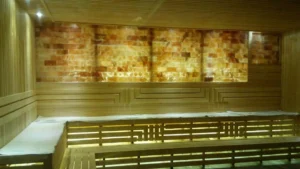
Designing a salt cave or salt room for a commercial wellness facility requires far more than aesthetic ambition. Every surface, every light source, and every brick must be planned against a set of technical parameters that determine whether the installation performs for years or fails within months. For architects, spa designers, and wellness facility planners, understanding salt cave construction specifications is the single most important step before a single brick is ordered or a wall is assembled. This guide walks through the material specifications, environmental considerations, and sourcing logistics that shape a successful salt cave or salt room project from concept to completion.

The difference between a striking, long-lasting salt installation and a costly disappointment often comes down to one factor: specification quality. Salt bricks that do not match in dimension create visible seams that undermine the design. Inadequate moisture planning leads to weeping walls that damage surrounding finishes. Lighting systems that ignore the thermal properties of salt produce uneven glow or, worse, accelerate degradation. Getting the specifications right at the outset prevents rework, protects budgets, and ensures the final installation delivers the therapeutic ambiance that clients expect.
Why Salt Cave Construction Specifications Matter More Than You Think
A salt cave is not a decorative accent. It is a functioning environment where hygroscopic salt surfaces interact continuously with the air, moisture, and heat of a commercial space. Every design decision, from the thickness of a salt brick wall to the placement of LED strips behind a salt panel, carries consequences for longevity, safety, and visual impact. The specifications you define at the planning stage determine whether the installation can withstand years of daily operation in a humid wellness environment.
Consider the procurement chain. Salt materials for wellness construction originate from specific geological sources, and not all salt is equal in density, translucency, or structural consistency. The Khewra salt mine in Pakistan, the primary global source for natural Himalayan salt crystals used in construction-grade applications, produces material that varies across seams and layers. A supplier who understands wholesale Himalayan salt for spa and wellness projects can guide specifiers toward the right grade, but the responsibility for defining precise requirements falls on the project team. Without clear specifications, even the finest raw material can produce disappointing results on site.
Salt Brick Dimensions and Tolerances for Wall Assembly
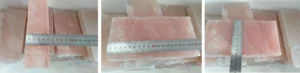
The foundation of any salt cave or salt room is the salt brick itself. These are not mass-produced ceramic tiles with uniform industrial tolerances. Salt bricks are cut from natural salt crystal blocks, and their dimensional accuracy depends on the precision of the cutting process and the consistency of the raw material. For large-area salt wall assembly, dimensional tolerance is the single most consequential specification.
When salt bricks are specified for wall assembly, each unit must meet exact width, height, and depth measurements. Even a deviation of a few millimeters per brick compounds across a wall of several dozen courses, producing visible misalignment, uneven joint lines, and structural weakness at pressure points. Manufacturers serving the wellness construction market prioritize cutting tolerance and surface flatness as primary quality parameters, because these directly determine whether a salt wall assembles seamlessly or requires costly on-site rework. The goal is bulk-ready precision: every brick in a production run must match the last, so that installers can work efficiently without sorting or trimming individual units.
For applications involving food-grade contact, such as salt cooking walls or salt surfaces in wellness rooms where the salt may contact skin, the surface finish specification takes on additional importance. The brick face must be smooth enough to clean and maintain, yet retain the natural texture that signals authenticity to facility guests. Cooking-grade salt boards and wall bricks intended for close human contact require specific surface treatments that differ from purely decorative installations.
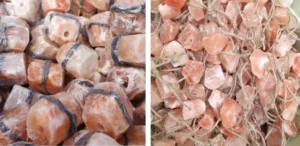
Density consistency across a production batch matters just as much as dimensional accuracy. Bricks with varying density absorb moisture at different rates, transmit light differently, and weather unevenly over time. A wall assembled from inconsistent bricks develops a patchy appearance that no amount of lighting design can correct. This is why leading manufacturers enforce strict density controls throughout the cutting and finishing process, ensuring that every brick in a shipment performs identically once installed.
Density, Porosity, and Light Transmission: Getting the Ambiance Right
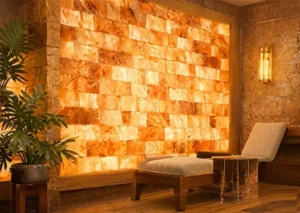
The visual impact of a salt cave depends on how light passes through the salt. This is where density and porosity become design parameters, not just material properties. Denser salt bricks have a tighter crystalline structure, which gives them greater translucency. When backlit, denser salt produces a warmer, more uniform glow. Less dense salt, with more microscopic air pockets, scatters light differently and can appear cloudy or unevenly illuminated.
Porosity also affects how the salt interacts with ambient moisture. More porous salt absorbs water vapor more readily, which can accelerate surface degradation in environments without proper climate control. The specification challenge is to balance the desired visual effect with the practical demands of the installation environment. Specifiers who work closely with their salt supplier can request samples at different density grades and evaluate the light transmission characteristics before committing to a full order.
Light transmission is not a standalone specification. It depends on the interplay between brick thickness, density, and the intensity and color temperature of the backlight source. A wall built from thinner salt panels will transmit more light, creating a dramatic luminous surface, but thinner panels also have less structural mass and may require additional support. Designers working on salt cave construction specifications should coordinate with both the salt supplier and the lighting contractor to establish the optimal combination of material thickness, density range, and lighting specification. Mock-ups and sample panels are invaluable at this stage, allowing the project team to evaluate the actual visual effect before ordering production quantities.

Moisture Control: Ventilation, Backlighting, and Sealing Considerations
Salt is hygroscopic. It attracts and absorbs moisture from the surrounding air. In a wellness environment where humidity levels fluctuate with occupancy, shower use, and climate conditions, this property is the single greatest threat to the longevity of a salt cave or salt room. Moisture management is not optional in salt cave construction specifications. It is the central engineering challenge that every other decision must support.
Ventilation design must account for the salt surface area, the room volume, and the expected humidity range. HVAC systems serving salt rooms often need dedicated dehumidification capacity beyond what a standard spa treatment room requires. Air exchange rates should be specified to maintain relative humidity below the threshold where salt begins to visibly weep or dissolve. The exact target depends on the salt density and the local climate, but the principle is consistent: keep the air dry enough that the salt surface remains stable.
Backlighting serves a dual purpose in moisture management. The heat generated by the light source behind a salt wall helps keep the salt surface dry by creating a thin warm layer that discourages condensation. This is why LED specification matters beyond aesthetics. The lighting system must produce enough heat to serve this protective function without overheating the salt or creating uncomfortable surface temperatures for guests who touch the wall. Finding this balance requires coordination between the lighting designer and the salt supplier, and the specifications should be documented before installation begins.

Sealing and surface treatment present another layer of complexity. Some projects apply protective coatings to salt surfaces to reduce moisture absorption, though this approach must be weighed against the desire for the salt to interact naturally with the room air, which is central to the halotherapy experience. For detailed guidance on how moisture damages salt installations and what structural measures prevent it, the analysis in this overview of why commercial salt walls deteriorate covers the failure modes and prevention strategies in depth.
Electrical Requirements for Backlit Salt Walls
Every backlit salt wall is, at its core, an electrical installation as much as a masonry one. The electrical specification for a salt cave must address safety, performance, and maintainability, all within an environment where salt vapor and moisture are constant factors.
LED lighting systems are the standard choice for backlighting salt walls. The fixtures must be rated for the operating temperatures that salt walls generate, and they must be positioned to distribute light evenly across the salt surface. Uneven lighting creates hot spots that can accelerate localized salt degradation while leaving other areas under-illuminated. Color temperature consistency across all LED strips is essential for a uniform warm glow. Dimming capability allows facility operators to adjust ambiance for different times of day or program types, from energizing morning sessions to restorative evening treatments.
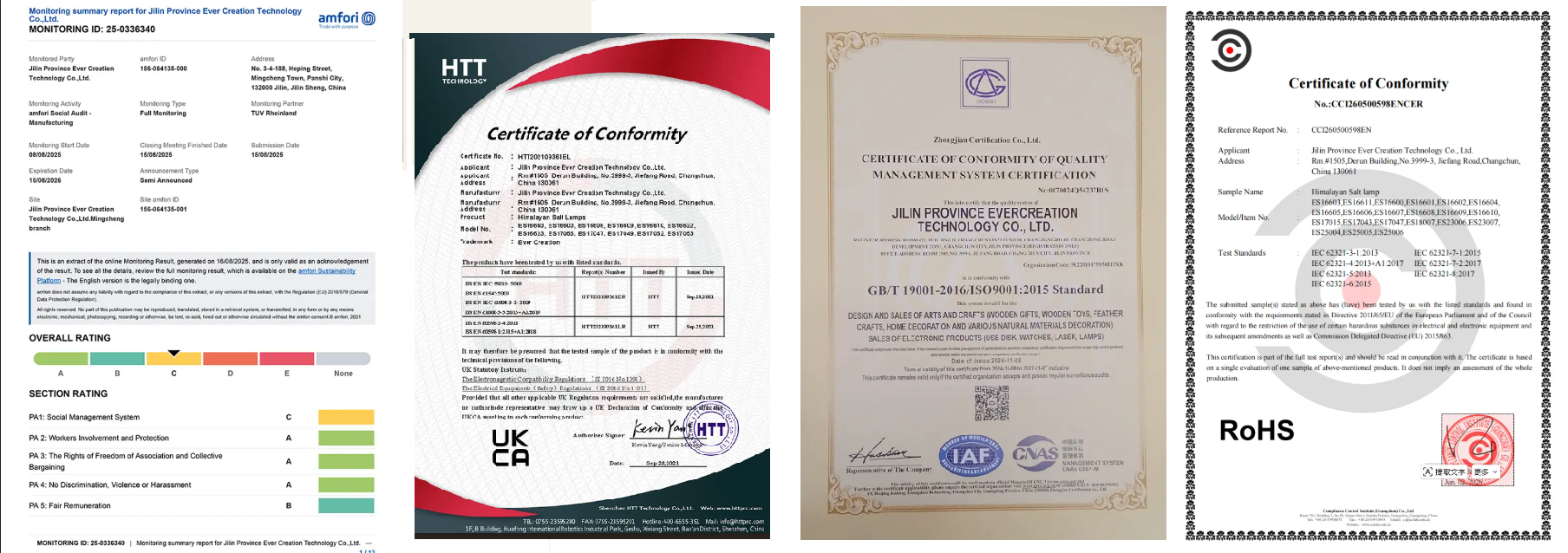
Electrical components used in salt cave installations should carry recognized safety certifications. For international projects, electrical components must comply with CE and RoHS for the EU, UKCA for the UK market, and UL or SAA for North American and Australian markets respectively. This ensures that wiring, drivers, and control systems meet the rigorous safety standards of their operating regions. All electrical connections should be routed behind the salt structure with appropriate insulation and protected from direct contact with salt surfaces. Junction boxes and transformers must be accessible for maintenance without disturbing the salt assembly.
The electrical design should also account for future maintenance. LED systems degrade over time, and individual strips may need replacement. A well-specified installation includes accessible mounting channels, standardized connectors, and spare circuits that allow maintenance staff to service the lighting without dismantling sections of the salt wall. For salt wall assembly and the structural considerations that affect electrical routing, the salt wall installation guide provides practical detail on how the wall structure and electrical systems integrate.
Sourcing and Lead Times: Ordering for Project Timelines
Salt materials for wellness construction projects are sourced from specific geological formations, and the supply chain involves multiple stages from mine to job site. The Khewra salt mine in Pakistan is the primary source of natural Himalayan salt crystals used in construction-grade salt bricks, panels, and decorative elements. The raw material is processed into construction-ready products at specialized manufacturing facilities, then shipped to project sites worldwide.
Lead times vary significantly depending on the product type and order volume. Stock items can ship within 7 to 15 days. Trial orders typically require 20 to 30 days for production and quality checks. Bulk custom orders, where salt bricks are cut to project-specific dimensions and tolerances, require 60 to 90 days. For construction projects with fixed completion deadlines, these lead times must be built into the project schedule from the earliest planning stages. Ordering salt materials as an afterthought, once the build is already underway, is the most common cause of project delays in salt installation work.
The ordering process for salt cave materials follows a logical sequence. Specifiers should begin by requesting samples to verify color, density, and dimensional accuracy against the project specification. Once samples are approved, a trial order allows the project team to confirm production quality at scale before committing to full volumes. Only after the trial batch meets expectations should the full production order be placed. This staged approach protects the project timeline by catching specification mismatches early, when adjustments are still inexpensive.
Packaging is a critical part of the sourcing specification. Salt products require moisture-proof shrink film wrapping to protect the material during transit and storage. Individual pieces are protected, then packed into inner boxes, and finally secured in reinforced master cartons designed to withstand the handling stresses of international freight. For projects receiving shipments at commercial warehouses or distribution centers, the packaging specification should also address palletization, labeling, and any special handling requirements for the receiving team.
Working with an established manufacturer reduces sourcing risk considerably. Ever Creation (Jilin Province Ever Creation Technology Co., Ltd.) has been manufacturing salt and wood products since 2004, with over 20 years of production experience. The company holds BSCI audit certification and ISO9001 quality management systems. On the compliance front, our electrical salt products and lighting components carry CE, RoHS, UL, UKCA, and SAA certifications for global markets, while our wooden craft lines fully comply with EN71 toy safety standards. Their client roster includes major international retailers such as Landi Switzerland, serving markets across North America, Europe, Asia-Pacific, South America, and the Middle East. For wellness project buyers, they offer trial orders from 100 pieces, wholesale from 300 pieces, and custom packaging from 500 pieces, with trade terms spanning EXW, FOB, CFR, CIF, DDU, and DDP including delivery to commercial warehouses and Amazon FBA facilities across the US, Europe, and Australia.
A Specification Checklist for Spa Designers and Architects
Coordinating salt cave construction specifications across multiple disciplines is demanding. The following checklist consolidates the key specification points that spa designers, architects, and wellness facility planners should address before placing orders. Each item represents a decision that, if left undefined, creates risk downstream.
Define salt brick dimensions and cutting tolerances based on the wall design and assembly method. Confirm density requirements with the salt supplier, referencing sample panels evaluated under the actual lighting conditions planned for the installation. Specify moisture-proof packaging standards for transit and on-site storage, particularly for projects in humid climates or where materials may be stored before installation. Coordinate electrical specifications with the lighting contractor, including LED type, color temperature, dimming range, and heat output, and verify that all components carry the safety certifications required for the project market. Plan lead times conservatively, allowing 60 to 90 days for custom salt brick production and additional time for sample approval and trial orders.
Factor ventilation and dehumidification requirements into the HVAC design from the earliest stage, not as a retrofit after the salt installation is complete. Discuss backlighting heat output with the salt supplier to confirm compatibility with the salt density and thickness specified for the project. Verify that the salt manufacturer holds current international certifications and can provide documentation for the project record. Request a detailed specification sheet from the supplier covering cutting tolerances, density ranges, surface flatness parameters, and packaging standards. Establish clear communication channels with the supplier, confirming a response time that keeps the project moving without delays.
Source-to-shelf integrity means that every step, from mine selection through cutting, packaging, and freight, is governed by documented standards. Master craftsmanship in salt production is not just about the beauty of the final installation. It is about the discipline of manufacturing consistency that ensures every brick meets the same standard, every shipment arrives in perfect condition, and every project performs as designed for years of daily operation.
Spec Your Salt Cave With the Right Supplier
Consistent brick dimensions, certified lighting and project lead times. Discuss your project specifications and order volume with our wellness team.
Explore Wholesale Himalayan Salt for Spas →Frequently Asked Questions
What salt brick dimensions are typically specified for salt cave walls?
Salt brick dimensions are defined by the project design, but the critical specification is cutting tolerance.
How far in advance should salt materials be ordered for a wellness project?
Custom salt brick orders typically require 60 to 90 days for production. Including time for sample approval and trial orders, specifiers should begin the sourcing process at least three to four months before the salt installation is scheduled to begin.
What is the most important specification for preventing moisture damage in salt caves?
Moisture management requires an integrated approach combining adequate ventilation and dehumidification capacity, appropriate backlighting heat output to keep salt surfaces dry, and correct material density selection for the specific environment. No single measure is sufficient on its own.
Why does density consistency matter across a salt brick production batch?
Inconsistent density causes bricks to absorb moisture at different rates, transmit light unevenly, and weather at different speeds. The result is a wall with a patchy appearance that cannot be corrected through lighting adjustments or surface treatments after installation.
What electrical certifications should salt cave lighting components carry?
For international projects, LED components should carry CE and RoHS certifications at minimum. Additional certifications such as UKCA or UL may be required depending on the destination market.