Skip to content
Managing the seasonal demand for salt products is one of the most critical challenges for importers and wholesalers navigating the Q4 retail calendar. The rhythm of this demand is shaped by holiday gifting cycles, wellness trends, and the purchasing patterns of spa and hospitality buyers. For B2B decision-makers at importing companies, retail chains, and e-commerce brands, understanding these cycles is not a nice-to-have — it determines whether your containers arrive in time to capture revenue or sit in a warehouse while competitors fill the shelves. This guide walks through the demand patterns you need to plan around, the product categories that move fastest during peak periods, and the ordering timelines that keep your supply chain intact.
Understanding Salt Products Seasonal Demand Patterns
Himalayan salt products do not sell evenly throughout the year. Like many consumer goods categories, they experience pronounced peaks and quieter troughs — and the shape of that curve matters enormously for anyone sourcing from manufacturers in Asia.
Q1 (January–March) opens with post-holiday clearance in Western markets. Retailers who over-ordered in Q4 liquidate excess stock, and new buying tends to be cautious. However, this quarter also brings a wave of wellness-driven purchasing. New Year’s resolutions fuel interest in wellness products, and salt lamps marketed as air-purifying or mood-enhancing decor attract buyers in the health-conscious segment. Spa and wellness centers often place restocking orders during this window, creating a moderate demand uptick that catches some suppliers off guard.
Q2 (April–June) is typically the planning and ordering window for the second half of the year. Mother’s Day in May generates a short gifting spike — salt lamps and small aromatherapy diffuser units move well as gift items. More importantly, serious B2B buyers use Q2 to place orders for Q4 inventory. This is the window where custom packaging decisions are finalized, private-label branding is locked in, and production slots at manufacturing facilities are secured. Buyers who delay past June risk competing for limited capacity with every other importer preparing for the holiday season. You can explore broader trend dynamics in our analysis of Himalayan salt market trends.
Q3 (July–September) is when production is in full swing for Q4-bound inventory. Factories are at maximum output. Shipping schedules tighten as ocean freight capacity gets consumed by pre-holiday cargo. For buyers who missed the Q2 ordering window, this is the period where compromises begin — accepting stock items instead of custom designs, paying premiums for faster shipping, or reducing order quantities. Lead times for bulk custom orders run 60-90 days, which means a July order may not ship until late September at the earliest.
Q4 (October–December) is the peak. The National Retail Federation projects U.S. holiday sales surpassing $1 trillion, and a meaningful share of that spending flows through gift retail, home decor, and wellness categories — all segments where Himalayan salt products compete. Salt lamps are among the strongest performers here: they are visually striking, carry a wellness narrative, and sit at price points that work for both individual gifts and corporate gifting programs.
Q4 Gifting Season: Salt Lamps, Gift Sets & Wellness Bundles
The Q4 gifting window transforms salt lamps from home decor items into curated gift products — and that shift changes everything about how buyers should think about their product mix.
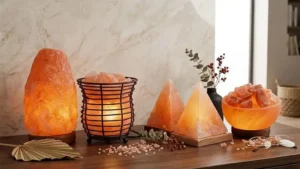
Natural-shaped salt lamps remain the volume sellers. Each piece is unique, carved from salt crystals sourced at the Khewra salt mine in Pakistan, and the natural variation in color and form is itself a selling point. Gift recipients are not receiving a mass-produced object — they are receiving a one-of-a-kind piece. That narrative carries significant weight in a market where consumers increasingly value authenticity and natural materials.
Geometric shapes — pyramids, spheres, and polished cylinders — appeal to buyers who want a more uniform presentation. These work well for corporate gifting programs where consistency matters: a company ordering 200 units for employee gifts wants each recipient to receive something that looks equivalent. Geometric salt lamps also photograph better for e-commerce listings, which matters for Amazon FBA sellers preparing their Q4 inventory.
Animal-shaped salt lamps have carved out a strong niche, particularly in markets with younger demographics. They function as both decor and conversation pieces, and their playful form factor makes them popular in gift shops and lifestyle retail. For buyers targeting the European market — particularly the UK, Germany, and France — these shapes tend to resonate with consumers who browse gift shops and wellness boutiques during the October-to-December rush.
The real opportunity for margin improvement lies in bundling. A salt lamp paired with a small cooking salt board, or a set of mini USB lamps arranged as a centerpiece, transforms a single-item purchase into a gift set that commands a higher price point. This is where private-label salt product packaging becomes critical — custom color boxes that present the bundle as a cohesive gift rather than a collection of individual items.
Aromatherapy diffuser lamps combine two wellness trends into one product. The salt lamp provides ambient lighting and the visual warmth that consumers associate with hygge and self-care, while the diffuser function adds an aromatic dimension. These dual-function units tend to outperform standard lamps in the gift segment because they offer a perceived higher value relative to their price.

Salt Products Seasonal Demand in the Wellness Sector
Beyond the gift retail channel, salt products seasonal demand is shaped by the wellness industry — a sector that has grown substantially in recent years. The Global Wellness Institute reports the global wellness economy reached $6.8 trillion in 2024, reflecting sustained consumer investment in personal wellbeing across multiple categories.
Spa and wellness centers represent a distinct demand stream from retail gifting. These buyers purchase salt bricks for halotherapy rooms, salt wall installations for treatment spaces, and decorative salt lamps for reception and relaxation areas. Their purchasing cycle is less tied to Q4 and more driven by facility renovation schedules and seasonal visitor patterns. Many spas in temperate climates renovate or refresh their interiors during the late autumn and early winter months, ahead of the holiday season when visitor traffic peaks. This creates a demand pulse for salt bricks and decorative salt installations that runs roughly parallel to — but is structurally different from — the retail gifting peak.
Hotels and hospitality venues represent another demand channel with its own seasonal logic. Boutique hotels and wellness resorts increasingly use Himalayan salt features — illuminated salt walls, salt lamp clusters in lobbies, salt brick accent installations in spa areas — as part of their brand positioning. These projects tend to be specified months in advance, with procurement decisions made during Q2 and Q3 for installations that debut in Q4 or the following spring. For importers and distributors serving the hospitality segment, the key is maintaining relationships with interior designers and hospitality procurement teams who plan on a longer cycle than retail buyers.
Halotherapy — the practice of spending time in salt-rich environments for respiratory and skin benefits — has driven demand for salt bricks and salt wall panels in dedicated wellness studios. This niche has grown steadily as consumers seek non-pharmaceutical wellness options. Studios that open new locations or expand existing facilities often time their buildouts for early autumn, creating a late-summer ordering peak for construction-grade salt materials.
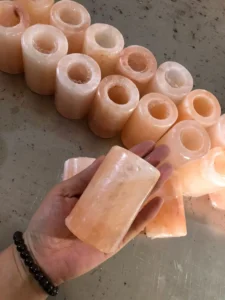
Yoga studios and meditation centers represent smaller but consistent buyers of decorative salt lamps. These venues value the warm, ambient lighting that salt lamps provide, and many incorporate salt products into their retail corners — selling small lamps, salt candle holders, and mini diffuser units to practitioners. The seasonal pattern here mirrors the broader wellness purchasing cycle: strong in Q4 as practitioners buy gifts for themselves and others, with a secondary uptick in January as new memberships drive studio retail sales.
Building a Seasonal Product Mix: Lamps, Cooking Boards & Salt Bricks
Smart buyers do not put all their inventory into a single product category. The most resilient Q4 product mixes balance high-volume gift items with steady sellers that perform across multiple seasons.
- Salt lamps are the anchor category. They carry the strongest gift appeal, the widest variety of shapes and sizes, and the best margin potential when bundled with custom packaging. For guidance on how to present these effectively, our retail merchandising guide covers display strategies that drive sell-through.
- Food-grade cooking salt boards occupy a different position in the product mix. They are not primarily gift items — they are kitchen tools that appeal to culinary enthusiasts. Demand is more evenly distributed across the year, protecting against the risk of post-holiday returns.
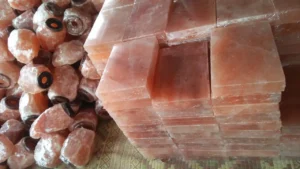
- Salt bricks and construction-grade materials serve the commercial segment — spas, wellness centers, hospitality venues. These are specification-driven purchases rather than impulse buys, and they tend to be larger orders with longer procurement cycles.
- Animal salt lick blocks serve agricultural and equestrian buyers, sharing the same manufacturing base. Including these in your portfolio smooths revenue across seasonal fluctuations, as agricultural demand follows livestock management cycles rather than retail calendars.
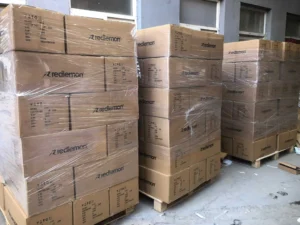
Packaging plays a strategic role in seasonal product mix planning. Individual items packed in white paper and boxed at 6-12 units per inner carton give buyers flexibility. For Q4 gift retail, custom packaging transforms the same product into a higher-margin offering — but the 1000-piece minimum (MOQ) for custom color boxes means commitment decisions must be made well in advance. At Ever Creation, our team has supported importers through this planning process for over 20 years, helping balance the trade-off between customization and flexibility.
Timeline for Q4 Ordering: When to Place Your Salt Product Order
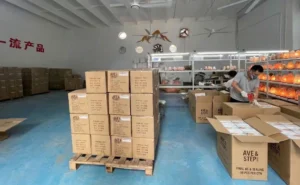
The single most common mistake that new importers make is underestimating lead times. Himalayan salt products are natural materials that require mining, hand-carving, electrical assembly, quality inspection, and careful packaging. This is not a commodity that ships from a warehouse shelf — it is a manufactured product with real production constraints.
Here is a working timeline for Q4 inventory:
- April–May: Finalize your product selection and quantities. Decide which SKUs you want in stock items versus custom packaging. Confirm certifications (CE, RoHS, EN71, BSCI, ISO9001).
- June–July: Place bulk custom orders. With 60-90 days of production lead time, an order placed in June ships by late August or September. Custom packaging at the 1000-piece tier should be committed by July at the latest.
- August–September: Stock items ship within 7-15 days. DDP shipping to the US, Europe, and Australia — including Amazon FBA warehouses — means your inventory can move directly from factory to fulfillment center.
Payment terms follow a standard T/T structure: 30% deposit at order confirmation, 70% balance before shipment. Planning your cash flow around this payment structure is part of the seasonal demand management process.
The companies that perform best during Q4 are not necessarily those that order the most. They are the ones that plan earliest, build in buffer time, and diversify their product mix. The question is not whether the peak will come — it is whether your inventory will be ready when it does.
Plan Your Q4 Salt Product Inventory
From wellness gift sets to cooking salt boards, our Himalayan salt collection covers every Q4 category. Start your order early to secure production capacity.
Browse Wholesale Salt Products →Frequently Asked Questions
When does seasonal demand for salt products peak?
Salt products seasonal demand peaks during Q4, driven by holiday gifting and wellness purchasing. Secondary peaks occur in spring around Mother’s Day and Valentine’s Day in February.
Which salt products sell best during the Q4 gifting season?
Himalayan salt lamps, aromatherapy diffusers, and curated gift sets featuring salt bricks perform strongest during Q4. USB mini lamps and animal-shaped varieties appeal to budget-conscious gift buyers.
How far in advance should B2B buyers place salt product orders for Q4?
Bulk custom orders require 60-90 days lead time, meaning Q4 inventory should be ordered by June or July. Trial orders need 20-30 days, while stock items ship within 7-15 days.
What certifications matter for salt products sold during peak retail seasons?
CE and RoHS certifications are essential for electrical salt lamps sold in Europe. EN71-1/-2/-3 safety certification matters for gift items. BSCI and ISO9001 demonstrate manufacturing quality standards.
How can retailers diversify their salt product range beyond the gifting season?
Cooking salt boards and food-grade salt products maintain steady year-round demand. Animal salt lick blocks serve agricultural buyers independently of retail cycles, smoothing seasonal revenue fluctuations.