Skip to content
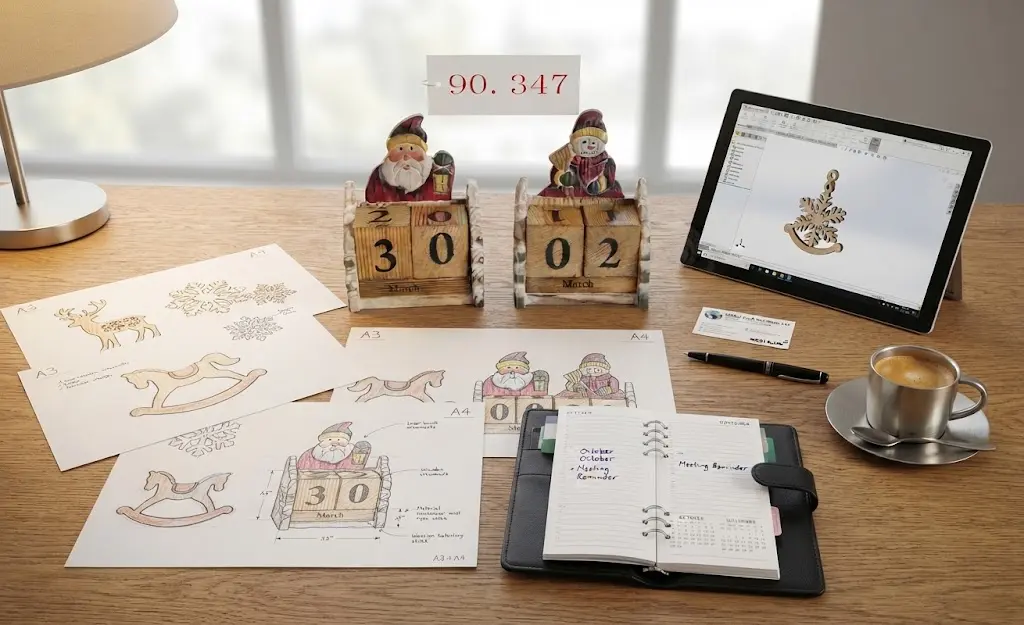
A custom Christmas ornament programme runs on four milestones — design approval, golden sample, production slot, shipping window — and the entire calendar is built backward from the last one. Standard terms at Ewoodarts start at 300 units per design, and every custom shape carries sculpt or cut-file development before the run can start, which is why the buyer who treats development as a calendar problem ships while the buyer who treats it as a design problem misses the season. This guide walks the full sequence, stage by stage, with the slip points that actually cause missed holidays.
Key Takeaways
- Golden sample is the hard gate. Nothing — tooling, material buying, line time — should commit before a signed physical sample of the complete design exists.
- Design-to-sample is the longest unknown. Sculpt revisions move at the speed of decisions, not machines; two revision rounds is the common working assumption.
- Production slots are calendar real estate. The autumn peak fills months ahead; the slot is booked at sample approval, not at order placement.
- Hardware is a development item too. Ribbon, hooks and loop length get decided at the sample stage; late hardware changes re-open an approved sample.
- Packaging runs in parallel. Insert-card and box artwork needs its own proofing track from the sample week, not after production.
- Every milestone has a slip cost. Late design eats sample time; late sample eats the slot; late slot eats the sailing — protect the earliest milestone you can still influence.
In This Guide
- The Four Stages of Ornament Development
- Building the Backward Calendar
- The Golden Sample Stage in Detail
- Production Slot and Run
- Packaging and Labelling in Parallel
- Where Custom Programmes Actually Slip
- Year-Two Reorders: The Fast Lane
- Frequently Asked Questions
The Four Stages of Custom Christmas Ornament Development
Stage one is design definition: sketch or reference images, target size, species or shape family, colour direction and the decision between laser-cut flatwork, layered depth and hand-carved sculpture — the construction trade-offs are laid out in the hand-carved versus laser-cut comparison. Stage two is development and sampling: cut files or sculpt models, first sample pieces, revision rounds, and the signed golden sample. Stage three is production: slot booking, material buying, the run itself and finishing. Stage four is packing, inspection and shipping inside the retail calendar. The stages are sequential with one deliberate overlap: packaging proofing starts at sample approval, not at run completion.
Building the Backward Calendar
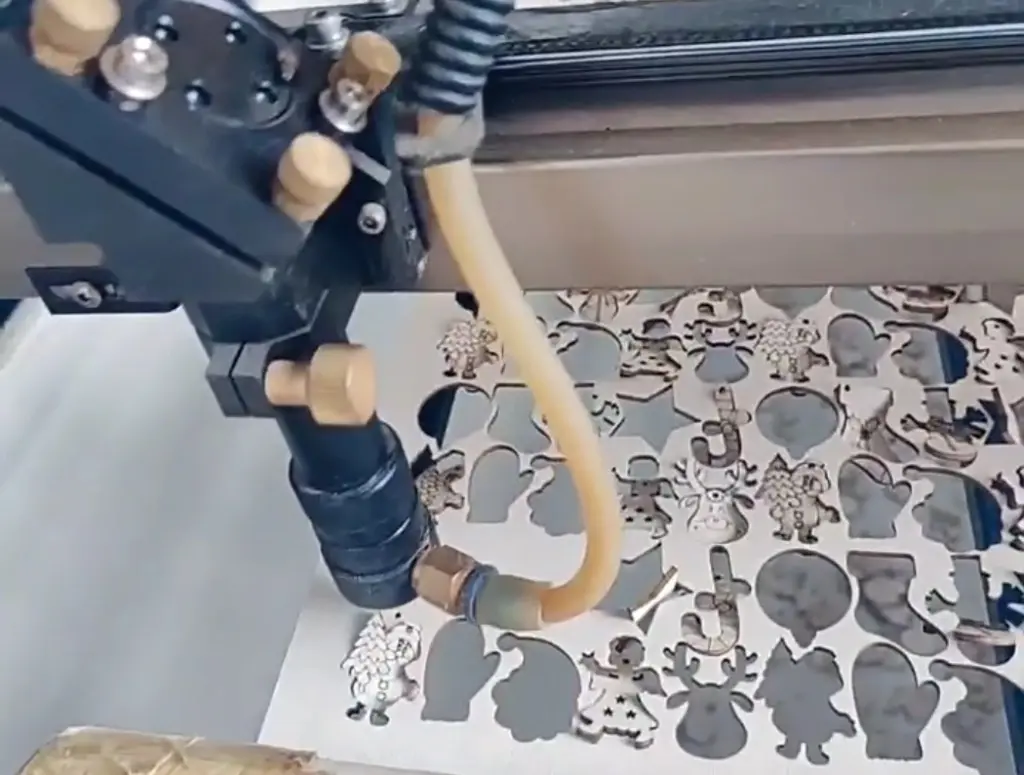
Start from the date the customer sees the product and walk backward: shelf-ready date, minus ocean transit and clearance, minus production and finishing, minus packed-carton inspection buffer, minus the golden-sample sign-off window, minus development revisions. That arithmetic is why the planning conversation for a custom wholesale wooden ornament programme happens in spring, not summer — the buyer who starts at the shelf date in September has already run out of calendar for anything with a sculpt step in it. The same backward method drives Easter and seasonal programmes across the calendar year, which is why the ordering rhythm is documented separately in the Easter merchandising timeline guide rather than reinvented for each holiday.
The Golden Sample Stage in Detail
The golden sample is the single physical piece that every later carton is judged against — colour against standard, proportion against the design sheet, hardware against the display spec. Treat the approval as a document, not a handshake: photograph the signed piece, log the date, and keep a matching reference piece at the factory. Two revision rounds are the practical planning assumption for a genuinely new sculpt; shared-catalogue shapes personalised with engraving usually clear in one. Hardware decisions belong in this stage too — loop style, ribbon or jute, hole position — because changing any of them after sign-off re-opens the sample and re-opens the calendar.

Production Slot and Run
Sample approval is the moment the production slot is booked, and the slot is the scarcest resource in the whole sequence: material buying, finishing labour and inspection time all stack around the date the line actually reserves for the run, so an unbooked approval is just an intention. A confirmed slot with written dates is what converts a design into a delivery promise. Autumn line time is committed months ahead; a programme that approves samples late joins whatever margin remains, often pushing delivery past its shipping window even though the factory could physically run the order. Blank-heavy assortments are the exception that saves late programmes: unfinished runs skip painting, cure time and gift-box assembly, so a store that misses the finished-goods window can still land a paint-your-own tier late — the economics behind unfinished ornament blanks.
Packaging and Labelling in Parallel
Insert cards, boxes and retail labels carry their own proofing track: artwork proofs, print plates and sometimes their own minimum quantities that run longer than the ornament itself. Start the packaging track at the sample week and the two lines converge at pack-out; start it at run completion and finished ornaments sit boxed and waiting in the warehouse while a single card prints slowly somewhere else. Labelling for the destination market belongs in the same parallel track — marking rules and retail data fields are a documentation job that has no reason to be sequential to carving.

Where Custom Programmes Actually Slip
One planning tool keeps all four honest — a milestone sheet with four rows and four columns:
| Milestone | Single Owner | Exit Artifact | What Makes It Slip |
|---|---|---|---|
| Design lock | Named buyer decision-maker | Signed design sheet with sizes and colours | Distributed opinions without one signatory |
| Golden sample | Retailer (with factory reference piece) | Photographed dated sample plus hardware spec | Unlimited revision rounds |
| Slot booking | Supplier line planner | Written slot confirmation with dates | Treating approval and ordering as one step |
| Ship window | Forwarder or broker on the order | Booked sailing plus inspection buffer | No rework time left before cutoff |
Four failure points cause most missed seasons. Late design changes after sample approval — every re-opened detail restarts the approval clock and may cost the booked slot. Revision rounds that wander: three or four sculpt opinions from distributed stakeholders instead of one named decision-maker. Hardware and finish surprises at first production, from details nobody looked at on the sample. And the silent killer: packaging artwork that arrives after the ornaments are finished. The control for all four is the same — a milestone sheet with a single signatory per stage, reviewed at the standing weekly call from design lock to container booking.
Inspection at the end of the run is covered in the pre-shipment QC guide: schedule the check with a real rework window before the sailing, or the last milestone simply becomes the first missed deadline.
Year-Two Reorders: The Fast Lane
Once the golden sample exists, the calendar collapses in your favour: no development, no revision rounds, slot booking at order placement. Year-two reorders of an approved design are the cheapest and fastest placement of the entire Christmas programme — the same terms that govern MOQ and volume pricing in the MOQ and unit-cost guide. Practical habit: programmes that succeed keep one file per approved design — signed sample photo, size sheet, hardware spec and box artwork — so the year-two reorder quotes fast, and a different retail account can be offered the same design as a near-custom item without restarting development at all.
If you are starting a custom ornament design and want the milestone sheet — sample rounds, slot booking, packaging track and inspection window — mapped to your shelf date, our team can build that calendar with you.
Frequently Asked Questions
How long does custom ornament development take before production?
It is driven by revision rounds, not by machine time: a genuinely new sculpt with two revision rounds plus golden-sample sign-off is the planning assumption, while catalogue shapes personalised with engraving typically clear in one round. Start from the shelf date and work backward.
What is a golden sample?
The single signed physical piece every later carton is judged against — colour, proportion, finish and hardware. Photograph it, date the approval, and keep a reference piece at the factory; changing anything after sign-off re-opens it.
When should the production slot be booked?
At sample approval, not at order placement. Autumn line time commits months ahead, and a late-approving programme can miss its shipping window even when the factory could physically run the order.
Can packaging development run in parallel with the ornaments?
It should. Cards, boxes and labels carry their own proofs and sometimes their own minimums; starting that track at sample week lets both lines converge at pack-out instead of delaying finished goods.
What is the fastest late-season route to a custom Christmas order?
Reorders of approved designs skip development entirely, and unfinished blank runs skip painting and gift-box steps — the two lanes that can still land after the finished-goods window closes.
Sources
Seasonal retail demand context: National Retail Federation. Import and destination-market marking rules: U.S. Customs and Border Protection. Verify current requirements with a compliance specialist for your market.