Skip to content

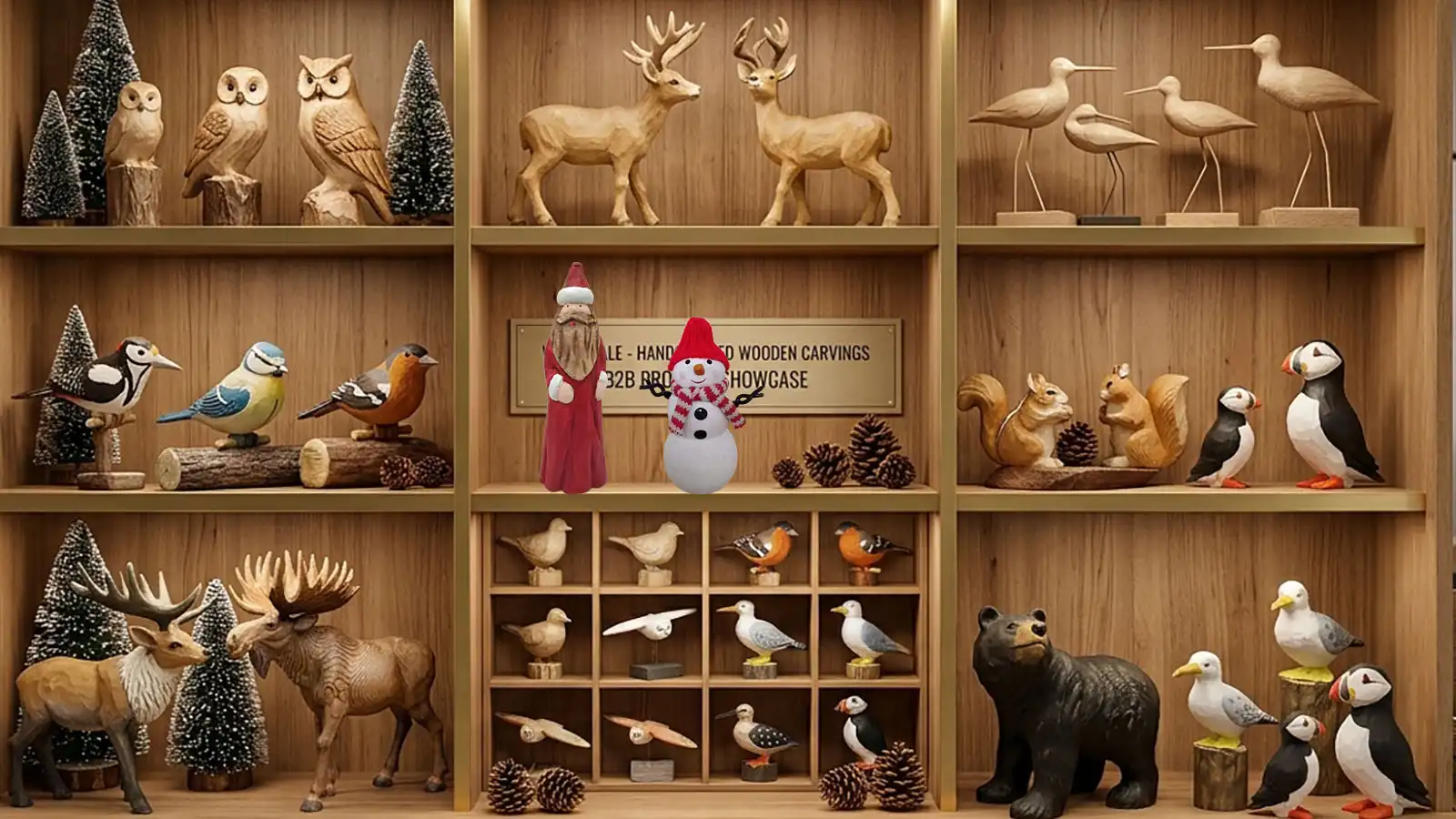
Carved wood species like mango, sheesham and acacia dominate the carved-wood category in retail, and buyers routinely specify one of them without knowing what the choice costs downstream. The three behave differently under a chisel, age differently on a shelf, and carry different documentation requirements at the border. None of that is visible in a product photograph.
This guide compares the three for importers, wholesalers and retail buyers sourcing carved wooden decor and animal figures, and then states plainly what we carve in and why — because a supplier who claims every species is equally good is not telling you anything useful. Hardness figures are given only where we hold a first-party value; for the rest we explain what to ask for instead of quoting a number we cannot stand behind.
Key Takeaways
- Hardness is not carvability. A dense, attractive hardwood can be the wrong choice for fine detail work, and the wrong choice shows up as softened feathers, blurred faces and shorter tool life.
- Grain decides whether detail reads. Pronounced figure looks superb on a turned bowl and works against a painted carving where the surface is meant to disappear behind the colour.
- Mango is largely an orchard by-product, acacia is plantation-grown, and rubber wood comes from trees past their latex-producing life. That provenance story is a genuine retail asset, not a footnote.
- Sheesham is a Dalbergia, and the genus carries international trade documentation requirements in many markets. Confirm the current listing and the permits your importer needs before ordering.
- Published hardness figures for these species vary by source, origin and moisture state. Ask for the tested value on the batch you are buying rather than accepting a catalogue number.
- We carve in basswood, pine, rubber wood and birch — not in mango, sheesham or acacia — because fine hand-carved detail is what our customers are buying.
In This Guide
- Mango, Sheesham and Acacia: What Each Actually Is
- Hardness and Carvability: Why One Number Misleads
- Provenance and Documentation
- What We Carve In, and Why
- Best For / Not For: Species by Product Type
- What We Check on Species and Material
- End to End: Specifying Species on a Carved Animal Programme
- Frequently Asked Questions
Mango, Sheesham and Acacia: What Each Actually Is
| Species | Character | Best Known For | Behaviour Under a Chisel |
|---|---|---|---|
| Mango Mangifera indica | Warm golden to olive-brown, often with striking figure and spalting; moderate density that varies a great deal between boards | Furniture, boards, turned bowls and rustic decorative carving | Cuts reasonably but interlocked grain can tear; variable density means the same design behaves differently board to board |
| Sheesham Dalbergia sissoo | Rich brown with dark figuring, dense and durable, takes a high natural sheen | Furniture, cabinet work, and natural-finish carving where the grain is the decoration | Hard on tools; holds crisp edges once cut, but fine painted detail fights the pronounced grain |
| Acacia | Hard and durable with wide colour variation between species and origins; often plantation-grown | Boards, homewares, flooring and utility items where durability matters more than detail | Difficult to carve finely; excellent where the product is shaped rather than detailed |
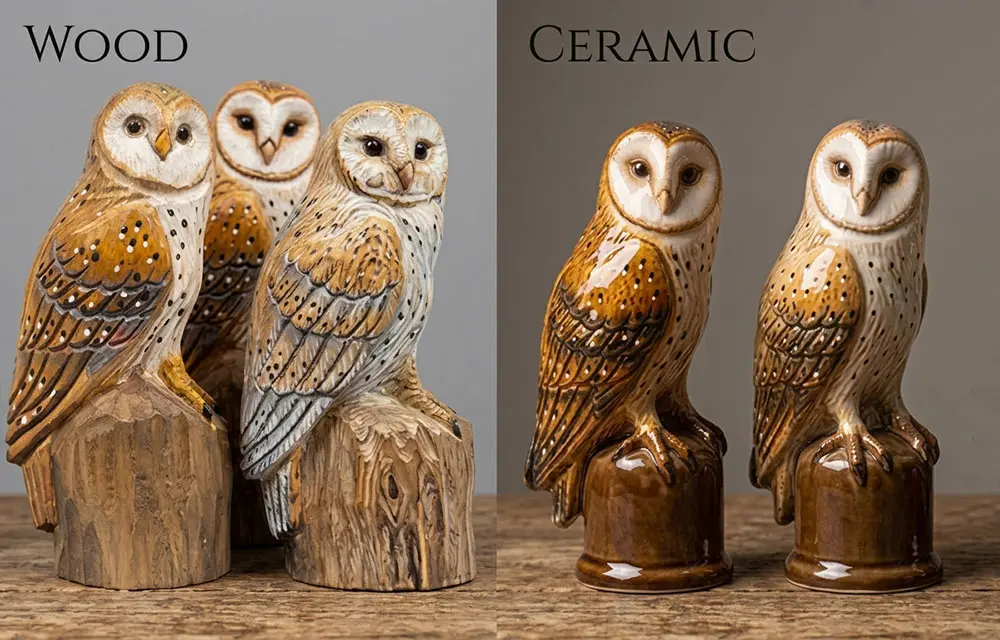
All three are legitimate choices for the right product. The mistake is treating them as interchangeable, or assuming that because a species makes a beautiful board it will make a beautiful carved bird. A material comparison of the same kind — carved wood against a glazed ceramic alternative — is set out in our decorative bird carvings comparison.
Hardness and Carvability: Why One Number Misleads
The Janka hardness test is the standard way to compare species, and it is genuinely useful — but it measures resistance to indentation, not behaviour under a carving tool. Three things the number does not tell you:
- Grain interference. A species can be soft enough to cut and still ruin fine detail, because pronounced grain shows through paint and reads as noise on a small carved face.
- Variability within the species. “Acacia” covers a large genus, and mango density shifts between boards and between orchards. A single figure cannot describe a batch.
- Moisture state. Hardness is reported at a stated moisture content; the same board reads differently in a humid workshop and in a dry one.
The one figure we quote is our own material’s, because we test and work with it continuously: basswood sits at a Janka hardness of around 410 lbf, which is the balance point for hand carving — soft enough to cut smoothly without exhausting the artisan or blunting tools quickly, firm enough to hold a fine edge such as a feather barb or an eyelid without crumbling. The full technical case is in our basswood carving guide.
For mango, sheesham and acacia we deliberately do not print a hardness table. Published figures vary between sources and origins, and quoting one as fact would be more misleading than useful. Ask your supplier for the tested value on the batch you are buying, together with the moisture content it was measured at.
Provenance and Documentation
Species choice carries a paperwork consequence, and this is where buyers get caught rather than informed.
Mango is largely a by-product of fruit orchards: trees are felled when their yield drops, so the timber is a secondary crop rather than a forestry product. That is a real sustainability story and retailers use it well. Acacia is commonly plantation-grown on short rotations, which is a different and equally legitimate story. Rubber wood — which we do use — follows the same logic again, coming from trees past their latex-producing life.
Sheesham needs more care. It is a Dalbergia, and that genus is subject to international trade documentation requirements in a number of markets. Before ordering, confirm the current listing status and the permits your importer of record will need, rather than relying on a supplier’s verbal assurance that the paperwork is fine. Timber legality and forest-management frameworks are documented by the FAO forestry programme, and your broker will know the current requirement for your destination.
On our own sourcing we are equally specific: our facility holds FSC chain-of-custody certification and operates under ISO 9001 with BSCI social compliance, but because certified basswood is not currently available to us we do not market our carvings as FSC-certified wood. We supply traceable sustainable timber and provide official felling and transport permits on request. A supplier who answers every provenance question with “yes, certified” is answering a different question.
What We Carve In, and Why
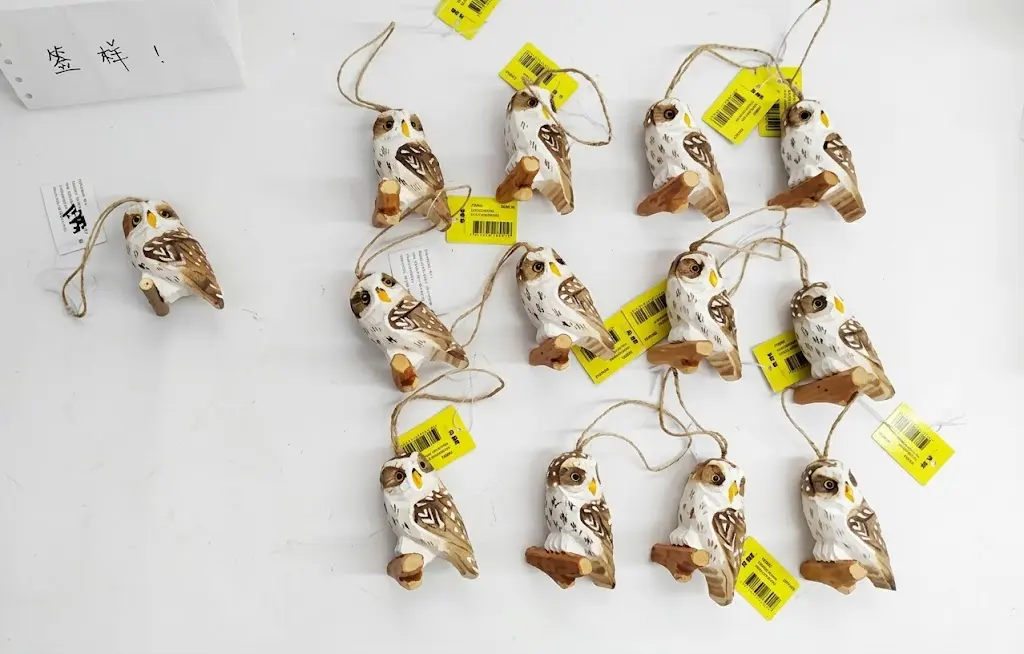
Our wooden crafts are produced in basswood, pine, rubber wood and birch — 100% carved and painted, from 5 cm miniatures up to 40 cm three-dimensional pieces and 80 cm flat carving. We do not produce in mango, sheesham or acacia, and we would rather say so plainly than win an enquiry we cannot serve properly.
The reason is the product. Basswood’s fine, even grain holds intricate detail without splintering, its pale colour takes stain and paint evenly, and it is light — which matters for wall-mounted pieces and for freight. Pine brings a warmer, more visible grain for rustic lines. Rubber wood is a consistent plantation material that machines and finishes predictably. Birch sits between basswood and the harder species where a slightly denser body is wanted.
If your programme genuinely needs mango or sheesham — a natural-finish furniture piece, or a rustic board where the figure is the selling point — those are the right materials and you should buy them from a supplier who works in them daily. If what you are selling is a hand-carved, hand-painted bird where the detail is the point, the species list above is the one that serves it. The characteristics behind each of our materials are set out in our wood characteristics reference.
Best For / Not For: Species by Product Type
| Product Type | Best Suited | Not Suited | Why |
|---|---|---|---|
| Hand-painted animal and bird figures | Basswood, birch | Sheesham, acacia | Fine detail needs a smooth, pale, low-figure surface for paint to sit on |
| Natural-finish decorative carving | Sheesham, mango | Basswood where figure is the selling point | The grain is the decoration, so pronounced figure is an asset |
| Boards, homewares, utility items | Acacia, mango | Soft fine-grained species in high-wear use | Durability and indentation resistance matter more than detail |
| Wall-mounted and large carved panels | Basswood, pine, rubber wood | Dense hardwoods at scale | Weight drives fixing, freight and installation cost |
| Rustic or farmhouse decorative lines | Pine, mango | Uniform pale stock that hides character | Visible grain and knot character are what the customer is buying |
What We Check on Carved Wood Species and Material
Species is the one specification that cannot be corrected later, so it is verified earliest.
- Species and grade confirmed at blank stage. The material is checked against the specification before carving starts, because a substituted species is invisible once painted.
- Moisture content before carving and before finishing. Blanks are verified against our wood moisture content standard, and logs are treated against cracking so pieces survive a climate change between factory and shelf.
- Grain and figure matched across a batch. Where a line is sold as a set or displayed as a family, pieces are grouped so grain character reads as one collection rather than five leftovers.
- Finish behaviour on the actual material. Paint adhesion and colour are proved on the species being used, since the same paint reads differently on pale basswood and on figured mango.
- Provenance documentation available. Official felling and transport permits for the timber are held and can be supplied for a buyer’s own sustainability reporting.
Buyers auditing a supplier on these points rather than trusting a brochure can work through our factory audit checklist.
End to End: Specifying Species on a Carved Animal Programme
A home-decor importer is launching a carved woodland animal line for garden centres and gift shops, and starts by asking for sheesham because a competitor’s range uses it.
Step one — match the species to the product, not to the competitor. The line is hand-painted: foxes, owls and deer with facial detail at 12–18 cm. Painted detail needs a fine, pale, low-figure surface, so sheesham’s pronounced grain would fight the artwork and its density would slow the carving. The specification moves to basswood, with pine reserved for a small rustic sub-line where visible grain is the point.
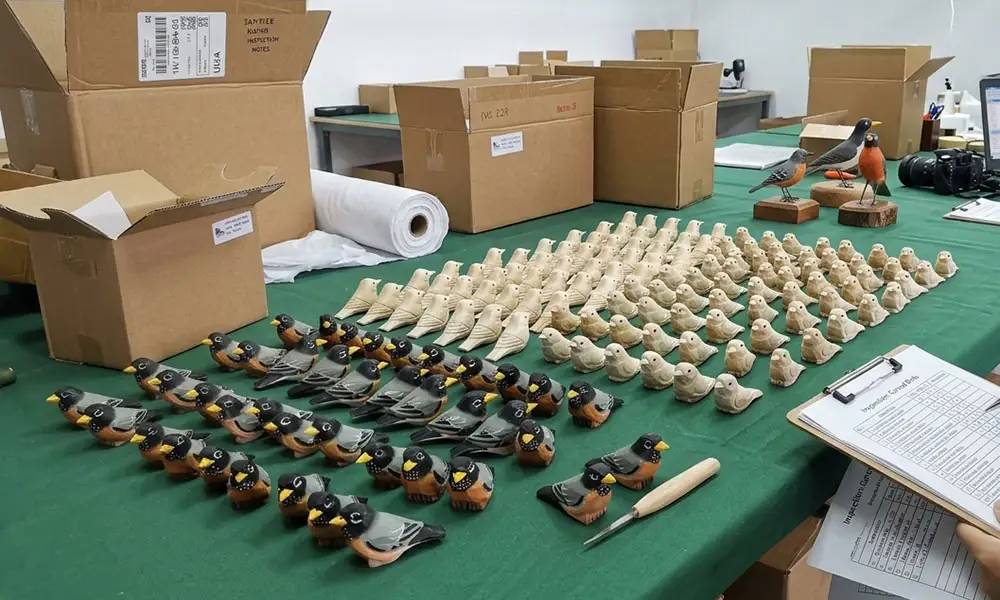
Step two — sample on the real material. A trial order of 100 pieces with a USD 500 minimum order value is placed on the chosen species, shipped air express on DDP terms in 20–30 days. The importer judges the pieces in hand under shop lighting, not from photographs, and approves the sample in writing.
Step three — first production order. The programme moves to the wholesale tier at 300 pieces with a USD 3,000 minimum order value per design, sea freight, 60–90 days to port. Species, grade, finish and colour lane are frozen against the signed sample, and batch consistency is checked throughout the run rather than only at the end.
Step four — documentation travels with the goods. Felling and transport permits are supplied for the importer’s sustainability reporting, and finish documentation is matched to the destination market. Payment runs T/T at 30% deposit and 70% before shipment, with photographs and video of the finished goods supplied before the balance falls due.
Step five — the reorder is a quantity conversation. Because the species, sample and files are archived against the order number, the second run does not restart sampling. The wider range for a mixed assortment sits in our wholesale wooden crafts line, and the ordering sequence in our procurement guide for wooden crafts.

If you are specifying a carved wood species for a decor or animal line and want an honest answer on whether your chosen material serves the product — with samples, grain-consistency checks and provenance documentation — our team will work through it with you.
Frequently Asked Questions
Q: Which wood species is best for hand-carved animal figurines?
A fine-grained, pale, moderately soft hardwood — basswood above all. It holds feather barbs, eyelids and beak detail without crumbling, takes paint evenly because there is little figure to show through, and is light enough for wall-mounted pieces. Dense hardwoods with pronounced grain work against painted detail.
Q: Is mango wood good for carving?
It is workable and its figure is attractive, so it suits rustic and natural-finish carving well. For fine painted detail it is less predictable: interlocked grain can tear, and density varies enough between boards that the same design can behave differently across a batch.
Q: Does sheesham need special import documentation?
Often, yes. Sheesham is a Dalbergia, and that genus carries international trade documentation requirements in a number of markets. Confirm the current listing and the permits your importer of record needs before ordering, rather than accepting a supplier’s verbal assurance.
Q: Which is more durable, acacia or mango?
Acacia is generally the harder and more durable of the two, which is why it is used for boards, flooring and utility homewares. Durability is not the same as suitability: for a carved decorative piece, resistance to indentation matters far less than how the material behaves under a tool and under paint.
Q: What species do you carve in?
Basswood, pine, rubber wood and birch, all 100% carved and painted, from 5 cm miniatures to 40 cm three-dimensional pieces and 80 cm flat carving. We do not produce in mango, sheesham or acacia, because fine hand-carved detail is what our customers are buying.
Sources
Timber legality, forest management and species documentation frameworks are published by the FAO forestry programme. The basswood Janka hardness figure, our species list, size range, minimums, order values, lead times, payment terms and certification holdings are our own published first-party terms. Hardness figures for mango, sheesham and acacia are deliberately not stated, because published values vary by source, origin and moisture state and should be requested per batch.