Skip to content

Buying wood blanks for painters building a product line usually starts with the wrong question: price per piece. A blank is the substrate your entire line sits on, and the decisions that actually determine whether your painted range sells — surface readiness, thickness consistency, species, format — are all made before anyone picks up a brush.
This guide is for artists, craft businesses and small brands building a painted wooden product line: what makes a blank genuinely paintable, which species and formats suit which part of a range, how to give a line an entry piece and a premium piece, and how to move from fifty pieces for a market stall to a wholesale programme. Retailers stocking paint-your-own stock for customers are a different buyer with a different problem, covered in our guide to unfinished wooden Christmas ornament blanks.
Key Takeaways
- Surface readiness is the specification. A blank that has not been sanded to a stated grit, or that raises grain after your first wash of paint, will cost you more in rework than the price difference between suppliers.
- Thickness consistency matters more than thickness. Acrylic, ink and pyrography all behave differently on stock that varies, and a batch that varies paints unevenly and stacks crooked.
- Pale, fine-grained species give you the cleanest canvas. Basswood is the standard for a reason: it holds detail, takes paint evenly and has little figure to fight your colour.
- Build a line, not a catalogue. One entry piece, two or three mid pieces and one premium piece is a range a buyer can navigate; forty designs at one price is inventory.
- Minimums scale in steps. Trial terms are 100 pieces with a USD 500 minimum order value on in-stock designs; wholesale and custom run 300 pieces with a USD 3,000 minimum order value per design.
- If your painted pieces may end up in a child’s hands, the paint and the substrate are a safety question as well as an aesthetic one, and the documentation should exist before you sell.
In This Guide
- What Makes a Blank Actually Paintable
- Species and Thickness for Painted Work
- Blank Formats and What Each Is For
- Building the Line: Tiers, Pricing and Range Architecture
- Best For / Not For: Format by Business Type
- What We Check Before a Blank Order Ships
- End to End: From Market Stall to Wholesale Line
- Frequently Asked Questions
What Makes a Blank Actually Paintable
Four properties decide whether a blank takes paint cleanly, and none of them are visible in a supplier’s product photograph.
- Sanding grit, stated. Ask what grit the face is finished to and whether it is machine-sanded or hand-finished. A surface left coarse will show brush strokes; a surface sealed by machine sanding can resist thin paint and produce a blotchy first coat.
- Grain raise after wetting. Water-based paint lifts fibre on almost any wood. The test takes two minutes: wipe a damp cloth across a spare blank, let it dry, and feel it. If it goes furry, you will be sanding between coats on every piece you sell.
- Moisture content. A blank that is too wet moves after you paint it, and movement shows as cracking along the grain. Blanks should be verified against a stated standard — ours are checked against our wood moisture content standard before finishing.
- Edge and hole quality. Cutting leaves a burr on the reverse face, and drilled hanging holes tear out if the drill exits too fast. Both are felt before they are seen, and both are what a customer notices first.
The construction method behind the blank also decides its surface. Laser-cut flat blanks have a charred edge and a smooth face; carved pieces have tool marks that read as character under thin paint and as defects under opaque paint. The difference is set out in our comparison of hand-carved versus laser-cut ornaments.
Wood Species and Thickness for Painted Work
For painted goods the species question is really a question about figure. The more visible the grain, the harder it is to lay down a flat, even colour — and the more the wood competes with your artwork.
Basswood is the standard for painted work and for good reason: fine even grain, pale colour, little figure, and a Janka hardness around 410 lbf, which is soft enough to cut and sand cleanly while still holding a crisp edge. It takes acrylic, gouache and pyrography evenly, and its pale base means your colour reads as the colour you mixed rather than as a compromise with the wood underneath. The full technical case is in our basswood carving guide.
Birch sits a step denser and is a good choice where a blank has to survive handling — market stalls, workshop tables, children’s craft sessions. Pine brings visible grain and warm tone, which suits rustic and folk-art lines where the wood is meant to show through. Rubber wood is a consistent plantation material that machines predictably, useful where a line needs uniform blanks at volume.
On thickness, match the number to the job rather than to a default. Thin stock is light but flexes, which shows as cracking in an opaque paint film; thick stock is rigid and reads as substantial but adds weight to every shipped piece. Tolerance matters more than the nominal figure — a batch that varies by a millimetre will not stack, will not fit a box insert, and will not paint consistently. The wider material trade-offs are covered in our wood characteristics reference.

Blank Formats and What Each Is For
| Format | Painting Effort | Best Use in a Line | Watch Out |
|---|---|---|---|
| Flat cut shapes | Low — one or two faces, fast to finish | Entry price point, high volume, seasonal restocks | Charred laser edges need sealing or sanding before light paint |
| Wood slices and rounds | Low to moderate — bark edge limits masking | Rustic and folk lines, gifts, pyrography work | End grain drinks paint; seal first or the colour sinks unevenly |
| Carved three-dimensional pieces | High — shading, detail work, longer drying between coats | Premium tier, the piece that carries the range’s reputation | Recesses hold paint and dry slowly; build time per piece into your price |
| Kits and multi-piece sets | Moderate per piece, plus assembly and packing time | Gift positioning, higher ticket, marketplace bundles | Completeness is a quality issue: a short set is a return, not a partial sale |
Most painter-run lines work best with two formats rather than four: one flat for volume, one carved or dimensional for the premium tier. Adding formats multiplies paint inventory, drying space and packing materials faster than it multiplies sales.

Building the Line: Tiers, Pricing and Range Architecture
A product line is a set of decisions about what a buyer sees first, what they trade up to, and what makes the range memorable. Three tiers is enough for almost any painter-run business.
- Entry tier. Flat shapes, fast to paint, low material cost. This is what pays the stall fee and gets a first-time buyer to stop. Volume matters more than margin here.
- Mid tier. Where your actual profit lives. Slightly larger or slightly more detailed pieces with a finish that justifies the step up — a sealed surface, a two-tone treatment, a box instead of a bag.
- Premium tier. Carved or dimensional pieces, painted slowly and signed. These rarely sell in volume, but they anchor the other two and they are what people photograph.
Pricing follows from your own costs rather than from anyone else’s price list. Add blank cost, paint and consumables, labour minutes at an hourly rate you would actually pay someone, packaging, and market or platform fees, then apply the margin your business needs. The most common mistake is pricing labour at zero, which turns a profitable range into an unpaid hobby.
Because blanks are the one input you can move, the biggest lever is usually the minimum order rather than the unit price: a trial run costs more per piece but commits far less capital, and moving to the wholesale tier once a design has proven is what lowers the cost. The ordering mechanics are in our procurement guide for wooden crafts, and the range these blanks come from is in our wholesale wooden ornaments line.

Best For / Not For: Format by Business Type
| Business Type | Best For | Not For | Starting Order |
|---|---|---|---|
| Market and craft-fair painter | Flat shapes and slices, painted in batches between events | Long-drying carved pieces that tie up your only workspace | Trial terms: 100 pcs / USD 500, in-stock designs |
| Online marketplace seller | Consistent flat blanks that photograph well and pack flat | Heavy dimensional pieces that make postage uneconomic | Trial first, then wholesale tier once a design sells |
| Workshop and class provider | Uniform, forgiving blanks in quantity, identical across a class | Premium carved stock — the fee will not cover your paint time | Wholesale tier: 300 pcs / USD 3,000 per design |
| Brand selling a painted range | Carved pieces plus custom printed boxes for shelf presentation | Short-notice launches; custom boxes carry their own minimum | Wholesale tier plus custom boxes from 500 pcs |
What We Check Before a Blank Order Ships
A blank has no finish to hide anything, so inspection concentrates on the surface a painter is about to work on.
- Surface readiness. Sanding grit is verified and a damp-wipe test is run on samples, because grain that raises after a customer’s first wash of paint fails in their hands, not in our factory.
- Thickness consistency across the run. Measured rather than eyeballed; a batch that varies paints unevenly and will not stack square in a box.
- Hole and edge quality. Hanging holes are drilled clean with no tear-out on the reverse, and edges are broken just enough to be safe without softening the silhouette.
- Moisture content. Blanks are checked against our moisture standard and held tighter than finished goods, since there is no sealant to buffer movement once the piece reaches a warm studio.
- Finish documentation where paint is applied by us. Water-based non-toxic paints are used throughout, with EN71 toy safety testing available where an article may be handled by children — which matters if your own line will be sold that way.
- Export packing. Pieces are white-paper wrapped, 6–12 per three-ply inner box at 21 × 11 × 14 cm and 240–480 per five-ply master carton at 58 × 44 × 31 cm, gross weight held between 8.0 and 15.0 kg and rated to pass an ISTA 3A drop test. The options are set out in our guide to packaging wooden crafts.
End to End: From Market Stall to Wholesale Line
A painter sells at four winter markets a year and wants to turn two best-selling designs into a line that sells online and into two independent shops.
Stage one — trial blanks, market-tested. A trial order of 100 pieces with a USD 500 minimum order value on in-stock designs arrives air express on DDP terms in 20–30 days. Two designs are painted and taken to market. The sell-through data decides which designs are worth scaling — a decision made with evidence rather than enthusiasm.
Stage two — specification freeze. The winning designs get a written specification: species, thickness and tolerance, sanding grit, edge treatment, hanging hole position. A sample is approved and retained by both sides, so the next batch is measured against something rather than against a memory.
Stage three — first wholesale run. The order moves to the wholesale tier at 300 pieces with a USD 3,000 minimum order value per design, sea freight, 60–90 days to port. That lead time is why the reorder is placed after the first market weekend and not after the stock runs out.
Stage four — packaging and the shop conversation. Custom printed boxes become worth the 500-piece minimum once two shops are stocking the range, because the box is what lets a retailer put the piece on a shelf without repacking it. Payment runs T/T at 30% deposit and 70% before shipment, with photographs and video of the finished goods supplied before the balance falls due.
Stage five — the line grows sideways. A third design is added on the same specification and the same packaging, so the retailer gets a range rather than an item. Because the sample, files and specification are archived against the order number, each addition is a quantity conversation rather than a new project.
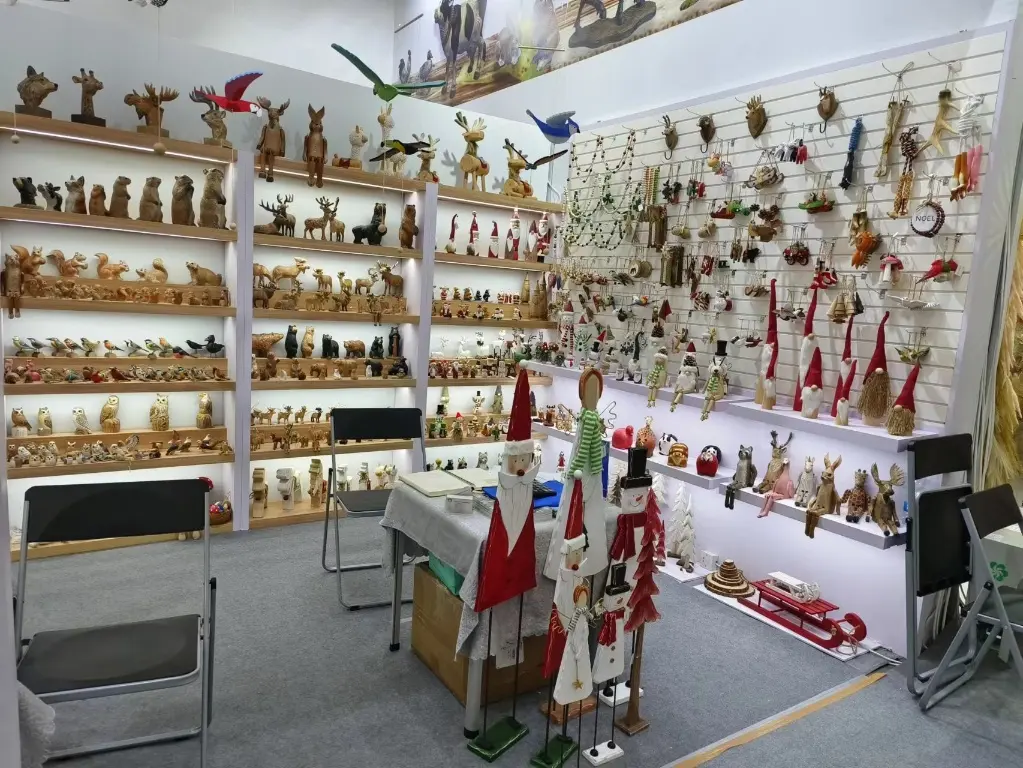
If you are building a painted product line and want blanks specified to your surface, thickness and tolerance requirements — with samples, carton quantities and the tier that fits your volume — our team will put that specification sheet together with you.
Frequently Asked Questions
Q: What wood is best for painting?
A pale, fine-grained species with little figure — basswood above all. It takes acrylic and gouache evenly, holds a crisp edge for detail work, and its light base means your colour reads as the colour you mixed. Birch is a step denser where handling matters, and pine suits rustic lines where visible grain is wanted.
Q: Do I need to seal wood blanks before painting?
Usually yes on end grain and on porous surfaces, and it depends on your paint. Test it: wipe a damp cloth across a spare blank, let it dry and feel for raised grain. If it goes furry, seal or sand between coats, otherwise your first coat will look patchy on every piece you sell.
Q: What is the minimum order for wood blanks?
Trial orders run at 100 pieces with a USD 500 minimum order value on in-stock designs, shipped air express on DDP terms in 20–30 days. Wholesale and custom orders run at 300 pieces with a USD 3,000 minimum order value per design, by sea freight at 60–90 days to port. Custom printed boxes require 500 pieces.
Q: How many designs should a first product line have?
Two or three, across at most two formats. Every additional design multiplies paint inventory, drying space and packing materials, and it splits the volume that would otherwise bring your blank cost down. Prove two designs at market or online before adding a third.
Q: Are painted wooden products safe to sell for children?
They can be, but it has to be documented rather than assumed. Where an article may be handled by children, finishes should meet the EN71 toy safety standards, and small-parts sizing applies. Ask your blank supplier for finish documentation and check the rules for your own market before labelling anything as child-safe.
Sources
Toy safety requirements for articles children may handle, including the EN71 standards, are set out by the European Commission. The basswood hardness figure, our species list, minimums, order values, lead times, payment terms and packaging specifications are our own published first-party terms. No blank unit price is stated, because cost depends on format, thickness, tolerance and quantity, and is quoted against the specification.