Skip to content

Buyers arriving from plastic, resin or die-cast sourcing open with the same question: what is the mold cost? For custom wooden products made by hand carving, the honest answer is that there is no mold — which changes how a development budget is built, because the fixed costs sit elsewhere.
This guide sets out what those fixed costs are, where genuine tooling does appear in a wooden programme, and how the economics differ from a moulded material. No tooling price list is quoted because we do not publish one: setup cost follows the design, and a figure detached from a drawing would be wrong for almost every project. What is stated is our published commercial structure, so the arithmetic is visible before a number is asked for.
Key Takeaways
- Hand carving is subtractive, not formative. There is no cavity tool to cut, so the largest fixed cost in resin or plastic sourcing does not exist here.
- The fixed costs you do pay: design and artwork, a master sample, jigs and fixtures, cutter and machine setup, print plates or screens for marking and packaging, and first-article approval.
- Real tooling appears at the edges of the process: CNC and laser fixtures, dies for flat-cut plywood parts, and moulds for any resin component or moulded-pulp pack insert.
- Wood has low fixed cost and labour-bound marginal cost; moulded materials are the reverse. So wood suits short runs and design changes, moulding suits long ones.
- Fixtures and files are retained against the order number, so a reorder is a quantity conversation — the second run carries little or no setup.
- Ask who owns the design, fixtures and artwork. Ownership is a contract question, and settling it before the sample is made is cheaper than after.
In This Guide
- There Is No Mold in Hand-Carved Wood
- The Fixed Costs in Custom Wooden Products
- Where Real Tooling Does Appear
- How the Economics Differ From Moulded Materials
- Setup Costs: Hand-Carved Wood vs Moulded
- Amortising Setup Across a Run
- Best For / Not For: Development Route by Project
- What We Quote and What We Retain
- End to End: A First Custom Design
- Frequently Asked Questions
There Is No Mold Cost in Hand-Carved Wood
A mould is a formative tool: material is pushed into a cavity and the cavity decides the shape. Making one is expensive, because it must be machined to precision in hardened steel or aluminium and survive tens of thousands of cycles.
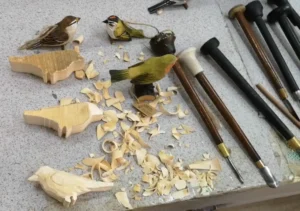
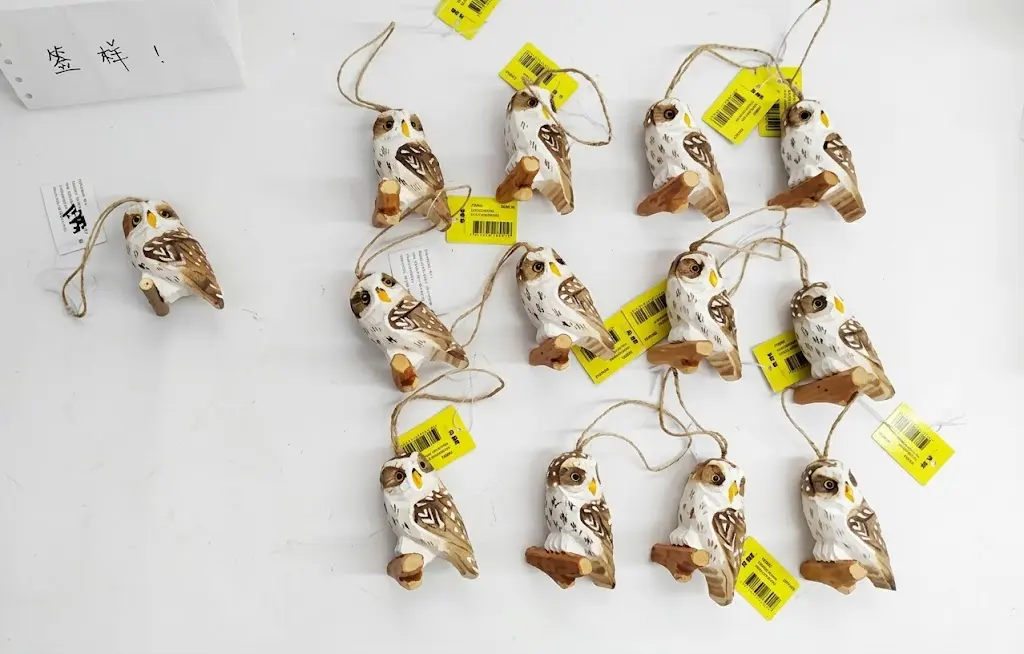
Hand carving is the opposite operation: material starts as a solid blank and is removed until the shape remains. Nothing forms the piece, so nothing has to be built to form it. Every piece in our range is carved and painted by hand, from basswood, pinewood, rubber wood or birch, across three-dimensional sizes from 5 cm to 40 cm and flat carving to 80 cm. A design can go from a reference photograph to a finished sample without a cavity tool being cut — which is why a wooden product can be developed and tested at quantities a moulded one cannot approach.

The Fixed Costs in Custom Wooden Products
There is no mould, but development of custom wooden products is not free. Six fixed costs appear in a programme, and knowing them in advance stops a quotation looking surprising.
- Design and artwork. Turning a reference image into a carveable specification: proportions, wall thicknesses, which detail survives at the target size, where the grain runs, and what must change so a carved form does not split. Where a buyer supplies only a photograph, most of the engineering happens here.
- The master sample. A first carved and finished piece that both sides approve and retain — the closest thing wooden production has to a tool, since once approved it is the reference every later piece is judged against. The mechanics are in our guide to golden sample approval.
- Jigs and fixtures. Not a mould, but the holding and locating devices that let a repeat operation — a hanging hole, a flat base, a mating joint, a paint mask — land in the same place on every piece. Fixtures turn a craft into a run.
- Cutter and machine setup. Where a step is machined rather than carved, the toolpath, cutter selection and machine setup are prepared once and reused — small but real, and reset by a design change.
- Print plates, screens and dies. Engraving paths, screen or pad print plates, foil blocks, and cutting dies for custom colour boxes and insert cards. These are the true tooling costs in most wooden gift programmes, and they sit in the packaging rather than the product. Artwork requirements are covered in our guide to labeling wooden gifts for the EU.
- First-article approval. The pieces produced so the first production article can be checked against the master before the run continues — cheap relative to discovering a mismatch at delivery.
Where Real Tooling Does Appear
No mould in the carving does not mean no tooling in the programme. It appears at four places; ask which your design touches.
- CNC and laser operations. Flat-cut and layered work uses machine paths, fixtures and, for laser, lens and power settings tuned to species and thickness. Files are prepared once and reused. Precision engraving of this kind is shown in our guide to hand-carved versus CNC and moulded alternatives.
- Die-cutting. Plywood and flat components can be die-cut, and a die is a genuine one-off tool with a fixed cost and a cycle life.
- Moulded components elsewhere in the product. A wooden article can still carry a moulded part — a resin inlay, a plastic cord end, a stamped or cast metal fitting — and those carry their own tooling even though the wood does not.
- Moulded packaging. Moulded-pulp inserts and blister or vacuum-formed trays are tooled, so a wooden gift set in a moulded-pulp tray has tooling cost in the pack and none in the piece.
How the Economics Differ From Moulded Materials
The useful comparison is not which is cheaper but which cost curve you are buying. A moulded part has high fixed cost and marginal cost falling steeply with volume, so it rewards long runs and punishes revision — every change can mean cutting new tooling. A hand-carved part has low fixed cost and marginal cost that stays labour-bound: it falls more slowly with volume, but starts at a hundred pieces and can be revised without scrapping a tool. Wood is the sensible route for testing a design in market; a moulded version, if volume ever justifies it, is a decision taken after the design is proven.
Setup Costs: Hand-Carved Wood vs Moulded
| Cost element | Hand-carved wood | Moulded resin or plastic |
|---|---|---|
| Forming tool | None — material is removed, not formed | A mould, machined in steel or aluminium |
| Design reference | Approved master sample, retained by both sides | Tool drawing plus first-off sample |
| Repeat-operation tooling | Jigs, fixtures, paint masks | Fixtures and secondary operation tools |
| Marking | Engraving paths, screens or plates, foil blocks | Moulded-in text, or the same print tooling |
| Packaging | Cutting dies for boxes and insert cards | Identical, plus moulded inserts if used |
| Cost of a design revision | A new sample; fixtures adjusted or remade | Tool modification or a new tool |
| Marginal cost behaviour | Labour-bound; falls slowly with volume | Falls steeply once the tool is paid for |
| Practical starting volume | 100 pieces at trial tier | Set by what the tool must amortise across |
Amortising Setup Across a Run
Setup is a fixed sum, so its cost per piece is that sum divided by the pieces it serves. Three consequences follow, and they are what to negotiate around.
First, a design change resets it. Fixtures and plates are made against a specification, so revising artwork after plates are cut means cutting them again. Freeze the specification against a retained sample before the run — the sequencing is in our guide to the wood OEM timeline from sample to first order.
Second, the run it is spread across can be more than one order. Because fixtures, files and the retained sample are archived against the order number, a reorder carries little or no setup — so ask explicitly whether a supplier retains fixtures or rebuilds them.
Third, minimums interact with it. The trial tier exists so a design can be proven before custom setup is committed, while box dies and print plates only start to amortise sensibly once custom packaging reaches its 500-piece minimum. Below that volume, the route is described in our guide to low MOQ hand-carved wood crafts, and the negotiating levers in MOQ negotiation for wooden gifts.

Best For / Not For: Development Route by Project
| Project type | Sensible route | Poor route |
|---|---|---|
| Testing a new design | In-stock designs at trial tier first; custom development once the subject has sold | Committing setup, plates and dies before any sell-through data exists |
| Private-label range | One master sample per design, fixtures retained, packaging tooled once across the range | A separate box die per SKU where a common box with a changed insert would do |
| Seasonal one-off | Minimal tooling: engraving or a printed insert rather than a custom box | Tooling a pack that will not run again next season |
| High-volume repeat | A full fixture set and retained files, plus a documented acceptance rule | Leaving variation undefined, then renegotiating tolerance at delivery |
What We Quote and What We Retain
- You provide multi-angle references, target size, species, finish and paint level, marking method, packaging tier, destination market and target quantity.
- We return a quotation covering product and any setup specific to it, carton quantity and dimensions, gross weight per carton, HS code, and lead time for the tier — 20–30 days air express DDP at trial, 60–90 days to port for wholesale and custom.
- Retained against the order number: the approved master sample, artwork and machine files, and the fixtures — so a reorder is a quantity change, not a new development.
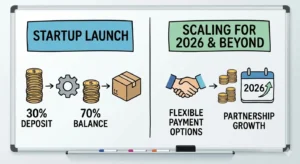
- Commercial terms: T/T at 30% deposit and 70% balance before shipment, with photographs and video of the finished goods supplied before the balance falls due.
- Compliance standing: our facility operates under ISO 9001 and BSCI with CE, RoHS and UKCA protocols on electrical lines and EN71 coating routes for painted articles children may handle. Where a project needs an acceptance rule as well as a sample, see our guide to AQL inspection levels for wooden crafts.
Two things we do not do. We publish no tooling or sample price list, because setup cost is a function of the drawing and a generic figure would mislead. And we do not market our carvings as FSC-certified wood: we hold FSC chain-of-custody certification, but certified basswood is not currently available to us, and we supply timber felling and transport permits for traceability. Capability questions of this kind are worth asking directly; our wood carving factory audit checklist lists the ones that matter.
End to End: A First Custom Design
A gift brand wants a carved animal in its own style, logo-engraved, in a custom box, for a range it has not sold before.
Prove the subject first. Rather than open a custom development, the brand takes in-stock designs at the trial tier — 100 pieces at a USD 500 minimum order value, air express DDP, 20–30 days — and puts them in front of customers. No custom setup is committed, which is the entire value of the tier.
Develop against evidence. Once a subject has sold, development starts: artwork is drawn up, a master sample is carved, approved and retained by both sides, and fixtures are made for the repeat operations. The sample policy behind this stage is in our guide to refundable samples for wholesalers.
Tool the pack, not the piece. The custom box and insert card carry this project’s real tooling — cutting dies and print plates at a 500-piece minimum. The carving needs none, and splitting those two budgets keeps a first range affordable.
Scale and reorder. Production moves to 300 pieces at a USD 3,000 minimum order value, sea freight, 60–90 days to port, payment T/T 30% and 70% before shipment with photographs and video supplied first. The reorder six months later is a quantity conversation, since sample, files and fixtures are archived. Range options are in our custom product manufacturing and wholesale wooden crafts guides, with sample kits described in our wholesale sample kit guide.

If you want to know what setup your design actually needs — sample, fixtures, engraving paths, box dies and plates — send us your references and target quantity and we will return a quotation that separates product cost from setup cost.
Frequently Asked Questions
Q: Do custom wooden products have a mold cost?
No. Hand carving removes material from a solid blank rather than forming it in a cavity, so there is no mould to cut. The fixed costs are design and artwork, a master sample, jigs and fixtures, machine setup, print plates or dies, and first-article approval.
Q: Where does tooling actually appear in a wooden programme?
At four places: CNC and laser operations need prepared paths and fixtures, flat-cut plywood parts can be die-cut, any moulded component such as a resin inlay or plastic fitting carries its own tool, and moulded-pulp or blister inserts are tooled. The carving carries none of these.
Q: Does a reorder carry setup cost again?
Little or none if the design is unchanged: the master sample, artwork and machine files and the fixtures are retained against the order number, so a reorder is quoted as a quantity change. A design revision resets setup, because fixtures and plates are made against a specific specification.
Q: What is the smallest run worth developing a custom design for?
Custom work runs at 300 pieces with a USD 3,000 minimum order value, custom printed boxes at 500. Below that, test with in-stock designs at the trial tier — 100 pieces with a USD 500 minimum order value, air express DDP in 20–30 days — and commit custom setup once the subject has sold.
Q: Who owns the design, fixtures and artwork?
That is a contract question to settle in writing before the sample is made, not after. Ask whether the supplier retains fixtures for your reorder or rebuilds them, whether artwork files are archived against the order number, and who owns a design developed jointly from your references and their carving experience.
Sources
Terms governing who bears cost and risk at each leg of a sample or production shipment are published by the International Chamber of Commerce. Our species list, carving size range, hand-carved and hand-painted construction, minimums, order values, lead times, payment terms, retention practice and certifications are our own published first-party terms. No tooling, mould, die, plate or sample fee is quoted here: setup cost is a function of the specific drawing and we publish no price list for it. Moulded materials are described structurally rather than numerically for the same reason.