Skip to content
Buyers plan a wood OEM production timeline from the wrong end. They start with the launch date and work backwards through production, then find that sampling was never in the schedule at all — and sampling is the only stage where a change is cheap. A first production order is not a bigger sample; it is a different process with different risks, different lead times and a different definition of done.
This guide sets the two side by side for importers, brand owners and retail buyers commissioning hand-carved wooden products. It covers what each stage actually produces, how long each takes, what has to be approved before the next one starts, and the four places where a timeline quietly loses three weeks. All lead times and minimums quoted are our own published first-party terms.
Key Takeaways
- Sampling and production have different clocks. Trial orders of in-stock designs run 20–30 days; bulk production runs 60–90 days to port. Adding them together is the only honest timeline.
- The sample is a contract, not a preview. Whatever is approved in writing becomes the reference every unit is inspected against, so approving loosely costs you at final inspection.
- Minimums differ by stage. Trial terms are 100 pieces with a USD 500 minimum order value on in-stock items; wholesale and custom run 300 pieces with a USD 3,000 minimum order value per design.
- Custom printed packaging has its own 500-piece minimum and its own proofing round, which buyers routinely forget to schedule.
- Four things eat timelines: late artwork, an unsigned sample, a specification change after the freeze, and booking inspection against the production date instead of the sailing date.
- Payment structure is a timeline control. Our T/T terms run 30% deposit and 70% before shipment, with photographs and video of finished goods supplied before the balance falls due.
In This Guide
- Sample Versus First Production Order, Side by Side
- The Two Clocks: Where the Days Actually Go
- Four Places a Wood OEM Timeline Slips
- Best For / Not For: Sample First or Go Straight to Production
- What We Check at the Sample-to-Production Handoff
- End to End: A Seasonal Launch Planned Backwards
- Frequently Asked Questions
Sample Versus First Production Order, Side by Side
The two stages look similar on a purchase order and behave completely differently on a factory floor. This is the comparison we work from when a buyer asks how long a programme will take.
| Dimension | Sample / Trial Stage | First Production Order |
|---|---|---|
| Purpose | Prove the design, the material and the finish; establish the written reference | Repeat the approved reference at volume without drift |
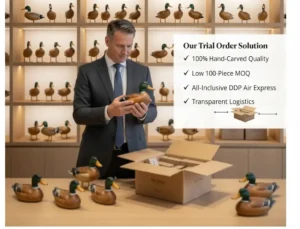
| Quantity | 100 pieces minimum with a USD 500 minimum order value, from in-stock designs | 300 pieces minimum per design with a USD 3,000 minimum order value |
| Lead time | 20–30 days, shipped air express on DDP terms | 60–90 days to port, then sea freight and destination clearance |
| What gets approved | Shape, species, dimensions, finish, colour and engraving depth — in writing | Nothing new; production is measured against the signed sample |
| Dominant risk | Approving from a photograph instead of the physical piece | Batch drift, and specification changes arriving after the freeze |
| Cost behaviour | High per unit; air freight and setup are spread over few pieces | Lower per unit; setup amortises and sea freight replaces air |
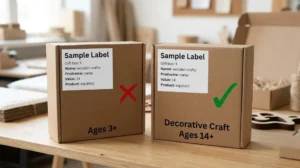
| Packaging | Standard export packing; custom boxes rarely worth the minimum | Custom printed colour boxes available from 500 pieces, own proofing round |
The stage that buyers most often skip is the second row of that table. A trial order of in-stock designs is not the same thing as a sample of a bespoke design, and a bespoke design needs its own physical approval before it can enter a 60–90 day run. The commercial structure behind both is set out in our guide to custom product manufacturing.
The Two Clocks: Where the Days Actually Go
A wood OEM production timeline has two clocks running at different speeds, and confusing them is the single most common planning error.
- The sampling clock is short but sequential. Brief, artwork viability check, sample production, physical review, revision, sign-off. Each step waits on the previous one, and the review step waits on the buyer — which is why the elapsed time is usually longer than the working time.
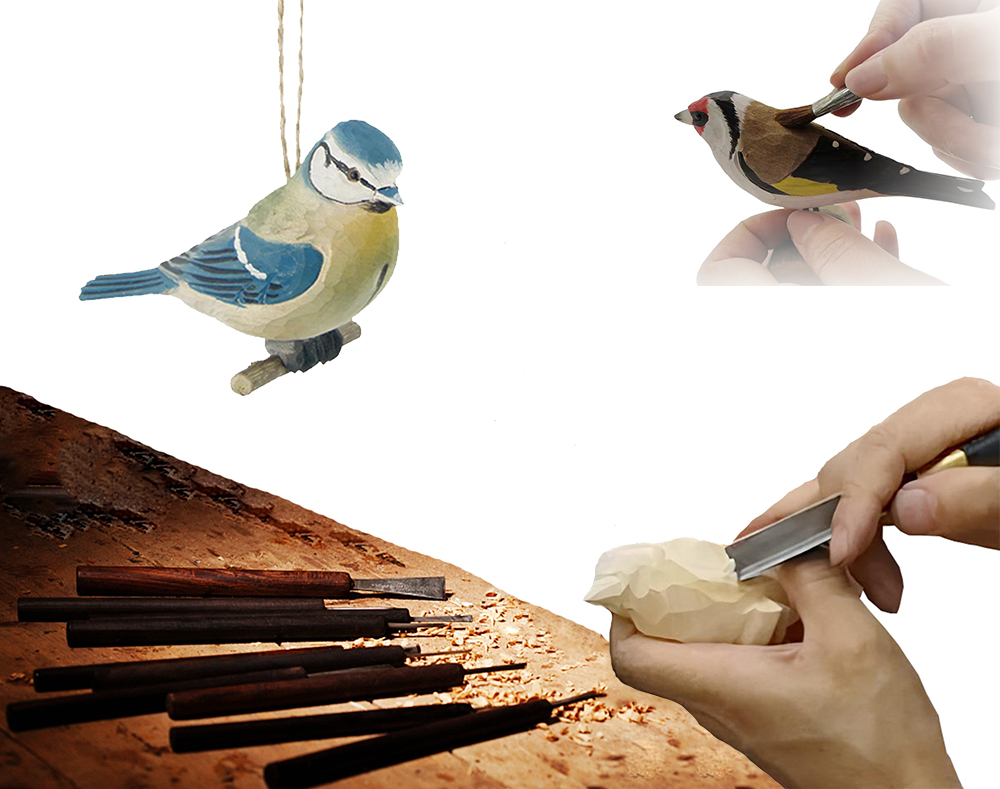
- The production clock is long but parallel. Once the sample is signed, material preparation, carving, sanding, painting, curing, assembly and packing overlap across batches. That is what allows 60–90 days to cover a large run, and it is also why inserting a change mid-run is expensive: the parallel streams all have to stop.
- The freight clock is separate again. Production ends at the port, not at your door. Sea freight plus destination clearance sits on top of the 60–90 days, and who carries that leg is decided by the delivery term agreed on the order — the ICC Incoterms rules define exactly where cost and risk transfer.

Four Places a Wood OEM Timeline Slips
Delays are rarely caused by slow carving. They are caused by these four things, in roughly this order of frequency.
- Late or unworkable artwork. Thin strokes, reversed type and fine serif detail do not survive engraving at ornament scale, so the artwork is assessed and redrawn before anything is cut. A file that arrives in week three pushes every downstream step.
- An unsigned sample. Production cannot start against a reference nobody has approved in writing. Buyers who say “it looks fine, go ahead” by phone and then request changes in week five pay for both the change and the delay.
- A specification change after the freeze. Changing species, finish or dimensions mid-run stops the parallel streams at once. A change to the colour lane alone can invalidate material already prepared.
- Inspection booked against the wrong date. Inspection needs the order finished and cured, which puts it one to two weeks before sailing. Buyers who schedule it against the production start date find the goods are not ready, and then lose the sailing.
Best For / Not For: Sample First or Go Straight to Production
| Buyer Situation | Best For | Not For | Route |
|---|---|---|---|
| First order with a new supplier | Trial terms on in-stock designs to test product and logistics together | Bespoke shapes — tooling and sampling will not fit a trial budget | 100 pcs / USD 500, air express DDP, 20–30 days |
| Established buyer, approved design | Going straight to a production reorder from archived files | Anything needing delivery inside 60 days | 300 pcs / USD 3,000 per design, sea freight, 60–90 days |
| Brand owner with exclusive product | A full sampling round with physical sign-off and archived tooling | Short-notice launches; the sample clock cannot be compressed | Sample first, then wholesale tier; custom boxes from 500 pcs |
| Retailer testing a new category | A small mixed trial to learn sell-through before committing volume | Judging per-unit economics — trial unit cost is not production unit cost | Trial, then reorder on wholesale terms once the data exists |
Material choice belongs in the sampling stage rather than the production stage, because it cannot be changed later without restarting. The species we work in and how they behave are covered in our wood characteristics reference and our basswood technical guide.
What We Check at the Sample-to-Production Handoff
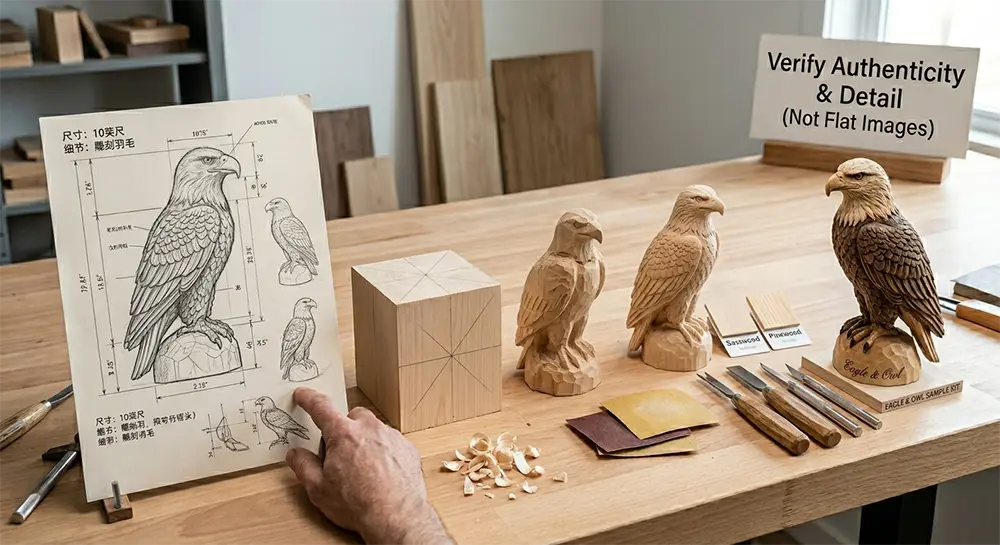
The handoff is where drift enters. These checks run before a signed sample becomes a production run rather than after.
- Specification frozen and written. Species, dimensions, finish system, colour reference, engraving depth and packaging are recorded against the order number, so a reorder is a quantity confirmation rather than a re-negotiation.
- Moisture content at blank stage. Blanks are verified against our wood moisture content standard, and logs are treated against cracking so pieces survive a climate change between factory and shelf.
- Batch consistency against the retained sample. Carved detail, paint registration and colour lane are compared to the approved piece throughout the run, not only at final inspection.
- Compliance documentation matched to market. Where the article could be treated as a child’s product, finishes are tested to the EN71 toy safety standards; our wider holdings cover ISO 9001, BSCI, CE, UKCA and RoHS.
- Packing to the quoted carton spec. White-paper wrap per piece, 6–12 per three-ply inner box at 21 × 11 × 14 cm, 240–480 per five-ply master carton at 58 × 44 × 31 cm, gross weight 8.0–15.0 kg, rated to pass an ISTA 3A drop test.

Photographs and video of the finished goods are supplied before the 70% balance falls due on our T/T 30/70 terms, so the buyer sees the run before paying for it. Buyers who want to audit the whole sequence can work through our factory audit checklist.
End to End: A Seasonal Launch Planned Backwards
A UK gift retailer wants a bespoke carved bird on shelf by the first week of November. Working backwards from that date, here is how the two clocks have to line up.
November minus 26 weeks — brief and artwork. The design is drawn, the artwork is checked for engraving viability, and the species and finish are chosen. Nothing downstream can start until the artwork is workable, so this is the step that most often decides whether the date is achievable at all.
Minus 22 weeks — sample production and physical review. A physical sample is produced and shipped. The retailer judges it in hand under shop lighting, requests one revision round, and signs off in writing. This sign-off is the gate: production does not start before it.
Minus 20 weeks — first production order placed. The order sits on the wholesale tier at 300 pieces with a USD 3,000 minimum order value per design. Deposit is paid, material is prepared, and the specification is frozen. Any change from this point stops parallel streams and costs weeks.
Minus 8 to 10 weeks — inspection, then sailing. Production completes inside the 60–90 day window. Final inspection is booked one to two weeks before sailing, photographs and video are sent, and the balance is paid. The goods are packed to the carton specification the retailer’s forwarder quoted against.
Minus 2 weeks — clearance and shelf. Sea freight and destination clearance land the stock with a fortnight to spare, which is the buffer that absorbs a missed sailing rather than a missed season. The reorder conversation happens here, while the sell-through data is fresh, and because the sample and files are archived it is a quantity decision. For the seasonal version of this arithmetic see our guide to when to order Christmas stock, and the wider ordering mechanics in our procurement guide for wooden crafts.

If you are planning a wood OEM programme and want the sampling round, production window, inspection date and sailing date mapped against your shelf date — with the minimums and packaging spec attached — our team will build that timeline with you.
Frequently Asked Questions
Q: How long does the whole wood OEM production timeline take from brief to shelf?
Add the two clocks plus freight. Sampling and written sign-off typically run several weeks and depend on how fast you review; bulk production runs 60–90 days to port; sea freight and destination clearance sit on top. For a fixed shelf date, plan backwards from the sailing, not forwards from the brief.
Q: Can I skip sampling and go straight to a first production order?
Only if the design is already in stock and previously approved. For anything bespoke, skipping the sample means the first physical version of your product is a 300-piece run, and any correction happens at production cost rather than sample cost.
Q: What is the difference between a trial order and a sample?
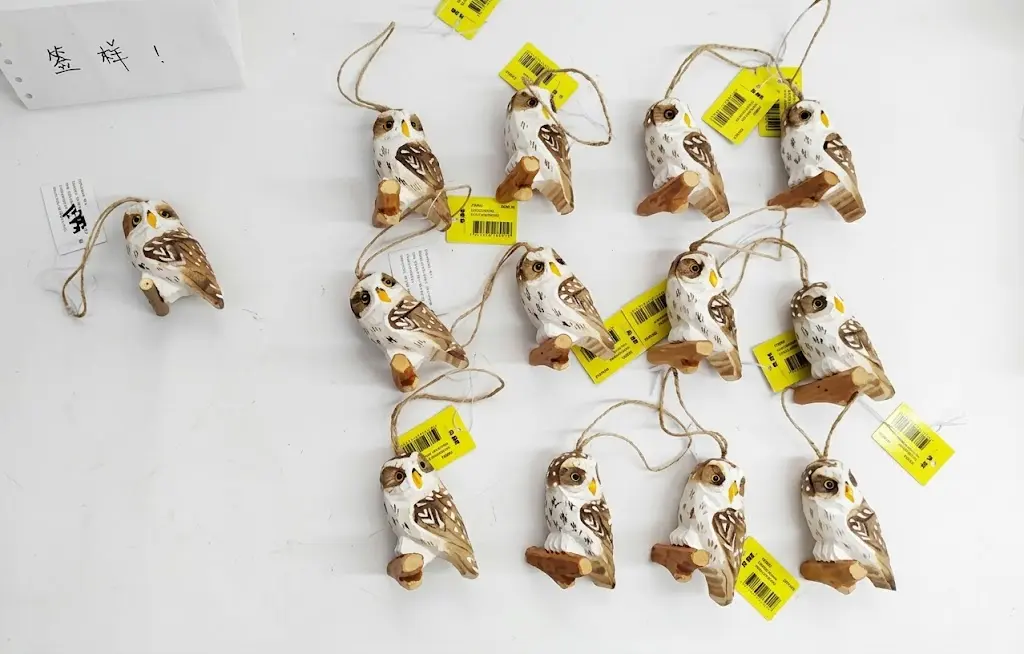
A trial order is 100 pieces with a USD 500 minimum order value drawn from in-stock designs, shipped air express DDP in 20–30 days — a small real order. A sample is a single reference piece produced to a bespoke specification and approved in writing before production starts. They answer different questions.
Q: When should I book pre-shipment inspection?
One to two weeks before sailing, once the order is finished and cured. Booking it against the production start date is the most common scheduling error, because the goods are not ready and the inspection has to be re-booked — which usually costs the sailing.
Q: Does a specification change during production always cause a delay?
Almost always, because bulk production runs as overlapping streams. A change to species, finish or dimensions stops material preparation, carving, finishing and packing at once, and material already prepared may be unusable. Freeze the specification at sample sign-off and treat later changes as a new order.
Sources
Delivery terms and the point at which freight cost and risk transfer are defined by the ICC Incoterms rules. Toy safety requirements for articles children may handle, including the EN71 standards, are set out by the European Commission. Minimums, order values, lead times, payment terms, packaging specifications and certification holdings quoted above are our own published first-party terms; no sampling fee or per-unit price is stated, because those are quoted against the specification.