Skip to content
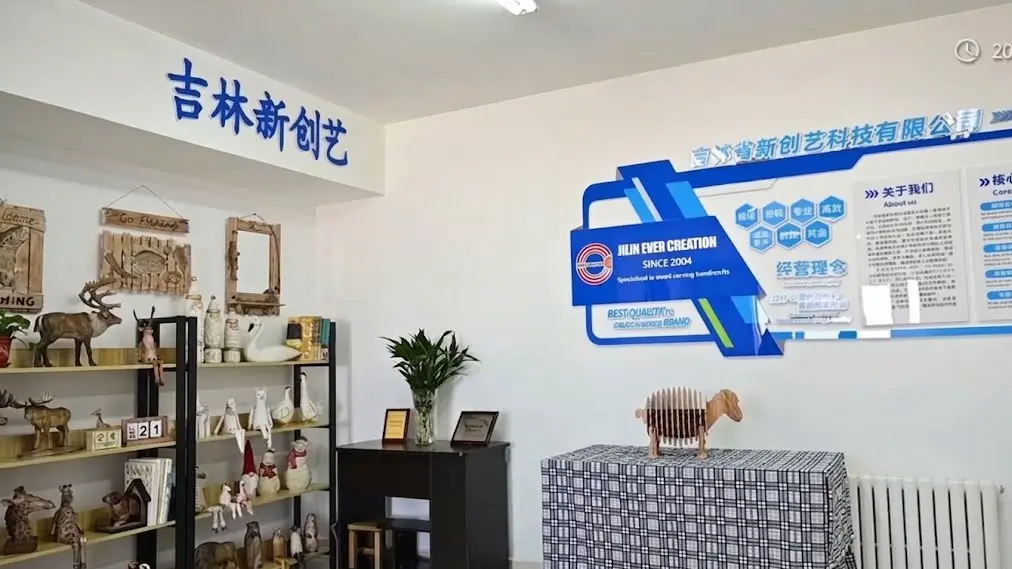
Most sourcing disputes are settled before the first carton is loaded — by whoever asked the better questions. A wood decor supplier will answer almost anything confidently, so the useful skill is knowing which answers are verifiable, which are marketing, and which ten you need in writing before you commit capital to a production run.
This guide is for importers, wholesalers, retail buyers and brand owners placing a first or second order in hand-carved wooden decor. Each question below is paired with the answer we give at Jilin Ever Creation, so you can compare a supplier’s response against a worked example rather than against a vague ideal. Every figure quoted is our own published first-party term, not an industry estimate.
Key Takeaways
- Ask for the minimum order in pieces and in order value. A supplier quoting only one of the two is quoting the one that suits them.
- Separate trial lead time from production lead time. Ours are 20–30 days for a trial of in-stock designs and 60–90 days to port for bulk production — conflating the two is how a season gets missed.
- A sample is only a control if it is approved in writing and archived. Ask who keeps the golden sample and what happens to it on a reorder.
- Certification claims need a certificate number tied to the production unit. A brochure logo is not a chain of custody.
- Packaging specification is a cost line, not an afterthought: pieces per inner box, carton dimensions and gross weight decide your freight per unit.
- Get the payment trigger in writing. We supply photographs and video of finished goods before the balance falls due, which is the checkpoint that protects a first order.
In This Guide
- Questions 1–4: Commercial Terms
- Questions 5–7: Sampling, QC and Documentation
- Questions 8–9: Timber, Finish and Compliance
- Question 10: Packaging, Carton and Freight
- Best For / Not For: Which Supplier Model Fits Which Buyer
- What We Check on Our Side of These Ten Questions
- End to End: Running the Ten Questions on a First Order
- Frequently Asked Questions
Questions 1–4: Commercial Terms
1. What is your minimum order — in pieces and in order value?
Two different minimums usually apply and a supplier may quote only the convenient one. Our trial tier is 100 pieces with a USD 500 minimum order value, drawn from in-stock designs. The wholesale and custom tier is 300 pieces with a USD 3,000 minimum order value, which opens the full catalogue and OEM/ODM manufacturing. Custom printed colour boxes carry their own 500-piece minimum, separate from the product minimum. Ask whether the minimum is per design or per order — that single distinction decides whether a four-shape assortment is one commitment or four.
2. What is your lead time, and is that trial or production?
Trial orders of in-stock designs run 20–30 days and ship air express. Bulk production runs 60–90 days to port, after which sea freight and destination clearance sit on top. A supplier who answers “about a month” to a bulk enquiry is describing the wrong process. The calendar detail behind planning a seasonal order is in our guide to procurement for wooden crafts.
3. What are your payment terms, and what triggers the balance?
Our standard is T/T, 30% deposit at order confirmation and 70% balance before shipment. The checkpoint that matters is what happens between production and that balance: we supply photographs and video of the finished goods before payment falls due. Ask any supplier the same question — if the balance is triggered by a date rather than by evidence, you are financing the run without a view of it.
4. Which delivery term are you quoting, and what does it include?
Trial orders ship air express on DDP terms, meaning we handle freight and customs clearance and deliver to your door with no hidden fees. Bulk orders are designed around sea freight, where the term you agree decides who carries duty and where risk transfers. The definitions are not interchangeable, so confirm which rule set applies — the ICC Incoterms rules are the reference both sides should be quoting from.
Questions 5–7: Sampling, QC and Documentation
5. What does the sample process actually cost and produce?
Ask for a physical sample on the real material, not a render, and ask how many revision rounds are included. For hand-carved work the sample is the contract for the remaining units: it is the reference your inspection is measured against. The factory audit checklist sets out how to judge one properly.
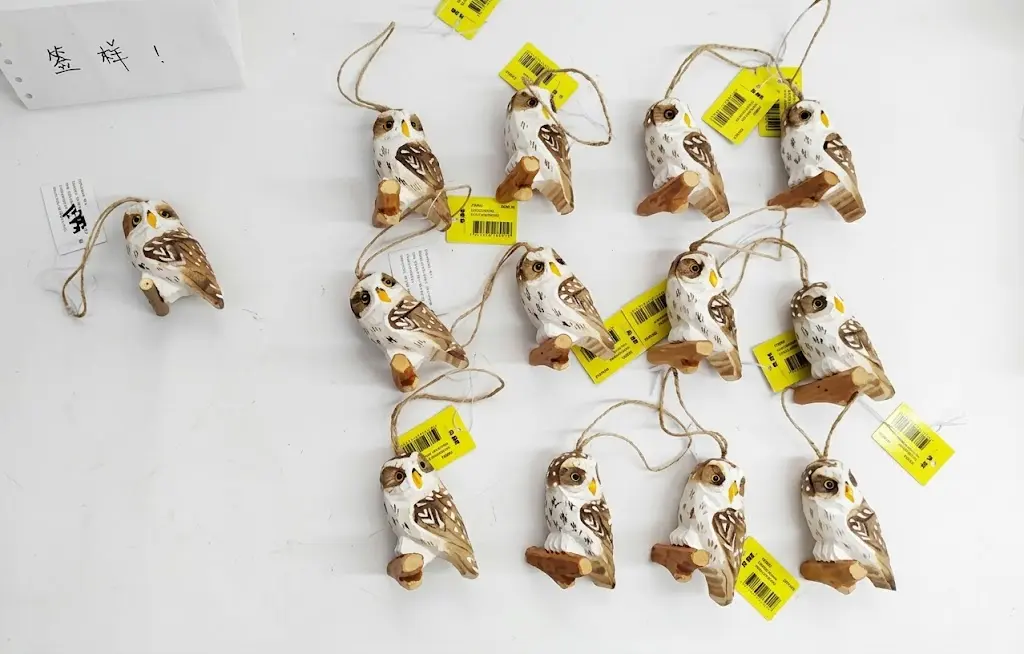
6. Who keeps the golden sample, and what happens on a reorder?
A supplier with no archive will re-sample you every year and charge for it. We log the approved sample, the engraving or carving files and the specification against the order number, so a reorder is a quantity confirmation rather than a new project. Ask specifically whether design files are retained and for how long.
7. What inspection do you run, and will you accept a third party?
Hand-carved goods fail differently from moulded ones — the risk is drift across a batch, not a broken mould. Ask what is checked inline versus at final inspection, and whether a third-party pre-shipment inspection is accepted. Our own line checks carving detail against the approved sample, paint registration and adhesion, edge and splinter condition, hardware pull strength where a piece hangs, and carton packing to specification.

Questions 8–9: Timber, Finish and Compliance
8. What species will you actually use, and can you document its origin?
Our wooden crafts are produced in basswood, pine, rubber wood and birch, 100% carved and painted, from 5 cm miniatures up to 40 cm three-dimensional pieces and 80 cm flat carving. Ask which species your order will actually be made in, because the answer changes weight, grain and how well engraving reads — our wood characteristics reference covers the trade-offs, and the carving-specific case for basswood is in our basswood technical guide.
On provenance, be precise about what a certificate covers. Our facility holds FSC chain-of-custody certification and operates under ISO 9001 with BSCI social compliance. Because certified basswood is not currently available to us, we do not market our carvings as FSC-certified wood; we supply traceable sustainable timber and provide official felling and transport permits on request. A supplier who answers “yes, FSC” to every question without naming the species and the certificate scope is selling you a logo.
9. Which safety and compliance standards does the finish meet?
Ask for the standard, not the adjective “non-toxic”. We use eco-friendly, non-toxic water-based paints; where an article could reasonably be treated as a child’s product, finishes are tested to the EN71 toy safety standards, and the wider certification set we hold covers CE, UKCA, EN71-1/-2/-3 and RoHS alongside ISO 9001 and BSCI. Electrical components on any lamp line are a separate obligation with separate documentation.
Question 10: Packaging, Carton and Freight
10. What are your pieces per inner box, carton dimensions and gross weight? These three numbers decide your freight per unit, and most buyers only ask after the order is placed. Our standard export packing is: each piece wrapped in white paper, 6–12 pieces per three-ply corrugated inner box at 21 × 11 × 14 cm, then 240–480 pieces per five-ply master carton at 58 × 44 × 31 cm, adjusted to the product’s dimensions, with average gross weight held between 8.0 and 15.0 kg so one person can lift it. Cartons are built to pass an ISTA 3A drop test. Custom colour boxes, gift boxes, labels and shipping marks are all available.
Wooden decor is light but bulky, so cube usually beats weight in the freight calculation. The packaging options and their cost behaviour are covered in our guide to packaging wooden crafts.

Best For / Not For: Which Supplier Model Fits Which Buyer
| Buyer Situation | Best For | Not For | Our Matching Tier |
|---|---|---|---|
| First order, testing a category | In-stock designs, fast turnaround, all-in delivered pricing | Bespoke shapes — tooling and sampling will not fit a trial budget | Trial: 100 pcs / USD 500, air express DDP, 20–30 days |
| Retailer building a seasonal assortment | Full catalogue access, mixed designs against one commitment | Anything needed inside 60 days | Wholesale: 300 pcs / USD 3,000, sea freight, 60–90 days to port |
| Brand owner needing exclusive product | OEM/ODM development, archived tooling, custom packaging | Short-notice reorders of a design never sampled | Custom: 300 pcs per design; colour boxes from 500 pcs |
| Chain with its own compliance calendar | Documented certifications, third-party inspection, stable specs | Suppliers who cannot tie a certificate to the production unit | ISO 9001, BSCI, CE, UKCA, EN71-1/-2/-3, RoHS on file |
What We Check on Our Side of These Ten Questions
The questions above only work if the answers are enforced. These are the checks that keep our own answers true, and they are the same ones a buyer can ask to see evidence of.
- Moisture content before carving and before finishing. Blanks are checked against our wood moisture content standard, and logs are treated against cracking so pieces survive a climate change between factory and shelf.
- Batch consistency against the approved sample. Carved detail, paint registration and colour lane are compared to the golden sample, not to a photograph of it.
- Finish documentation per destination market. The finish system and its test reports travel with the order rather than living in a filing cabinet.
- Packed carton verification. Inner box count, master carton dimensions and gross weight are confirmed against the quoted spec, because those three numbers are what your forwarder bills against.
Buyers who want the whole sequence rather than a summary can work through the factory audit checklist, and the wider product range sits in our wholesale wooden crafts line.
End to End: Running the Ten Questions on a First Order
A European gift retailer is placing a first order of carved wooden animals for a spring assortment, and wants to know whether the supplier’s answers hold up under a real timeline.
Week 1 — questions 1 to 4 in writing. The retailer confirms the trial tier (100 pieces, USD 500 minimum order value, in-stock designs), the 20–30 day lead time, the T/T 30/70 terms with finished-goods photographs before balance, and DDP air express so duty and clearance are not a surprise. All four answers go on the proforma invoice, not into an email thread.
Week 2 — questions 5 to 7 against a physical sample. A sample of each species arrives and is judged in hand under shop lighting. The approved sample is photographed, dated and archived against the order number by both sides, so the reorder conversation next year starts from a reference rather than a memory.
Week 3 — questions 8 and 9 on documentation. Species is confirmed as basswood, the finish is confirmed as water-based with EN71-3 test documentation for the pieces that will be handled by children, and the timber permits are requested for the retailer’s own sustainability reporting. No FSC-certified-wood claim is made or accepted, because certified basswood is not what is being supplied.
Weeks 4 to 8 — production and question 10 at packing. The run completes inside the trial lead time. Cartons are verified against the quoted inner-box count, master dimensions and gross weight, then shipped DDP.
Month 4 — the reorder conversation. Because the sample and files are archived, the second order moves straight to the wholesale tier at 300 pieces and USD 3,000 minimum order value, sea freight, 60–90 days to port — planned against a spring shelf date rather than against the day the buyer notices the shelf is empty.
If you are evaluating a wood decor supplier and want our written answers to all ten questions — minimums, lead times, payment trigger, certifications, carton spec and sample policy — on one sheet against your assortment, our team will put that together with you.
Frequently Asked Questions
Q: What is the single most important question to ask a wood decor supplier?
Whether the minimum order is per design or per order. That one answer decides if a four-shape assortment is one commitment or four, and it changes your landed cost per unit more than any discount negotiation will.
Q: How do I verify a supplier’s certification claims?
Ask for the certificate number and the scope, then confirm the scope names the production unit making your order. A certificate that cannot be tied to the factory is marketing. Where wood provenance is concerned, ask which species is certified and which is supplied under felling and transport permits instead.
Q: What lead time should I plan around for a first order?
Plan on 20–30 days for a trial order of in-stock designs shipped air express, and 60–90 days to port for bulk production before sea freight and clearance are added. A seasonal shelf date should be worked backwards from the bulk figure, never the trial one.
Q: Should I accept a supplier’s packaging specification as given?
No — ask for pieces per inner box, master carton dimensions and gross weight, then check them against your forwarder’s rate basis. Wooden decor is light but bulky, so cube usually drives cost. Our standard is 6–12 pieces per inner box and 240–480 per master carton at 8.0–15.0 kg gross.
Q: What payment structure protects a first-time buyer?
A deposit-and-balance structure where the balance is triggered by evidence rather than by a date. We run T/T at 30% deposit and 70% before shipment, with photographs and video of the finished goods supplied before the balance falls due, so the buyer sees the run they are paying for.
Sources
Delivery terms and the point at which cost and risk transfer are defined by the ICC Incoterms rules. Forest certification scope and chain-of-custody claims are explained by FSC for businesses. Toy safety requirements for articles children may handle, including the EN71 standards, are set out by the European Commission. All minimums, order values, lead times, payment terms, packaging specifications and certification holdings quoted above are our own published first-party terms.