Skip to content
Sourcing a high-quality fire bowl salt lamp is a calculated balance between visual impact and transit durability. For retailers, the risk isn’t just aesthetic; thin-walled bowls that crack or loose salt chunks that pulverize during sea freight result in high return rates and eroded margins. Veteran buyers prioritize tumbler-polished, 1-2 inch chunks to eliminate sharp edges and ensure consistent light transmission across every unit.
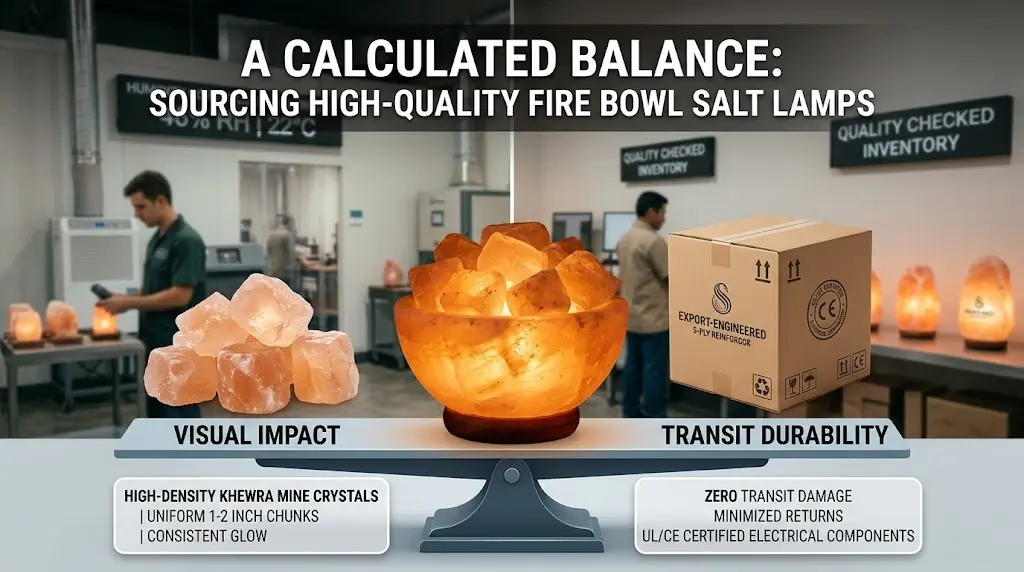
Our sourcing criteria prioritize hand-carved, high-density salt crystals from the Khewra Mine to ensure structural integrity and the signature amber glow. We evaluate manufacturing standards against export-engineered 5-ply reinforced packaging and UL/CE certified electrical components to help you secure a scalable, damage-resistant inventory for global distribution.
The Visual Appeal of the Fire Bowl
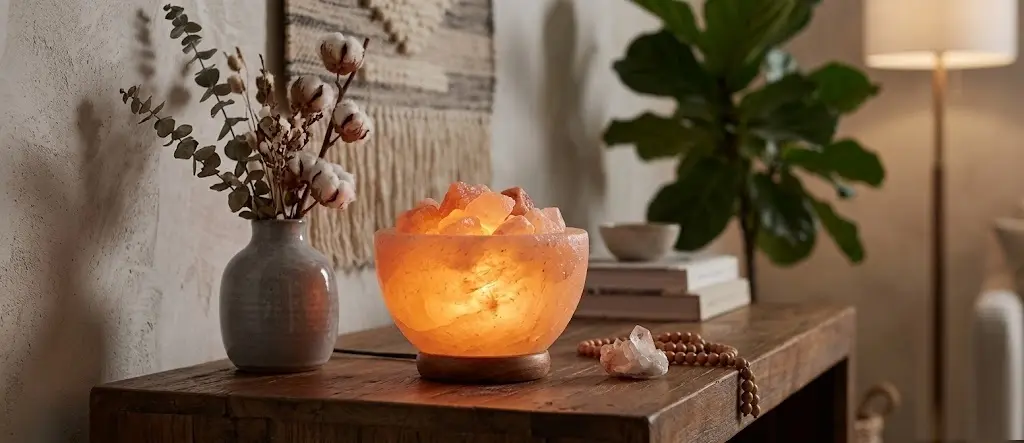
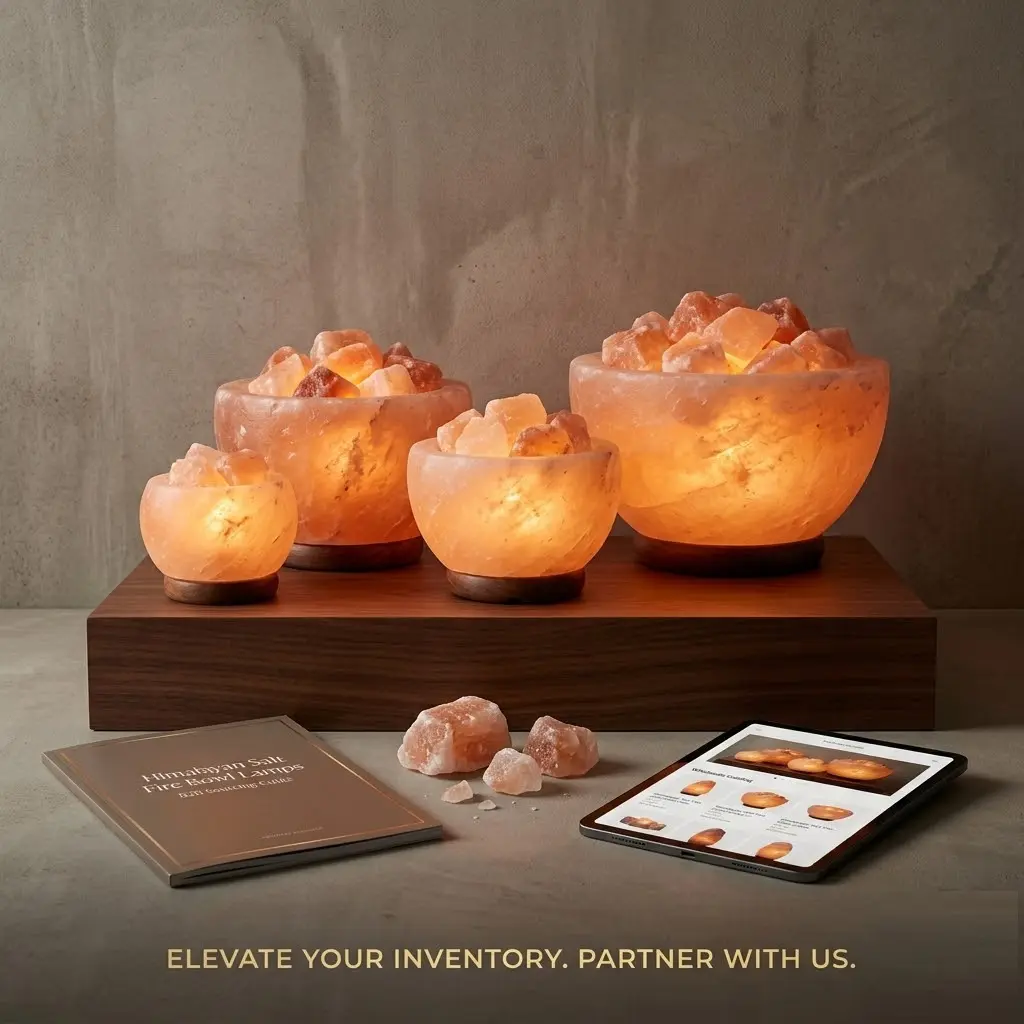
The fire bowl’s appeal is its unique shape filled with loose salt chunks, creating a “glowing coals” effect. Each hand-carved piece offers a warm, dimensional amber glow.
The Organic Form and Natural Salt Chunks
The lamp’s design centers on a distinctive bowl that holds loose, hand-carved salt crystal chunks. This combination creates a striking visual contrast, blending the solid form of the bowl with the random, organic shapes of the salt rocks. The result is an earthy, natural centerpiece that taps into what we call “Nature’s Geometry”—since no two chunks are identical, every lamp is one-of-a-kind.
Adjusting the Signature Amber Glow
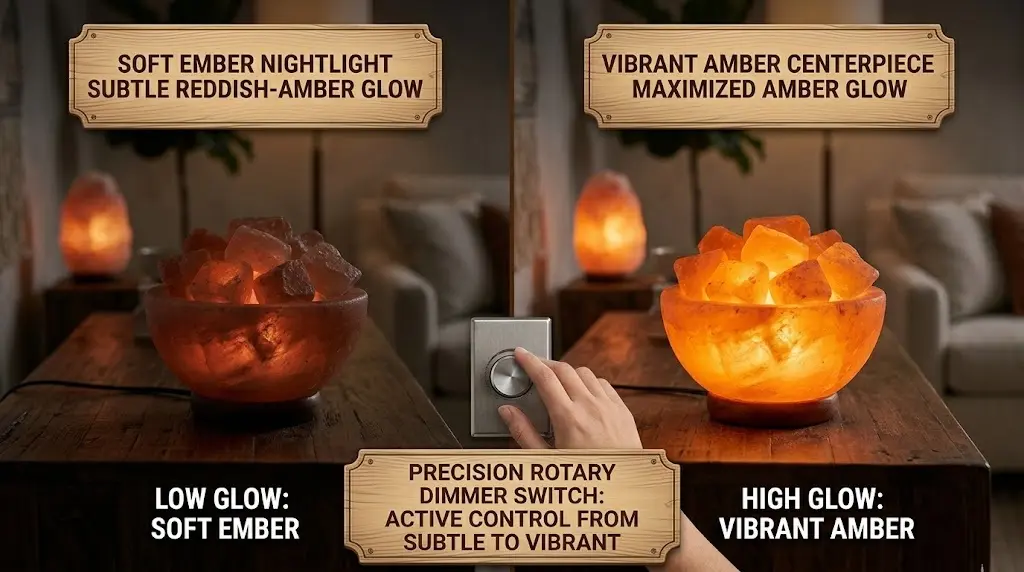
Control over the lamp’s visual output is a key feature for retail. We offer a Rotary Dimmer Switch that lets users adjust the brightness from a soft, subtle nightlight to a vibrant amber glow. This gives full control over the lamp’s “Luminous Ambiance,” allowing it to serve as either a quiet accent piece or a bold centerpiece in any room.
Carving the Bowl vs. Assembling Baskets
A carved fire bowl is crafted from a single piece of Himalayan salt. An assembled basket uses a frame filled with loose chunks. We focus on the carved method for better durability and a more authentic look.
The Carved Bowl: A Single, Solid Piece
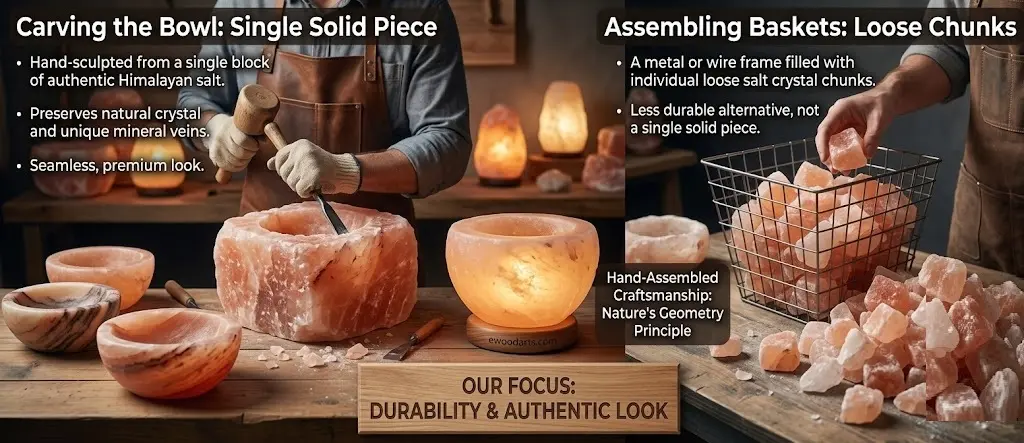
There are two ways to make a fire bowl lamp. The first, and the only one we use, is carving the bowl from a single, solid block of authentic Himalayan salt. This approach preserves the natural crystal structure and mineral veins, which means every piece has its own unique pattern. A solid bowl is far more durable and has a seamless, premium look that you just can’t get from the alternative method.
Our Focus on Hand-Assembled Craftsmanship
While the bowl itself is carved, we refer to our process as ‘Hand-assembled Craftsmanship.’ This is because our team carefully fits each unique carved bowl with a stable wooden base and certified electrical components. This method is part of our ‘Nature’s Geometry’ principle—it guarantees every lamp is a one-of-a-kind item for your inventory. By sticking to carved bowls, we ensure the integrity of the ‘High-Density Salt Crystal’ and deliver the consistent ‘Warm Ambient Glow’ that customers expect.
Boost Profits with Factory-Direct Salt Lamps
Sizing Loose Salt Chunks (1-2 inches)
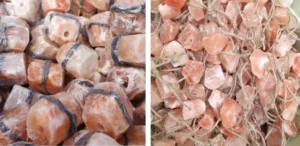
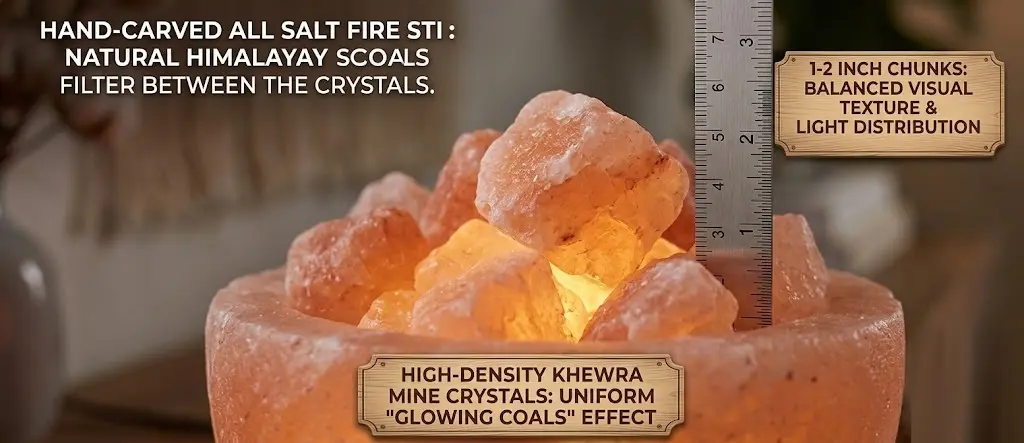
Salt chunks between 1-2 inches offer the best balance for fire bowls. This size creates a ‘glowing coals’ look and allows heat and light to circulate properly.
Balancing Visual Texture and Light Distribution
The 1-2 inch size specification isn’t arbitrary. It directly creates the visual effect that makes fire bowl lamps popular in retail. When stacked, chunks of this size look like natural glowing embers, a key part of the product’s appeal. Smaller pieces would look like gravel, and larger ones would block too much light. This specific range leaves just enough space between the crystals for light from the internal bulb to filter through, producing a warm, even ambient glow instead of hot spots or dark areas.
Selecting High-Density Salt for Performance
The raw material quality is just as important as the sizing. We use hand-selected, high-density salt crystals sourced directly from the Khewra Mine in Pakistan. Denser salt is more durable, reducing chipping or breakage during shipping and handling. It also has a superior mineral composition that produces the signature warm amber glow that consumers look for. Using high-density salt ensures product consistency and the premium aesthetic that justifies a higher retail price point.
Maximizing the “Glowing Coals” Effect
The ‘glowing coals’ effect comes from light passing through high-density salt crystals. Control its intensity with a rotary dimmer, adjusting the glow from a soft ember to a vibrant amber.
How Crystal Properties Create the Amber Glow
The warm, ambient light is a direct result of the bulb’s light diffusing through the high-density Himalayan salt crystals. We select these crystals for their unique color variations and natural textures. This interaction filters the light, creating the “Signature Amber Glow” that provides a distinct, calming ambiance valued in retail and commercial settings.
Achieving Precision with a Rotary Dimmer Switch
The optional Rotary Dimmer Switch offers a versatile control interface for adjusting the lamp’s brightness. This component allows end-users to finely tune the light output, moving from a subtle, soft nightlight to a vibrant, warm amber glow. This level of control lets the lamp perfectly match a room’s atmosphere, meeting specific customer preferences.
Packaging Challenges for Loose Rocks
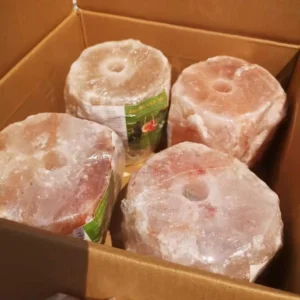
Packaging loose salt rocks requires robust solutions to prevent punctures and absorb shock. Their abrasive nature and irregular shapes are the main challenges. We use multi-layer, export-grade cartons with custom foam supports to keep the chunks secure during shipping.
Puncture and Abrasion Risks
Loose salt rocks are hard, abrasive materials that can easily wear down or puncture standard packaging. During transit, constant movement and mechanical handling create repetitive stress. This demands packaging with high structural integrity and durability to prevent product loss and damage.
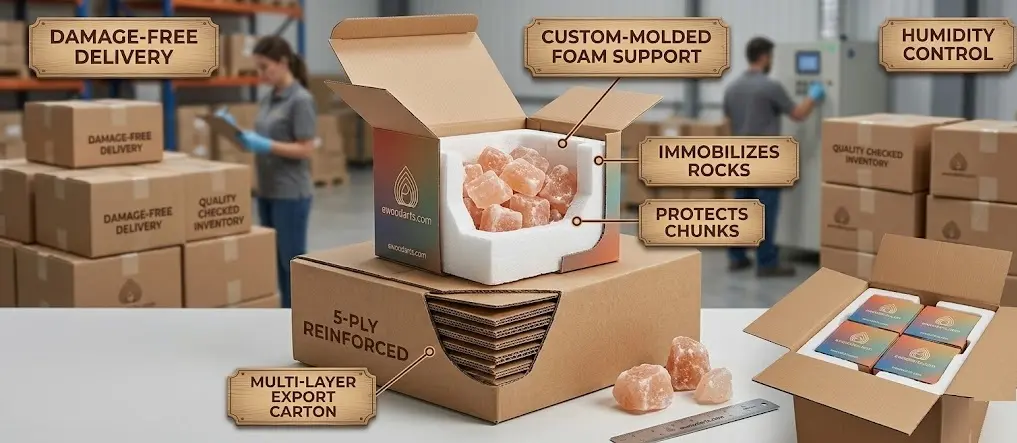
Export-Engineered Packaging Solution
We use a proven multi-layer system. Each product is secured inside a protective color box with internal foam supports, which immobilizes the rocks. These boxes are then packed into 5-Ply reinforced corrugated master cartons. This approach is specifically designed to withstand the rigors of long-distance sea and air freight, ensuring the products arrive without damage.
Heat Distribution in Bowl Designs
Fire bowls use convection (air warmed by the bulb) and radiation (from heated salt) to distribute warmth. Bulb choice and a dimmer switch control the intensity.
How Bowl Shape Influences Warmth
The open-top design of a fire bowl is fundamental to its thermal performance. It allows the gentle heat generated by the internal incandescent bulb to rise naturally. This process creates a convective air current that circulates around the loose salt chunks, warming them evenly. Once heated, the salt crystals then radiate a subtle, consistent warmth into the surrounding area, contributing to the lamp’s ambient effect.
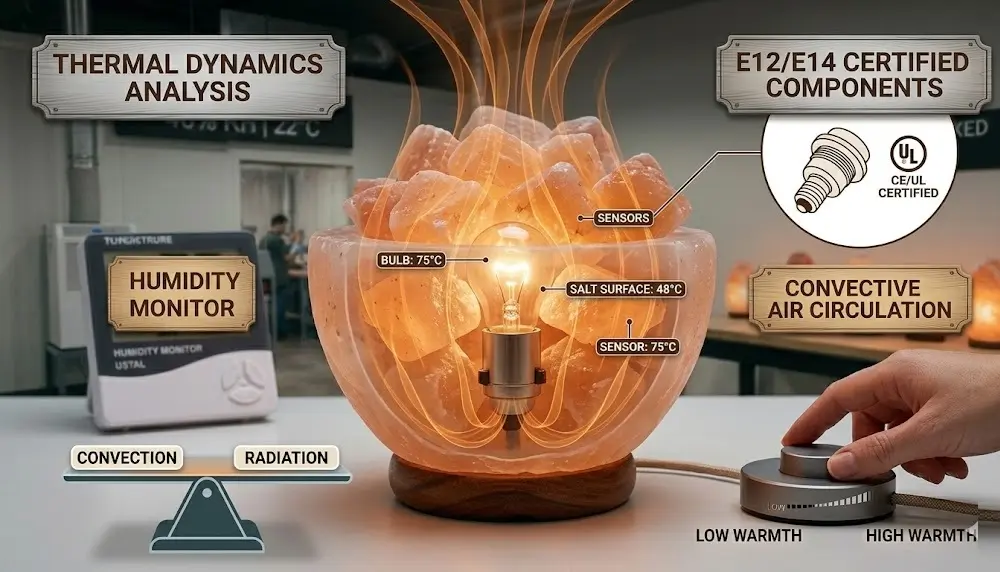
The Role of Bulbs and Dimmer Switches
The control and safety of the lamp’s warmth depend entirely on its electrical components. Our lamps feature heat-resistant E12/E14 bulb holders, engineered to safely manage the heat from incandescent bulbs. While LED bulbs work, incandescents are necessary to produce the signature warming effect. For precise control, we recommend the optional Rotary Dimmer Switch. It allows the end-user to adjust not just the brightness but also the corresponding level of warmth, a key feature for premium retail positioning.
Retail Display Tips for Maximum Impact
Effective displays hinge on strategic placement and storytelling. Highlight the ‘Signature Amber Glow’ with dimmer switches and market each lamp as a unique piece of ‘Nature’s Geometry’.
Retailers often miss sales not because of the product, but because of the presentation. For Himalayan salt lamps, the display isn’t just about showing an item; it’s about selling an experience. A well-designed display communicates authenticity, uniqueness, and value before a customer even checks the price tag.
| Merchandising Principle | Actionable Tip for Salt Lamps |
|---|---|
| Visual Hierarchy | Place the best-selling 2–3kg models at eye level. Use larger lamps as anchor pieces to draw attention. |
| Storytelling | Use simple signage to explain the authentic origin and highlight that each piece is one-of-a-kind “Nature’s Geometry.” |
| Interactive Engagement | Set up a live display with a Rotary Dimmer Switch so customers can experience the adjustable “Luminous Ambiance.” |
Core Principles of Visual Merchandising
First, establish a clear visual hierarchy. Your most profitable products, like the popular 2-3kg lamps, should be positioned at eye level. This isn’t just a suggestion; it’s a fundamental rule of retail. Your display needs to be in a high-traffic area where it can’t be missed. Ensure pricing is clear and easy to read, communicating value instantly.
Next, use storytelling to connect with customers. People are more likely to remember a story than a list of features. Create a narrative around the lamp’s authentic origin—sourced from ancient salt mines in Pakistan. This transforms a simple decorative item into a piece of natural history, justifying its price and appeal.
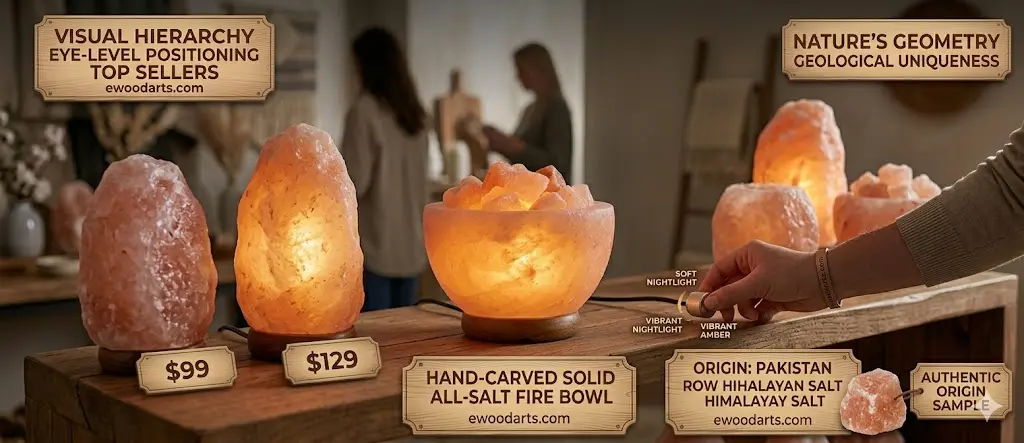
Highlighting the Lamp’s Signature Features
An interactive display sells itself. Use our Rotary Dimmer Switch to let customers adjust the lamp’s brightness. This demonstrates its versatile ‘Luminous Ambiance,’ showing how it can function as a soft nightlight or a vibrant statement piece. This hands-on experience moves a customer from browsing to buying.
Emphasize the ‘Geological Uniqueness’ of every single lamp. No two are identical. Market this as a key feature, calling it ‘Nature’s Geometry.’ This appeals to customers looking for authentic, one-of-a-kind decor, not mass-produced goods. Grouping different sizes together showcases the variety available and helps customers find a lamp that fits their space and budget.
Final Thoughts: A Strategic Addition to Your Inventory
The fire bowl salt lamp stands out as a high-performance retail item because it bridges the gap between raw natural art and functional wellness decor. By offering a more dynamic visual experience than standard shapes, it naturally attracts premium clientele in the spa, boutique, and luxury gift sectors, allowing for stronger retail margins.
Our production at ewoodarts focuses on the structural harmony of the bowl and the purity of the internal crystals to ensure every unit meets international safety and aesthetic standards. If you are refining your procurement strategy, you can find more technical details in our [Ultimate Guide to Sourcing Wholesale Himalayan Salt Lamps]
As you expand your catalog, we invite you to browse our full [Salt Lamps Wholesale] collection to see how our handcrafted designs can elevate your brand’s market positioning.
Frequently Asked Questions
How many loose salt chunks come in a fire bowl lamp?
The number of salt chunks varies based on the bowl’s size, weight, and the natural shape of the hand-carved rocks. Products are typically sold by total weight, not by a specific count of individual chunks, ensuring each lamp has a unique appearance.
Should I wash the salt rocks with water?
No. Washing salt rocks with water will cause them to dissolve and degrade. Salt is naturally antibacterial. If cleaning is necessary, unplug the lamp and use a dry or very lightly dampened cloth to gently wipe away debris.
Is it safe to add essential oils to the salt chunks?
Adding undiluted essential oils directly to the salt is not recommended as it can cause skin irritation. For aromatherapy, you must first mix the essential oil with a carrier oil, such as jojoba or coconut oil, before applying it to the salt chunks.
What should I do if my lamp isn’t glowing brightly?
A dim glow is often caused by a bulb issue. First, check that the bulb is screwed in tightly. Second, confirm you are using the correct wattage for the lamp’s size (usually a 15 or 25-watt incandescent bulb). If your lamp has a dimmer, ensure the bulb is dimmable.
How do I clean dust from my fire bowl lamp?
Unplug the lamp and let it cool completely. Use a soft, dry microfiber cloth to gently wipe dust from the bowl and the individual salt chunks. A soft-bristle brush can help with hard-to-reach areas. Do not use water or cleaning sprays.
Is the bowl itself also made of Himalayan salt?
This depends on the specific product design. Some fire bowls are carved from a single piece of Himalayan salt. Others use a ceramic or different material for the bowl, which is then filled with loose salt chunks. Always check the product specifications to confirm.