The value of Hand-Painted Craftsmanship promises a 30% retail markup, but sourcing products with inconsistent finishing or non-compliant paint erodes that premium through customer returns and lost brand trust.
This analysis breaks down the techniques that separate authentic work from replicas, focusing on EN71-compliant paint safety and our multi-stage quality control. We detail how “Artisanal Variance” is managed to deliver the “Bulk-ready Precision” required for scalable wholesale partnerships.
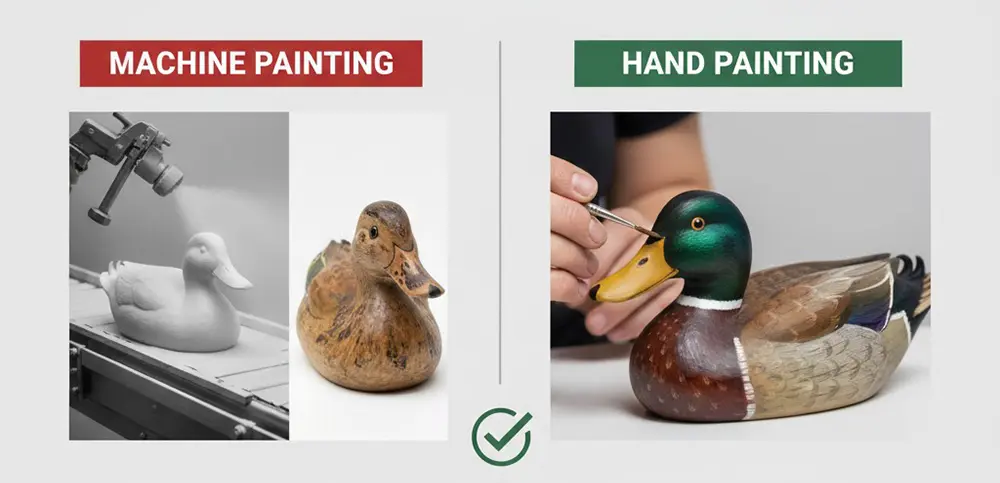
Machine vs. Hand Paint
Machine painting offers industrial speed, but hand painting delivers the meticulous detail and unique character essential for high-quality handcrafted products.
| Method | Best For | Key Trade-off |
|---|---|---|
| Machine Painting | Large, simple surfaces requiring uniform coverage | High speed and consistency, but poor on complex details |
| Hand Painting | Detailed work, complex shapes, and textured surfaces | Superior precision and control, but labor-intensive |
Comparing Efficiency, Cost, and Precision
In any industrial application, the choice between machine and hand painting comes down to a simple trade-off between volume and detail. Machine systems, like automated sprayers, are built for speed. They apply consistent, even coats over large, flat surfaces and significantly reduce labor costs on big projects. The catch is the high upfront capital needed for equipment and training.
Hand painting is the opposite. It requires a very low initial investment—just brushes and skilled labor. While much slower, it gives an artisan total control over the outcome. This method excels where machines fail: on intricate details, complex curves, and textured surfaces that demand a human touch for a quality finish.
Why Our Ducks Are 100% Hand-Painted
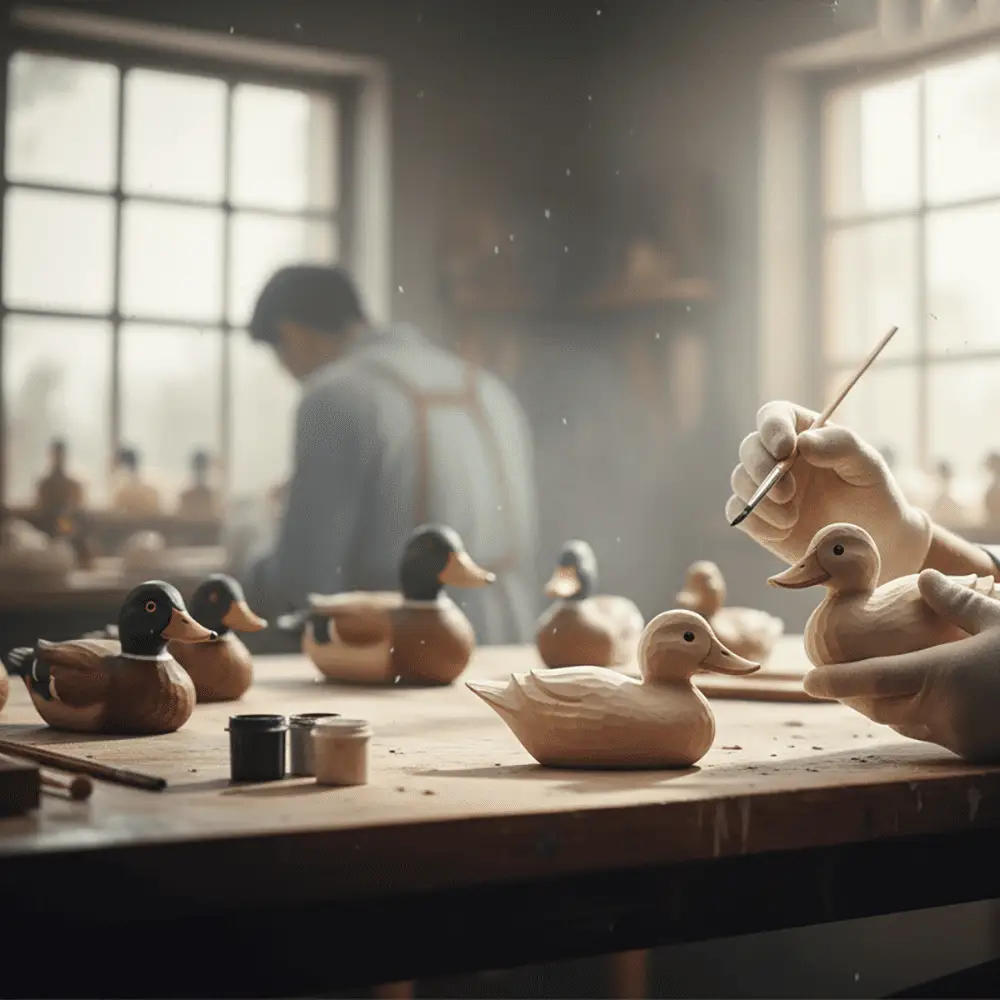
We don’t make road signs or paint warehouse walls; we craft unique wooden ducks. For our products, machine painting would destroy the very value we build into each piece. Our commitment to 100% hand-painting is a deliberate production choice that ensures a superior, more authentic product for your customers.
- Hand-sculpted Authenticity: Each brushstroke is applied by an artisan, giving every duck a distinct character. This process ensures no two pieces are identical, which is a key selling point for handcrafted goods.
- Meticulous Detailing: Machines can’t replicate the fine details in expressive eyes or the subtle textures on feathers and boots. Hand-painting allows us to achieve a level of precision that brings each carving to life.
- Artisanal Variance: Slight variations in color and brushwork are not defects; they are the hallmark of true craftsmanship. This “Artisanal Variance” is what separates an authentic, hand-made item from a soulless, mass-produced replica.
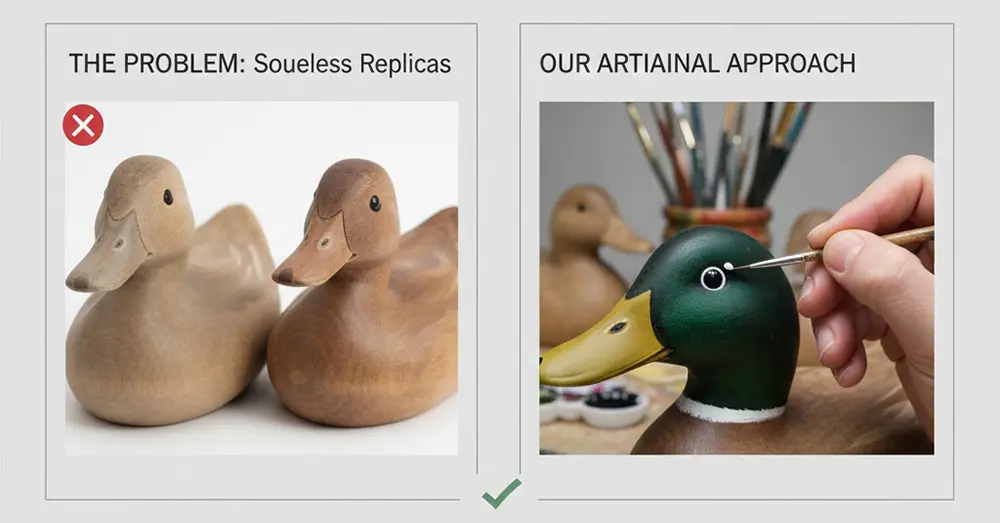
The “Soul” in the Eyes
Capturing the “soul” is an artistic philosophy for creating personality through detailed eye work. Our artisans hand-paint every eye, making each wooden duck uniquely expressive.
An Artistic Philosophy for Emotional Depth
The idea of capturing “soul” is about giving a piece emotional depth and a unique character. This focus on personality is what separates true artisanal work from generic, mass-produced items. It acts as a clear quality marker in craftsmanship, signaling both technical skill and a commitment to creating an object with life, not just a uniform shape.
Meticulous Detailing in Every Hand-Painted Duck
We apply this philosophy directly to our products. Our artisans focus on meticulous detailing, making sure the expressive eyes on each duck are 100% hand-painted. This hand-sculpted authenticity guarantees that no two ducks are identical. Each piece possesses its own unique expression and charm, a direct result of an artisan’s hand rather than a machine’s repetition.
Elevate Your Collection with Artisan Wooden Ducks
Dry Brushing Technique
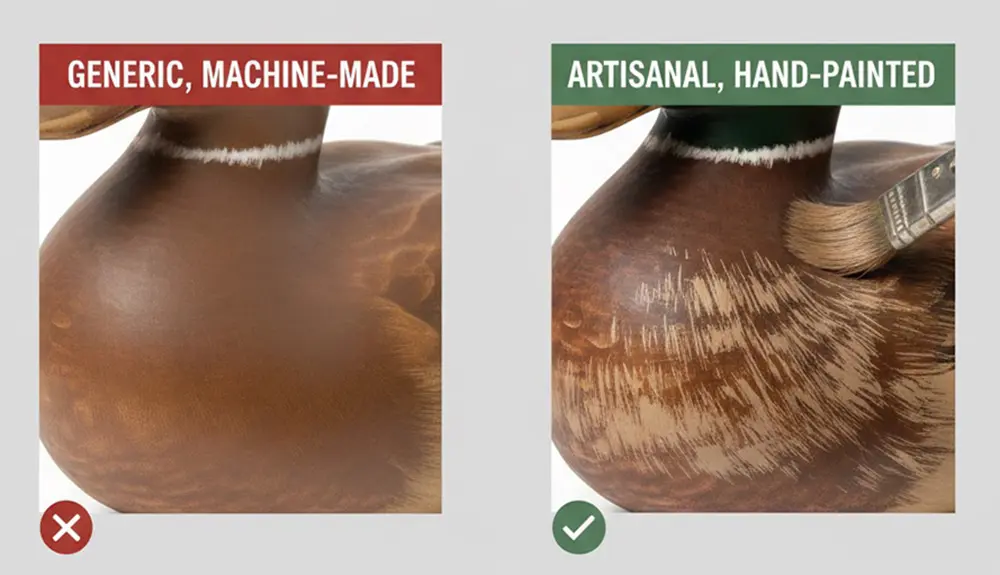
Dry brushing uses minimal paint to create a textured, scratchy finish. This technique adds realistic feather details, giving each hand-painted wooden duck its unique, artisanal character.
Dry brushing is a specific painting method that separates mass-produced items from genuinely handcrafted ones. It’s less about applying a solid coat of color and more about building texture and depth. The technique is fundamental to achieving the realistic and worn-in look that defines high-quality wooden duck carvings.
Creating Texture with Minimal Paint
The core idea is simple: use a brush that is almost dry. Instead of a smooth, uniform layer, the result is a rugged, weathered appearance that adds dimension. This is how the technique works.
- A brush with a very small amount of paint is applied to a dry surface.
- The application produces scratchy, broken brushstrokes that create visual texture.
- It allows the base coat to show through, which is perfect for highlighting raised details on the carving.
Achieving Meticulous Detail and Artisanal Variance
This isn’t a technique for covering large areas quickly. Its value is in the fine details, where machine painting simply can’t compete. For our wooden ducks, dry brushing is what transforms a carved shape into a character piece.
- Our artisans use this method for the meticulous detailing on feathers and boots, making them look authentic and lived-in.
- It creates a unique, one-of-a-kind finish on every duck, turning slight variations into a mark of true craftsmanship.
- This method is a key part of our “Purely Handcrafted, Uniquely Yours” approach to production.
Paint Safety (EN71)
The EN71 standard is a set of European regulations ensuring toy safety. Our hand-painted wooden ducks use non-toxic, water-based paints fully compliant with EN71-1/-2/-3.
Understanding EN71 Requirements for Toy Paint
EN71 is the European safety standard that sets the legal requirements for any toy sold within the EU. It’s not optional—it’s the benchmark for market access.
The standard establishes strict limits on the migration of harmful substances, like heavy metals, and prohibits specific chemicals to protect children. For any painted product, EN71-3 (chemical safety) is the most critical part of the regulation.
Our Certified Compliance with EN71-1/-2/-3
We don’t take chances with safety or compliance. We exclusively use non-toxic, eco-friendly water-based paints on all our hand-carved wooden products. This ensures both a vibrant finish and absolute safety for the end user.
Our factory holds official EN71 certifications, which are verified and available to our wholesale partners. This confirms our products meet the required European standards for:
- EN71-1: Mechanical and physical properties (structural safety).
- EN71-2: Flammability requirements.
- EN71-3: Migration of certain elements (chemical and heavy metal safety).
Consistency Control
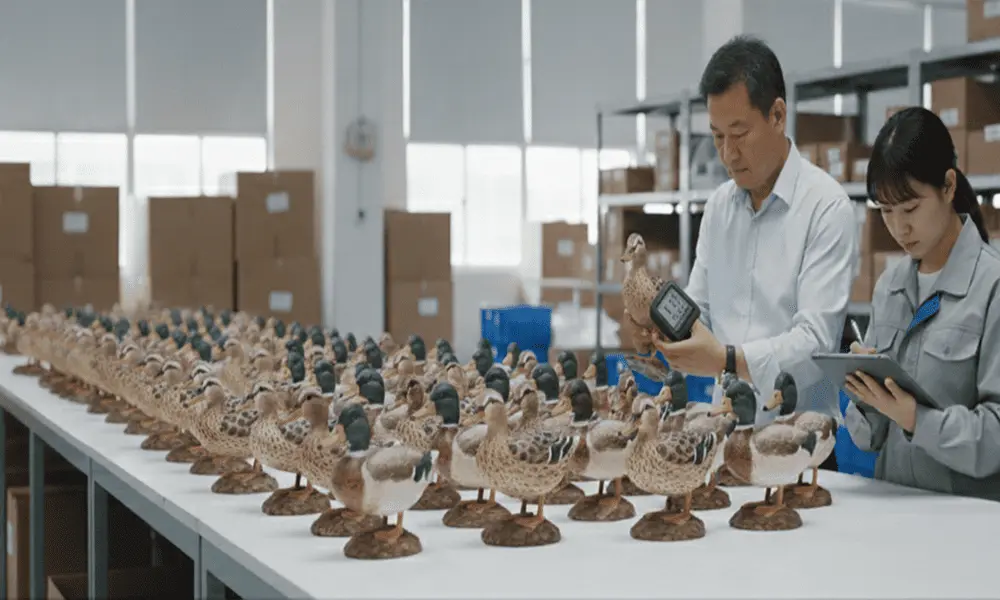
Hand-painted crafts require balancing unique ‘Artisanal Variance’ with wholesale standards. Our multi-stage QC system ensures ‘Bulk-ready Precision’ from raw wood to final packaging for every order.
Balancing Artisanal Variance with Quality Standards
Hand-painted products will always have slight variations. Each artisan develops a unique touch and personalized technique over time. We don’t see this as a flaw; we call it ‘Artisanal Variance.’ It’s the signature of authentic craftsmanship that proves our wooden ducks are shaped by a human hand, not a machine mold. This is what separates genuine handcrafted goods from mass-produced replicas.
Our Multi-Stage Quality Control System
To meet the demands of large wholesale orders, we run a rigorous, multi-stage inspection process. Our teams check everything from the initial raw timber selection to the semi-finished carvings and the final painted products before they’re packed. This system delivers ‘Bulk-ready Precision,’ ensuring that the charm of a handmade item doesn’t come at the cost of consistency your business relies on.
Artisan Training
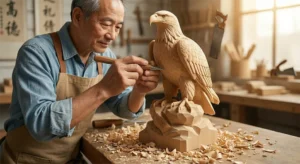
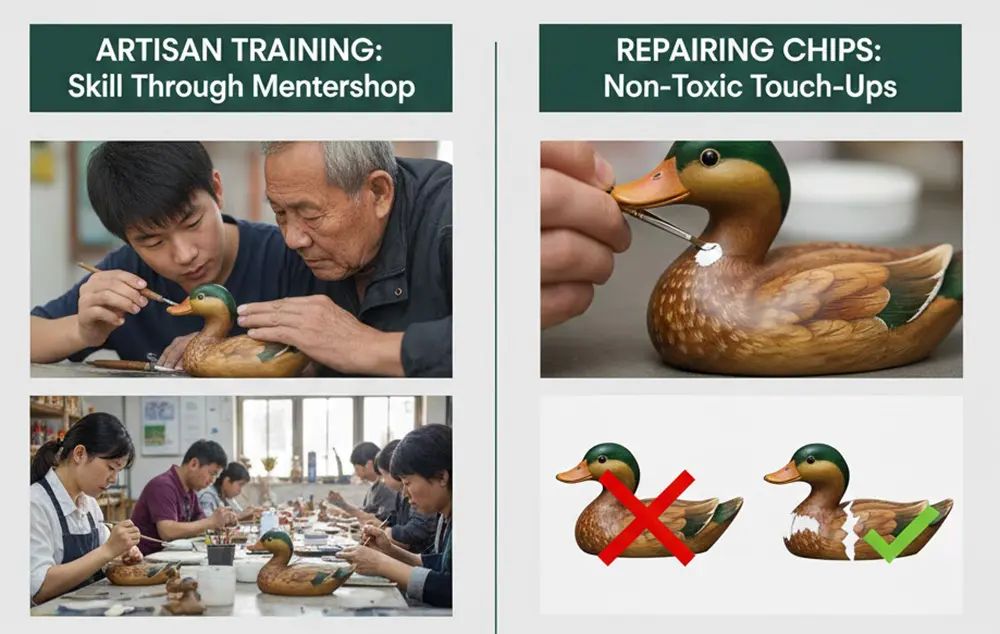
Artisan training builds skill through mentorship. At Jilin Ever Creation, our master artisans ensure every hand-carved wooden duck embodies time-honored techniques and precision.
Developing Skill Through Mentorship
Real craftsmanship can’t be learned from a manual. Effective artisan training depends on structured mentorship where experienced masters transfer traditional techniques to the next generation of craftspeople. Our programs focus on core technical skills in woodworking and carving, but also include professional development to ensure a high standard is maintained across the board.
Our Standard of Master Craftsmanship
Our team of master artisans has an average of over 10 years of experience in hand-carving and painting. This deep expertise is the foundation of our quality. We are committed to using ‘Time-honored Techniques’ that produce products with ‘Hand-sculpted Authenticity’. You get a genuine piece of art, not a machine-molded replica from a production line.
Repairing Chips
Minor chips are easily fixed with a touch-up using the same safe, EN71-compliant water-based paint from production, ensuring a seamless and non-toxic repair.
The Nature of Handcrafted Item Repairs
Small chips or scuffs can happen during shipping or handling. This is a normal aspect of owning handcrafted items, much like fine art or ceramics, not a manufacturing defect. The goal isn’t just to cover a mark; it’s to create an invisible restoration that preserves the duck’s original, hand-painted character. A quick touch-up also protects the underlying basswood or pinewood from moisture, ensuring the piece lasts.
Touch-Up Using Non-Toxic Water-Based Paint
We use a specific non-toxic, eco-friendly water-based paint for all our ducks. This finish meets the European toy safety standard EN71, so any touch-ups you perform are safe and straightforward. For our wholesale partners, we can provide guidance or even matching paint to help you manage minor repairs on your inventory in-house, maintaining the product’s value and integrity.
Frequently Asked Questions
Is the paint used on your wooden ducks safe?
Absolutely. We use a non-toxic, eco-friendly water-based paint that is completely safe. It complies with major international standards, including the European toy safety standard EN71, the UKCA mark, and American ASTM testing requirements, ensuring it’s free from harmful chemicals.
Will the paint fade if the duck is placed in the sun?
Like any hand-painted artwork, prolonged exposure to direct UV radiation from sunlight can cause colors to fade over time. To maintain the original vibrancy, we recommend displaying your wooden duck in a location that avoids continuous direct sunlight.
Is every wooden duck identical?
No, and this is what makes each one special. Every duck is 100% hand-carved and hand-painted, resulting in unique variations in shape, posture, and detail. This ‘artisanal variance’ is a hallmark of authentic craftsmanship, guaranteeing that your piece is one-of-a-kind.
Can you match specific brand colors for custom orders?
Yes, for wholesale custom orders (OEM/ODM), we can work with the Pantone Matching System (PMS) to achieve specific brand colors. This allows for a high degree of color consistency, though slight variations may occur due to the hand-painting process on natural wood.
Final Thoughts
Machine-made replicas carry the risk of customer returns and damage your brand’s reputation for quality. Our commitment to 100% hand-painting with EN71-compliant materials ensures each piece has the “Artisanal Variance” that justifies a premium price point. This is how you build a loyal customer base that values authentic craftsmanship.
Don’t guess on quality—verify it. We recommend placing a small trial order to see the “Hand-sculpted Authenticity” and meticulous detail for yourself. Contact our team to get your first shipment started or to discuss custom OEM requirements.
While looking for specific styles, don’t forget to check our full catalog of [Wholesale Wooden Ducks] to see all available options.
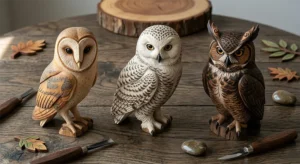
We don’t just make ducks. As a comprehensive [Wooden Bird Factory], we also produce cardinals, owls, and robins.