Skip to content

Key Takeaways
- Sizing a livestock salt block programme starts with positions, not pieces: the buyer’s nutritionist sets intake, and the order sheet prices 1 block format per position plus a spare rotation.
- Format follows weathering: covered barn positions take the standard block, open pasture positions take the denser format and a seat that sheds rain, and the rotation count rises from 1 to 2 or 3 where weathering is fastest.
- Holders keep blocks off soil: a stand lifts the block above mud, and our wooden stand line seats blocks in 4 species, basswood, pinewood, rubber wood and birch, with the contact face unfinished.
- Grade is a mining story, not a colour story: natural mined blocks carry vein variation while formed blocks read uniform, and 1 tag line states which the buyer is getting before the pallet moves.
- Pack follows the format sheet: 1 pack specification per block format with corners protected, because bruised block corners read as damage at the farm gate even when the mass is sound.
- Proof on the 100-piece trial tier at a USD 500 minimum order value via LCL sea freight, then the 300-piece wholesale tier at a USD 3,000 minimum order value carries the season in 60 to 90 days to port.
Livestock salt blocks are bought against a herd and consumed against a season, which puts them in a rare category: a repeat purchase whose volume the seller cannot predict and the buyer’s nutritionist will not outsource. What a wholesale supplier can price honestly is the structure around that uncertainty, the block format per position, the seat that keeps the block off soil, the grade statement on the tag, and the pack that delivers corners intact. This guide walks that structure for cattle and sheep programmes, states which lines belong to the buyer’s veterinary side rather than ours, and ends with the tier maths for proving a format before committing a season to it.
Intake rates, mineral formulations and herd-specific supplementation are the buyer’s nutritionist territory and this page quotes none of them; the wildlife side of the lick range sits in its own article, and the wooden holder line that seats these blocks in a third.
In This Guide
- Why Positions, Not Pieces
- Livestock Salt Block: Sizing by Head and Season
- Placement: Barn, Pasture and Water Line
- Weathering Loss and the Rotation Count
- Holders and Seats for Pasture and Barn
- Sizing Table: Herd Band, Format, Placement
- Grade Statements: Mined Versus Formed
- What We Supply Into Livestock Block Programmes
- Which Format Fits Which Operation
- What We Check Before a Block Order Ships
- End to End: A Two-Herd Season in Numbers
- FAQ
Why Positions, Not Pieces
A herd does not consume blocks, it consumes positions: a covered barn slot, a pasture station by the water line, a handling-yard seat used during work days. Each position eats at its own rate depending on shelter, traffic and weather, so an order sized by piece count guesses, while an order sized by position list prices. The position list is the document this guide builds.
The supplier side of the position list is format and seat: which block geometry each position takes, whether a stand or pad seats it, and how many spare rotations the weathering at that position implies. Everything else belongs to the buyer’s nutritionist.
Livestock Salt Block: Sizing by Head and Season
Head count enters the order only through the position list: the buyer sets how many stations the herd needs and where, and the order sheet attaches a block format and a rotation count to each station. A cattle operation with two pasture stations and one barn slot orders three formats worth of structure even when the herd size changes mid-season, because stations move less often than head counts do.
Season length sets the rotation count: a short grazing season may run one block per station, while a year-round pasture station with fast weathering carries two or three rotations, and the order sheet shows that multiplier per station rather than hiding it in a total.
Placement: Barn, Pasture and Water Line
Placement decides weathering more than format does. Barn stations under roof lose little to rain and mostly need a seat that keeps the block off a damp floor. Pasture stations near the water line see the most traffic and the most weather, and they are where rotation counts double. Handling-yard stations see intense short use during work days and can run a harder format that survives pushing and crowding.
One placement rule travels across all three: shade and shelter extend a block’s service life more than any pack or format choice, and buyers who cannot shelter a station should price the rotation count accordingly rather than blaming the block.

Weathering Loss and the Rotation Count
Weathering loss is the share of a block that leaves service dissolved, crumbled or fouled rather than consumed, and it is the number most block programmes never measure. The cheap proxy is the rotation count per station per season: count how many blocks a station actually goes through, and the difference against consumption is the weathering line.
Seats and stands move that line more than buyers expect: a block seated off soil and shed of rain weathers from the top only, while a block sitting in mud loses its base first and tips second, taking the remainder with it into the trample zone.

Holders and Seats for Pasture and Barn
The wooden stand line seats round and rectangular blocks in turned cups and framed cradles, in our four verified species, with the contact face unfinished and a drip gap so brine leaves the joint; stand stock is held at the 8 to 12 percent band our wood moisture content standard sets for every wooden line. Wooden seats suit barn and sheltered pasture stations; open pasture stations in heavy rain country often pair better with a steel or stone pad, and the pairing sheet says so per format instead of pushing wood where wood loses.
Hanging formats take a corded yoke at head height for species that lick standing, and the yoke route removes the seat question entirely; the holder line and its pairing rules are documented in our salt block holder guide for the builds and in the wholesale pairing sheet for the aisle.
Sizing Table: Herd Band, Format, Placement
The table is the order sheet skeleton we fill with buyers; rotation counts are planning multipliers the buyer confirms against one measured season.
| Station type | Block format | Seat | Rotation planning |
|---|---|---|---|
| Covered barn | Standard block, round or rectangular | Wooden cup or cradle off the floor | 1 per station per season |
| Sheltered pasture | Denser format | Wooden seat with drip gap | 1 to 2 per station |
| Open pasture, water line | Denser format, hard face | Steel or stone pad in rain country | 2 to 3 per station |
| Handling yard | Hard format, crowding resistant | Fixed cradle or yoke | Per work cycle, counted |
Grade Statements: Mined Versus Formed
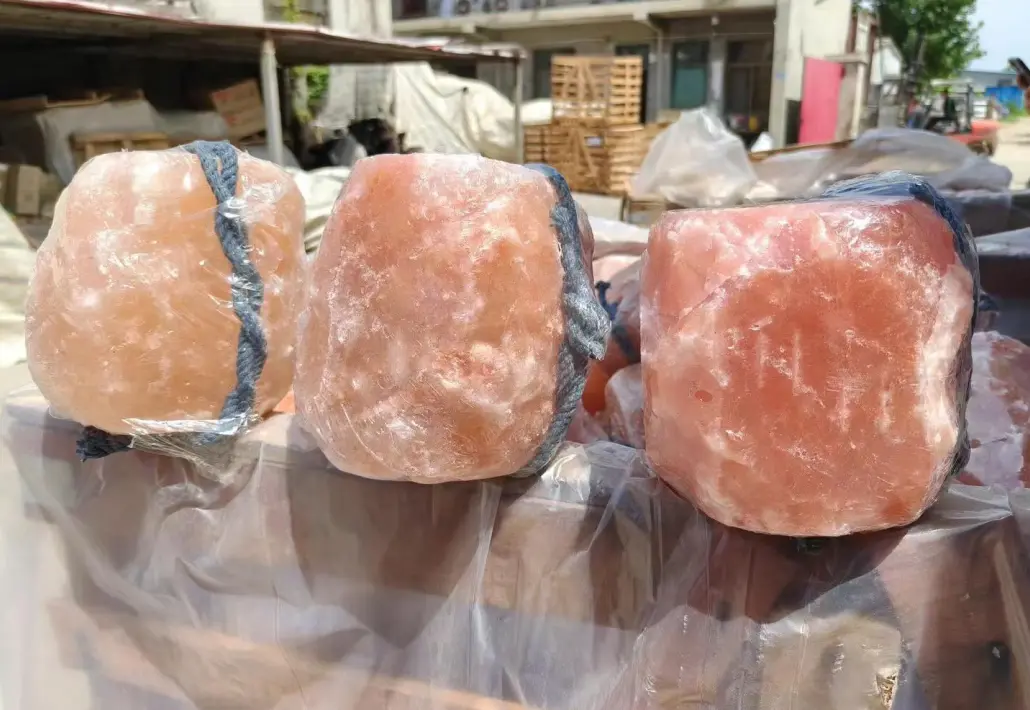
Buyers ask about colour and receive answers about grade, because the two are not the same story: natural mined blocks carry vein variation and mineral traces from the seam, while formed blocks read uniform because they are pressed from milled material. Neither is inherently better for livestock; what matters is that the tag states which one the pallet carries, before the pallet moves.
Mineral content claims beyond the grade statement belong to the buyer’s nutritionist and to the regulatory regime of the destination market; in the United States the FDA oversees animal food and feed requirements, published at fda.gov, and a block programme that keeps its tag inside the grade statement stays on the right side of that line.

What We Supply Into Livestock Block Programmes
- We supply: mined and formed salt blocks in the formats on the order sheet, with the grade statement printed on the tag and repeated on the master carton.
- We supply: wooden seats and yokes in 4 species for barn and sheltered stations, with the pairing sheet naming steel or stone pads where wood loses.
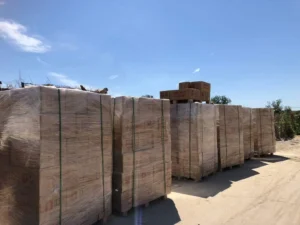
- We supply: export packing per format sheet with corners protected, and inner and master carton counts quoted per format.
- We do not supply: intake or supplementation advice, medicated or mineral-fortified formulations beyond the grade statement, and no UL, ETL or SAA claim on any piece.
The wildlife-facing lick programme and its placement rules sit in our deer salt lick blocks wholesale page, kept separate from livestock lines on purpose.
Which Format Fits Which Operation
Dairy and intensive beef operations with covered housing run standard blocks on wooden seats and measure little weathering. Grazing sheep and beef operations in wet country run denser formats on pads with doubled rotation counts, and their order sheet should show the multiplier explicitly. Mixed operations with handling yards add a hard format for work-day stations, priced per work cycle rather than per season.
Farm stores and distributors buy the same structure one layer up: pair cards at the aisle, rotation counts on the shelf talker, and grade statements legible from two metres, because the end buyer reads the tag in the rain.
What We Check Before a Block Order Ships
- Grade statement parity between tag, inner box and master carton, so a pallet cannot carry two stories.
- Corner and edge inspection on the sampling plan, since bruised corners read as damage at the farm gate regardless of mass.
- Pack configuration per format sheet, with corners protected and inner counts packed as quoted.
- Factory credentials limited to what we hold: BSCI and ISO 9001 at the facility level, with no certification or feed claim on the block line beyond the grade statement.
Every figure above is first-party and checkable against an inspection report or a certificate we hold; rotation multipliers are planning numbers the buyer confirms against one measured season, not statistics. The company and its specification library sit at ewoodarts.com.

End to End: A Two-Herd Season in Numbers
A mixed operation runs cattle on open pasture and sheep around sheltered paddocks, with one barn station shared by both herds during winter housing. It builds a position list of five stations before any quantity is discussed.
Proof. After 1 to 2 evaluation samples confirm format and finish by air express, the five stations proof on the trial tier at 100 pieces and a USD 500 minimum order value via LCL sea freight, one block format per station type, so the first season measures rotation per station instead of guessing it.
Season. The season order rides the wholesale tier at 300 pieces and a USD 3,000 minimum order value, sea freight at 60 to 90 days to port, timed to land before spring turnout, with the open-pasture stations carrying the doubled rotation multiplier the proof season measured.
Close. Payment runs T/T with a 30 percent deposit and 70 percent before shipment against photos and video of the packed pallets, and the season closes with one sheet: rotations per station against plan, and the weathering line that difference implies for next year’s multiplier.
Price the position list, not the piece count
Blocks, seats, grade tags and format packing quoted from one specification library.
FAQ
Should a supplier quote intake rates per head?
No. Intake and supplementation belong to the buyer’s nutritionist and destination-market feed rules; the supplier prices formats, seats and rotations around that decision.
What moves weathering loss the most?
Placement and seating: a block off soil and shed of rain weathers from the top only, while a block in mud loses its base, tips, and finishes in the trample zone.
Mined or formed blocks for livestock?
Either, provided the tag states which: mined blocks carry vein variation from the seam, formed blocks read uniform, and the grade statement is what a buyer can verify at the gate.
Do wooden seats suit open pasture?
In sheltered positions yes; in heavy rain country the pairing sheet moves open stations to steel or stone pads, because wood loses the weep path fight there.
How is a first order sized?
On the trial tier at 100 pieces and a USD 500 minimum order value via LCL sea freight, one format per station type, so the first season measures rotations per station before the wholesale tier commits.