Skip to content

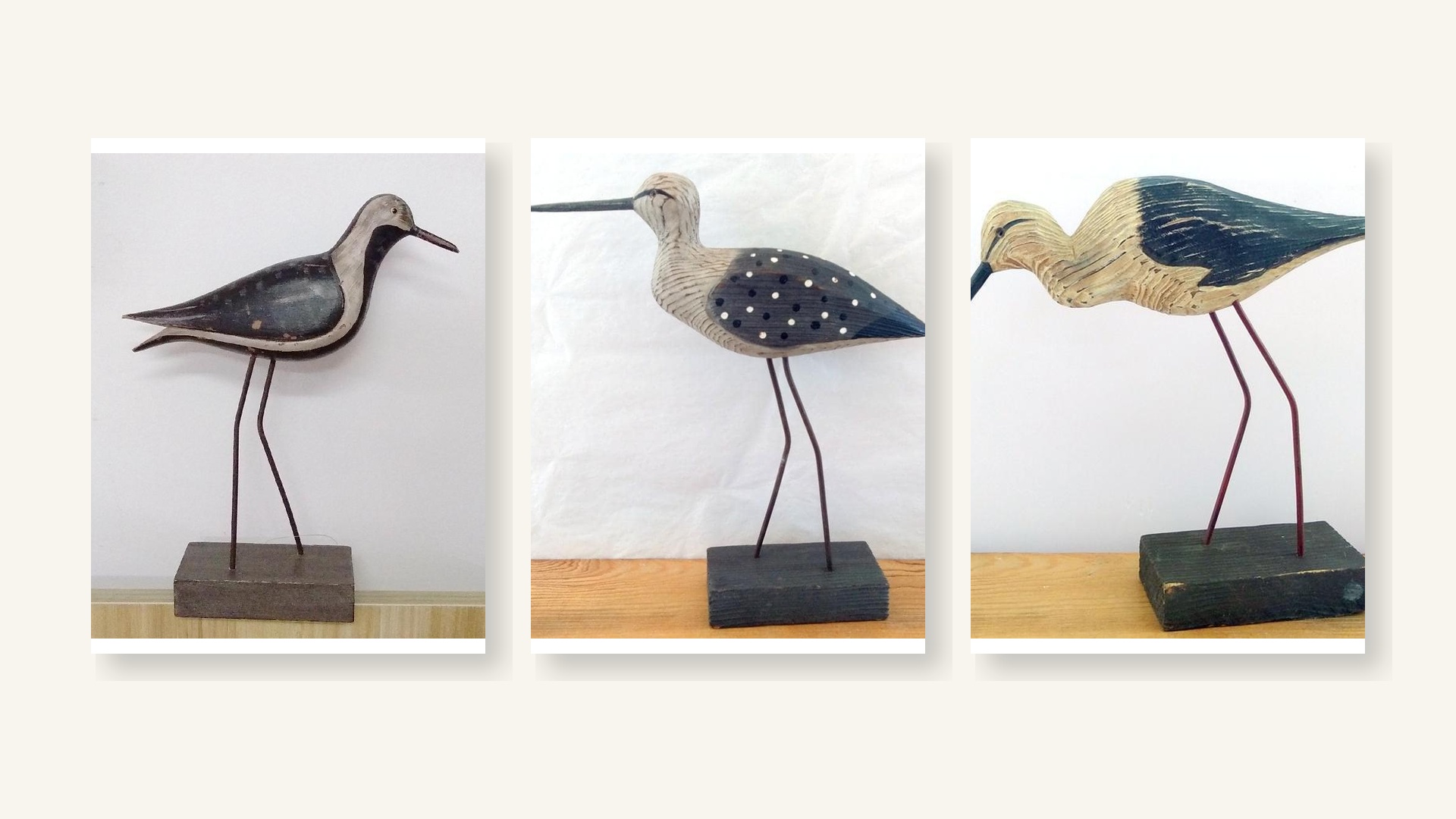
Minimalist wooden decor is the hardest assortment to build because it is defined by what is absent: no painted detail competing for attention, no themed grouping telling a story, no texture pile-up. What remains is silhouette, grain and proportion, and those three carry the entire sale or fail it in silence.
This guide gives retail buyers a method for building a minimalist wooden assortment that reads as curated rather than sparse: the object language, the shelf maths, the finish discipline and the honest limits of the style. Every production figure is our own first-party number; the counts and heights are recommendations for your floor.
Key Takeaways
- A minimalist assortment is built from 3 carriers only: silhouette, grain and proportion; any piece that needs a 4th, paint detail or a themed prop, does not belong in the range.
- Shelf maths is subtraction: 1 piece per 30 cm of shelf run with air on both sides, because 2 pieces at 20 cm spacing read as clutter and 1 piece at 60 cm reads as an omission.
- Hold 1 wood tone and 1 finish family per fixture; mixing 4 species across a minimalist shelf turns a curated range into a sample board, which is the failure mode buyers miss at order time.
- Natural finish is the style’s default for a reason: it shows the grain that justifies the price, and it ages with the room; painted pieces enter a minimalist range only as a single accent colour, 1 piece per fixture at most.
- Size stepping does the work colour does elsewhere: 3 graded sizes of 1 silhouette read as a composition, while 3 different silhouettes at 1 size read as unrelated stock.
- Order the range on the usual tiers: the trial tier at 100 pieces and a USD 500 minimum order value proves a fixture, and the wholesale and custom tier at 300 pieces and USD 3,000 carries the assortment across doors.
In This Guide
- Why Minimalism Is a Subtraction Discipline
- Minimalist Wooden Decor: The 3 Carriers
- Shelf Maths: Spacing, Air and the Omission Line
- Finish Discipline: One Tone, One Family
- Size Stepping Instead of Colour
- Minimalist Against Rustic Against Eclectic
- The Honest Limits of the Style
- What We Supply Into a Minimalist Range
- Best For / Not For
- What We Check on a Minimalist Run
- End to End: A 3-Fixture Minimalist Wall
- Frequently Asked Questions
Why Minimalism Is a Subtraction Discipline
Most assortments are built by addition: a buyer likes a piece, the piece joins the range, the range grows until the fixture is full. A minimalist assortment inverts that: the buyer starts from a full shelf and removes until removing one more would break the composition. The discipline is uncomfortable because every removal feels like lost sales, and every addition feels like improvement.
The commercial case for the discomfort is simple: a minimalist fixture photographs well, travels well in social feeds, and prices above its material cost because the curation is visible. A cluttered fixture of the same pieces prices at material cost. The range this method applies to is described on our wood carving factory page, where natural-finish work is a deliberate line rather than an unfinished one.
Minimalist Wooden Decor: The 3 Carriers
Silhouette is the first carrier: the outline a piece makes against a plain wall, which is why minimalist carvings keep clean profiles and simple bases. Grain is the second: the figure and tone variation that replaces paint as the surface interest, and the reason species choice matters more here than anywhere else in wood retail. Proportion is the third: the relationship between a piece’s height, its base and the negative space around it.
A piece qualifies for a minimalist range only if all 3 carriers are working without help. A carved owl with painted eyes and a textured stump base is a beautiful rustic piece and a failed minimalist one, because its interest sits in detail rather than outline. Sorting candidate pieces by this test, before any ordering conversation, prevents the range from drifting mid-season.

Shelf Maths: Spacing, Air and the Omission Line
The working spacing is 1 piece per 30 cm of shelf run with clear air on both sides, and the omission line sits at 60 cm: beyond that gap a single piece stops reading as placed and starts reading as forgotten. Between those two numbers lives the entire minimalist shelf, and both are measurable at set-in with a tape, which is more than can be said for taste.
Height variation follows the same restraint: 2 levels per shelf at most, usually the shelf surface and one low riser, because a third level reintroduces the visual noise the style exists to remove. Where a fixture needs depth of stock, it goes behind the fixture rather than on it, and the facing count stays at 1 per design; the grouped-merchandising logic that rustic ranges use instead is covered in our piece on rustic wooden decor merchandising in boutiques, if only to mark the boundary.
Finish Discipline: One Tone, One Family
One wood tone per fixture, chosen against the room rather than the catalogue: pale birch or basswood against dark walls, walnut-toned stain against pale walls, and never both on the same shelf. One finish family too, either natural oil or a single stain, because a mix of oiled and stained pieces reads as two ranges arguing.
Paint enters a minimalist range as an accent only: 1 painted piece per fixture, in a colour already present in the room, placed at the fixture’s visual end rather than its centre. Our paints are eco-friendly and non-toxic and take a flat matte finish well, which is what lets a painted accent sit quietly instead of shouting.

Size Stepping Instead of Colour
Where a colourful range uses hue to create rhythm, a minimalist range uses size: 3 graded pieces of 1 silhouette, stepped small to large across the shelf, compose like a chord. The same 3 sizes in 3 different silhouettes produce noise, because the eye has no repeated element to hold.
Stepping also solves the depth problem: the large piece carries the stock behind it, the medium carries the price point, and the small carries the impulse purchase at the shelf edge. Our carving range runs 5 cm to 40 cm in three dimensions, which gives 3 clean steps inside one silhouette without leaving the range; the retail-side execution of stepped carved groups is set out in wooden animal figurines in retail display.
Minimalist Against Rustic Against Eclectic
| Dimension | Minimalist | Rustic | Eclectic |
|---|---|---|---|
| Interest sits in | Silhouette and grain | Texture and paint detail | Variety and story |
| Spacing | 1 per 30 cm, air both sides | Grouped, touching allowed | Dense, layered |
| Finish | 1 tone, 1 family | Mixed stains and paints | Anything goes |
| Facings per design | 1, depth behind | 3 to 4 graded | Singles, many designs |
| Failure mode | Reads sparse, then empty | Reads cosy, then cluttered | Reads rich, then chaotic |
The Honest Limits of the Style
Minimalist wooden decor has three limits a buyer should know before ordering. It sells slowly per facing and well per fixture, because the composition is the product and a half-empty fixture sells nothing; depth of stock must sit behind, not on, the shelf. It photographs better than it survives handling, so open-bin retail and minimalist ranges do not mix. And it forgives no damage: a chipped edge that disappears in a rustic grouping is the only thing a minimalist piece has to say.
None of this is an argument against the style; it is an argument for ordering it like a composition, with spares held centrally and a damage policy at the door. The pack that protects those pieces in transit is our standard export pack, white paper per piece, 6 to 12 per inner box, 240 to 480 per master carton at 8.0 to 15.0 kg gross, ISTA 3A rated.

What We Supply Into a Minimalist Range
- We supply: natural-finish and single-stain carvings in 4 species, basswood, pinewood, rubber wood and birch, from 5 cm to 40 cm, with clean profiles and simple bases on request.
- We supply: graded size steps of one silhouette from the same stain batch, so a stepped group reads as one commission.
- We do not supply: distressed, whitewashed or antiqued finishes as standard; those are rustic-range treatments and they fight the minimalist shelf.
- We do not supply: plinths, risers or display hardware; the riser logic belongs to your fixture designer and our bases are cut to stand without it.
On sourcing claims in a minimalist range, where the material is the message: our facility holds an FSC chain-of-custody certificate, but certified basswood is not currently available to us, so natural-finish pieces ship with species and origin statements plus official felling and transport permits, and no FSC-certified wood claim; the wider framework for credible forest claims is published by the FAO forestry programme.
Best For / Not For
| Format | Best for | Not for |
|---|---|---|
| Design-led concept store | Full method, 3 fixtures minimum | Open bins and handling traffic |
| Hotel and spa retail | Pale tone against dark walls, 1 accent | Souvenir-range expectations |
| Online-first brand | Photographic fixtures, stepped groups | Ranges needing detail close-ups to sell |
| High-traffic gift shop | A single quiet end-cap | The whole floor |
What We Check on a Minimalist Run
- Surface flaw visibility, inspected at arm’s length on a plain background, because a minimalist piece has nowhere to hide a fill or a tear.
- Base flatness and edge crispness, gauged per piece; the base is half the silhouette in this style.
- Stain batch consistency across a stepped group, photographed together before packing.
- Moisture at 8 to 12 percent recorded per batch, because a cupped base ruins a clean profile permanently.
- Claims limited to what we hold: CE, UKCA, RoHS, EN71 where it applies, BSCI and ISO 9001.
Every figure above is first-party and checkable against an inspection report or a certificate we hold; the spacing and omission numbers are recommendations to test on your floor, not standards. The company and its specification library sit at ewoodarts.com.

End to End: A 3-Fixture Minimalist Wall
A design-led concept store dedicates a 3-fixture wall to minimalist wooden decor and wants it to read as one composition across 9 metres, with a refresh each season. The catalogue the wall draws from is in our wholesale wooden crafts guide.
Compose on paper, then subtract. The team lays out 3 silhouettes per fixture in graded steps, one wood tone across the whole wall, and one painted accent on the end fixture. The first draft holds 21 pieces; after two subtraction passes it holds 14, and the 7 removed pieces become the behind-fixture depth stock.
Order the composition, not the pieces. At 14 facings plus depth and spares the run sits near 200 pieces, so the store consolidates the wall with its small furniture-adjacent range to clear the wholesale and custom tier at 300 pieces and a USD 3,000 minimum order value, sea freight 60 to 90 days to port, with all stepped groups drawn from single stain batches.
Set in with a tape and a camera. Spacing is measured at 30 cm runs, the omission line checked at both fixture ends, and the wall is photographed at set-in and again after 4 weeks of handling; the delta photo set decides which pieces move to behind-fixture stock next season. The retained samples travel with the photo set, so a replacement piece matches the wall it returns to.
Building a minimalist wooden wall?
Send us your fixture metres and your wall colour. We will return the silhouette shortlist per fixture, the tone and stain family that suits the room, and the stepped groups drawn from single batches.
Frequently Asked Questions
Q: How many pieces belong on a minimalist shelf?
One per 30 cm of shelf run, with clear air on both sides and no gap beyond 60 cm at the ends. A 120 cm shelf thus carries 4 pieces, usually one stepped group of 3 plus a single companion, and the depth stock for the group sits behind the fixture rather than on it.
Q: Can painted pieces sit in a minimalist range?
As an accent only: one painted piece per fixture, in a colour the room already carries, placed at the fixture’s visual end. A matte finish keeps it quiet. More than one accent per fixture restarts the colour conversation the style exists to avoid, and the range drifts back toward eclectic.
Q: Why does a minimalist fixture need depth stock behind it?
Because the style sells slowly per facing and the composition is the product: an empty facing breaks the wall’s read immediately, while a rustic grouping tolerates gaps. Holding depth behind the fixture lets staff refill within minutes of a sale without restaging, and keeps the facing count at one per design.
Q: Which species suits natural minimalist finishes best?
Birch and basswood for pale, even tone against dark walls, because their fine grain reads as surface rather than pattern; pinewood where a warmer figure should show; rubber wood for harder-wearing edge pieces. All are held at 8 to 12 percent moisture, and a stepped group should come from one stain batch regardless of species.
Q: How do we keep the range minimalist after the first season?
By subtracting at every refresh: photograph the wall, remove the piece the photo does not miss, and promote one behind-fixture piece into the vacancy if the composition needs it. A range that only adds becomes eclectic within two seasons, and the subtraction pass is the only mechanism that holds the line.