Skip to content

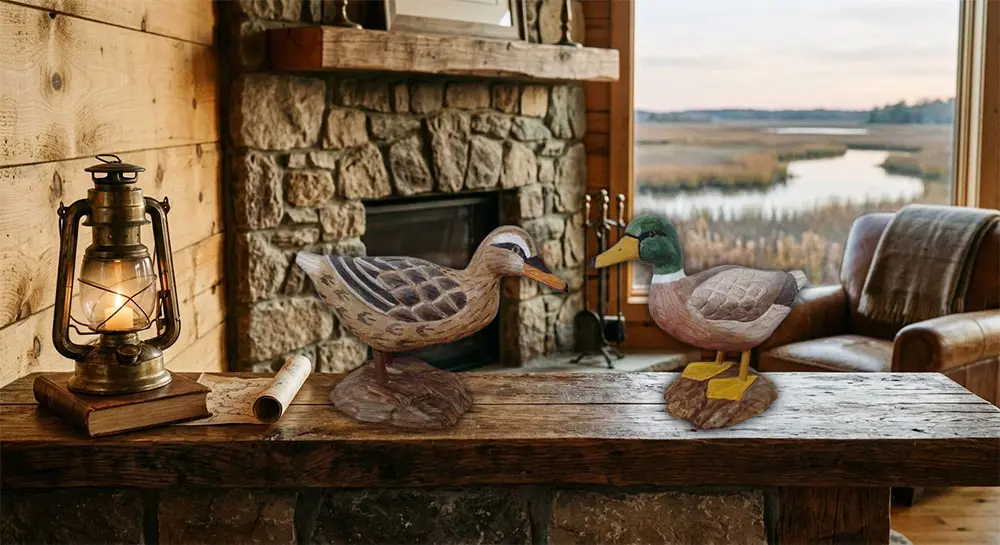
Rustic wooden decor is the easiest style to buy and the hardest to merchandise. The pieces are warm, tactile and forgiving on their own — but put them on a white gloss shelf under cool LED and the whole look collapses into brown objects in a row. The style depends on what surrounds the product as much as on the product.
This guide is for gift boutiques, garden centres and home decor independents building or rebuilding a rustic zone: what the look requires from a fixture, how to group pieces so a range reads as collected rather than stocked, how texture and lighting do most of the work, and how to tell whether the zone is earning its floor space. Fixture mechanics generally are covered in our guide to gift shop planogram basics; this one is specific to the rustic look.
Key Takeaways
- Rustic is a material story, not a colour story. The fixture has to be made of something — raw wood, iron, stone, linen — or the product has nothing to belong to.
- Group by story, not by size. A shelf of unrelated brown objects reads as stock; a shelf that reads as woodland, farmyard or shoreline reads as a collection.
- Matte finishes die under cool light. Warm temperature and directional light are what make grain and tool marks visible, and visibility is the whole selling argument.
- Height variation is the cheapest fix in retail. Three levels on one shelf do more for a rustic zone than any additional product.
- Imperfection is a feature here but has to look intentional. Distressed finishes and visible grain sell; damage and dust do not, and the two look similar from two metres.
- Measure the zone, not the SKU. Weeks-to-clear by zone and lift-and-replace rate tell you whether the merchandising is working, which a sales total alone cannot.
In This Guide
- What the Rustic Look Requires From a Fixture
- Grouping: By Story Rather Than by Size
- Texture, Height and Lighting
- Rustic Wooden Decor Across Four Shop Zones
- Best For / Not For: Rustic Treatment by Shop Type
- What We Check on a Display Order
- End to End: Building One Rustic Zone
- Frequently Asked Questions
What the Rustic Look Requires From a Fixture
Rustic wooden decor sells on material authenticity. A customer picks it up because it looks carved from something, and the fixture either supports that or contradicts it. Three properties decide which.
The fixture must be a material, not a colour. Painted white shelving reads as a showroom; raw timber, reclaimed board, black iron or stone reads as a place where wooden things belong. If the fixture cannot be changed, a shelf liner of unbleached cloth or a board laid across the shelf does most of the work for a fraction of the cost.
Imperfection must look deliberate. Distressed finishes, visible grain, tool marks and slight asymmetry between pieces are the selling argument — but the same visual register also covers dust, a chipped edge and a faded label. A rustic zone needs more cleaning attention than a glossy one, not less, because the tolerance for a flaw that looks accidental is lower when everything around it looks intentionally rough. Our guide to wooden carvings versus ceramic figurines covers why the hand-made read supports a higher shelf price.

Grouping: By Story Rather Than by Size
The most common mistake in a rustic zone is ranging by size — all the small pieces on one shelf, all the large on another. It is tidy and it is efficient for stock counting, and it destroys the reason the category works. Customers do not buy a 12 cm owl; they buy a woodland shelf, a farmyard corner or a shoreline table.
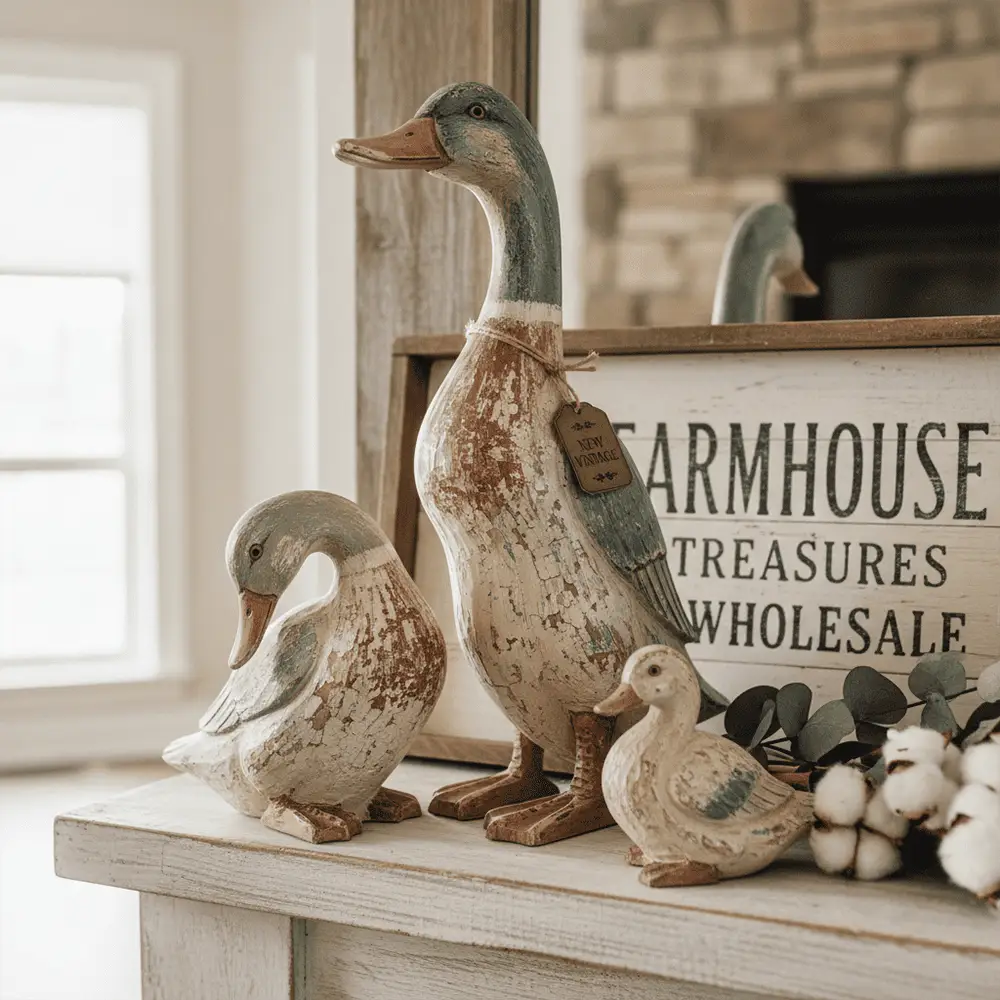
Group by subject or habitat instead, and mix sizes within the group. Three songbirds at three sizes with a stump and a linen runner read as a scene. A songbird, a duck and an owl at the same size in a row read as inventory. Our carving range supports this directly: three-dimensional pieces run from 5 cm to 40 cm and flat carving to 80 cm, so a single subject can be stocked at an impulse size, a shelf size and a statement size from one supplier.
Two rules keep a story group from becoming cluttered. Odd numbers — three or five pieces reads as arranged, four reads as leftover. And one anchor per group: a piece noticeably larger or more detailed than the rest, which gives the eye somewhere to land first and lets the smaller pieces read as companions rather than as stock. Styling principles for the pieces themselves are in our guide to styling wooden animal carvings, and subject-led ranging for a specific habitat in our guide to garden centre bird display zones.
Texture, Height and Lighting
Texture is what makes rustic read. A carved wooden piece on a smooth surface has nothing to contrast with. Natural stumps, bark-edged boards, unglazed pottery, woven basket, linen and black iron all give the carving an edge to be seen against. Props should be cheaper than the product and never compete with it for subject — a stump is a prop, a second carved animal is not.
Height is the cheapest improvement available. A flat shelf of pieces at the same level looks like stock no matter how good the pieces are. Three levels — a riser, a stump and the shelf itself — create a silhouette, and a silhouette is what a customer notices from across a shop. Wooden risers and crates also stay inside the material story, where acrylic ones do not.
Lighting decides whether the finish is visible. Matte and waxed finishes, which is most rustic work, scatter light rather than reflecting it, so under cool diffuse ceiling light they read as flat brown. Warm temperature and directional light from above or slightly to one side make grain, tool marks and painted detail visible — and visibility is the argument the category runs on. Avoid anything that produces a specular highlight on a lacquered neighbour, since a glare spot on one piece draws the eye away from the whole group. Retail display principles for figurines generally, including checkout positioning, are covered in our guide to wooden animal figurines retail display.
Rustic Wooden Decor Across Four Shop Zones
| Zone | What works | What fails |
|---|---|---|
| Window | One large anchor piece plus two smaller, lit directionally, changed seasonally | A full range at eye height, which reads as a stockroom from the street |
| Main wall shelf | Two or three story groups at three heights, with texture props between them | Ranging by size, or filling every gap so no group has breathing room |
| Table or dump bin | Small impulse pieces in a shallow tray on linen, priced visibly | Deep piles, where the pieces underneath are unreachable and get damaged |
| Checkout | One subject at one small size, boxed, within reach of the queue | Fragile or large pieces where a bag gets set down |

Best For / Not For: Rustic Treatment by Shop Type
| Shop type | Strong fit | Wrong treatment |
|---|---|---|
| Rural or village gift shop | A full rustic zone with local subjects — farmyard, woodland, shoreline | Mixing it into a contemporary range, where neither reads properly |
| Garden centre | Bird and wildlife subjects grouped by habitat beside the plants they belong to | Fine-detail pieces outdoors without a stated finish rating for weather |
| Urban contemporary boutique | Two or three rustic pieces as contrast inside a cleaner scheme | A full rustic zone, which will fight the rest of the shop |
| Seaside or tourist retail | Weathered and bleached tones rather than warm rustic — see our coastal decor guide | Warm brown rustic, which reads as woodland rather than as coast |
| Multi-channel or marketplace | Photographing the piece against texture, since the fixture will not exist online | Assuming a white-background listing carries the same material story |
What We Check on a Display Order
- Finish consistency across a display run. A rustic zone is seen as a group, so a distressed or washed finish is approved against a retained sample and held to a stated tolerance — variation inside the range reads as craft, variation outside it reads as a mixed shipment.
- Size bands held per tolerance across the 5 cm to 40 cm three-dimensional range, so the three height steps in a story group are the sizes you planned rather than approximately the sizes you planned.
- Moisture held at 8–12% before finishing, per our published wood moisture content standard — a piece that moves after delivery changes shape on your shelf and no longer sits level in the group.
- Species matched to the look. We produce in basswood, pinewood, rubber wood and birch; pine carries the visible figure rustic work usually wants, while basswood holds fine detail where a subject needs it. Every piece is carved and painted by hand with eco-friendly non-toxic paint systems.
- Packaging that protects a distressed finish. White paper wrap per piece, 6 to 12 per three-ply inner box at 21 × 11 × 14 cm, 240 to 480 per five-ply master carton at 58 × 44 × 31 cm, 8.0 to 15.0 kg gross, rated to pass an ISTA 3A drop test. A rubbed or polished mark on a matte surface is more visible than a dent on a gloss one.
- Provenance claims matched to the material. Our facility holds FSC chain-of-custody certification and operates under ISO 9001 and BSCI, but certified basswood is not currently available to us, so our carvings are not marketed as FSC-certified wood; official timber felling and transport permits are available. Frameworks behind such claims are described by FSC for businesses and the FAO forestry division.

End to End: Building One Rustic Zone
A village gift shop has two metres of wall shelf and wants a woodland zone that works all year rather than only at Christmas.
Plan the group before the order. Three story groups across two metres, each with one anchor piece and two or three companions, each at three heights. That is roughly nine to twelve pieces on display, which sets the order shape far better than a budget figure does.
Order the trial. 100 pieces at a USD 500 minimum order value from in-stock designs, air express DDP, 20–30 days — enough to fill the zone and hold back a few for the checkout and the table. Because the pieces are in-stock designs, the finish range can be seen in photographs and confirmed against a sample before the order is placed.
Build and photograph. The zone is dressed with stumps, linen and iron, lit warm and directional, and photographed once it is finished. The photograph becomes the reference for redressing after a busy weekend, which is where most retail zones quietly decay.
Read six weeks. Weeks-to-clear per story group rather than per SKU, how often pieces are lifted, and whether the anchor piece is what sells or only what draws the eye. If the lift rate is high and conversion is not, the problem is price or finish, not merchandising.
Scale what worked. The winning groups move to the wholesale tier at 300 pieces with a USD 3,000 minimum order value, sea freight, 60–90 days to port, with a seasonal subject swap rather than a new development. Payment runs T/T at 30% deposit and 70% before shipment, with photographs and video of the finished goods supplied first. Sourcing options at lower volume are covered in our guide to low MOQ hand-carved wood crafts, and the wider range in our wholesale wooden crafts guide.

If you are building a rustic zone and want subjects, sizes and finishes planned against your actual shelf length — with story groups, anchor pieces and carton quantities worked out — send us your fixture dimensions and we will build the range with you.
Frequently Asked Questions
Q: How do I make rustic wooden decor look expensive rather than brown?
Give the pieces something to be against. Raw timber, iron, stone or linen on the fixture; warm directional light so grain and tool marks are visible; three heights on every shelf; and one anchor piece per group. Brown-on-white under cool light is what makes the category look cheap, and none of those four fixes costs much.
Q: Should I range by size or by subject?
By subject. Ranging by size is tidier and easier to count, and it removes the reason the category works — customers buy a woodland shelf or a shoreline table, not a 12 cm owl. Mix sizes inside each subject group so a shopper can move up or down a price step without leaving the story.
Q: How many pieces does a rustic zone need?
Plan from the fixture, not from a target number. Two metres of shelf carrying three story groups, each with one anchor and two or three companions at three heights, needs roughly nine to twelve pieces on display plus a small back-stock holding. A trial order of 100 pieces covers that comfortably with pieces left for checkout and table zones.
Q: What lighting temperature suits rustic wood?
Warm rather than cool, and directional rather than diffuse. Matte and waxed finishes scatter light, so under cool ceiling lighting they lose grain and read as flat brown. Light from above or slightly to one side brings out texture, and avoids the glare spot a lacquered piece would throw.
Q: How do I tell if the zone is working?
Measure the zone rather than the SKU: weeks-to-clear per story group, how often pieces are lifted and put back, and whether the anchor piece converts or only draws attention. A high lift rate with low conversion points at price or finish; a low lift rate points at lighting, height or grouping.
Sources
Forest provenance frameworks are described by FSC for businesses and the FAO forestry division. Our species list, carving size range, moisture standard, hand-carved and hand-painted construction with non-toxic paint systems, carton specification and ISTA 3A rating, minimums and order values, lead times, payment terms and certification holdings are our own published first-party terms. No conversion rate, dwell time, uplift percentage or sales-per-metre figure is quoted in this guide: those numbers belong to your shop, your catchment and your fixture, and the measurement method in the final section is what produces them. Lighting guidance here is directional rather than specified in kelvin, because the right temperature depends on the rest of your shop’s lighting scheme.