Skip to content
A simple 8% to 12% moisture standard is usually the line between a custom wooden duck line that sells out completely and one that splits down the middle six months after arriving at customer warehouses. A boutique home decor brand once lost over $50,000 on a single shipment simply because their previous supplier rushed production using 15% moisture timber. That slight 3% oversight caused duck beaks to crack and surface paint to flake, completely wiping out their seasonal margin.
When you partner with a custom wooden duck manufacturer, evaluating pre-production samples isn’t about checking if an item looks good under studio lighting. It is about locking in measurable, physical tolerances that floor supervisors and quality control (QC) inspectors can test across thousands of units. The same logic applies to your shipping terms. Clear FOB terms ensure your manufacturer takes full physical responsibility for the batch until it clears the vessel’s rail. These operational details determine whether a private-label wooden home decor line succeeds long before the first retail box is opened.
Here is a quick filter for your next supplier screening call: ask their engineering team for their kiln-drying moisture standard. If they don’t immediately cite “8% to 12% with strict batch testing,” treat it as an immediate operational red flag.
From Concept to Blueprint: Preventing Early Structural Errors
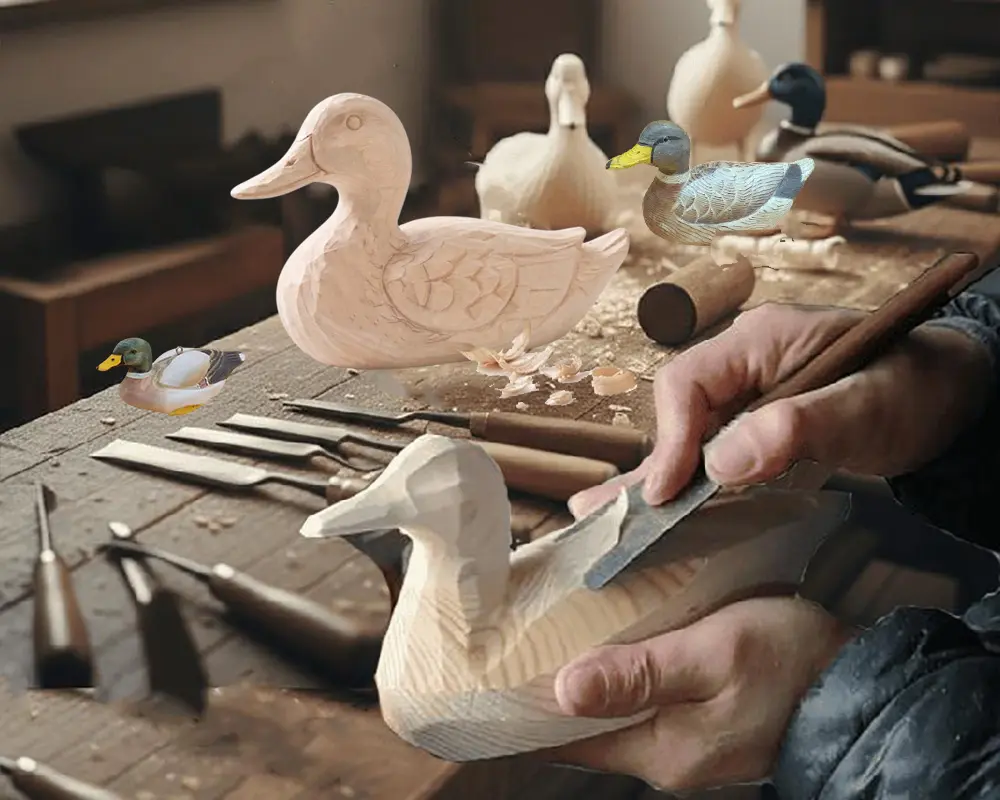
Most manufacturing defects don’t start on the carving line—they start on the drafting table. Moving from a rough client sketch to a workable production blueprint for custom painted wooden birds requires balancing original aesthetics with raw timber limitations. A delicate indoor shelf display piece and a heavy-duty outdoor decoy require completely different carving tolerances and wall thicknesses.
- Clay Prototypes as Physical Gateways: Before cutting expensive timber, an experienced factory team should craft a 1:1 scale clay model. Natural wood grain cannot safely support thin details under 1.5mm without risk of snapping during hand-carving. Clay models let you verify body proportions, wing angles, and head placement in 3D before committing to tooling.
- Valuing Factory Feedback: Expect practical engineering adjustments from the factory floor. When a technician points out that a neck joint or tail feather edge is too thin and likely to splinter during mass production, view it as essential risk prevention rather than design compromise.
- Digital Vector Normalization: Demand a finalized, fully dimensioned digital vector file (.AI or .EPS format). This guarantees the factory can scale your design across different sizes—from mini tabletop figurines to large entryway statues—without distorting the original proportions.
Wood Species & Timber Moisture Controls
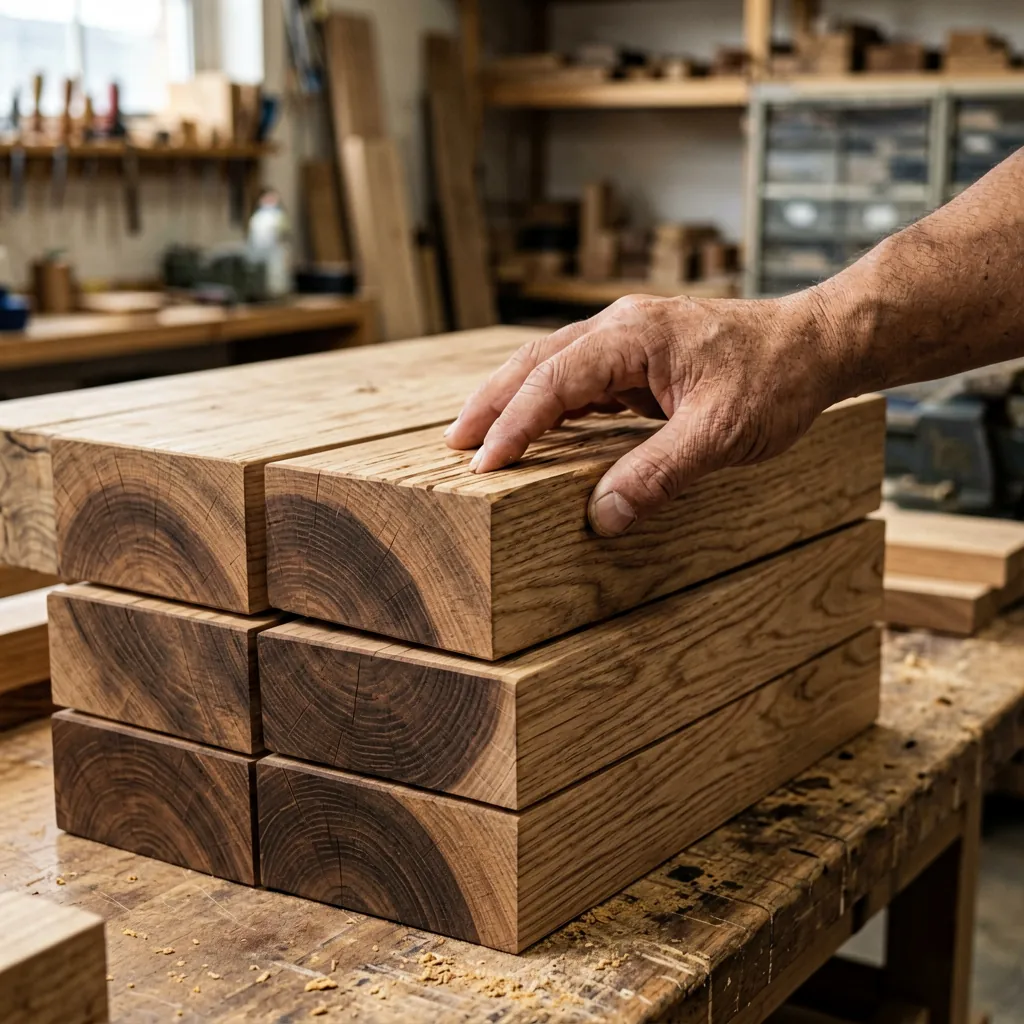
Generic terms like “solid hardwood” mean little without a verified kiln-drying log behind them. The specific timber species you choose directly governs long-term durability and surface finish. For standard production, we rely heavily on premium northern Basswood sourced responsibly from Changbai Mountain forestry areas. Its tight, uniform grain resists chipping under sharp chisels and holds fine painted details exceptionally well.
- Strict Moisture Parameters: Timber must be kiln-dried down to 8%–12% moisture content before rough cutting. Planks exceeding this limit warp as atmospheric humidity shifts or crack open when displayed in heated indoor spaces.
- Pore Density & Surface Uniformity: Open-grained woods like oak or ash allow paint to settle inside deep pores, creating uneven textures along curved surfaces like carved duck bills. Basswood’s closed pore structure supports a clean, multi-layer hand-painted finish without visible grain bleed or rough brush drag.
- Legal Compliance & Traceability: Major international retailers demand clear timber origin tracking. Suppliers should provide complete harvest documentation to help buyers meet strict import regulations like the US Lacey Act or EU timber standards.
Pre-Production Approval: Lock In Quality Early
The pre-production sample sign-off is your final checkpoint before bulk manufacturing begins. Approving samples without strict testing leaves product consistency open to floor-level interpretation.
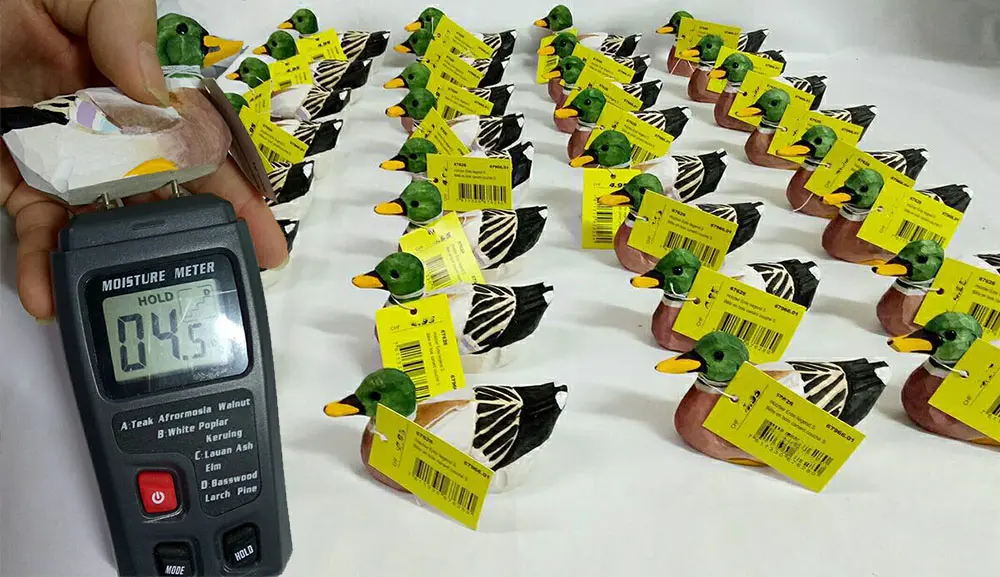
- Mandatory Moisture Inspections: Request clear photo or video proof showing a calibrated digital moisture probe inserted into the core of your actual sample lot, verifying readings within the 8%–12% threshold.
- Paint Adhesion Testing: A sample might look perfect straight out of the box but flake off under handling. Request a cross-hatch scratch test on test pieces to ensure base coats and top lacquers have properly bonded to the timber.
- The Dual Counter-Sample Protocol: Always implement a two-box sample hold. The factory signs and seals one identical master sample in their QC room, while you retain a second sealed sample at your office. Neither box is opened until the container arrives. If batch quality disputes occur, both sides compare production units directly against the sealed reference.

Why a 300-Piece Order Quantity Works for Private Labels
Attempting 30-piece micro-runs with primary wood factories often results in orders being passed down to inexperienced apprentices or sub-contractors. Setting a 300-piece Minimum Order Quantity (MOQ) creates an ideal operational balance: it gives your order dedicated space on the main production line while keeping initial capital requirements manageable for growing brands.
- Controlled Financial Exposure: A standard 30% deposit on 300 handcrafted units keeps initial outlay reasonable, leaving working capital for custom packaging and marketing runs. If a new SKU underperforms, inventory risk remains contained.
- Agile Market Validation: A 300-unit batch moves efficiently from raw timber preparation through final painting. You can test a seasonal run in spring, collect real customer reviews, and adjust color schemes or sizing in time for peak Q4 inventory orders.
- 100% Inspection Feasibility: At 300 units, your warehouse team can easily inspect every single piece upon arrival, ensuring total batch compliance before fulfilling customer orders.

Conclusion
Every stage in a successful custom OEM manufacturing run—from confirming 1:1 clay models to verifying core moisture levels—serves to eliminate commercial risk. By formalizing technical specifications into your factory contracts and insisting on sealed reference samples, you protect your margin and build a reliable supply chain.
Frequently Asked Questions
Are your wooden ducks made from crack-resistant wood?
Yes. We exclusively kiln-dry our northern basswood and pine timber to a verified 8%–12% moisture range prior to carving. Batch moisture logs can be included with pre-production samples upon request.
Can I start a custom project with just a basic sketch?
Yes. Our engineering team can convert rough pencil drawings or physical reference samples into digital 3D vector blueprints and physical clay models for formal review before wood carving starts.
Do you provide transit-tested packaging for fragile items?
Yes. We design custom die-cut foam inserts for delicate carvings and perform standard drop tests (e.g., 61cm drop angle tests on 10-19kg master cartons) to meet Amazon and retail distribution requirements.
What are your standard payment terms for OEM orders?
Standard commercial terms are a 30% deposit upon order confirmation to initiate timber preparation and production, with the remaining 70% balance payable via T/T prior to shipment inspection release.