Skip to content
Requesting a quotation from a wooden craft manufacturer without a detailed product spec sheet is how procurement cycles stretch from weeks into months. A well-structured product spec sheet wooden crafts buyers submit to their factory cuts through ambiguity, reduces back-and-forth emails, and ensures the price you receive reflects exactly the product you need. For B2B purchasers sourcing hand-carved wooden decorations, ornaments, or functional items, this document becomes the single reference point that aligns your sourcing team with the manufacturer’s production team.
The challenge is particularly acute with artisan-made goods. Unlike injection-molded products where a CAD file communicates everything, wooden crafts involve variables that span material selection, carving complexity, painting technique, and finishing processes. This guide walks through every field your specification document should contain, drawing on established practices at Ever Creation, a Jilin Province-based manufacturer with over 20 years of experience in hand-carved wooden products.
Why a Product Spec Sheet for Wooden Crafts Matters
In B2B manufacturing, the specification sheet serves as the contractual foundation of any sourcing engagement. For wooden crafts specifically, the stakes are higher than with commodity goods because each piece carries the mark of human craftsmanship. A carving’s depth, the smoothness of its sanded surface, the opacity of its paint coat, these are not parameters a machine controls to decimal-point precision.
When a buyer sends a vague inquiry, the factory faces two unappealing options: ask dozens of clarifying questions (delaying the process) or make assumptions and quote based on their best guess. Neither outcome serves the buyer. The first stretches the procurement timeline. The second produces a quote that may be too high, because the factory pads for unknowns, or too low, because they assumed minimum specifications that don’t match your actual requirements.
A thorough product spec sheet eliminates this tension. It gives the manufacturer everything needed to calculate material costs, labor time, finishing expenses, and packaging requirements without guessing. For the buyer, this means receiving a quotation you can trust and compare against other suppliers on a like-for-like basis. According to sourcing documentation best practices, a complete specification reduces the RFQ cycle by eliminating clarification rounds that typically add days or weeks to the process (CosmoSourcing).
Product Spec Sheet Wooden Crafts: Essential Fields to Include
Every product specification document needs a core set of fields that communicate what you’re sourcing, in what quantity, and to what standard. For wooden crafts, these fields expand to address the material and artisanal variables unique to hand-carved goods.
Start with basic product identification: item name, SKU or style number, and product category (ornament, figurine, functional item, seasonal decoration). Then move to materials: wood species, paint or finish type, and any additional components like metal hooks, bases, or inserts.
Dimensions come next, and this is where many buyers underspecify. Don’t just list height, width, and depth. Specify which dimension is most critical to your retail presentation and what tolerance you’ll accept. We’ll address hand-carved variance in detail below.
Quantity requirements should be broken into tiers if possible. Many manufacturers, including Ever Creation, structure pricing around trial orders, wholesale volumes, and custom packaging thresholds. Stating your expected volume trajectory helps the factory propose the right pricing structure from the start.
Finish and color specifications deserve their own dedicated section. If you need a specific shade, provide a Pantone code or send a physical reference sample. For hand-painted items, describe the painting style: solid color, wash, antiqued, or multi-layered detail work.
Finally, include reference images. For OEM carving projects, the manufacturer needs multi-angle reference photos showing the design you want reproduced. These photos, combined with your target size and wood type preference, form the visual foundation of the specification. As product specification guides note, visual references alongside written specs dramatically reduce misinterpretation risk (Visme).
Specifying Wood Material & Finish Requirements
Wood selection drives cost, carving detail, durability, and final appearance. Your spec sheet should name the preferred species explicitly and explain why if multiple options could work. This gives the factory room to suggest alternatives if your first choice faces supply constraints.
Basswood serves as the primary material for most hand-carved wooden crafts. Its fine, even grain holds intricate detail without splitting, and it accepts paint and stain uniformly. Pinewood offers a rustic aesthetic with natural grain character, making it ideal for rustic or seasonal decor items. Specifying the right natural wood upfront guarantees stability and clean carving results.
For finishing, specify whether the piece should be left natural, stained, or painted. If painted, note the paint type. Ever Creation uses eco-friendly, non-toxic paint across all product lines, compliant with EN71-1, EN71-2, and EN71-3 safety standards. This matters particularly for items marketed as children’s toys or decorative pieces in households with young occupants.
Anti-cracking treatment should also be addressed in your material specifications. The manufacturer applies log anti-cracking treatment combined with kiln drying to achieve a specific moisture content appropriate for the product’s destination climate. Buyers shipping to regions with extreme humidity or temperature swings should call this out explicitly, as additional drying cycles may be warranted.
Dimension Tolerances & Hand-Carved Variance
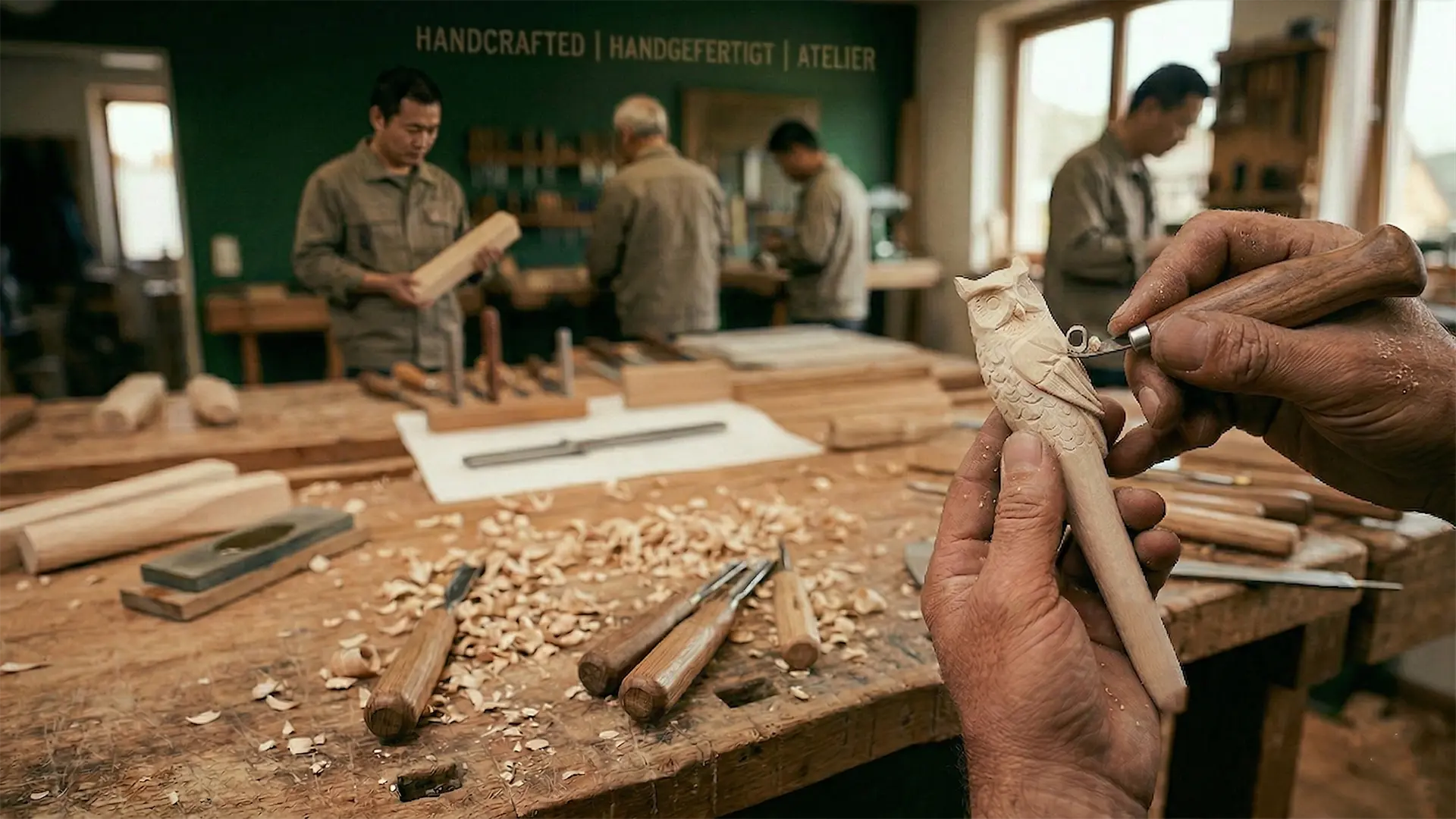
Hand-carved wooden crafts occupy a different precision tier than CNC-machined components. The factory produces 3D carvings ranging from 5cm to 40cm and 2D flat carvings up to 80cm. Within these ranges, every piece passes through the hands of skilled artisans who shape, refine, and sand each item individually.
This means slight dimensional variation between pieces is inherent to the product category, not a quality failure. Your spec sheet should acknowledge this reality by specifying acceptable tolerance ranges rather than demanding exact measurements that hand production cannot consistently deliver. A typical tolerance for hand-carved items might be plus or minus 2-3mm on critical dimensions, though this varies with piece size and design complexity.
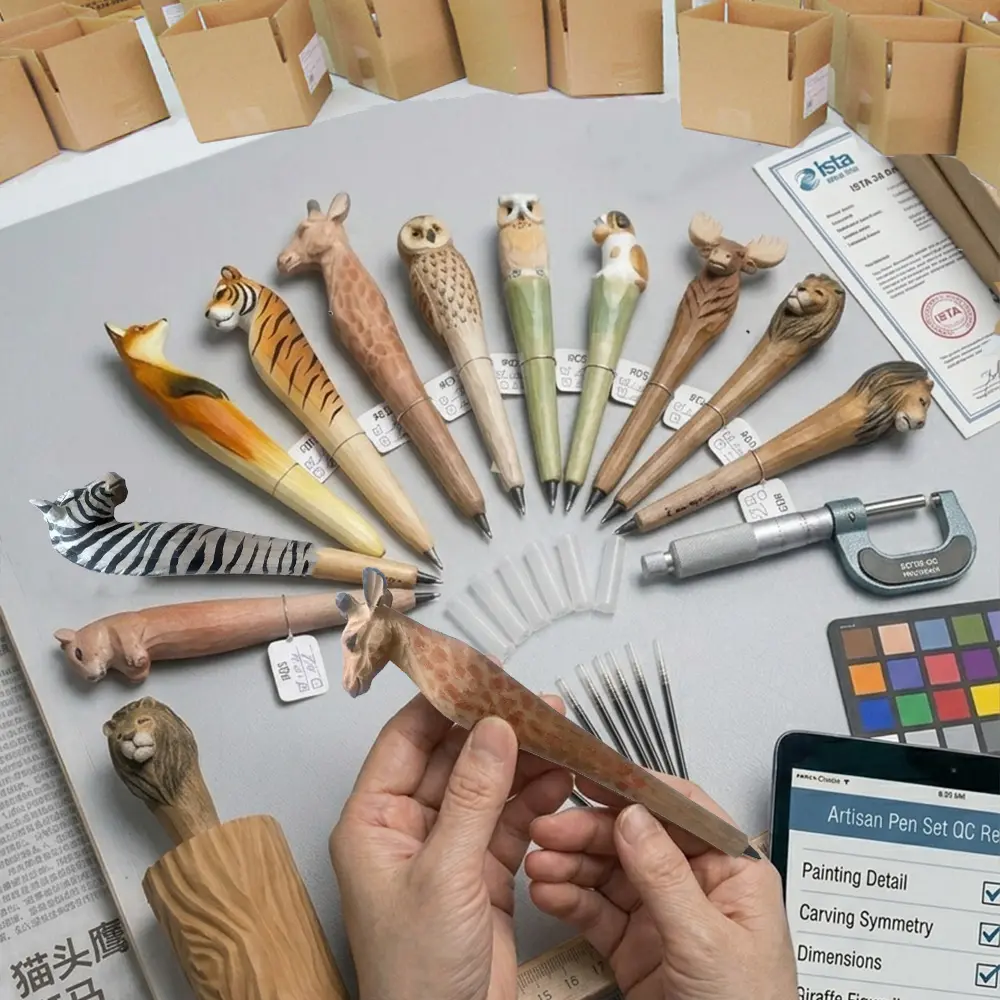
When writing dimension specifications, distinguish between critical and non-critical measurements. If a figurine must fit inside a retail box with exact internal dimensions, note the height constraint as critical with tight tolerance. Less visible dimensions like base width can carry looser ranges. This approach gives the factory clear guidance on where to focus precision and where artisan judgment can prioritize aesthetics over exact measurement. The factory’s quality control process is designed around this distinction, inspecting critical dimensions with calipers while allowing visual assessment for non-critical surfaces.
Wood movement also deserves mention. Wood is hygroscopic, meaning it absorbs and releases moisture based on ambient humidity. A piece measured at 12cm in the factory may expand slightly during ocean transit to a humid destination port. Specify the moisture content at time of measurement and the expected climate conditions at the point of retail sale. The factory’s kiln drying process addresses this by stabilizing the wood before carving begins, but buyers in extreme climates should discuss additional treatment options.
Packaging, Compliance & Shipping Specifications
Packaging specifications protect your product during transit and communicate professionalism at retail. The factory follows a layered packaging system: each piece wrapped in individual white paper, then packed into inner boxes holding 6-12 pieces in 21x11x14cm 3-ply corrugated cardboard. These inner boxes go into outer cartons holding 240-480 pieces, measuring 58x44x31cm in 5-ply corrugated construction rated for ISTA 3A transit testing.
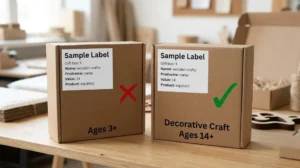
Your spec sheet should state whether standard packaging is acceptable or if custom branded boxes are required. Custom packaging typically carries a 500-piece minimum order. Specify inner pack quantity, outer carton quantity, and any labeling or barcode requirements. For detailed guidance on how packaging choices affect product integrity, see the wood carving packaging guide.
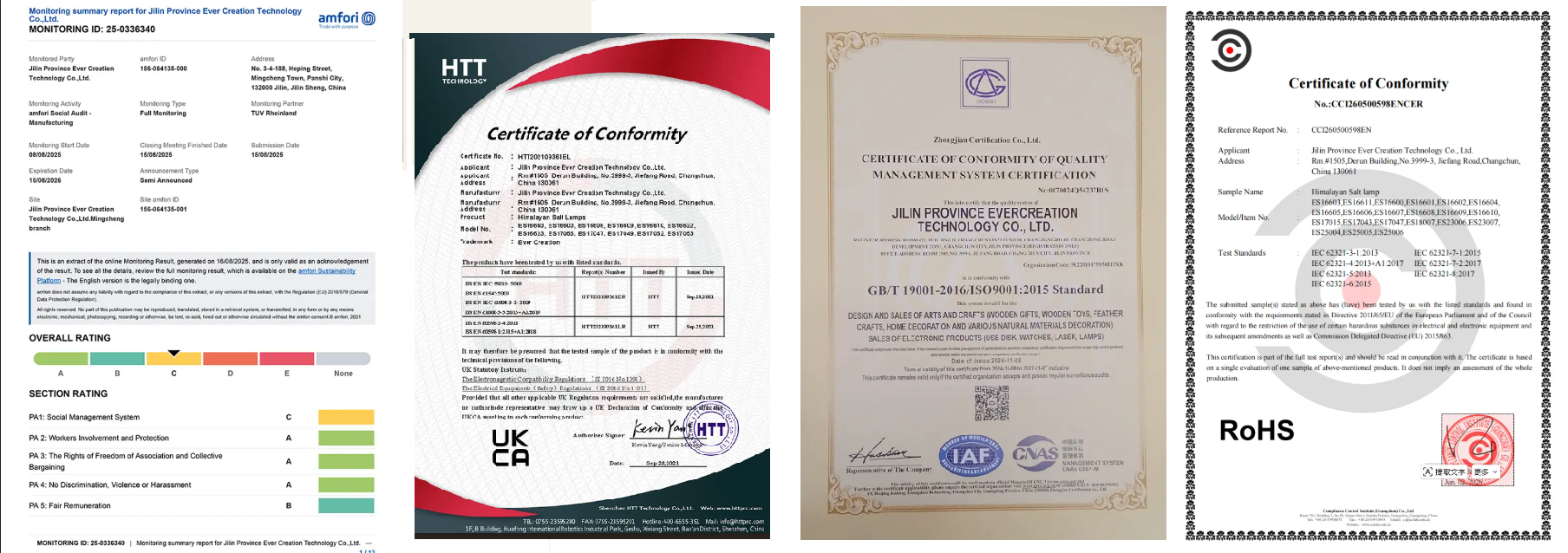
Compliance certifications should be listed explicitly in your specification. The factory holds BSCI, ISO9001, CE, UKCA, EN71-1, EN71-2, EN71-3, and RoHS certifications. If your target market requires specific marks, state them clearly: CE marking for European Union markets, UKCA for the United Kingdom, EN71 toy safety standards for products marketed to or usable by children. While the company does not hold FSC certification, all timber is legally sourced with official logging permits and phytosanitary certificates, providing complete supply chain traceability from forest to finished craft.
HS codes must be confirmed for your specific product classification. Common codes for wooden crafts include 4420.1990 for wooden statuettes and ornaments, 9505.1000 for festive articles, and 9608.1000 for pens and similar items. Your spec sheet should reference the applicable code or ask the factory to recommend the correct classification based on product function.
From Spec Sheet to Accurate Quote: The Submission Process
Once your product spec sheet is complete, the path to an accurate quotation becomes straightforward. Submit your specification document along with reference photos to the manufacturer. A well-organized submission with clear reference images typically receives a response within one working day.
For OEM carving projects specifically, the essential inputs are multi-angle reference photos showing the design you want reproduced, your target size, preferred wood type, and any painting or finishing requirements. The more detailed your visual references, the fewer clarification rounds stand between your initial inquiry and a binding quotation. The OEM process guide provides additional detail on how custom projects move from initial specification through sampling to full production.
Quantity tiers affect pricing significantly. Trial orders start at 100 pieces or USD 500 minimum. Wholesale pricing kicks in at 300 pieces or USD 3,000 minimum. Custom packaging orders begin at 500 pieces. Payment terms follow standard T/T structure: 30% deposit upon order confirmation, with 70% due before shipment.
Lead times vary by order type and complexity. Stock items ship within 7-15 days. Trial orders require 20-30 days for production. Bulk custom orders typically run 60-90 days depending on design complexity, quantity, and current production queue. Factor these timelines into your procurement planning, particularly for seasonal products where retail deadlines are non-negotiable.
Trade terms are flexible: EXW, FOB, CFR, CIF, DDU, and DDP are all available depending on your logistics capability and preference. Specify your preferred Incoterms in the spec sheet so the quotation includes accurate shipping costs rather than requiring revision later.
Ready to Start Your Wooden Craft Project?
Send us your product specifications and receive a detailed quote within 24 hours. From reference photo to container load, we guide you through every step.
Request a Quote →Frequently Asked Questions
What should I include in a product spec sheet for wooden crafts?
Include dimensions, wood species, finish type, painting details, quantity, packaging preferences, and compliance requirements. Attach multi-angle reference photos for carved items. Greater detail produces more accurate quotations.
What is the minimum order quantity for custom wooden crafts?
Trial orders begin at 100 pieces or USD 500 minimum. Wholesale pricing applies at 300 pieces or USD 3,000. Custom-branded packaging requires a 500-piece minimum order.
How long does production take for custom wooden carvings?
Stock items ship within 7-15 days. Trial orders take 20-30 days. Bulk custom orders require 60-90 days depending on design complexity and order quantity.
Can I request eco-friendly, non-toxic paint for wooden toys?
All painting uses eco-friendly, non-toxic paint compliant with EN71-1, EN71-2, and EN71-3. The factory holds CE, UKCA, and RoHS certifications for toy and decorative item safety.
What trade terms are available for wooden craft orders?
The factory accepts EXW, FOB, CFR, CIF, DDU, and DDP trade terms. Payment follows T/T structure: 30% deposit upon order confirmation, 70% balance before shipment.