Skip to content

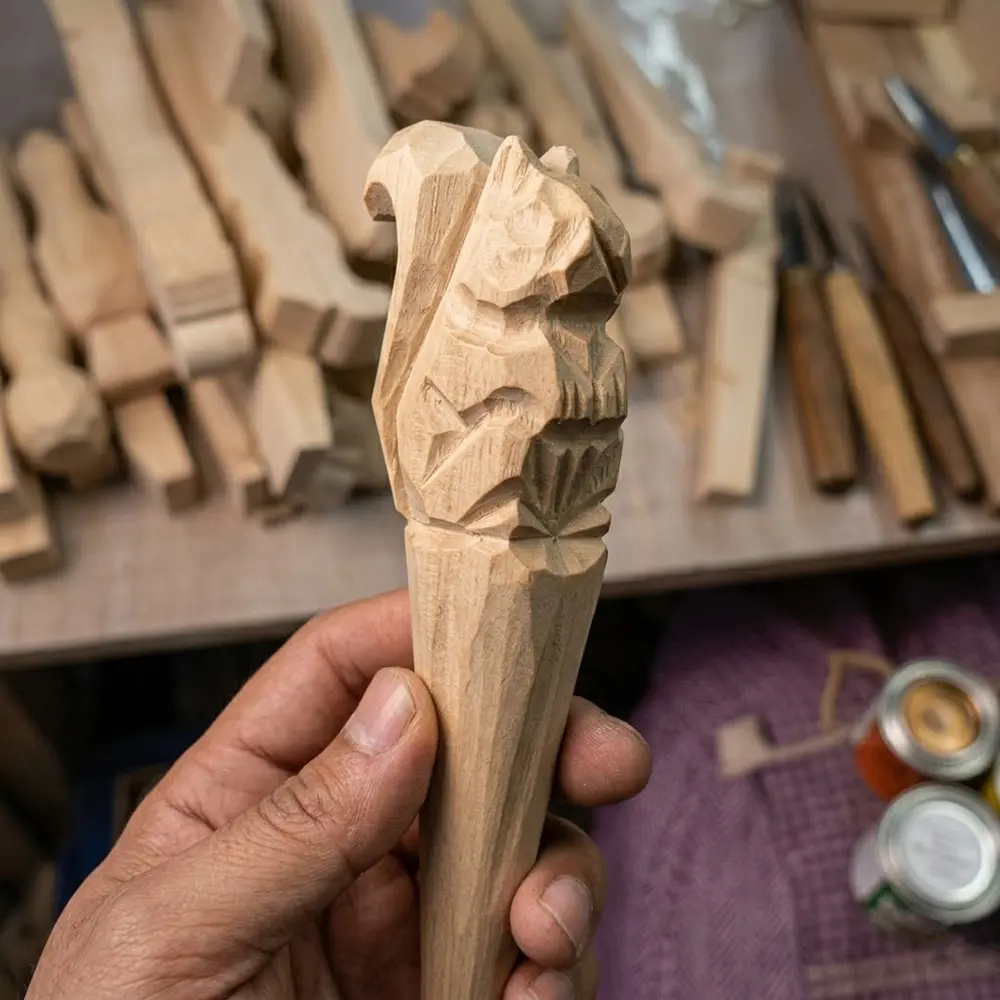
Refillable or disposable is the first decision in an OEM brief for wooden pens, and it is usually made last — after the shape, the engraving and the gift box have been settled. That order is backwards, because the mechanism decides the barrel proportions, the tooling, the packaging copy and whether the piece is still in use two years after the campaign ended.
This is a comparison of the two routes as a manufacturing and commercial decision. It does not cover wood species, balance or grip, which are a separate specification question worked through in our guide to pen wood species and writing comfort. Where a number appears below it is either our own published first-party term or a measurement from our own reference imagery.
Key Takeaways
- A disposable wooden pen discards a hand-carved body. That is the central tension in this category, and no amount of marketing copy resolves it.
- Refillable only works if the refill format stays available. A proprietary or discontinued format turns a kept object into waste and generates retail complaints.
- The refill length drives the barrel. A 10 cm refill and a 7 cm refill produce different pens, so the mechanism is chosen before the shape is drawn.
- Refillable costs more per unit and less per year of use. Which of those matters depends on whether the pen is a campaign item or a product line.
- Packaging has to carry the refill specification. If the recipient cannot identify the refill, the pen is functionally disposable whatever the mechanism says.
- Write the refill standard into the specification and print it on the box. That single line is what separates a pen that lasts from one that is binned.
In This Guide
- Refillable vs Disposable Wooden Pens: The OEM Decision
- What a Refillable Wooden Pen Requires
- The Disposable Route, and Why It Sits Badly on Wood
- Refillable and Disposable Compared
- Refill Formats We Supply
- What This Changes in an OEM Brief
- Best For / Not For
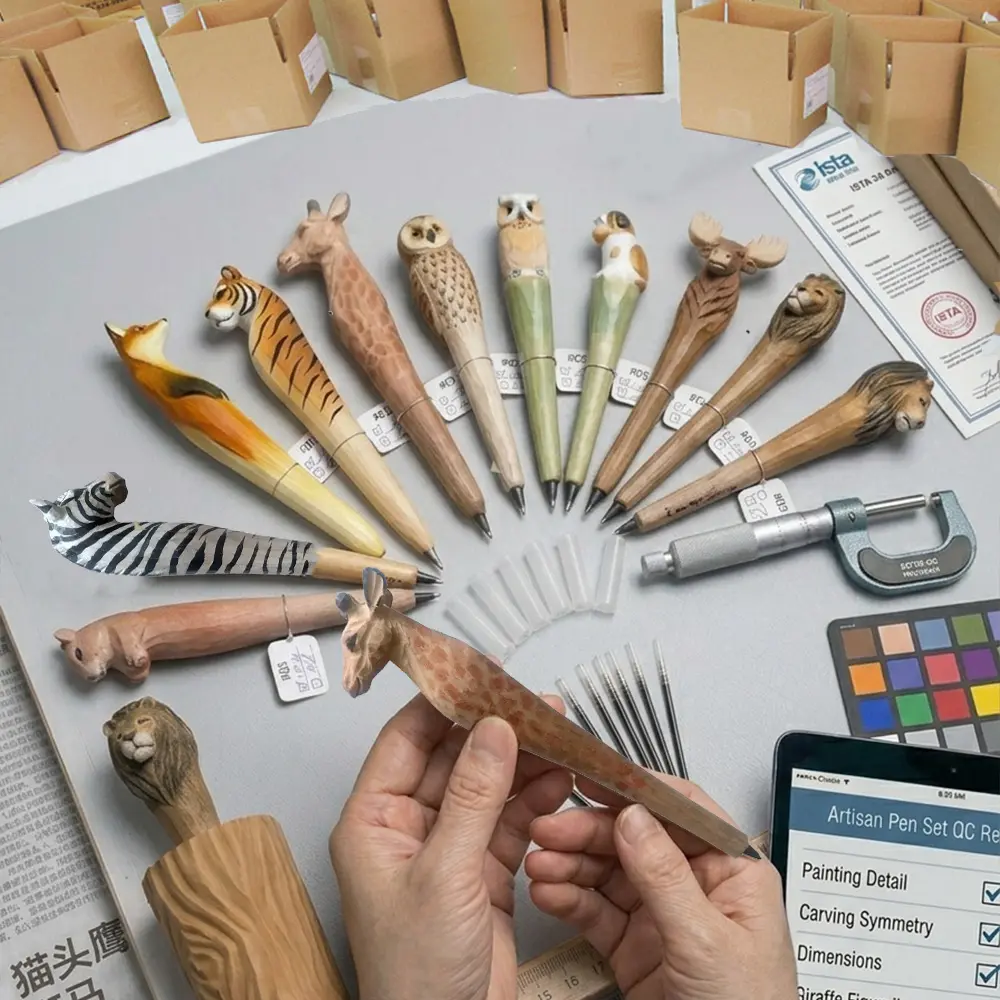
- What We Check on a Pen Run
- End to End: Choosing Between the Two
- Frequently Asked Questions
Refillable vs Disposable Wooden Pens: The OEM Decision
The two routes differ in one respect that drives everything else: what happens when the ink runs out. A disposable pen is discarded whole. A refillable pen keeps its carved body and takes a new refill, which means the body has to be designed to be opened, reassembled and held to a tolerance that survives being opened repeatedly.
For a plastic pen that is a minor engineering point. For a wooden pen it is the whole argument, because the body is not an injection-moulded shell — it is a piece of basswood, pinewood, rubber wood or birch that was carved and painted by hand. Throwing that away after one refill cycle is the reason this category attracts scrutiny, and the reason a buyer specifying wooden pens should decide the mechanism before anything cosmetic.
What a Refillable Wooden Pen Requires
- A barrel built around the refill length. The refill sets the internal cavity and with it the proportions of the pen. This is decided first, not adapted later.
- A mechanism seat that holds tolerance after repeated opening. Wood moves with humidity, so a threaded or friction fit that is perfect at production can loosen or bind months later in a different climate. This is the failure mode that matters most on a wooden barrel.
- A refill format that will still be available. A widely used standard format means the recipient can buy refills anywhere. A proprietary format means the pen stops working the day the supply stops.
- The specification printed on the packaging. If the recipient has to guess which refill fits, they will not buy one, and the pen becomes disposable in practice regardless of its mechanism.
- An after-sales position. Refillable implies a commitment to supply refills. That has to be agreed with the buyer rather than assumed, because it outlives the original order.
The Disposable Route, and Why It Sits Badly on Wood
Disposable is cheaper per unit, simpler to manufacture and carries no after-sales obligation. There is no mechanism seat to hold tolerance, no refill supply chain to maintain, and nothing to explain on the box. For a high-volume promotional drop where the pen is expected to last a quarter, it is the rational choice and it is honest to say so.
The problem is specific to the material. A disposable wooden pen asks a carver to shape and paint a solid timber body that will be binned with the mechanism inside it. Where a brief carries an ESG or sustainability claim, a disposable carved wooden pen is difficult to defend, because the part being discarded took the most labour and material. If a campaign needs a low unit cost and a sustainability story at once, those requirements conflict, and it is better to surface that at brief stage than to find it in a compliance review.
Refillable and Disposable Compared
| Factor | Refillable | Disposable |
|---|---|---|
| What is discarded | The refill only | The whole carved body |
| Unit cost | Higher — mechanism plus tolerance work | Lower |
| Engineering risk | Seat tolerance as wood moves with humidity | Minimal |
| Brand exposure life | Years, if refills stay available | Until the ink runs out |
| After-sales obligation | Yes — refill supply must be agreed | None |
| Defensibility of an ESG claim | Strong, if the refill format is a lasting standard | Weak — the labour and timber are discarded |
Refill Formats We Supply
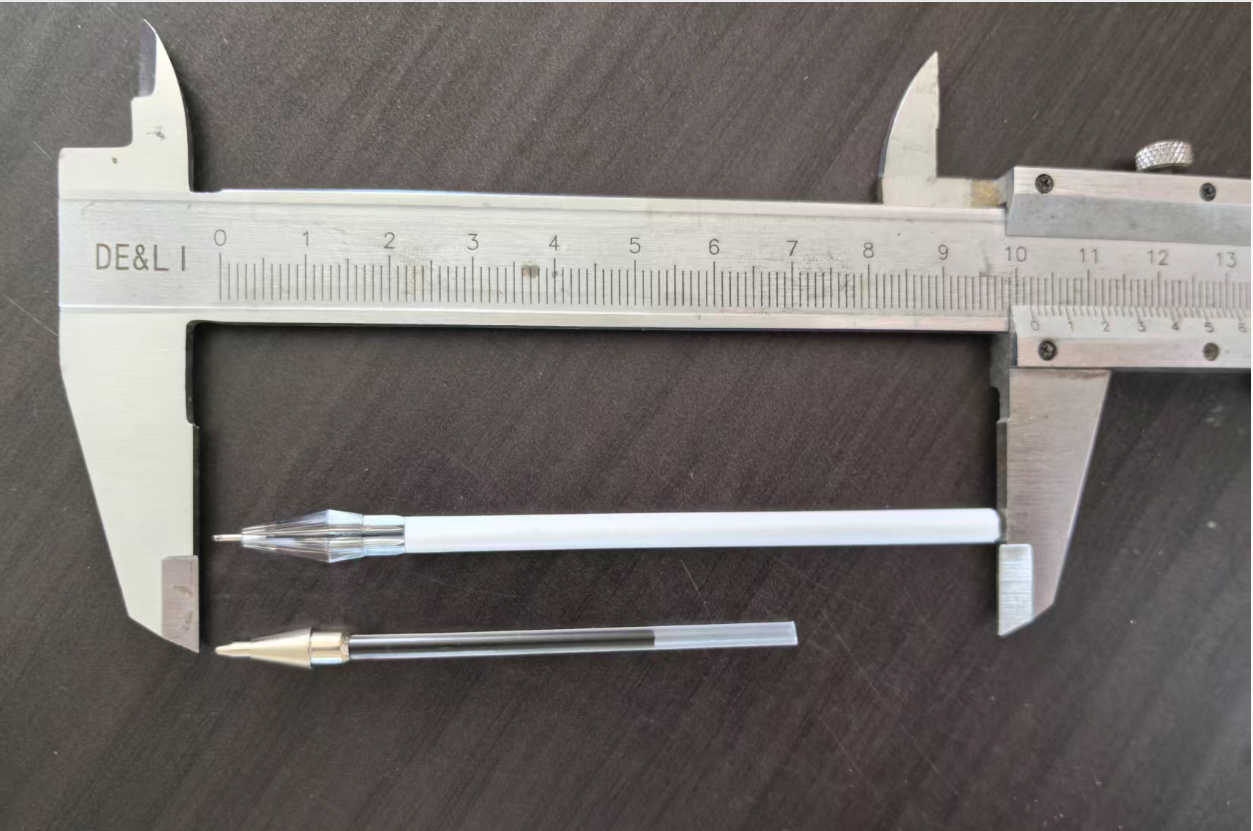
We supply wooden pens together with refills, and our own reference imagery documents two formats, measured rather than described. The first is a 10 cm diamond-shaped black carbon refill supplied with a protective cap. The second is a 7 cm standard ballpoint refill available in blue and black ink. The difference in length is not cosmetic: it changes the barrel cavity, the balance point and the overall pen length, which is why the format is settled before the shape is drawn.
Two cautions apply. A format shown in our imagery is a format we have supplied, not a universal guarantee that it will remain in production indefinitely — a buyer committing to a multi-year product line should ask us to confirm availability in writing at order stage. And the choice between a standard widely distributed format and a more distinctive one is a trade between longevity and differentiation, which belongs to the buyer rather than to the factory.

What This Changes in an OEM Brief
The mechanism decision propagates into almost every part of the brief. Barrel dimensions follow the refill. A mechanism seat may need a jig or tooling, which is a separate cost from the carving and is worked through in our guide to tooling and mould costs for custom wooden products. Packaging has to carry the refill specification and, for a gift set, has to hold the pen securely without pressing on the mechanism — options are covered in our guide to ornament retail packaging.
Our first-party commercial terms are fixed regardless of route: a trial tier of 100 pieces at a USD 500 minimum order value on in-stock designs, air express DDP in 20–30 days, then wholesale and custom at 300 pieces with a USD 3,000 minimum order value by sea in 60–90 days to port, with custom colour boxes from 500 pieces. Payment is T/T at 30% deposit and 70% before shipment, with photographs and video of finished goods supplied first. A refillable pen with a bespoke mechanism seat is custom work and belongs on the second tier. To open a custom project we need clear multi-angle reference photographs, the target size, the wood species and the painting or coating requirement, plus the chosen refill format; the wider route is described in custom product manufacturing and our pen capability sits on the wood carving pen page.
Best For / Not For
| Route | Best for | Not for |
|---|---|---|
| Refillable | Retail product lines, gift sets, brands making a longevity or ESG claim, corporate gifting where the pen is kept | Short campaigns at the lowest possible unit cost, or buyers unable to commit to refill supply |
| Disposable | High-volume event and trade giveaways with a short expected life | Any brief carrying a sustainability claim, or a line intended to be reordered for years |
What We Check on a Pen Run
- Refill fit and repeat opening. The mechanism is fitted, removed and refitted on sample pieces, because a seat that binds or loosens only shows up after the first refill change rather than at inspection.
- Moisture before finishing. Timber is dried to 8–12% so a barrel does not move and change the fit of the mechanism — the standard is set out in our guide to wood moisture content.
- Write test, not appearance test. A pen is judged by how it writes over a page, since balance and grip only reveal themselves in use rather than on a display stand.
- Finish consistency against a retained sample. A run is seen as a group, and drift across it is visible in a gift set where two pens sit side by side.
- Claims limited to what we hold. ISO 9001, BSCI, CE, UKCA, RoHS and EN71 where the article applies. Our facility holds an FSC chain-of-custody certificate, but certified basswood is not currently available to us, so our carvings are not marketed as FSC-certified wood; we supply official timber felling and transport permits, described against the FSC business standards, with our timber position in the context set out by FAO forestry.
End to End: Choosing Between the Two
A brand is ordering carved wooden pens for two purposes at once: a trade-show giveaway and a boxed retail gift set. The instinct is to use one pen for both to save tooling. That is the mistake this decision exists to catch.
Split the brief by what happens to the pen. The giveaway is expected to live in a conference bag for a month; the gift set is expected to sit on a desk for years. Those are different products. The giveaway can be disposable without pretending otherwise, and the gift set has to be refillable with the format printed on the box.
Settle the refill before the shape. For the gift set the format is chosen first — the 7 cm standard ballpoint refill or the 10 cm carbon refill — and the barrel is drawn around it. A sample is made, the mechanism is fitted and removed repeatedly, and the pen is written with rather than looked at.
Order to the right tier and keep the two runs separate. The giveaway may fit an in-stock design on the trial tier at 100 pieces with a USD 500 minimum order value, air express DDP in 20–30 days. The refillable gift set is custom work and runs at 300 pieces with a USD 3,000 minimum order value by sea in 60–90 days to port, with custom colour boxes from 500 pieces. Combining them into one order to reach a minimum produces one compromise pen that serves neither purpose. The wider range is in our wholesale wooden crafts guide.
If you are specifying wooden pens and are not sure whether the brief needs a refillable mechanism or a disposable one, send us the use case, the expected life and the engraving. We will tell you honestly which route the brief supports — including when the two purposes in one order need two different pens.
Frequently Asked Questions
Q: Are your wooden pens refillable?
We supply wooden pens with refills, and our imagery documents two formats: a 10 cm diamond-shaped black carbon refill with a protective cap, and a 7 cm standard ballpoint refill in blue or black ink. Whether a specific design is refillable depends on the barrel being built around one of those formats, settled at sample stage.
Q: Which route costs more?
Refillable costs more per unit: it needs a mechanism and a seat that holds tolerance after repeated opening. It usually costs less per year of use, since only the refill is replaced. Which figure matters depends on whether the pen is a short-life campaign item or a product line reordered for years. We quote no cost comparison here, since both sides move with the design.
Q: What goes wrong with refillable wooden pens?
The mechanism seat. Wood moves with humidity, so a fit correct at production can bind or loosen months later in a different climate. That is why moisture is controlled before finishing and why samples are opened and refitted repeatedly, not inspected once. The second failure is not mechanical: if the refill format is not printed on the packaging, the pen is discarded anyway.
Q: Can a disposable wooden pen carry a sustainability claim?
It is difficult to defend. The discarded part is the carved timber body — the part carrying the most labour and material — so a disposable wooden pen undercuts the claim it is used to make. If a brief needs both low unit cost and a sustainability position, raise that conflict early. Refillable supports the claim, provided the refill format stays available.
Q: Can one pen serve a giveaway and a retail gift set?
It can, and usually serves neither well. A giveaway wants the lowest unit cost and no after-sales obligation; a gift set wants a refillable mechanism, the specification printed on the box and a finish judged against a retained sample. Combining them to reach a minimum produces a compromise. Splitting the brief keeps the giveaway in-stock and puts the gift set on the custom tier, where the mechanism can be specified properly.
Sources
Authority: FSC business standards · FAO forestry
Related: Pen wood species and writing comfort · Tooling and mould costs for custom wooden products · Wholesale wooden crafts