Skip to content
Bringing a custom wooden animal sculpture from a single reference photo to a pallet-ready shipment is not a linear path. It involves material selection, artisan assignment, iterative sampling, and compliance checks that vary by destination market. For retailers, brand owners, and importers sourcing custom wooden animal sculptures, understanding each stage of the OEM workflow helps avoid costly miscommunication and ensures the finished product matches the original vision. This guide walks through the entire process at Ever Creation’s wood carving factory — a facility with over 20 years of hand-carving production experience.
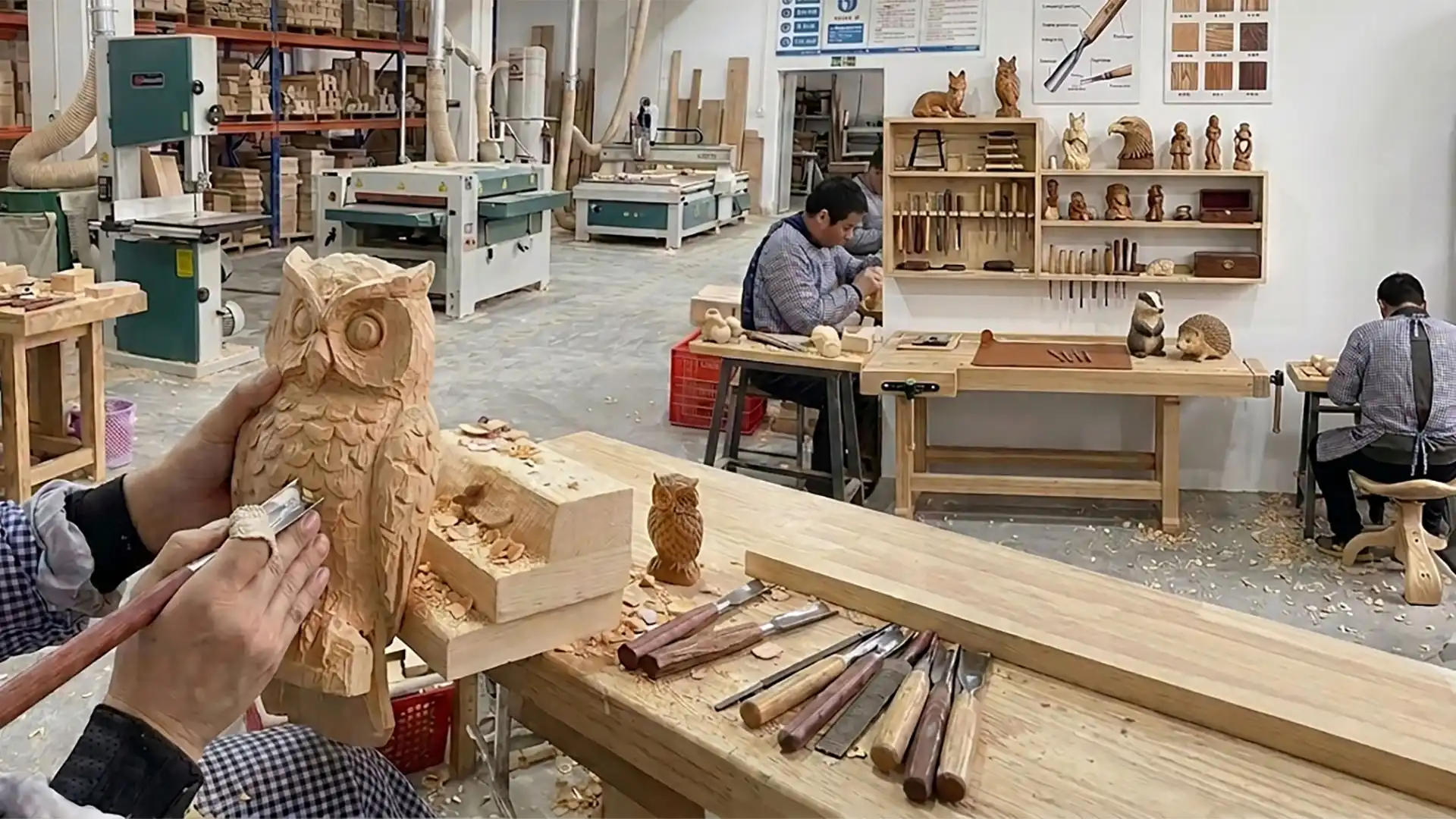
The OEM Process: From Reference Photo to Mass Production
Every custom order begins with a conversation, not a contract. The client sends multi-angle reference photos of the desired animal sculpture along with target dimensions, preferred wood species, and painting or finishing requirements. This information package is the single most important input — it determines which artisans are best suited for the project, what tooling is needed, and how many sampling rounds to budget for.
Once the design team reviews the brief, they produce a technical sketch or digital mockup. For clients who need a physical feel before committing, a hand-carved sample is produced. This sample stage typically takes 7–15 days depending on complexity. The client reviews the sample for proportions, surface texture, paint accuracy, and overall character. Approval triggers mass production; revision requests loop back to the sample stage until both sides sign off.
This iterative approach is standard across the industry, but the quality gap between factories often shows up in how faithfully the mass-production run matches the approved sample. At Ever Creation, the same artisan team that builds the sample often oversees the production batch, maintaining consistency across hundreds of units. For buyers comparing suppliers, asking to see sample-to-production comparison photos is a practical due-diligence step.
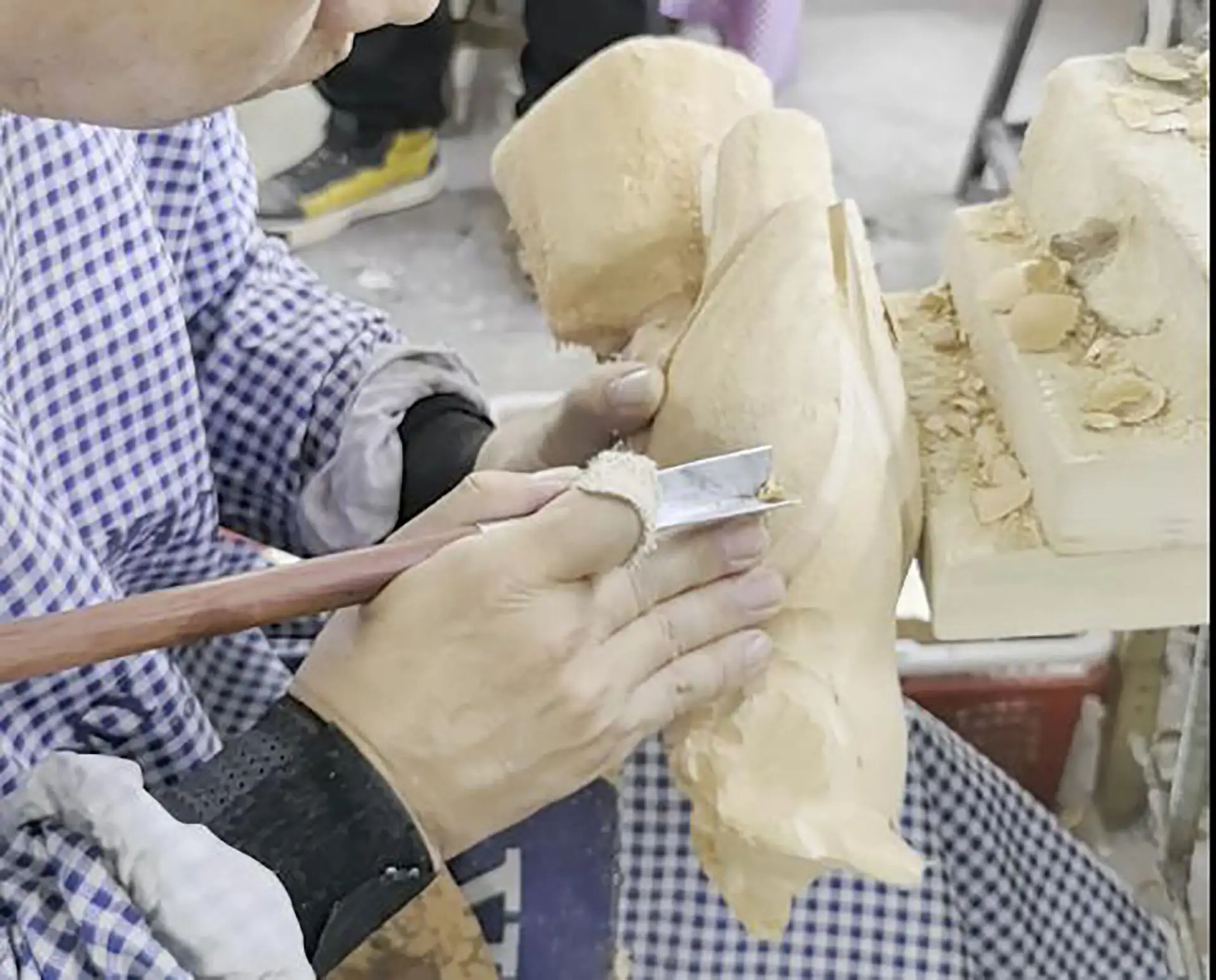
Wood Material Selection: Basswood, Pine, Rubber Wood, and Birch
The choice of wood species affects carving detail, weight, cost, and how the piece ages over time. Four species are available for custom wooden animal sculpture production:
- Basswood — The primary material. Fine-grained, soft enough for intricate detail yet dense enough to hold sharp edges after carving. Basswood accepts eco-friendly non-toxic paint evenly, which matters for toy-grade products. It is the default choice for most animal figurines and decorative carvings.
- Pinewood — Slightly harder with visible grain patterns. Works well for rustic or natural-finish pieces where the wood texture is part of the design language. Not ideal for ultra-fine detail work.
- Rubber wood — A plantation-sourced hardwood with moderate density. Cost-effective for larger production runs. Takes paint well but has a coarser grain than basswood.
- Birch wood — Light-colored with a tight, uniform grain. Suitable for pieces that require a pale base tone or will receive a clear-coat finish rather than opaque paint.
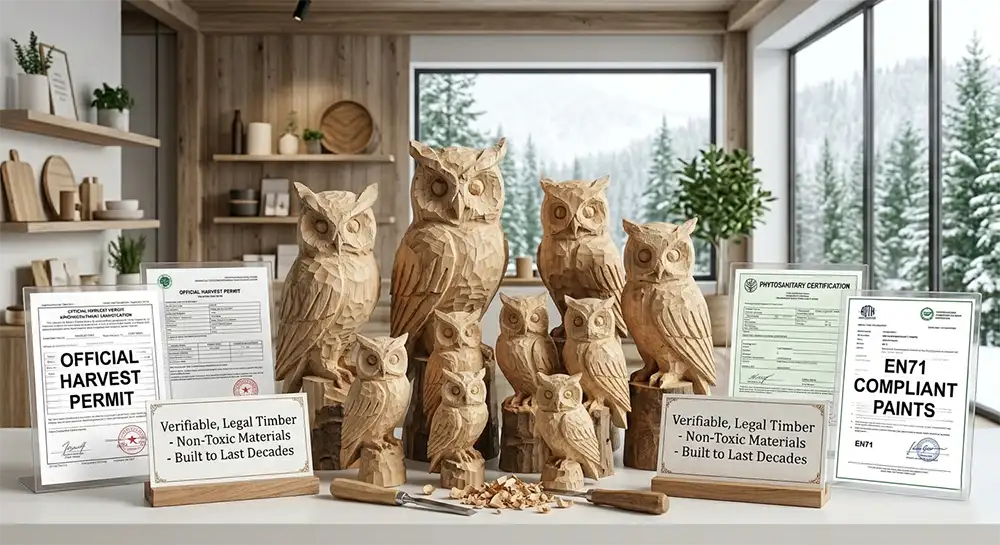
The factory provides full traceability documentation—including official timber felling permits and transport certificates—which effectively satisfies most compliance audits and verification requirements. Always clarify wood documentation and compliance needs prior to placing an order rather than assuming availability.

Size Capabilities and Design Constraints
The factory produces 3D carvings ranging from 5 cm miniature figurines to 40 cm statement pieces. For flat-relief or wall-mounted designs, 2D carving capacity extends up to 80 cm. These ranges cover the majority of retail-ready animal sculptures — from shelf-sitting owls and forest animal sets to larger decorative wall panels.
Size affects more than the final visual impact. Smaller pieces (under 10 cm) require artisans with steady hands and fine-blade tools; they take longer per unit and carry higher per-piece labor costs. Larger pieces (25–40 cm) demand careful anti-cracking treatment to prevent splitting during international transit. Designers should discuss intended use — shelf display, tabletop centerpiece, wall hanging — early in the process so the factory can recommend proportions that balance aesthetics with structural integrity.
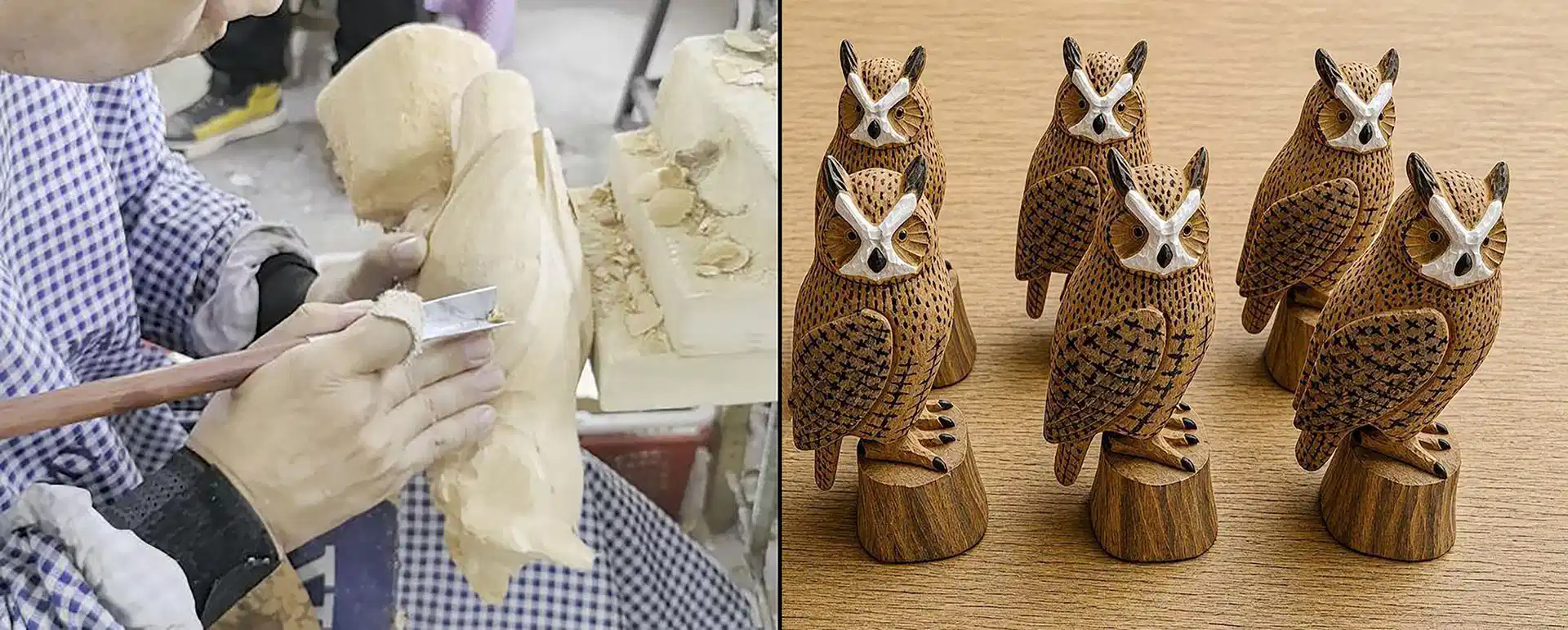
Hand-Carving vs. CNC and Mold Production
This distinction matters for buyers who have received quotes from multiple suppliers at very different price points. Every sculpture produced at this facility is 100% hand-carved by artisans whose average experience exceeds 10 years. No CNC routers, no molds, no casting.
Hand-carving produces what the industry calls “artisanal variance” — subtle differences between individual pieces that signal authentic craftsmanship. Two hand-carved owls from the same design file will share the same proportions and color palette, but no two are identical. This is a feature, not a defect, and it is exactly what premium retailers and gift brands seek.
CNC and mold-based production offers uniformity at scale, but it eliminates the texture variation and organic feel that buyers associate with quality wooden crafts. For brands positioning in the mid-to-premium segment, hand-carving is the correct manufacturing choice. For commodity-price buyers who need absolute uniformity across thousands of units, a different production method may be more appropriate — though it will not come from this factory.
Quality Control and Anti-Cracking Treatment
Wood is a living material that responds to humidity and temperature changes. A sculpture carved in a heated factory in northeast China and shipped to a dry warehouse in Arizona faces real risk of cracking. The factory addresses this through a dedicated anti-cracking log treatment applied during the raw material preparation stage. This treatment stabilizes the wood’s moisture content and creates internal resilience against climate shifts encountered during international shipping and long-term display.
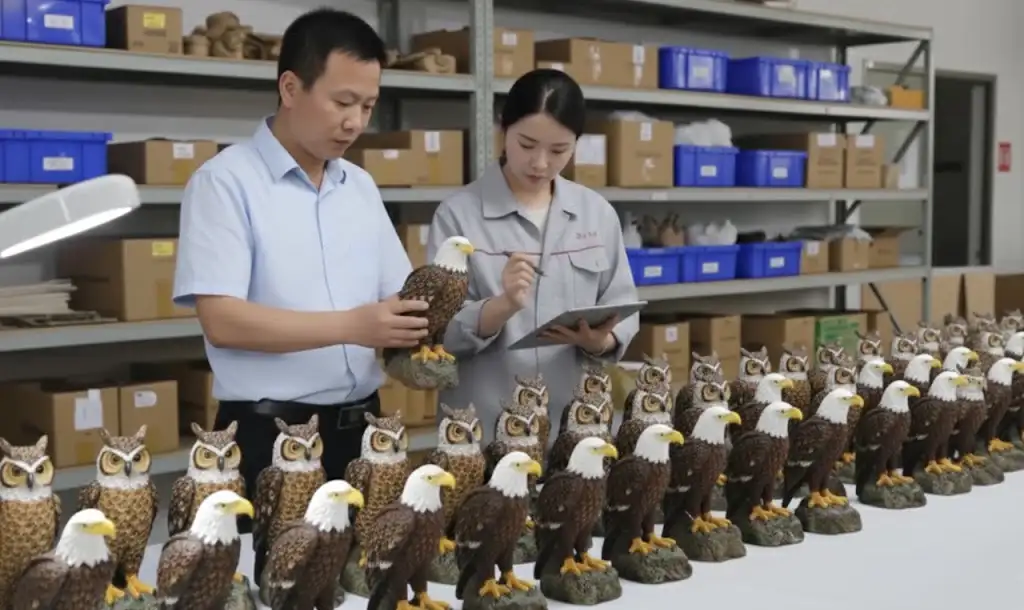
Beyond anti-cracking, the quality control workflow includes: visual inspection of each carved piece for surface defects, paint consistency checks against approved color standards, dimensional verification against the approved sample, and final packaging inspection to ensure protective wrapping meets transit requirements. For orders destined to the EU or UK, additional compliance checks verify that paint and finish materials meet EN71-1/-2/-3 safety standards for toy-grade products.
Certifications for International Markets
Compliance documentation is non-negotiable for retailers selling into regulated markets. The factory maintains the following certifications:
- EN71-1/-2/-3 — European toy safety standard covering mechanical properties, flammability, and chemical migration. Essential for any wooden product marketed as a children’s toy in the EU.
- CE marking — Required for products sold in the European Economic Area.
- UKCA marking — The UK equivalent of CE, required for products entering the British market post-Brexit.
- RoHS — Restriction of Hazardous Substances, confirming the absence of lead, mercury, cadmium, and other restricted materials in finishes and paints.
- ISO 9001 — Quality management system certification.
- BSCI audit report — Business Social Compliance Initiative, demonstrating ethical labor practices. Major European retail chains and supermarket groups regularly require and accept this documentation.
For buyers entering new markets, it is worth confirming certification requirements with your local importer or customs broker before placing the order. The factory can provide current certificates upon request during the sampling stage.
Packaging Engineered for Safe International Shipping
Wooden sculptures are fragile relative to their weight. A poorly packed 30 cm basswood owl can arrive with a broken beak or chipped wing — and the buyer, not the factory, absorbs that loss unless packaging meets recognized transit standards.
The factory uses a three-layer packaging system:
- Individual wrapping — Each piece is wrapped in white paper to protect the painted surface from scratches and moisture.
- Inner box — 6 to 12 pieces per inner box (21 x 11 x 14 cm, 3-ply corrugated cardboard). The inner box provides cushioning and prevents pieces from shifting against each other.
- Master carton — 240 to 480 pieces per master carton (58 x 44 x 31 cm, 5-ply corrugated cardboard). Each master carton weighs between 8.0 and 15.0 kg and is tested to ISTA 3A drop-test standards, which simulate the handling impacts of parcel delivery networks.
For brands requiring custom retail packaging — branded boxes, hang tags, barcoding — the factory accommodates these requirements at MOQs of 500 pieces. Discuss custom packaging needs during the sampling stage to ensure the packaging design integrates with the product dimensions.
MOQ, Pricing Tiers, and Lead Times
Pricing for custom wooden animal sculptures depends on size, complexity, wood species, and order volume. The factory offers three entry tiers:
| Order Type | MOQ | Minimum Value | Lead Time |
|---|---|---|---|
| Trial Order | 100 pieces | $500 | 20-30 days |
| Wholesale | 300 pieces | $3,000 | 60-90 days for large custom orders |
| Custom Packaging | 500 pieces | – | Per project scope |
Stock items ship within 7-15 days. Payment terms follow a standard T/T structure: 30% deposit at order confirmation, 70% balance before shipment. Small trial orders and samples can use an online payment gateway for convenience.
Trade terms are flexible: EXW, FOB, CFR, CIF, DDU, and DDP are all available. The factory offers DDP (Delivered Duty Paid) service directly to warehouses in the US, Europe, and Australia, including Amazon FBA fulfillment centers — a significant convenience for e-commerce brands that want a hands-off logistics experience.
For buyers evaluating total landed cost, remember that HS Code 4420.1990 or 9505.1000 applies depending on the product classification (wooden ornament vs. festive article). Your customs broker can confirm the correct code and applicable duty rate for your market.
For broader context on the product range this factory produces, the wholesale wooden animal carvings catalog covers stock designs across multiple animal categories. Brands exploring complementary product lines may also find the wooden home decor collections useful for understanding how animal sculptures fit into a wider home decor assortment. And for buyers concerned about design confidentiality during the OEM process, the factory’s custom design and IP protection policies outline how reference materials and proprietary designs are safeguarded.

Frequently Asked Questions
Q1: Can I send a photo of an animal sculpture I found online and have it replicated?
Yes, multi-angle reference photos are the standard starting point for custom orders. The factory will review the images, assess feasibility in basswood or other available species, and produce a sample for your approval. Note that the factory respects intellectual property — if the design is clearly owned by another brand, they will discuss modifications to create an original piece inspired by your reference.
Q2: What is the minimum order for a fully custom design?
The trial order MOQ is 100 pieces with a $500 minimum order value. This applies to fully custom designs based on your reference photos, not stock items. Lead time for trial orders is 20-30 days.
Q3: Are the sculptures safe for children?
The factory uses eco-friendly non-toxic paint and holds EN71-1/-2/-3 certification, which covers mechanical safety, flammability, and chemical migration. CE and UKCA markings are available for EU and UK markets respectively. Confirm toy-grade certification requirements at the time of order to ensure the correct paint and finish materials are used.
Q4: How do you prevent cracking during international shipping?
All raw wood undergoes anti-cracking log treatment before carving begins. This stabilizes the moisture content and creates resilience against the humidity and temperature fluctuations encountered during ocean freight, air cargo, and warehouse storage in different climate zones.
Q5: Can you ship directly to Amazon FBA warehouses?
Yes. DDP (Delivered Duty Paid) service is available to warehouses in the US, Europe, and Australia, including Amazon FBA fulfillment centers. The factory handles all logistics, customs clearance, and duty payment under DDP terms.
Ready to Start Your Custom Wooden Animal Sculpture Project?
Send your reference photos and specifications to Ever Creation’s factory team. From sample to mass production, the entire OEM process is managed in-house by artisans with 10+ years of carving experience.
Request a Quote from the Factory