Skip to content
Standard pressed white salt blocks fail in two critical areas: they lack the structural integrity to prevent dangerous “chunk biting” and miss the 84-mineral profile needed to bridge modern forage gaps. With horses requiring a minimum of 1.5% body weight in forage daily to maintain gut function, relying on industrial sodium chloride (95-98%) leaves critical nutritional deficits in Zinc and Selenium that only denser, mineral-rich sources can address.
This guide dissects the operational differences between vacuum granulated blocks and mined Himalayan salt block, providing a clear cost-benefit analysis for wholesale buyers. We examine strict quality protocols, including C=0 sampling plans and AS9100D Clause 8.4.3 compliance, ensuring your inventory meets the durability standards required for safe, free-choice equine feeding.
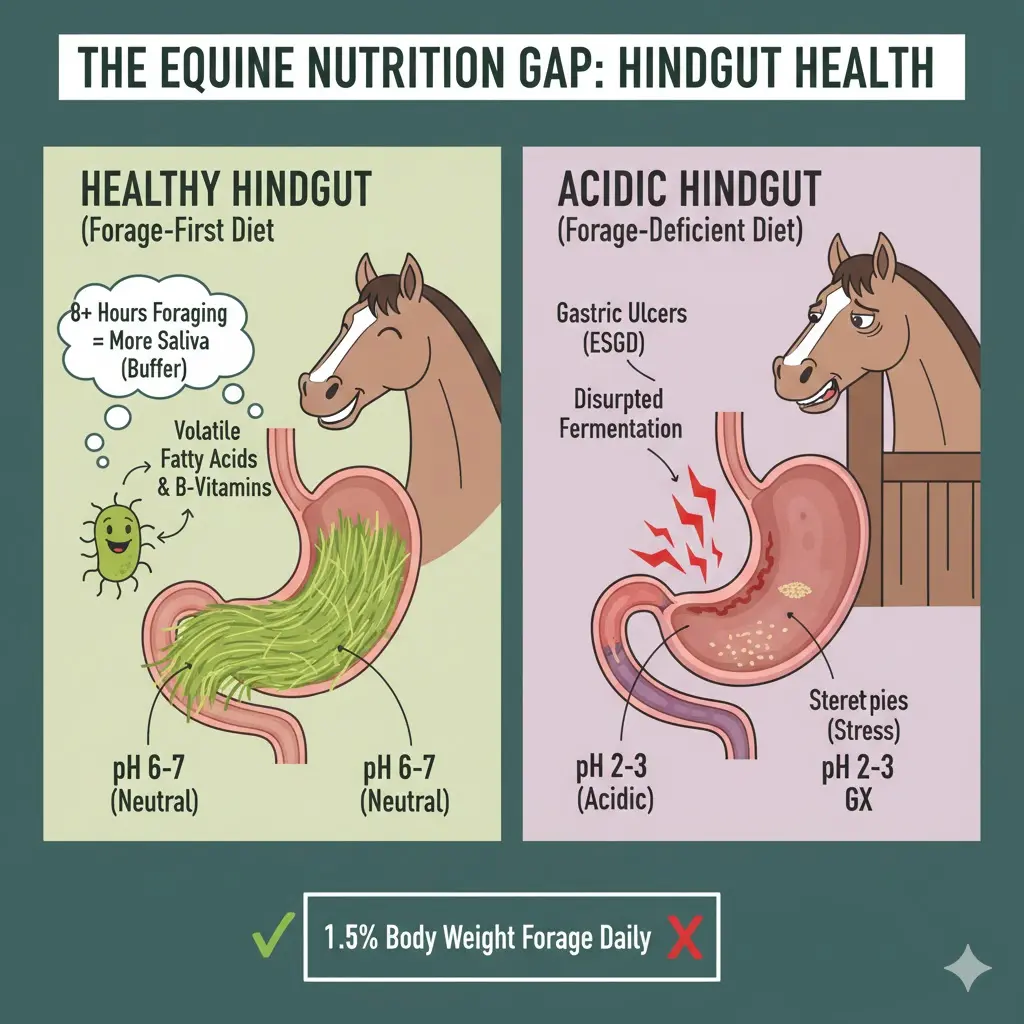
The Equine Nutrition Gap
Modern stable diets often fail the 1.5% body weight forage threshold, disrupting hindgut fermentation and causing gastric ulcers due to unbuffered acid.
The Forage-First Deficit: Hindgut & Ethological Impacts
Inadequate forage intake fundamentally disrupts hindgut fermentation. Without sufficient fiber, microbes cannot convert material into essential Volatile Fatty Acids (VFAs) and B-vitamins, which horses rely on for energy. This deficit triggers a physiological chain reaction. Reduced chewing time significantly lowers saliva production, removing the primary natural buffer against gastric acid. Consequently, the stomach loses its fiber barrier, and acid splashing leads directly to Equine Squamous Gastric Disease (ESGD).
The impact extends to ethology. Horses have an evolutionary drive to forage for over eight hours daily. Confining them to stalls without continuous access to long-stem fiber frustrates this instinct. This deprivation manifests as behavioral depression and stereotypies (stall vices), which are clinical signs of stress rather than simple “bad habits.”
Quantitative Thresholds: Dry Matter & Mineral Ratios
Managing equine nutrition requires adherence to specific physiological limits rather than tradition. You must maintain specific ratios to ensure GIT motility and metabolic health.
- The 1.5% Rule: A 500 kg horse requires a minimum of 7.5 kg of forage daily (approx. 8.3 kg as-fed) to maintain gut function.
- Dietary Composition: Concentrates must comprise less than 50% of the total diet to prevent hindgut acidosis and volatile pH swings.
- Mineral Balance: Diets must target a Ca:P ratio of 1.5–2:1. You must balance high-calcium alfalfa with phosphorus sources or use buffering supplements for high-grain regimens.
- Absolute Dry Matter Floor: 12.5 g/kg of body weight (6.25 kg DM/day for a 500 kg horse).
Pink Salt vs. Pressed White Blocks
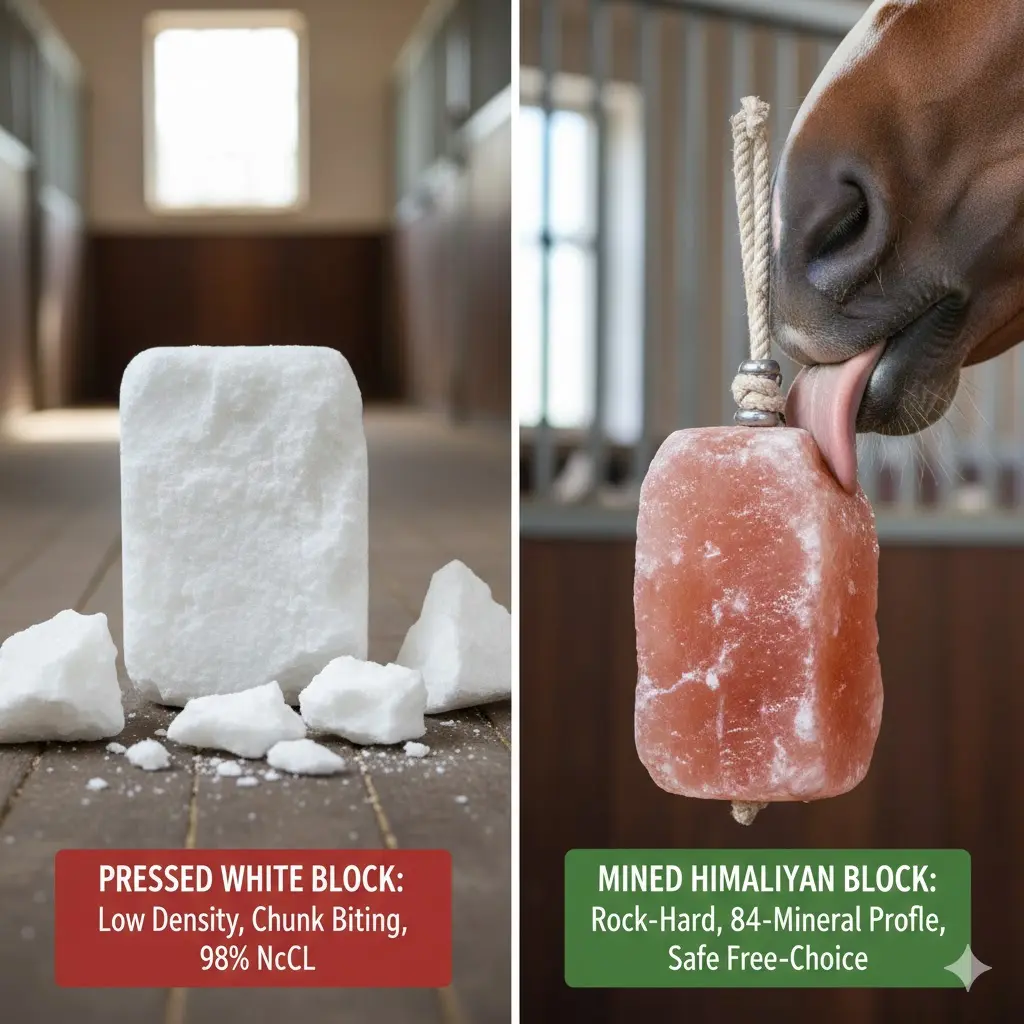
Pressed white blocks soften and encourage excessive chunk biting, whereas rock-hard Himalayan pink salt enforces natural licking and resists weather damage.
| Feature | Pressed White Blocks | Himalayan Pink Salt |
|---|---|---|
| Base Material | Vacuum granulated or solar salt | Mined rock salt (Khewra Mine) |
| Mineral Profile | Pure NaCl (95-98%) | NaCl + 2-4% Polyhalite (84 minerals) |
| Physical Density | Compressed granules (Softens) | Crystalline Rock (Hard) |
| Primary Risk | Chunk biting (Over-consumption) | Rough texture (Tongue abrasion) |
Compositional Profile: Refined Granules vs. Mineral-Rich Rock
White blocks are industrial commodities. Manufacturers create them by compressing fine vacuum granulated salt or solar salt under high pressure. This process results in a product that is purely sodium chloride (95-98%) with zero natural mineral variation. While efficient, these blocks sometimes require binding agents to maintain their shape, lacking the structural integrity of natural stone.
Himalayan blocks are unprocessed raw stones. Miners extract these directly from the Khewra Salt Mine in Pakistan, where ancient tectonic pressure formed their crystalline structure. The pink hue indicates the presence of 2-4% polyhalite, a complex mineral delivering iron, magnesium, and potassium alongside the sodium.
Structural Density and Consumption Safety
The physical hardness of the salt dictates how a horse consumes it. White blocks possess a smooth surface that softens rapidly when exposed to moisture or saliva. This softness allows horses to engage in “chunk biting,” where they bite off large pieces rather than licking. This behavior causes sodium intake to spike well above the standard 30g/day maintenance requirement and wastes product.
Pink salt is mechanically superior for regulation. Its “rock hard” density prevents horses from biting into the block, forcing them to lick. This natural limiting factor ensures safe, gradual sodium intake. While studies indicate horses often prefer the taste of refined white salt initially, the durability of pink salt eliminates the crumbling and weather-induced waste common with pressed blocks in outdoor settings.
The 84 Minerals Benefit
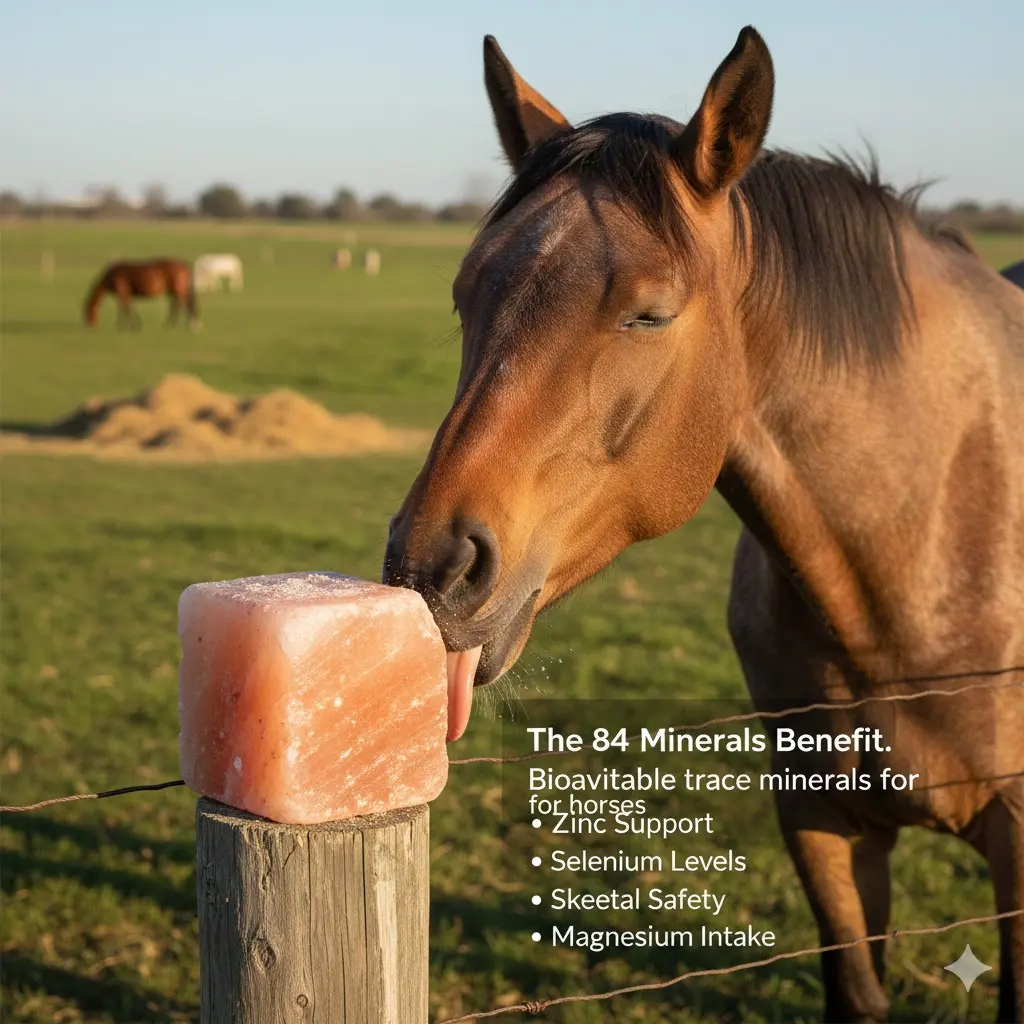
Himalayan salt delivers 84 bioavailable trace minerals, filling critical nutritional gaps in Zinc and Selenium that standard processed white salt blocks miss.
Bioavailability of the 84-Mineral Spectrum
Standard white salt blocks are typically processed heavily, stripping away everything but Sodium and Chloride. Himalayan rock salt retains its natural crystalline structure, which houses a complete profile of 84 trace minerals. This structure matters because it dictates bioavailability; the minerals exist in a colloidal form that passes more easily through the equine digestive tract compared to the inorganic compounds found in pressed industrial blocks.
This natural composition also prevents antagonist imbalances. Artificial mineral blocks often contain random concentrations that can inhibit absorption. For example, excess Molybdenum interferes with Copper uptake. Himalayan salt maintains natural ratios, such as the ideal 4:1 Copper:Molybdenum balance, ensuring that one mineral does not block the absorption of another.
Bridging Nutritional Gaps: Zinc, Selenium & NRC Data
Forage alone rarely meets the full micromineral requirements for horses, particularly in regions with depleted soil. Bermuda hay, for instance, frequently tests low for Zinc and Selenium. Himalayan salt licks provide a free-choice mechanism to bridge these specific deficits without the risk of force-feeding synthetic additives.
- Zinc Support: Contributes to the NRC requirement of 1-3 mg/day (for a 500kg horse), critical for maintaining hoof wall integrity and skin health.
- Selenium Levels: Supplements maintenance needs (1 mg/day) and working horse requirements (1.25+ mg/day) in a bioavailable form.
- Skeletal Safety: Adheres to a safe Calcium:Phosphorus ratio (target 1.3:1), avoiding the skeletal risks associated with inverse ratios found in some grain-heavy supplements.
- Magnesium Intake: Aligns with daily requirements of 7.5-15 g/day, supporting nervous system function and muscle recovery.
Enhance Livestock Vitality with 100% Natural Himalayan Salt
Durability: “Rock Hard” vs. Crumbling
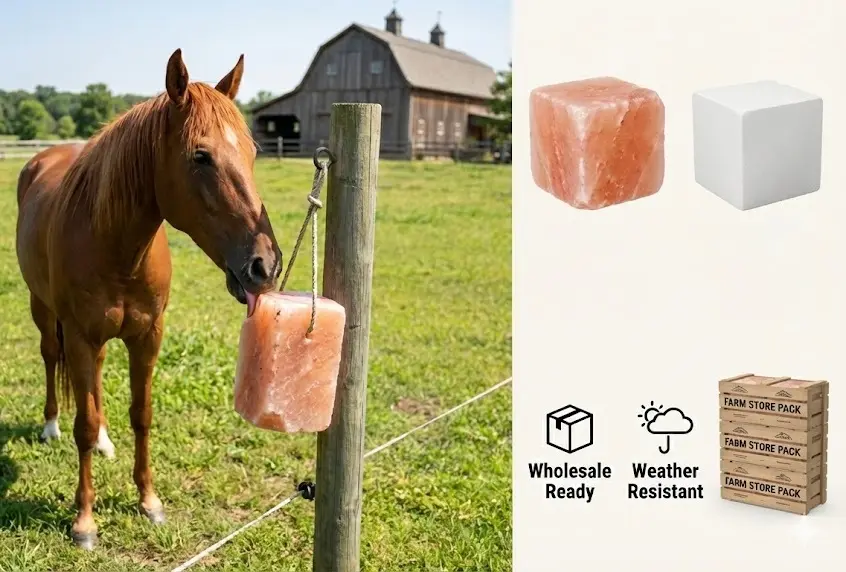
Natural rock and 1000-ton compressed licks share one critical trait: extreme density that prevents horses from biting off chunks or dissolving in rain.
The Physics of Hardness: Geological vs. Mechanical Compression
Natural Himalayan salt derives its structural integrity from over 550 million years of geological pressure. This creates a crystalline structure dense enough to resist shattering. High-quality manufacturing mimics this process using industrial hydraulic presses.
Machines apply up to 1000 tons of force to fine pink salt powder (98% NaCl). This mechanical compression fuses the crystals without chemical binding agents, creating a block that matches the density of mined rock. Both methods result in an interlocking matrix that eliminates the crumbling issues common in softer, chemically bound licks.
Field Performance: Weather Resistance and Bite Safety
Field testing confirms that 1000-ton compressed blocks withstand extreme weather just like natural stone. Unlike low-density pressed blocks that turn to mush in the rain, these high-pressure variants maintain their shape outdoors. This hardness serves a primary safety function: it stops horses from biting off large chunks, forcing them to dose themselves slowly via licking.
Compressed licks offer one specific advantage over natural cuts: surface texture. Mined rocks often feature sharp, irregular edges that risk tongue bruising. Hydraulic compression guarantees a perfectly smooth, uniform finish that protects the animal’s mouth while delivering the same durability.
Safe Hanging: Ropes vs. Holders
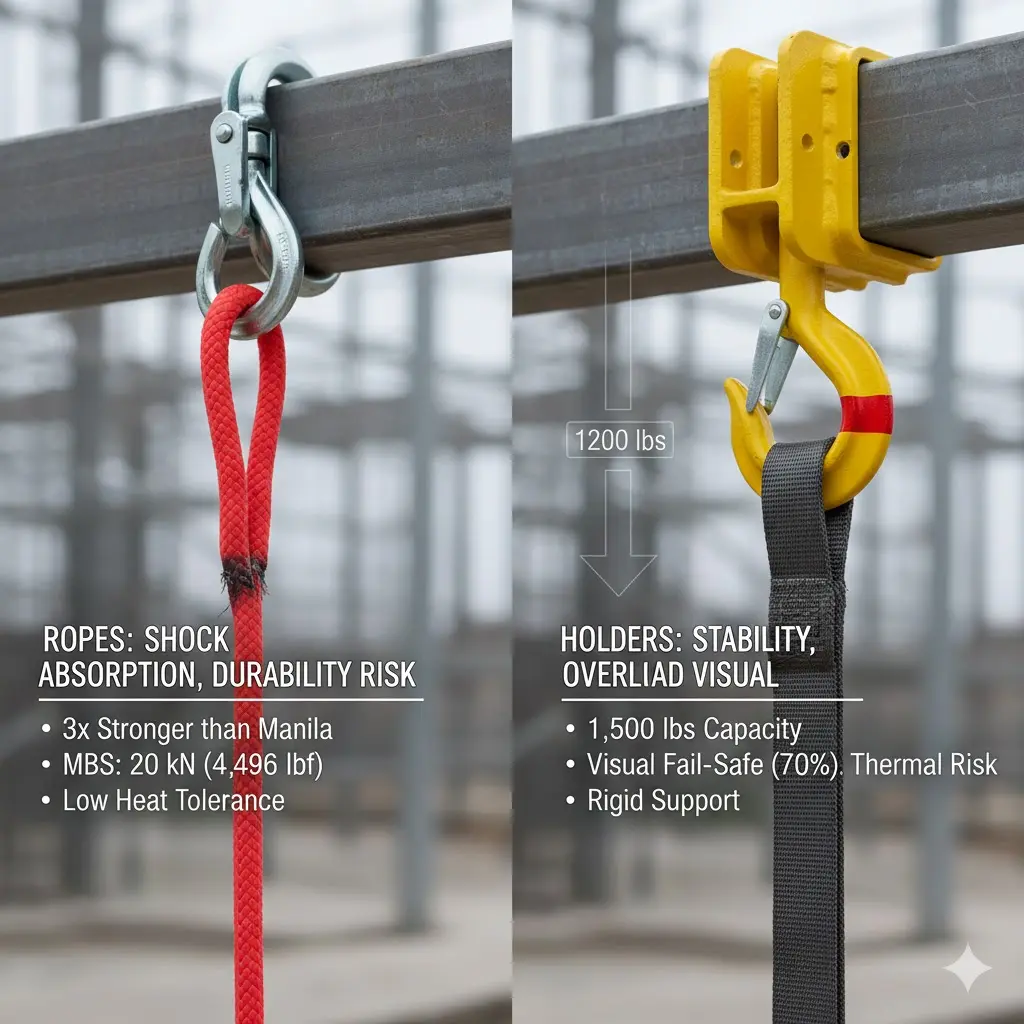
Safe suspension requires a trade-off: static nylon ropes offer shock absorption, while engineered holders provide stability for 1,500-lb loads and visible overload indicators.
Material Mechanics: Rope Flexibility vs. Holder Stability
Ropes used for suspension must utilize static or low-stretch designs, such as those meeting NFPA 1858 standards, to minimize elongation during use. Nylon ropes are the superior choice for shock resistance, testing approximately three times stronger than manila rope of the same diameter. However, rope-based systems face durability issues in prolonged static setups; polyolefin materials have low heat thresholds and degrade quickly under friction heat.
Engineered holders and metal suspension systems mitigate these thermal risks and eliminate the “bounce” associated with dynamic ropes. While block systems introduce a 10% friction loss per sheave, they provide the rigidity necessary for heavy, stationary loads where movement compromises safety.
Load Capacities and Failure Indicators
Anchorage structures generally require a minimum support capacity of 5,000 lbs per load or employee to ensure a sufficient safety margin. Alternatively, a safety factor of at least two must be maintained under the supervision of a qualified person. Modern hardware includes mechanical fail-safes that warn of structural compromise before a catastrophic drop occurs.
- Visual Warning System: Safety hooks on holders are designed to open at 70% of the block’s maximum strength, creating a visible indicator of overload.
- System Capacity: Holder systems support up to 1,500 lbs total when configured with proper redundancy (e.g., self-closing snap hooks).
- Rope Standards: Technical-use life safety ropes must meet a Minimum Breaking Strength (MBS) of 20 kN (4,496 lbf) per NFPA 1983.
- Positioning Limits: Lanyards used for positioning are strictly limited to free falls of less than 2 feet to prevent shock damage to the anchorage.
Sizing Guide (Lumps vs. Cut Blocks)
Natural lumps (1.3kg–3kg) enable individual stall monitoring, while cut blocks (2kg–10kg) fit standardized holders for durable, free-choice pasture feeding.
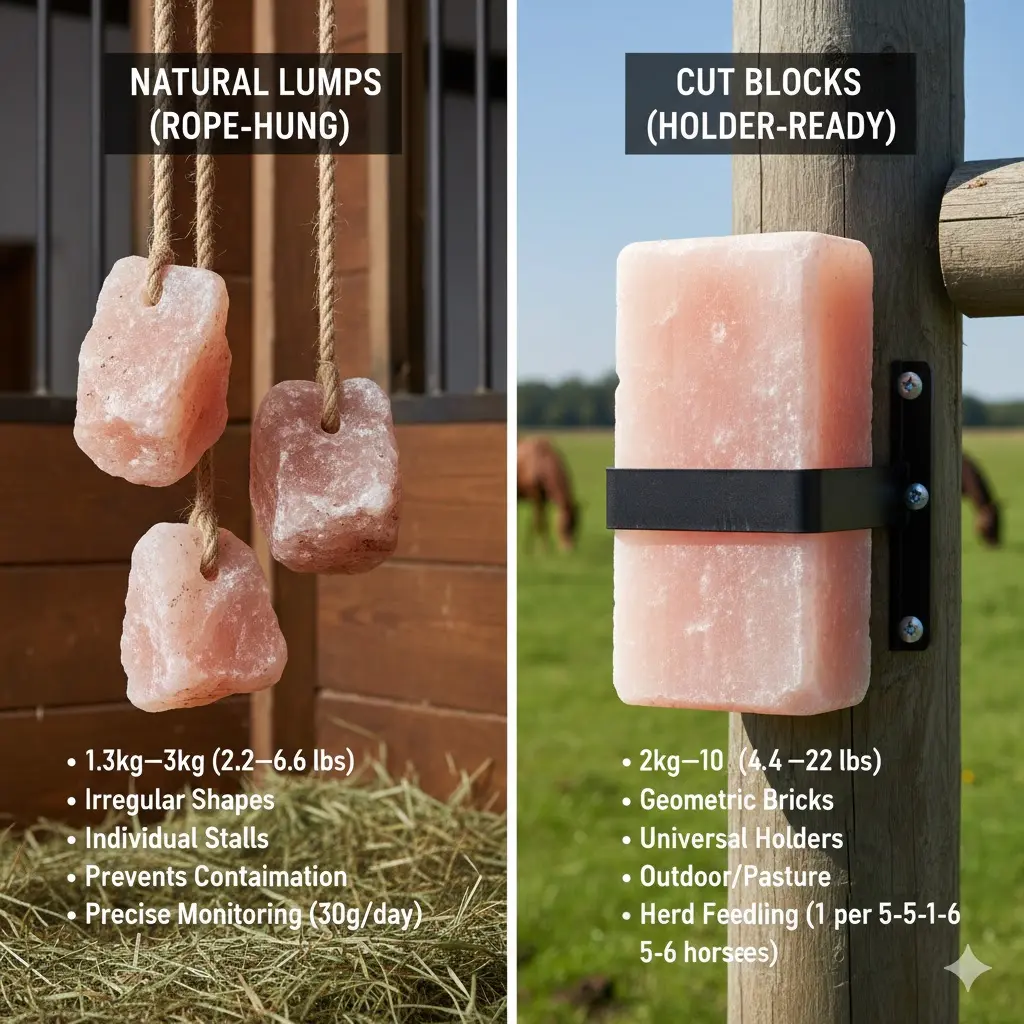
Form Factor Comparison: Natural Lumps vs. Geometric Blocks
Manufacturing processes dictate how these salts function in a stable versus a pasture. You choose the form factor based on the infrastructure available—specifically, whether you have mounting hardware or rely on suspension ropes.
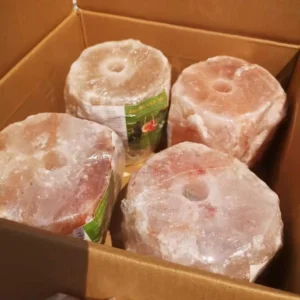
- Natural Lumps (Rope-Hung): These irregular shapes typically weigh 1.3kg to 3kg (2.2–6.6 lbs). They come drilled for rope suspension, which keeps the salt elevated off the ground to prevent manure contamination and allows for precise intake monitoring in individual stalls.
- Cut Blocks (Holder-Ready): Manufactured into geometric bricks, these blocks are engineered to fit standard metal or composite holders. This design prevents waste and contamination in outdoor or pasture settings where hanging a rope is impractical.
Technical Specifications: Standard Weights and Usage Ratios
Effective herd management requires matching the salt mass to the number of horses to prevent resource guarding or depletion. Industry research supports specific dimensions and ratios for optimal electrolyte delivery.
- Standard Dimensions: Cut blocks generally adhere to the 2”x4”x8” (approx. 2kg or 4.4 lbs) norm to fit universal holders. Larger operations often utilize bulk options in 5kg and 10kg sizes for extended durability.
- Usage Protocols: For ad libitum access in herds, supply one large cut block per 5–6 horses. Conversely, smaller lumps are restricted to single-horse maintenance (targeting 30g daily intake) to ensure adequate intake without competition.
Sourcing for Tack Shops
Successful sourcing requires a $100K initial investment and strict adherence to C=0/AQL 1% quality sampling to balance high manufacturer MOQs against safety risks.
| Metric | Requirement / Standard | Operational Impact |
|---|---|---|
| Initial Capital | $100,000 Estimate | Prevents “empty shelf” syndrome; covers viable opening inventory. |
| Quality Threshold | AQL 1% (C=0 Plan) | Zero defects allowed in sample; mandates 100% inspection if failed. |
| Supplier Control | AS9100D Clause 8.4.3 | Requires flow-down of specs to sub-tier material suppliers. |
Wholesale Channels & Procurement Platforms
Shop owners must choose between direct manufacturer relationships and regional distributors. Direct sourcing protects margins but introduces significant Minimum Order Quantity (MOQ) challenges. Major manufacturers often impose volume requirements that exceed the cash flow capacity of small, independent tack shops. Regional distributors solve the volume issue but dilute profit per unit.
Alternative sourcing methods fill inventory gaps when traditional channels stall. Secondary markets like tack auctions, eBay, and Amazon B2B allow for spot purchasing, though they lack the reliability of a contract supplier. This approach often leads to a fragmented supply chain. You might source textiles from one global vendor and hardware from another, increasing the risk of production delays if consolidation fails.
Investment Thresholds & Quality Audits
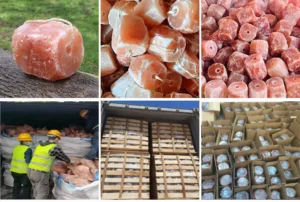
Financial barriers to entry are steep. Data indicates a minimum upfront investment of $100,000 is necessary to maintain viable stock levels and avoid customer attrition due to lack of inventory. This capital also covers overhead for secure storage facilities, such as locked sheds or spare stalls with adequate lighting, which are prerequisites for holding high-value equipment.
Quality control is not optional in this sector. Because tack impacts rider safety, procurement officers must enforce rigorous acceptance protocols. Facilities must support on-site audits and demand specific documentation with every delivery to ensure product integrity.
- Sampling Standard: C=0 sampling plan with an Acceptable Quality Limit (AQL) of 1%.
- Documentation: Certificate of Conformance (C of C) required per shipment.
- Traceability Data: C of C must include supplier name, part number, PO number, and serial numbers.
- Change Control: Immediate disclosure required for changes in processes, location, or ownership.
Final Thoughts
Pressed white blocks are a liability, dissolving in rain and risking dangerous overconsumption. Himalayan salt block demands a higher upfront price but delivers unmatched durability and mineral safety.
Switch to 1000-ton compressed or cut Himalayan Salt Licks mounted in rated holders immediately. Verify the density to ensure horses lick rather than bite.
Experience the quality firsthand with our low-threshold trial order – a risk-free way to test these high-margin products in your market. Get in touch to start your flexible trial today!
Frequently Asked Questions
Are Himalayan salt licks safe for horses?
Yes, they are safe when provided free-choice alongside fresh water. Horses instinctively self-regulate their intake to meet daily needs (typically 1-2 ounces or 28-56g), which prevents deficiency while minimizing toxicity risks.
How long do Himalayan salt licks last compared to pressed blocks?
Himalayan licks last significantly longer than processed blocks due to their natural rock-hard density. They resist weather degradation and can often endure several months outdoors before becoming too small to use effectively.
Can horses bite chunks off the salt lick?
No. The high density makes these licks rock-hard, physically preventing horses from biting off chunks. This creates a safety advantage over softer pressed salt blocks, which often crumble or get consumed too quickly.
Are they better than standard mineral blocks?
Most owners prefer them for outdoor use due to superior weather resistance. Unlike pressed blocks that use additives, Himalayan licks provide over 80 naturally occurring trace minerals—including iron, potassium, and magnesium—in their pure form.
Can these salt licks be used for cattle?
Yes, they function well for cattle and provide 84 essential minerals. Research indicates potential benefits including strengthened immune systems and a 5-15% increase in milk yields (average 12.8%).
Do I need a specific holder size?
Most commercial salt lick holders are standardized. Typical dimensions accommodate blocks around 305mm W x 260mm H (12″ x 10.25″) or standard 4 lb to 50 lb sizes.
For reference, see FAO livestock nutrition.