Skip to content
Every spring, retail shelves across Europe and North America undergo a colour transformation: deep winter tones give way to soft lavenders, butter yellows, baby blues, and blush pinks. For importers and brand managers sourcing seasonal home accents, selecting the right pastel paint finishes Easter decor is not a cosmetic detail—it is a commercial imperative. Consumers associate specific pastel shades with Easter traditions, and products that hit the right colour note outsell generic “spring decor” by a wide margin. If you are building a pastel wooden decor line for Easter 2027, this guide breaks down the paint-finish options, colour-matching logistics, and ordering timelines you need to know.
The data and production insights below come from Jilin Province Ever Creation Technology Co., Ltd., a BSCI-audited, ISO9001-certified manufacturer with over 20 years of hand-carving and hand-painting experience. The factory produces seasonal wooden decor for major retailers like Landi Switzerland and ships to importers across North America, Europe, and Asia-Pacific.
The Easter Pastel Palette: What Each Colour Signals to Consumers
The Easter colour palette is one of the most codified in seasonal retail. Each shade carries cultural associations that influence purchase decisions at the shelf. Understanding these associations helps buyers curate collections that resonate with their target market.
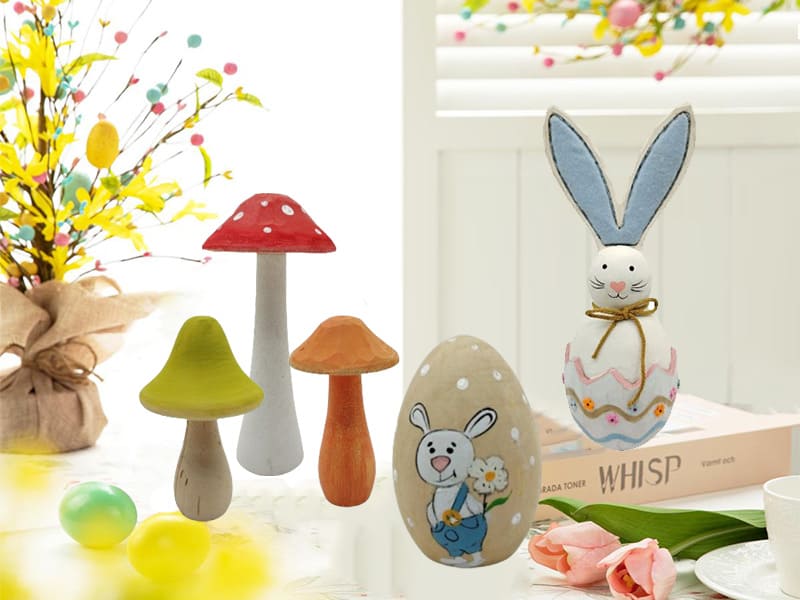
Soft pink evokes new life and spring blossoms. It dominates Easter egg packaging, bunny figurines, and gift-box linings. In the US and UK, pink is the single highest-selling pastel shade in spring seasonal decor. Lavender and lilac carry a more premium, spiritual connotation—they are popular in European markets, particularly Scandinavia and Germany, where minimalist Easter styling favours muted tones. Butter yellow signals sunshine and renewal; it works especially well on wooden eggs, chicks, and table-top accents. Baby blue is the go-to for gender-reveal spring collections and crosses over into baptism and christening gift segments. Mint green has grown in popularity over the past five years, driven by the “modern Easter” aesthetic that younger consumers share on social media.
According to Printify’s Easter colour guide, these five shades consistently rank as the top Easter colour family across consumer surveys—and the same palette applies directly to hand-painted wooden decor. The key for importers is ensuring shade consistency across your entire product range, so that a pink bunny, a set of eggs, and a napkin ring all read as part of the same collection.
Paint Finish Types Compared: Opaque, Translucent, and Natural
Choosing the right pastel shade is only half the equation. The finish type determines how the colour sits on the wood surface, how it feels in the hand, and what retail price point it supports. The three main finish types for wholesale Easter decor are opaque painted, translucent colour-wash, and natural wax.
Opaque Matte or Satin Paint
Full-coverage acrylic paint applied in two to three coats over a primer base. The result is a solid, uniform colour that completely conceals the wood grain beneath. Opaque finishes are the standard for Easter bunny figurines, painted eggs, and any product where brand colour accuracy is paramount. A satin top-coat adds a subtle sheen that elevates perceived quality without the plastic look of high-gloss. This finish type is ideal for mass-market retail and children’s Easter gift lines where EN71 toy safety compliance is required.
Translucent Colour-Wash
A thin, semi-transparent layer of tinted paint or stain that allows the natural wood grain to show through. Colour-wash finishes are popular for premium and boutique retail segments where the “handmade” aesthetic commands higher margins. A lavender colour-wash on basswood, for example, produces a soft, organic look that opaque paint cannot replicate. The trade-off is less colour precision—each piece carries subtle artisanal variance, which is a selling point for artisan-positioned brands but a liability for buyers who need exact Pantone matches across thousands of units.
Natural Wax with Pastel Tint
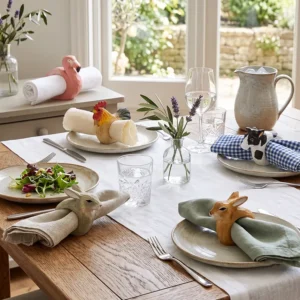
Beeswax or carnauba wax blended with a small amount of pigment, buffed directly onto the sanded wood surface. This is the most subtle finish option: it adds a hint of warmth and colour while preserving the tactile quality of raw wood. Natural wax finishes appeal to the growing “slow living” and Scandinavian-minimal consumer segment. They are most effective on larger pieces—wooden egg trays, napkin rings, and tabletop bunny sculptures—where the grain pattern is part of the design story. The wood carving finishes guide provides a detailed comparison of how wax, paint, and stain affect both unit cost and retail positioning.
Custom Colour Matching: Pantone, Brand Guidelines, and Consistency Across SKUs
For branded retail programmes—think a supermarket chain’s own-label Easter collection or a boutique hotel’s seasonal table setting—colour consistency across multiple product SKUs is non-negotiable. A pastel pink that looks right on a bunny figurine must match the same pink on a set of eggs, a napkin ring, and a gift box lid.
The factory’s OEM colour-matching workflow works as follows. The buyer provides a Pantone reference code or a physical colour sample (fabric swatch, printed card, or existing product). The paint team mixes a custom formula and applies it to a sample piece in the target wood species. Digital photos and/or a physical sample are sent to the buyer for approval before mass production begins. This sample-approval step typically takes 5–7 working days.
One critical detail: the same Pantone code will look different on basswood versus pinewood, because the underlying grain tone affects the final appearance. Always request the colour sample on the same wood species specified for the production run. The factory’s hand-painted wooden decor line demonstrates how consistent colour matching across a multi-SKU collection creates a cohesive shelf presence that drives higher average order values.
Durability, Safety Compliance, and Cost Implications
Pastel paints used on wooden decor destined for retail must meet safety standards, particularly if the product may be handled by children. The factory uses eco-friendly, non-toxic paints that comply with EN71-1/-2/-3 (European toy safety), CE and UKCA regulations, and RoHS restricted-substance limits. Opaque acrylic paints are inherently more durable than wax or colour-wash finishes—they resist fingerprints, minor scratches, and UV fading better during retail display and shipping.
| Finish Type | Colour Precision | Wood Grain Visible | Relative Cost | Best For |
|---|---|---|---|---|
| Opaque Paint | High (Pantone-matchable) | No | Base | Mass-market, children’s lines |
| Colour-Wash | Medium (artisanal variance) | Yes | +10–15% | Boutique, artisan-positioned |
| Natural Wax Tint | Low (subtle warmth) | Yes, fully | +5–10% | Scandinavian minimal, premium |
Cost differences between finish types are modest relative to the retail margin uplift. A colour-wash finish may add 10–15 % to the wholesale unit cost, but the same piece can command 25–40 % higher retail price when positioned as “hand-finished artisan decor.” The key is matching the finish to the brand positioning of the retailer you are supplying.
Building a Pastel Wooden Decor Easter Collection: Product Mix Recommendations
A well-balanced seasonal decor programme extends beyond a single holiday, and the same factory capabilities that produce Easter accents also deliver Christmas, Halloween, and Thanksgiving lines. For an Easter-specific pastel wooden decor collection, consider structuring your product mix across three tiers.
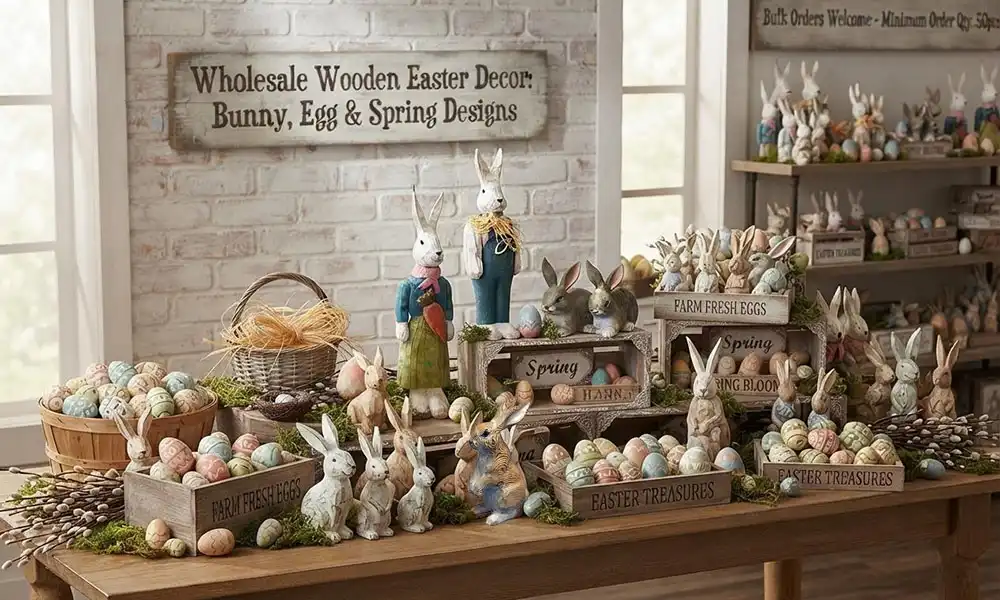
Hero pieces are the display magnets: large painted bunny sculptures (15–25 cm), family-sized wooden egg sets in graduated pastel shades, and wall-mounted spring wreaths with carved wooden flowers. These anchor feature tables and window displays. Mid-range sellers include napkin ring sets (ideal for Easter table styling), pen-and-egg gift sets, and medium-sized animal figurines in seasonal colours. These fill shelf runs and drive the bulk of revenue. Impulse add-ons—small painted eggs under 5 cm, bunny keychains, mini chick figurines—populate checkout counters and gift-wrap stations at USD 1–3 retail.
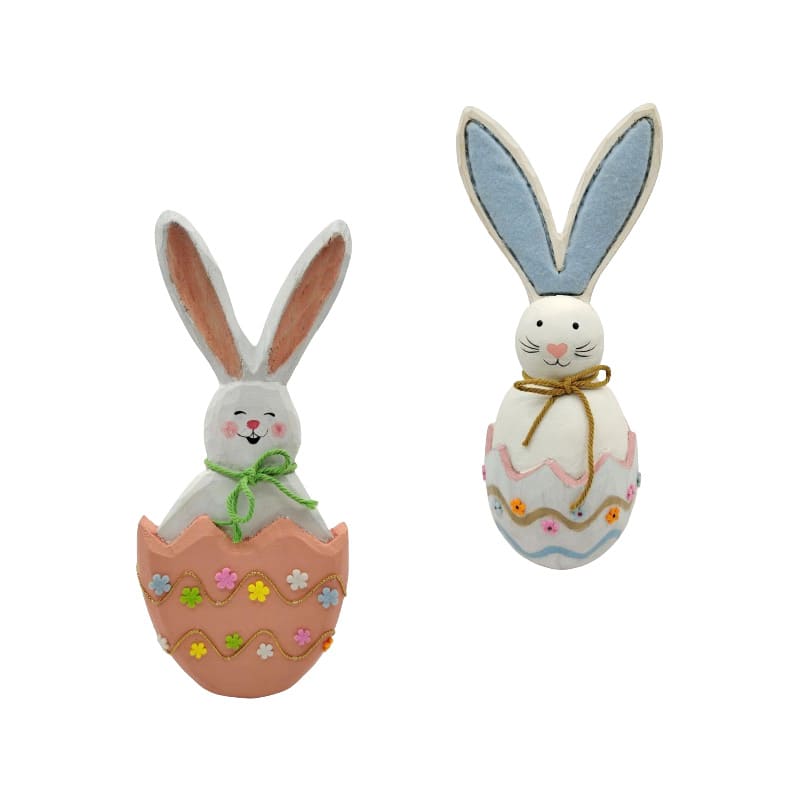
All three tiers can be produced in matching pastel colourways from a single OEM order, enabling retailers to present a cohesive “shop the look” merchandising story. The factory’s test-to-scale model means you can start with a 100-piece trial order (USD 500 minimum, shipped DDP) to validate which shades and products resonate with your customers before scaling to full container volumes.
Ordering Timeline: When to Place Your Easter Decor Order
Easter moves on the liturgical calendar (anywhere from late March to late April), but the sourcing timeline is fixed: retailers should finalise their Easter decor orders 6–9 months before the selling season. For an Easter 2027 collection, that means placing orders between July and October 2026.
Here is a realistic timeline. July–August: finalise product selection, colour palette, and Pantone references. Request and approve paint samples. September–October: approve golden sample; place production order. Trial orders (100–300 pcs) ship in 20–30 days; larger orders (500+ pcs) take 60–90 days. November–December: goods arrive at your warehouse or FBA centre via sea freight. This schedule leaves January–February for pre-retail photography, listing creation, and early-bird marketing to your wholesale customers.
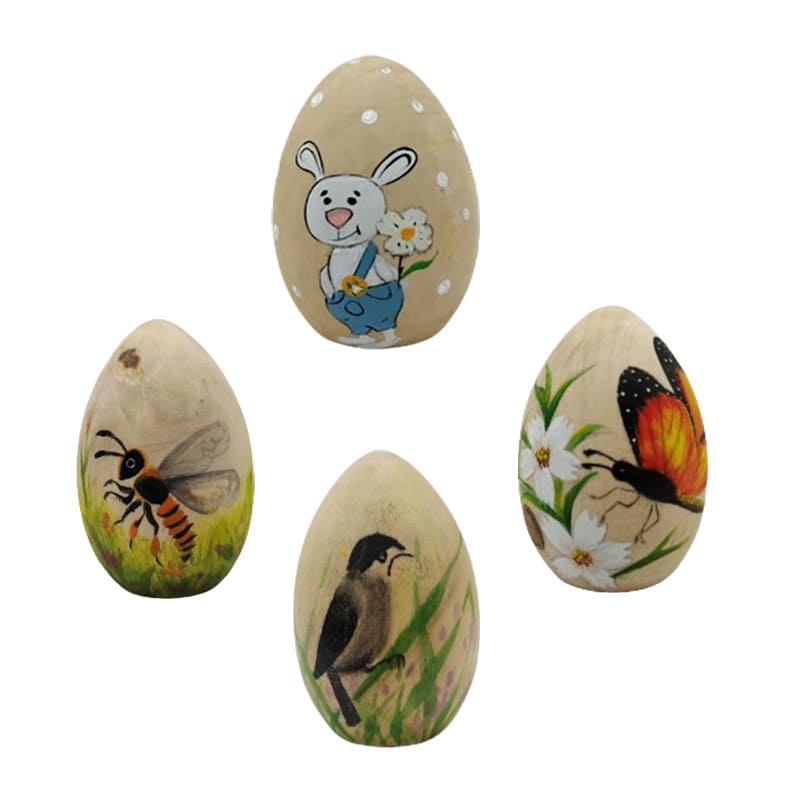
Start Your Pastel Wooden Decor Easter Order
Hand-painted pastel wooden decor gives Easter collections a handmade, premium quality that injection-moulded alternatives cannot match. With Pantone-matched colour consistency, EN71-compliant non-toxic paints, and a test-to-scale MOQ starting at just 100 pieces, launching or expanding your Easter decor line is straightforward.
Browse the full wholesale Easter decor collection or contact the sales team for a custom colour-matched quote tailored to your retail brand.
Explore Our Wholesale Easter Decor Collection
Hand-carved wooden bunnies, eggs, and spring accents in custom pastel colours—BSCI-audited factory, EN71-compliant paints, MOQ from 100 pcs.
View Easter Decor Catalog →