Skip to content
Wooden Christmas Nativity sets are a themed collection of carved figures — typically the core holy-family group plus animals, shepherds and angels — sold as one product rather than as separate ornaments. At Ewoodarts these sets run under the same first-party terms as the wider ornament programme: standard MOQ is 300 sets per design configuration, custom piece counts and box treatments are quoted against that baseline, and construction follows the same hand-carving steps described in the hand-carved versus laser-cut ornaments guide. This page covers set formats, figure construction, gift-box tiers, safety documentation and the order calendar that makes a nativity line actually reach shelves before December.
Key Takeaways
- A set is one SKU with more pieces. The nativity line is bought as a themed collection, which raises gift price points but multiplies figure-level QC inside every unit.
- Three formats dominate wholesale. Core groupings (5-7 pieces), full stable scenes (10-12 pieces), and add-on figures sold loose for window rotation.
- Figure construction sets the tier. Laser-profiled flat figures are the entry price; fully sculpted hand-carved pieces command the keepsake shelf.
- Presentation is half the sale. A gift box with a printed insert converts a carved set into a church and host-gift product; bins alone do not.
- Safety files carry extra weight on sets. Multi-piece collections with small figures may trigger child-toy assessment in some markets, so confirm testing and labelling with the destination market before selling.
- Plan before autumn. Sets need piece-by-piece approvals, so lock the piece list and golden sample earlier than single-ornament reorders.
In This Guide
- Why Nativity Sets Are a Distinct Category
- Set Formats: Stable Scenes, Core Groups, Add-Ons
- Figure Construction and Wood Choices
- Gift-Boxed Sets and Presentation Tiers
- Retail Positioning and Programme Logic
- Best For / Not For: Which Channel Buys Which Set
- MOQ, Cost Levers and Reorders
- Safety Documentation for Multi-Piece Sets
- What We Check Before a Nativity Set Ships
- Order Calendar for a Nativity Line
- End to End: A 300-Set Nativity Programme
- Frequently Asked Questions
Why Nativity Sets Are a Distinct Category
Nativity purchases behave differently from ornament purchases. The buyer is often shopping for a specific household — a new Christian home, a godchild, a church fundraiser — and the product has to read as complete. That completeness is exactly what makes it wholesale-friendly: one boxed set answers a gifting occasion that would otherwise need five separate ornament sales. Faith-based and heritage gift retailers typically build the nativity table at the front of their Christmas assortment, and the same carving programme that produces wholesale wooden Christmas ornaments can produce the set with only a piece-list change.
For the buyer, the category also behaves differently seasonally. Ornament demand spikes late; set demand starts early, because churches host nativity pageants across Advent and schools install displays in November. A line that stocks sets by early October captures an ordering window ornaments do not.

Set Formats: Stable Scenes, Core Groups, Add-Ons
Three formats cover almost the whole wholesale market, and a mature assortment usually carries one of each rather than three variations of the same scene.
| Format | Typical Pieces | Who Resells It | Retail Job |
|---|---|---|---|
| Core grouping | 5-7 figures | Gift shops, bookstores, faith-based retailers | Mid-tier boxed keepsake; the safest first buy. |
| Full stable scene | 10-12 figures | Department stores, church supply, specialty Christmas | Premium display piece; higher gift price, higher QC load. |
| Add-on figures | 1-3 loose | Same buyers as sets, plus pageant and school markets | Repeater revenue and window storytelling. |
Figure Construction and Wood Choices
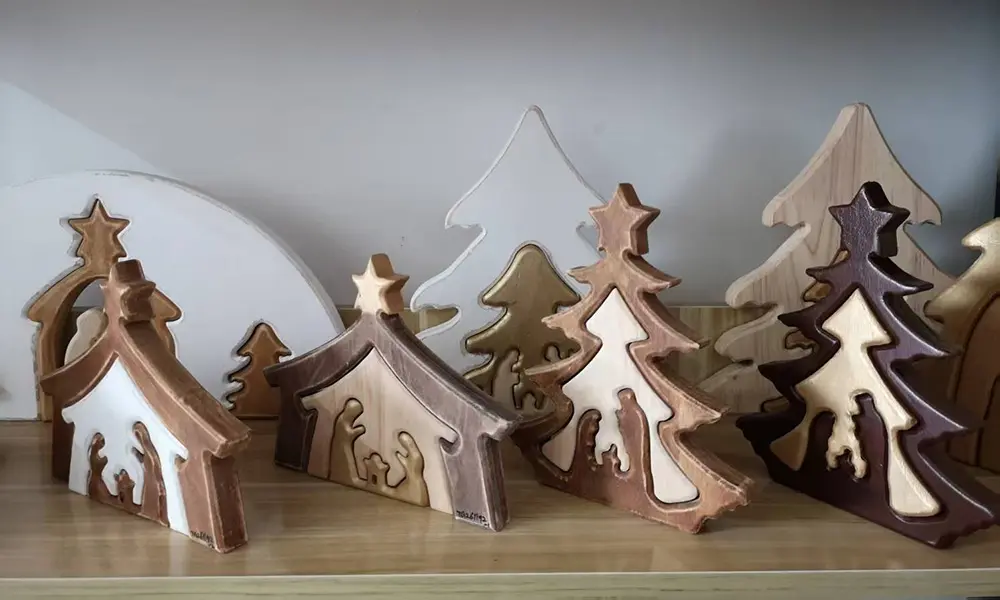
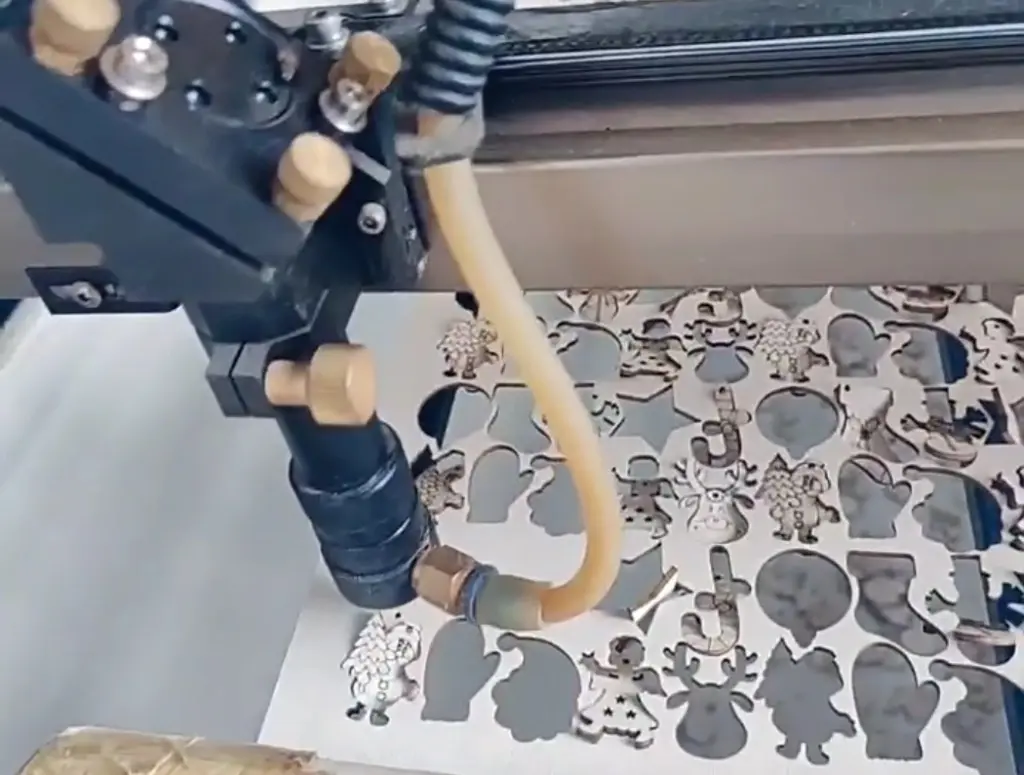
Nativity figures are carved in the same basswood lines used for sculptural ornaments, described in the basswood carving technical guide. Two construction levels dominate: profiled figures, where the silhouette is laser-cut and face detail is engraved or painted, and fully sculpted figures, where each body is carved in the round. The level drives cost, packing density and shelf read — a profiled stable scene nests flat and ships efficiently; a sculpted scene needs individual cradles and reads premium at arm length.
Height consistency across a set matters more than in a mixed ornament assortment. Buyers should specify figure heights in the design sheet — a standard proportion where the tallest figure reads as the anchor and animals sit noticeably lower — because proportion drift between production runs is the most common set complaint. Approving a golden sample of the complete set, not one figure, is the control that prevents it.

Gift-Boxed Sets and Presentation Tiers
The same figure programme supports three presentation tiers. Bin sets are the entry: figures packed with dividers in a plain box, suited to price-driven shelves. Carded collector boxes add a printed insert telling the scene and care note — the format that converts best for host gifts, built with the same retail display logic used across the ornament line. Rigid gift boxes with foam cradles lift the top tier for weddings, dedications and church presentations, and usually pair with a lid-window or a printed sleeve.
Insert artwork follows the seasonal-card discipline: agree one stock board format with a swappable printed panel so each year’s message changes without new tooling. Print plates and box formats carry their own one-time costs that spread across the set run, so they belong in the same quote conversation as the figures themselves; the ordering mechanics behind that are set out in our procurement guide for wooden crafts.
Retail Positioning and Programme Logic
Sets reward programme buying rather than one-shot orders. A boutique that stocks the core grouping as the hero, the stable scene as the window centrepiece, and add-on figures as the register-item ladder is running one assortment with three entry prices. The same set also functions as a corporate and institutional gift — church honourariums, school pageant keepsakes and hotel lobby displays all buy in set quantities — which is why set quantities are worth quoting as a separate pre-order channel alongside the shop-floor buy; the shapes available for that kind of programme are listed in the ornament buyers catalog. Year-two reorders keep the figure tooling but refresh box artwork, which is the cheapest way to relaunch a line that already sold.
Placement follows the season curve: sets sell earliest, so they anchor front tables through November while single ornaments catch the late rush. The colour and trend context for the year is covered in the Christmas decor trends page.

Best For / Not For: Which Channel Buys Which Set
The format table above sorts sets by piece count; this one sorts them by who is buying, because the same eleven-piece grouping sells for different reasons in a gift shop and a church supplier’s catalogue.
| Channel | Best For | Not For | Order Reality |
|---|---|---|---|
| Independent gift shop / boutique | Core grouping as the hero plus add-on figures as a register ladder | Full stable scenes — the footprint competes with the rest of the Christmas fixture | 300 sets per configuration; stock configurations testable on trial terms (100 pcs / USD 500 minimum order value) |
| Religious bookstore / church supplier | Larger traditional configurations, gift-boxed for presentation and honouraria | Modern or abstract silhouettes, which read as decorative rather than devotional | Box tier matters more than piece count here; specify the insert and sleeve together |
| Museum and heritage gift shop | Regionally specific scenes, natural-finish carving, provenance-led packaging copy | High-gloss painted finishes that read as mass-market souvenir | Lower volume, higher unit value — plan on the wholesale tier rather than trial |
| Online DTC / marketplace | Compact configurations that survive parcel handling and photograph well flat-packed | Tall stable scenes and thin carved details that need a rigid box to survive a courier | Packaging cost is a unit-cost line, not an afterthought — quote it with the figures |
| Institutional (school, hotel, care home) | Durable one-piece-per-figure builds for repeated annual set-up and storage | Delicate multi-part assemblies that will be handled by volunteers, not staff | Buys in set quantities on a fixed annual date; reorders are predictable once won |
MOQ, Cost Levers and Reorders
Set MOQ is quoted per complete configuration — 300 sets per design at standard terms — because every added figure multiplies the finishing and QC steps inside the unit. The cost levers line up with the ornament programme: piece count, construction level, box tier and artwork customisation. Reorders of an approved configuration are the cheapest placement in the entire Christmas calendar, since figure files, proportion approvals and box dimensions already exist. First runs with a new piece list need golden-sample approval before anything else moves; a late figure revision can stall an otherwise ready order.
Safety Documentation for Multi-Piece Sets
Nativity sets are decorative keepsakes in most markets, but multi-piece collections with small figures can attract child-toy scrutiny depending on size, packaging language and where they are sold. Requirements shift by market, so confirm the applicable rules and labelling with a compliance specialist before ordering, and request paint and finish documentation that matches the destination standard — the factory-side testing picture is laid out in the EN71 non-toxic paint guide. If a set targets households with young children, selling the larger-figure format and stating the age guidance plainly on the box is the low-risk route.
What We Check Before a Nativity Set Ships
A multi-piece set fails differently from a single ornament: one short figure or one figure that will not stand turns a gift into a complaint, and the buyer cannot fix it on the shelf. These checks run on every set configuration.
- Piece count against the configuration sheet. Every box is counted against the agreed piece list before it is closed, because a missing figure is a total return rather than a partial one.
- Base flatness and standing stability. Each figure is stood on a flat plate and checked for rock; a figure that leans in the box will lean on the customer’s mantel.
- Paint registration at viewing distance. Faces and hands are inspected at arm’s length, which is how a nativity shelf is actually seen, not under a magnifier.
- Seams and glue lines on multi-part pieces. Stable roofs, arches and separate bases are checked for visible joint lines and for movement after curing.
- Moisture content before finishing. Blanks are checked against our wood moisture content standard so figures do not warp after painting and split a fitted box insert.
- Insert fit, closed and dropped. The set is boxed with its insert, closed, and drop-tested; a figure that shifts inside the box will abrade its neighbour in transit.
- Master carton spec. Sets ship in five-ply export cartons within the standard 8.0–15.0 kg gross weight range, which is the figure your forwarder should be quoting against.
Buyers who would rather verify a factory than trust one can work through our wood carving factory audit checklist.
Order Calendar for a Nativity Line
Work backward from shelf: a set with new figures needs design approval, a complete-set golden sample, then a production run longer than a single ornament because pieces are checked individually. Lock the piece list well before autumn; late-summer first deliveries let retailers build their Advent displays, and institutional buyers — churches and schools — often order even earlier for pageant season. Reorders of approved configurations stay possible into October, but always confirm current slot availability against the factory calendar before promising a delivery date.
End to End: A 300-Set Nativity Programme
A regional gift retailer wants one nativity line for the coming season: a core grouping as the hero SKU, a stable scene for the window, and three add-on figures for the register. The commitment is 300 sets of the core configuration.
March–April — configuration freeze. The piece list is agreed figure by figure and frozen, because every added figure multiplies finishing and QC steps inside the same unit. Box tier is decided here too, since the insert is cut to the piece list.
May — golden sample set. A complete set ships for approval, not a single representative figure. Nothing enters production until that set is signed off in writing; it is the contract for the remaining 299.
June–August — production. Carving, sanding, painting, curing and boxing. Bulk production runs 60–90 days to port, which is why a May sample approval is the last comfortable start for a pre-December landing. The checks above run inline rather than only at the end.
August — inspection and balance. Final inspection, then photographs and video of the finished goods are supplied before the balance payment falls due, on the standard T/T terms of 30% deposit and 70% before shipment.
September–October — transit. Sea freight plus destination handling. Slot timing is the constraint that decides whether a first run makes the season at all, so it is worth reading our guides on when to order Christmas stock and the Christmas shipping deadlines before committing to a launch date.
November and year two — the reorder. The set goes on shelf for the sell-through window. Next season the figure tooling is already approved, so the reorder only refreshes box artwork, which is the cheapest way to relaunch a line that has already sold.
If you are building a nativity line and want the piece-list options, box tiers and 300-set terms mapped to your shelf plan, our team can prepare that specification sheet with you.
Frequently Asked Questions
What MOQ applies to wooden nativity sets?
Set MOQ binds the complete configuration, not individual figures: the standard is 300 sets per design at Ewoodarts. Changing the piece list or box format creates a new configuration and restarts the count.
What piece count sells best at wholesale?
The 5-7 piece core grouping is the standard opening buy for gift retailers; 10-12 piece stable scenes serve the premium display shelf; loose add-on figures repeat well for pageant and school markets.
Are nativity sets hand-carved or laser-cut?
Both construction levels exist. Laser-profiled figures with engraved detail hold entry pricing; fully sculpted hand-carved figures command the keepsake tier. Most assortments run one of each rather than a single level.
Do nativity sets need toy safety testing?
Sets are typically sold as decorative keepsakes, but multi-piece collections with small figures may attract child-toy requirements depending on market, size and labelling. Confirm the applicable rules and testing with a compliance specialist before ordering.
When should retailers order Christmas nativity sets?
New-figure configurations should be locked before autumn to allow set-level golden-sample approval; stock configurations commonly stay reorderable into October, subject to remaining capacity.
Sources
Delivery terms that decide who carries freight and duty on a set programme are defined by the ICC Incoterms rules. For destination-market toy and article safety requirements, verify current rules with the relevant authority or a compliance specialist before selling.