Skip to content

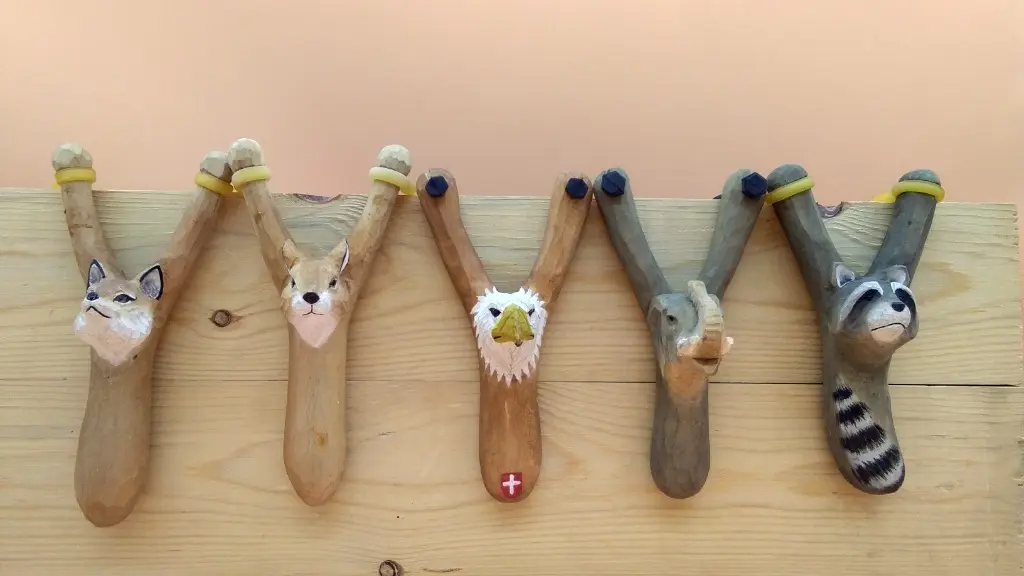
Outdoor games sit oddly in a hobby gift shop: they are the only family on the floor that a customer expects to use hard, outside, in weather, and the only family whose safety story must be legible at arm’s length. Build the section well and it becomes the store’s most photographed corner; build it badly and a slingshot ends up in a toddler’s reach beside a bin of painted birds.
This guide gives hobby and gift retailers the section list, the two-family split that keeps grading honest, the price ladder and the season rules for carved pieces sold into weather. Every production figure is our own first-party number; facing counts and heights are recommendations for your floor.
Key Takeaways
- An outdoor games section is 2 families, not 1: handled games that leave the store in a hand, and yard-adjacent carved pieces that live outside; mixing them puts a slingshot at toddler reach.
- The slingshot wall carries 3 to 4 animal designs in 2 size steps, faced one per design at adult eye level, with the grading on the shelf strip as well as on the piece.
- Yard-adjacent pieces need a weather line on the tag: painted carvings are indoor-specified, so anything sold for outside carries a natural finish or a seasonal-and-temporary statement, and 1 season of rain checks a painted finish.
- Price the section in 3 rungs: an impulse line at the counter, the slingshot wall and yard pieces at the mid rung, and collector carvings at the top; shoppers read the ladder before any single piece.
- Keep 1 touch tester per 6 faced pieces on the slingshot wall, chained or weighted, because handled games sell on feel and a sealed case sells nothing; the ratio caps loss without killing conversion.
- Order the section like any range: the trial tier at 100 pieces and a USD 500 minimum order value proves the wall, then the wholesale and custom tier at 300 pieces and USD 3,000 carries the season by sea in 60 to 90 days.
In This Guide
- Why the Section Needs Two Families
- Outdoor Games: The Assortment List
- The Slingshot Wall
- Yard-Adjacent Carved Pieces
- Grading and the Reach Rule
- Section Zones Compared
- Season Rules for Carved Pieces in Weather
- What We Supply Into the Section
- Best For / Not For
- What We Check on a Games Run
- End to End: A Hobby Shop Builds the Section
- Frequently Asked Questions
Why the Section Needs Two Families
Handled games and yard-adjacent decor look alike on a purchase order and behave oppositely on a floor. A slingshot is carried, drawn, stored indoors and graded by age; a garden guardian is staked, rained on and graded by small-part probe only. One family needs a reach rule that keeps it high, the other needs a reach rule that invites hands low.
Putting both in one bin is how stores create the incident they then insure against. The two-family split costs one extra zone card and removes the entire class of problem where a play item shares a reach band with a toddler. The handled-games core of the section is described on our wooden slingshot page.
Outdoor Games: The Assortment List
Family 1, handled games: carved animal slingshots in 3 to 4 designs, small travelling games and stacking pieces that pocket into a coat, and the impulse line of carved key-scale pieces at the counter. Family 2, yard-adjacent: natural-finish garden guardians on stakes, bird figures on log slices, and animal families for path edges, all sold with the weather line on the tag.
The list is deliberately short on our side because honesty is the assortment strategy: we carve wood, so the section carries what wood does well outdoors, and the tag says plainly what wood does not do in rain. A store that wants frisbees and bubble wands beside it can source them elsewhere; the section’s credibility lives in the carved half, and the company behind it sits at ewoodarts.com.

The Slingshot Wall
Face one piece per design at adult eye level, in 2 size steps per design, with a chained or weighted touch tester for every 6 faced pieces. The grading prints on the shelf strip and on the piece identically, and the strip also carries the one line shoppers actually ask: bands and projectiles are not included and not sold here.
Silence on that line reads as inclusion, and inclusion reads as liability the first time a parent assumes otherwise. The label wording, bay height and probe test behind that strip are covered in our guide to slingshot retail safety labeling, which the section plan should cite verbatim rather than paraphrase.
Yard-Adjacent Carved Pieces
The yard family sits at child reach and passes the same small-part probe as anything else low on the floor, even though nobody plays with it: loose fittings, detachable eyes and thin stakes are the failure points, and the probe decides the bay, not the marketing line. Natural finish is the default here because it greys honestly and fails visibly.
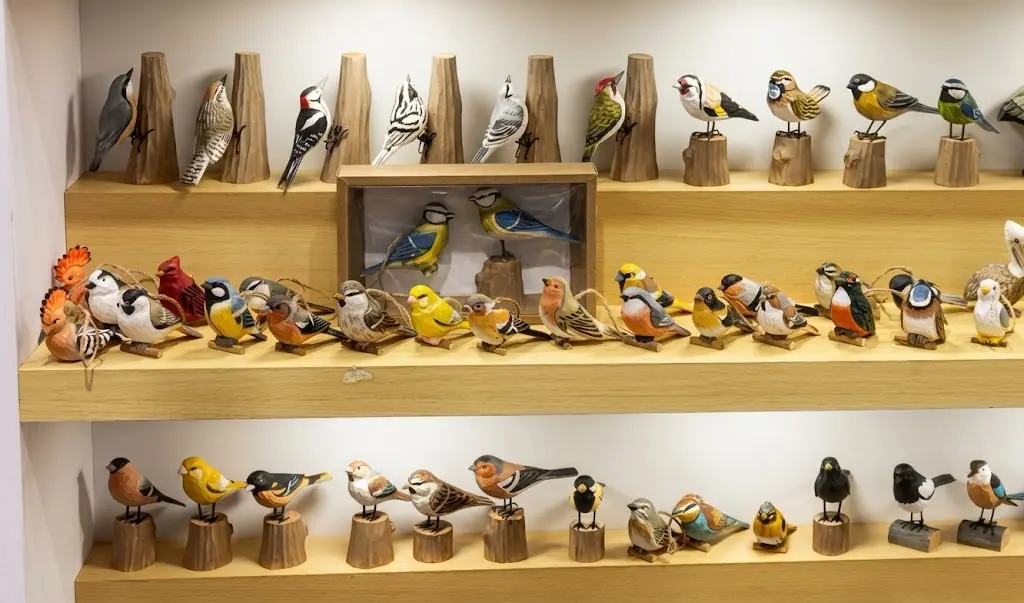
Grouping does the selling: a guardian on a stake beside two log-slice birds reads as a vignette a customer can copy into their own path edge, while the same three pieces spaced apart read as stock. The vignette logic for grouped carved pieces in a curated setting is set out in rustic wooden decor merchandising in boutiques.

Grading and the Reach Rule
Two reach rules, two bands. The slingshot wall lives above the under-3 band and in practice above the under-8 band, with supervision language on strip and piece; the yard family lives at child reach and must pass the small-part probe with no detachable fittings within a twist. The bands never overlap in one fixture, which is the whole point of the two-family split.
The US starting point for small-part and age-grading language is the CPSC safer products guidance, and the section’s written plan should quote the grading per family so a new hire sets the bays the same way in month 6 as the buyer set them in month 1.
Section Zones Compared
| Zone | Family | Reach band | Tag line that must appear |
|---|---|---|---|
| Counter impulse | Handled, key-scale | Adult hand at counter | Grading plus not-a-toy line where true |
| Slingshot wall | Handled games | Above under-8 reach | Grading, supervision, bands not included |
| Yard vignette | Yard-adjacent | Child reach, probe-passed | Natural finish or seasonal-and-temporary |
| Collector shelf | Either, top price rung | Above child reach | Species, finish, care |
Season Rules for Carved Pieces in Weather
The section’s calendar has two truths: handled games sell year-round with a summer lift, and yard pieces sell in spring and die in late autumn unless the tag prepared the customer for greying. Painted pieces sold into weather without a seasonal line generate the return conversation in October; natural pieces sold with the line generate the repurchase conversation in March. In practice the swap is a two-hour job per bay when the tag lines are already printed: pull the painted yard pieces, re-wrap them in their paper, box by zone, and let the natural-finish pieces stay out to grey through winter as the section’s honest signage.
Storage between seasons follows the pack discipline: wrapped per piece in white paper, boxed 6 to 12 per inner, cartons off the floor and away from heat, because a yard piece that cups in storage comes back warped in spring and reads as a quality failure rather than a humidity event. The bay mechanics of a seasonal swap are covered in our guide to gift shop planogram basics.

What We Supply Into the Section
- We supply: carved animal slingshots, travelling and stacking games, and natural-finish yard pieces across 4 species, from 5 cm to 40 cm, with the grading and weather lines drafted for your tag.
- We supply: touch testers with the order, chained or weighted on request, and the shelf-strip wording that matches the piece grading verbatim.
- We do not supply: bands, pouches, projectiles or any ammunition component, and no weatherproofing treatment or outdoor-rated claim for painted finishes.
- We do not supply: non-wood game families; frisbees, bubbles and ball games belong to another supplier and another planogram.
Best For / Not For
| Store type | Best for | Not for |
|---|---|---|
| Hobby and craft shop | Full two-family section with testers | Mixed bin with toddler reach |
| Coastal or park gift shop | Yard vignette plus counter impulse | Slingshot wall where local policy bans |
| Museum or zoo shop | Animal-matched designs, collector rung | Open testers without sightlines |
| General toy store | Graded wall with supervision language | Placing games in the under-8 aisles |
What We Check on a Games Run
- Fork grain direction on every slingshot sample, because a fork cut across the grain fails at the first full draw.
- Edge and point rounding against the grading the strip carries, on handled pieces only.
- Fitting security on yard pieces: eyes, stakes and joints torque-tested on the sampling plan.
- Moisture at 8 to 12 percent recorded per batch before wrapping, for both families.
- Claims limited to what we hold: CE, UKCA, RoHS, EN71 where a piece is marketed as a toy, BSCI and ISO 9001.
Every figure above is first-party and checkable against an inspection report or a certificate we hold; the zone list and ratios are recommendations to test on your floor. The wider range the section draws from is in our wholesale wooden crafts guide.
End to End: A Hobby Shop Builds the Section
A hobby shop with a dead two-metre wall beside the door wants an outdoor games section for spring, and its owner arrives planning one mixed bin of everything wooden that moves.
Split before ordering. The plan becomes four zones from the table above: counter impulse, slingshot wall at adult eye level, yard vignette at child reach with probe-passed pieces only, and a collector shelf above both. The mixed bin is retired before it exists, and the grading lines are printed on the strip cards at set-in.
Prove on the trial tier. One hundred pieces at a USD 500 minimum order value fly air express DDP in 20 to 30 days: 3 slingshot designs in 2 size steps, 2 yard vignettes, and the counter impulse line. Four weeks of sell-through per family decide the sea-tier mix.
Commit the season on the proven half. The wholesale and custom tier at 300 pieces and a USD 3,000 minimum order value, sea freight 60 to 90 days to port, doubles the family that outperformed and holds the other at trial depth; testers and strip wording ship with both orders so the second set-in matches the first exactly.
Building an outdoor games section?
Send us your wall metres and your local policy on slingshots. We will return the two-family zone plan, the grading and weather tag lines, and the trial-tier mix that proves the section before the season commits.
Frequently Asked Questions
Q: What belongs in a gift-shop outdoor games section?
Two families: handled games, led by carved slingshots plus small travelling and stacking games, and yard-adjacent carved pieces such as garden guardians and stake birds in natural finish. What does not belong is anything needing weatherproofing you cannot supply, or anything graded above the section’s reach rule sitting inside a child’s band.
Q: How should slingshots be displayed safely?
At adult eye level, faced one per design in two size steps, with the grading printed on the shelf strip and on the piece, and no ammunition components anywhere in the section. Bands, pouches and projectiles are not sold with our slingshots, and the display should say so plainly.
Q: Can painted carved pieces be sold for outdoors?
Only with a seasonal-and-temporary tag line. Our paints are eco-friendly and non-toxic but specified for indoor display and handled play; rain and ultraviolet light check a painted finish within a season. Natural-finish pieces grey honestly outdoors, which is a story the tag can tell truthfully and the customer can accept.
Q: What price ladder suits the section?
Three rungs: an impulse line at the counter, the slingshot wall and yard vignettes at the mid rung, and collector carvings on the top shelf. The ladder lets a family buy the impulse piece today and the collector piece for a birthday.
Q: How do we test the section before committing?
On the trial tier: 100 pieces at a USD 500 minimum order value, air express DDP in 20 to 30 days, in-stock designs, split across the two families with gradings and weather lines printed. Four weeks of sell-through per family tells you which half your store actually has, before the sea tier commits the season.