Skip to content

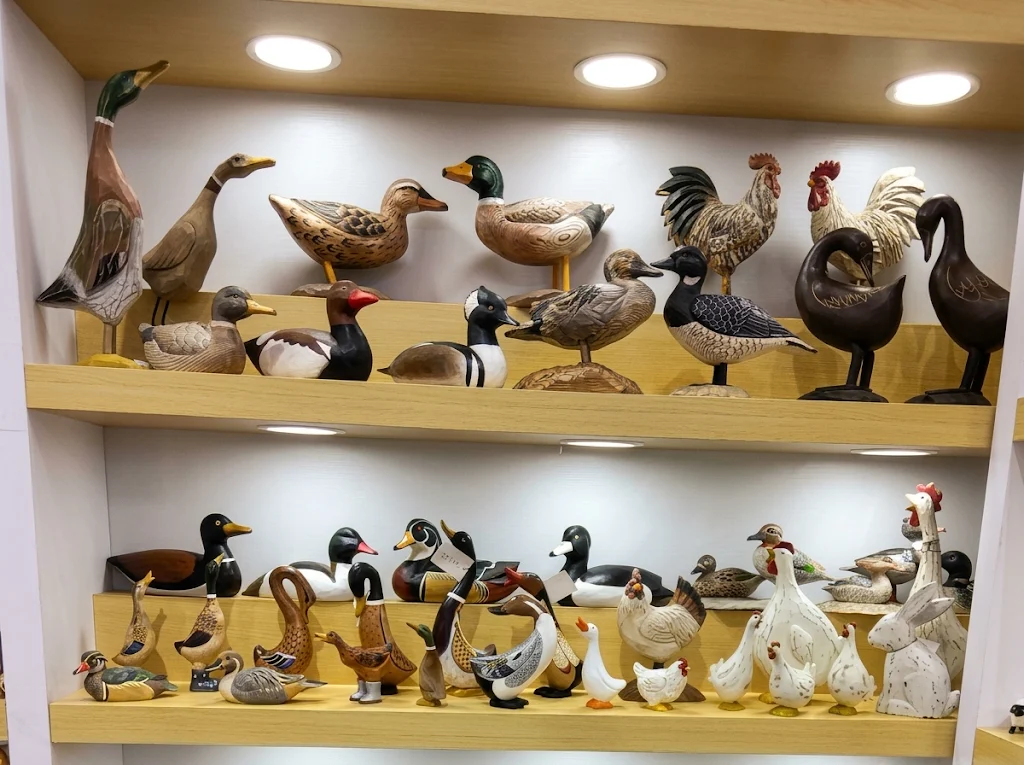
Wooden ducks and waterfowl occupy two different trades that share a silhouette: the decoy, a working object built to sit water and fool a bird, and the decor piece, a shelf object built to sit dust and please a shopper. Retailers who stock one while believing they stock the other generate returns, wrong tags and confused staff, because the two families differ in ballast, finish, mounting and law.
This guide separates them for buyers: what each family is built to do, which one belongs on which shelf, how the designation line runs through labelling, and where a carved waterfowl programme sits honestly between the two. Every production figure is our own first-party number.
Key Takeaways
- Decoy and decor differ in 1 purpose: a decoy is ballasted, sealed and painted to work on water; a decor piece is balanced, finished and painted to work on a shelf; the silhouette is the only thing they share.
- Stock the decor family on retail shelves and the decoy family only where your market legally allows decoy use, because several jurisdictions restrict decoys by season, material or species likeness, and 1 tag line must match the law.
- Finish decides the family at a glance: a decor finish is eco-friendly non-toxic paint or oil specified for indoor display, while a working decoy needs 1 marine sealant system we do not apply and do not claim.
- Mounting differs too: decor sits on a base, a stake or a hanging loop at 8 to 12 percent moisture; a decoy carries a keel and a line loop, and a piece sold without them must never be tagged as a decoy.
- Range the shelf in 3 price rungs: small waterfowl at the impulse band, graded pairs and families at the mid rung, and large statement pelicans or swans at the top, faced 1 per design.
- Order like any seasonal range: the trial tier at 100 pieces and a USD 500 minimum order value proves the shelf, then the wholesale and custom tier at 300 pieces and USD 3,000 carries the season by sea in 60 to 90 days.
In This Guide
- Two Trades, One Silhouette
- What a Decoy Is Built to Do
- Wooden Duck Decor: What the Shelf Piece Is Built to Do
- The Designation Line on the Tag
- Decoy Against Decor, Feature by Feature
- Ranging the Waterfowl Shelf
- Garden Use: The Third, Confused Category
- What We Carve, and What We Do Not Claim
- Best For / Not For
- What We Check on a Waterfowl Run
- End to End: A Coastal Shop’s Waterfowl Wall
- Frequently Asked Questions
Two Trades, One Silhouette
The decoy trade is older and narrower: hunters and collectors, ballast and keels, marine paint systems, and a body of law about when and where a likeness may be used to attract wild birds. The decor trade is broader and shallower: gift shops, coastal stores, nurseries and offices buying an object that reads as waterlife and lives indoors.
Confusion between them is not cosmetic. A decor piece tagged as a decoy invites a customer to float a paint system that was never sealed for water, and a decoy tagged as decor undersells an object whose ballast and keel are its reason for existing. The range we carve sits firmly in the decor trade, and the waterfowl family within it is described on our wholesale wooden bird page.
What a Decoy Is Built to Do
A working decoy has four jobs: float at a designed waterline, hold heading in wind and wake, carry a paint scheme readable by a bird at distance, and survive seasons of immersion and retrieval. Those jobs demand a keel or ballast pocket, a sealed substrate, a marine-grade paint system and a line loop placed so the tether does not capsize the piece.
None of those features belongs on a shelf piece, and each adds cost a decor buyer should not pay. Where a store serves hunters, the honest route is to stock decoys from a specialist maker and keep them in a separate bay with their own legal tagging, rather than asking a carved decor line to impersonate them.

Wooden Duck Decor: What the Shelf Piece Is Built to Do
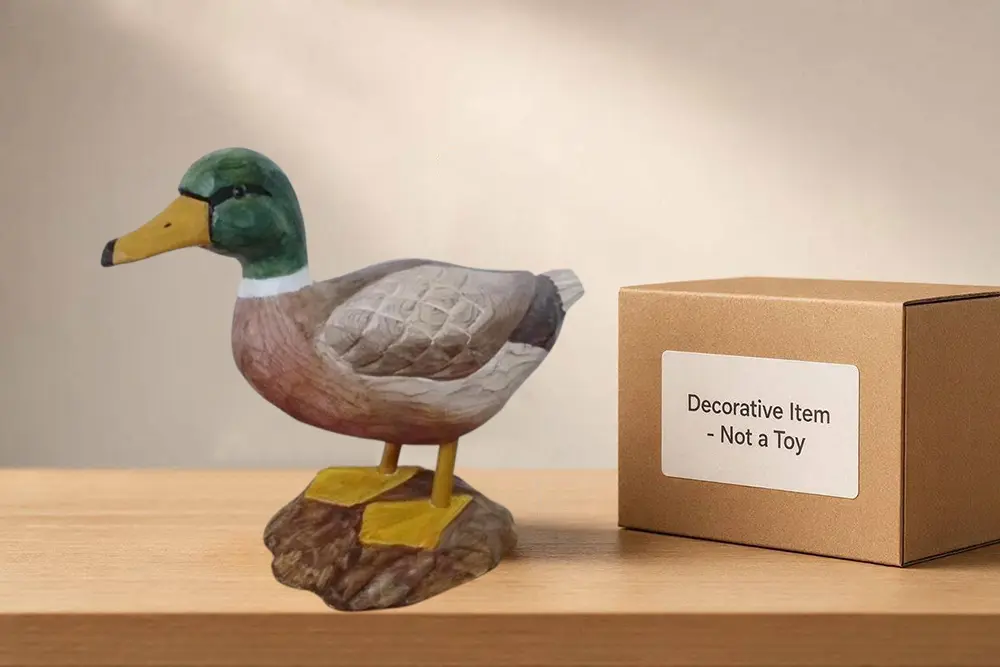
A shelf waterfowl piece has three jobs: read at three metres, stand without tipping, and survive handling by shoppers and later by a household. Balance replaces ballast, a flat or stumped base replaces the keel, and an indoor-specified finish replaces the marine system. The carve carries the sale: head angle, wing fold and paint detail do the work a decoy’s waterline would do.
Because the decor piece lives indoors, its material discipline is the same as any carved good we make: moisture held at 8 to 12 percent at packing, thin points inspected, and a finish system that is eco-friendly and non-toxic rather than weatherproof. The grouping logic that makes a waterfowl shelf read as a flock rather than a row is covered in rustic wooden decor merchandising in boutiques.
The Designation Line on the Tag
Every waterfowl piece carries a designation, written or implied: toy, decorative article, or sporting equipment. The designation decides which safety framework applies, which age line prints, and which use the warranty covers. A carved duck sold into a nursery is a toy in the eyes of most regulators regardless of what the tag hopes; the same duck on a mantel is a decorative article; neither is a decoy.
The US starting point for that language is the CPSC safer products guidance, and the practical rule for a waterfowl wall is one designation per design, printed identically on piece and box, with the word decoy reserved for pieces that actually carry keel, ballast and marine seal, which in our range means none.
Decoy Against Decor, Feature by Feature
| Feature | Working decoy | Shelf decor piece |
|---|---|---|
| Waterline | Designed and ballasted | None, piece is not sealed for immersion |
| Keel or base | Keel plus line loop | Flat or stumped base, felted option |
| Paint system | Marine sealant, bird-distance scheme | Indoor eco-friendly non-toxic paint or oil |
| Legal layer | Season and material rules per market | Toy or decorative designation per marketing |
| Failure mode | Leak, capsize, paint lift | Tip, chip at thin points, humidity cup |
Ranging the Waterfowl Shelf
Three rungs carry the family: small waterfowl and ducklings at the impulse band, 5 to 12 cm, faced with a touch tester where traffic allows; graded pairs and family groups at the mid rung, 15 to 25 cm, composed as flocks of 3 or 5 rather than rows; and statement pelicans, swans or herons at the top rung, 30 to 40 cm, one per store zone because a second statement cancels the first.
Facing stays at 1 per design with depth behind, and the flock composition is the merchandising unit: a pair of graded ducks outsells two single ducks at the same price because the pair tells the water story the single piece cannot. The shelf-level mechanics of faced groups and sightlines are covered in our guide to gift shop planogram basics.

Garden Use: The Third, Confused Category
Customers put shelf waterfowl in gardens, and gardens destroy indoor finishes: rain checks paint, ultraviolet light fades it, and freeze-thaw splits thin carved points within a season or two. The honest positions are two: natural-finish pieces may live outside as seasonal decor with a tag line saying seasonal and temporary, and painted pieces stay indoors or on covered porches with the same tag line saying indoor display.
Stores that print neither line inherit the return: a faded pelican brought back in October with a reasonable complaint and no reasonable answer. The tag line costs nothing at print time and everything at return time, which is why it belongs on the specification sheet with the paint code. Moisture behaviour behind the line is described in our wood moisture content standard.
What We Carve, and What We Do Not Claim
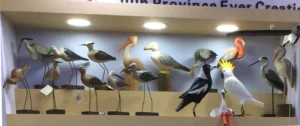
- We carve: ducks, geese, swans, pelicans, herons, gulls and shorebirds in 4 species, basswood, pinewood, rubber wood and birch, from 5 cm to 40 cm, as shelf and garden-look decor.
- We carve: decoy-silhouette pieces for the decor and collector trade, clearly designated decorative, without keel, ballast or marine sealant.
- We do not supply: working decoys, marine paint systems, ballast pockets or line loops, and no piece of ours may be tagged or relabelled as sporting equipment.
- We do not claim: weatherproofing, UV stability or immersion resistance for any finish we apply; the garden line is seasonal and temporary, in writing.
Best For / Not For
| Retail format | Best for | Not for |
|---|---|---|
| Coastal gift shop | Full 3-rung waterfowl wall | Decoy wording on any tag |
| Farm and hunting store | Decoy-silhouette decor bay, separate from real decoys | Mixing decor into the sporting bay |
| Nursery and baby retail | Small waterfowl with toy designation where marketed so | Thin-pointed pieces at under-3 reach |
| Garden centre | Natural-finish seasonal line with tag line | Painted pieces in uncovered lanes |
What We Check on a Waterfowl Run
- Base flatness and tip resistance, each sampled piece pushed at the head height a shopper would, because waterfowl silhouettes are top-heavy by nature.
- Thin-point integrity: beaks, wing tips and legs inspected and wrapped first, white paper per piece.
- Moisture at 8 to 12 percent recorded per batch before packing.
- Designation on piece and box identical, decorative or toy per marketing, checked at packing rather than at dispatch.
- Claims limited to what we hold: CE, UKCA, RoHS, EN71 where a piece is marketed as a toy, BSCI and ISO 9001.
Every figure above is first-party and checkable against an inspection report or a certificate we hold; the rung sizes and flock counts are recommendations for your floor. The company and its specification library sit at ewoodarts.com.
End to End: A Coastal Shop’s Waterfowl Wall
A coastal gift shop with a strong shellfish line and a weak bird wall wants a waterfowl programme for the spring season, and its buyer arrives with decoy catalogues from a sporting supplier.
Split the trades first. The shop keeps the sporting supplier’s decoys out entirely and builds the decor wall in 3 rungs: ducklings at the impulse band, graded duck and gull flocks at the mid rung, and two statement pelicans flanking the door. Every tag carries the decorative designation and the indoor or seasonal-and-temporary line, decided per finish at specification.
Prove on the trial tier. One hundred pieces at a USD 500 minimum order value fly air express DDP in 20 to 30 days, in-stock waterfowl designs only, with flock compositions pre-set so the wall sets in one afternoon. Four weeks of sell-through per rung decide the sea-tier mix.
Commit the season on the proven rungs. The replenishment sits on the wholesale and custom tier at 300 pieces and a USD 3,000 minimum order value, sea freight 60 to 90 days to port counted back from the summer peak, with the mid-rung flocks doubled and the statement pelicans held at 1 per zone. The retained samples from the trial become the inspection reference, and the tag lines travel with the carton label so a re-order two years later prints the same designation.
Ranging a waterfowl wall?
Send us your shelf metres and your finish preferences. We will return the 3-rung range with flock compositions, the designation and weather tag lines per design, and the trial-tier mix that proves the wall.
Frequently Asked Questions
Q: Can a decorative wooden duck be used as a decoy?
No. A working decoy needs ballast or a keel, a sealed substrate and a marine paint system; a shelf piece has none of these and will leak, capsize or lift paint within one outing. Pieces sold without those features must never be tagged as decoys, and our range carries the decorative designation on piece and box.
Q: Why does the designation line matter so much?
Because it decides the legal framework: toy, decorative article or sporting equipment each carry different safety, labelling and use rules. A carved duck marketed into a nursery is judged as a toy whatever the tag hopes, and a piece called a decoy invites use its finish cannot survive. One designation per design, printed identically everywhere.
Q: Can waterfowl decor live in a garden?
Natural-finish pieces can, as seasonal and temporary decor, because they grey honestly and fail visibly. Painted pieces cannot: rain checks the finish and ultraviolet light fades it within a season or two. The tag line states which case applies, and the garden centre bay should carry only the natural-finish line.
Q: How should a waterfowl shelf be composed?
In flocks rather than rows: graded pairs or groups of 3 to 5 at the mid rung, small waterfowl at the impulse band, and one statement piece per zone at the top. A pair tells the water story a single piece cannot, and a second statement piece in the same sightline cancels the first, which is why the top rung is rationed.
Q: Do you sell working decoys to hunting stores?
No. We carve decoy silhouettes for the decor and collector trade, designated decorative and built without keel, ballast or marine sealant. A hunting store that wants both trades should stock working decoys from a specialist maker in a separate bay with its own legal tagging, and our decor line beside it, clearly separated.