Skip to content

Starter pen kits are the cheapest way a gift shop enters the writing-instrument category, and the easiest way to do it badly. Six hooks of similar pens read as one pen; a sealed case reads as nothing at all; and a wall with no refills beside it sells a first purchase and quietly kills the second.
This guide sets out the starter assortment, the display maths that lets a carved pen be judged by hand, the refill wall that turns a kit into a relationship, and the gift-box layer that keeps the price ladder honest. Every production and tier figure is our own first-party number; hook counts and heights are recommendations for your floor.
Key Takeaways
- A starter kit wall is 3 price points, not 3 products: an entry carved pen, a mid kit with refill and pouch, and a top gift box; shoppers read the ladder before they read any single piece.
- Assort by 2 axes only, species tone and animal design: 6 designs in 2 tones read as a range, where 12 pieces in one tone on the same hooks read as stock nobody is buying.
- Display at 90 to 150 cm with 1 open touch tester per design pair: pens are bought by hand feel, and a sealed case converts nobody; the tester per 6 faced pieces keeps loss small.
- The refill wall is the second business: every kit sale creates a repeat visit, so the 2 standard refill types face beside the kits and the refill spec is printed on the kit card, not hidden in a drawer.
- Keep the gift layer separate: a boxed kit belongs in the gifting price block with its own card, because a box sitting in the open hook row reads as unsold stock within 2 weeks.
- Prove the wall on the trial tier first: 100 pieces at a USD 500 minimum order value, air express DDP in 20 to 30 days, tests the 6 designs before the sea tier at 300 pieces and USD 3,000 commits the season.
In This Guide
- Why Pen Walls Fail Quietly
- Starter Pen Kits: What Belongs in the First Assortment
- Assortment Maths: Two Axes, Six Designs
- Display: Height, Light and the Touch Tester
- The Refill Wall: The Second Business
- Three Kit Formats Compared
- The Gift-Box Layer and the Price Ladder
- What We Supply Into a Pen Wall
- Best For / Not For
- What We Check on a Pen Kit Run
- End to End: A Gift Shop’s First Pen Wall
- Frequently Asked Questions
Why Pen Walls Fail Quietly
A pen wall rarely fails loudly. There is no crash, no complaint wave; the wall simply stops being looked at, and the category dies of inattention while the buyer concludes that pens do not sell in their store. The usual causes are structural: too many similar pieces on one hook line, no way to touch the product, no refills visible, and the gift box mixed into the open row.
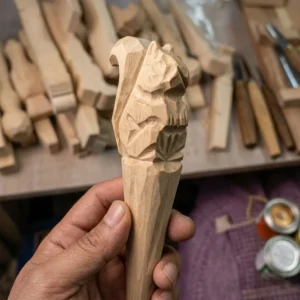
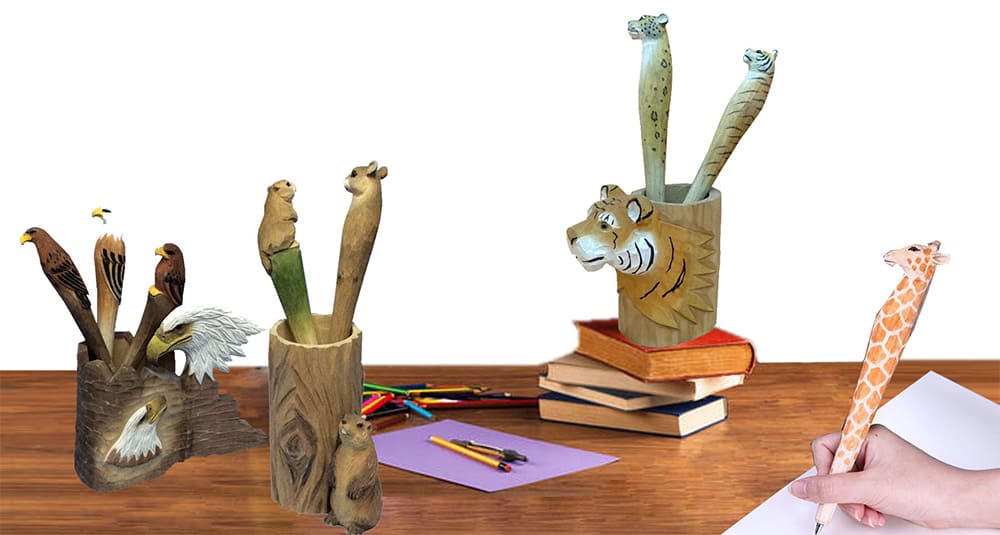
Each cause has a fix that costs nothing but discipline, and all four fixes belong on the plan before the first order rather than after the first slow month. The range a starter wall draws from, carved animal pens in four species with two standard refill types, is described on our wood carving pen page.
Starter Pen Kits: What Belongs in the First Assortment
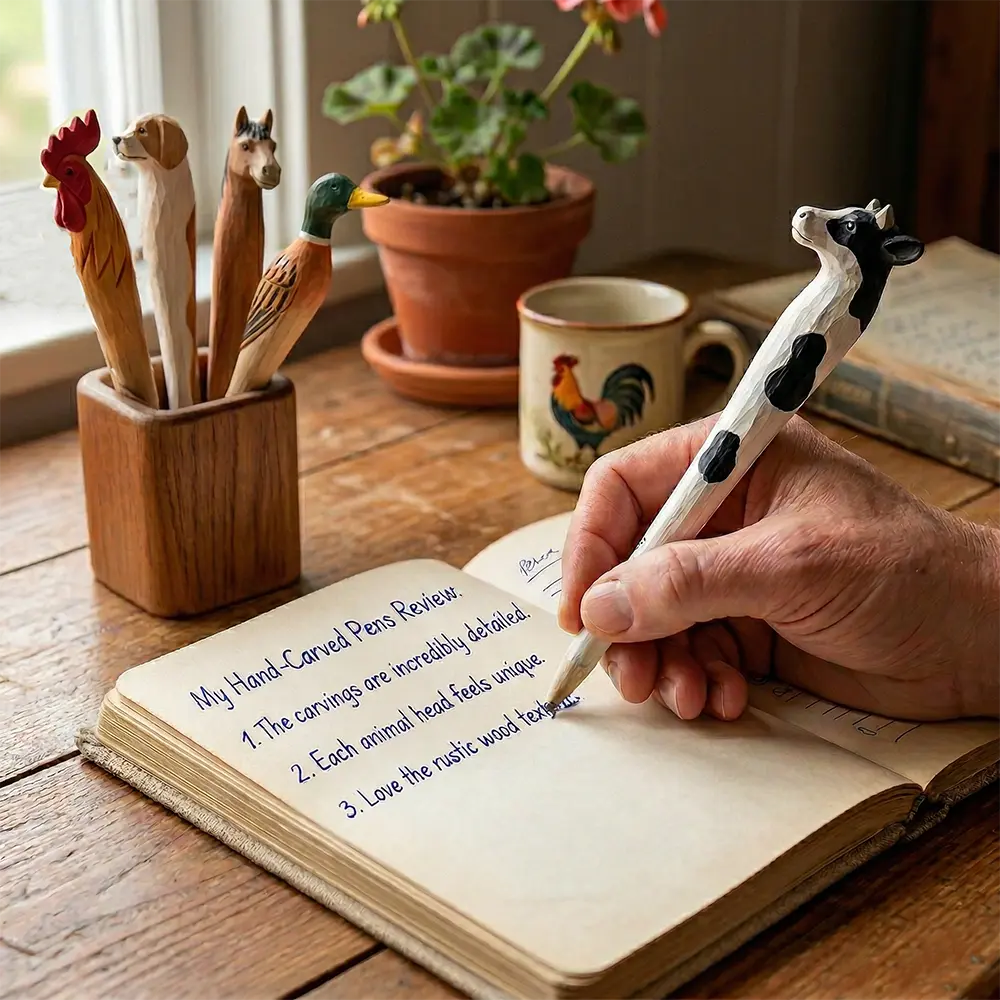
Three formats cover a starter wall. The entry piece is a single carved pen on a hook, no box, priced to be an impulse yes. The mid kit adds the refill and a soft pouch in a kraft sleeve, priced as a considered purchase. The top kit is the gift box: pen, refill, pouch and a printed card naming species and care, priced for the occasion buyer who never touches the open row.
The ladder matters more than any single format, because shoppers price a category by its spread: a wall with only entry pieces trains the store’s customers to expect cheap pens, and a wall with only gift boxes trains them to walk past. Three rungs let each buyer self-select, and let the staff upsell without arguing. The company and its specification library sit at ewoodarts.com.

Assortment Maths: Two Axes, Six Designs
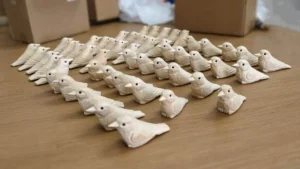
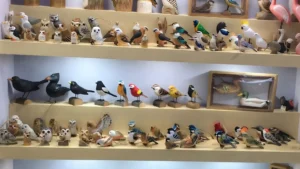
Six designs, two wood tones, one facing each: that is the starter wall. The two axes, species tone and animal design, are the only variation a shopper can read at three metres; a third axis, say three sizes of the same animal, collapses into noise at hook height. Six faced pieces plus two touch testers fit a one-metre run, which is what most stores can spare.
Growth happens by adding tone and species, not hooks: the second season introduces a darker stain family and two new animals, keeping the faced count at one per design so the wall never becomes a bin. The species behaviour that makes tone variation legible, including how bark-edged branch pens differ from turned barrels, is covered in our guide to pen wood species and writing comfort.
Display: Height, Light and the Touch Tester
Pens live in the 90 to 150 cm band, the reach-and-read zone where a shopper can lift a tester without asking. Light does the second half: a carved pen’s grain reads under a directed warm spot and dies under flat ceiling light, so the wall gets the same lighting attention as jewellery, at a fraction of the value per piece.
The touch tester is the conversion device and the loss risk, and the ratio that balances them is one open tester per six faced pieces, chained or weighted where the store’s traffic demands it. A tester that writes, with the refill type labelled beside it, answers the only question a sealed case cannot: how does it feel in the hand. The shelf-level mechanics of a small high-touch fixture are covered in our guide to gift shop planogram basics.
The Refill Wall: The Second Business
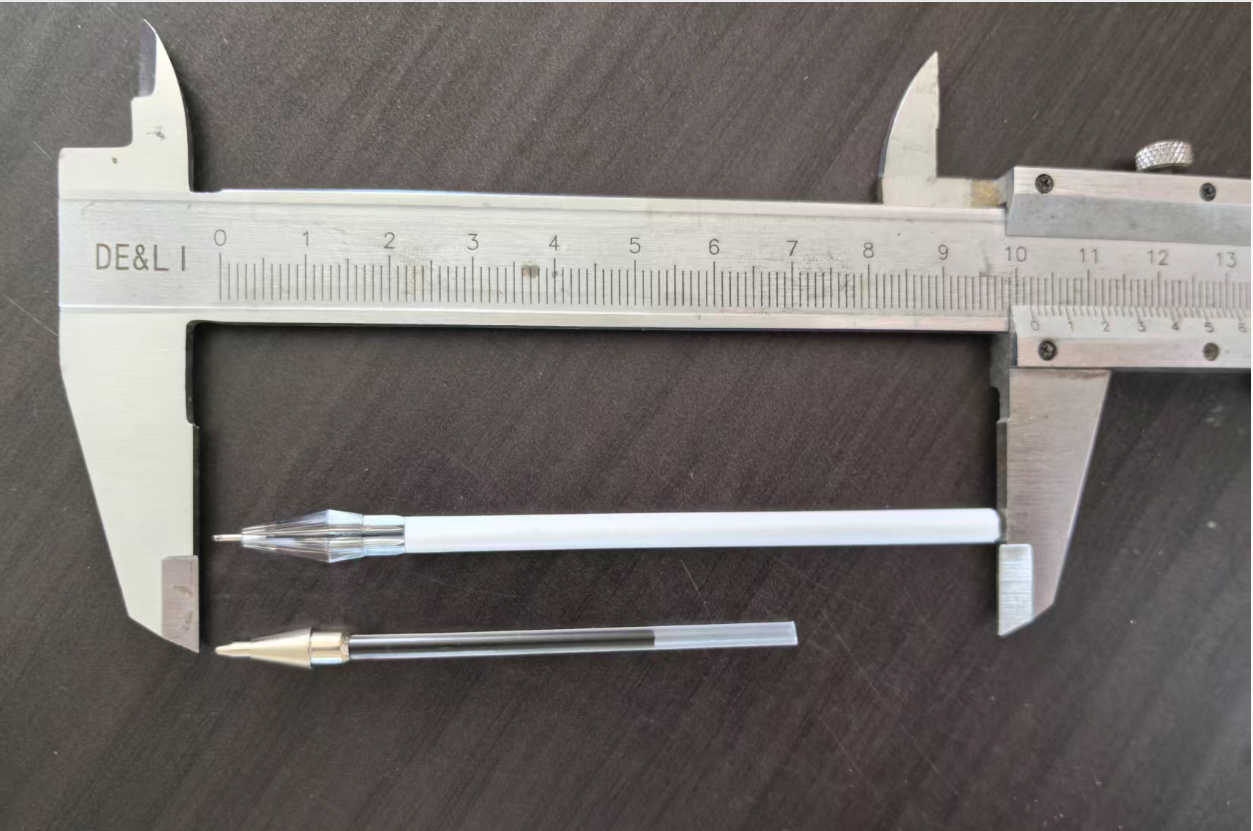
Every pen sale is a promise of a repeat visit, and the refill block is where the promise is kept or broken. Face the two standard refill types beside the kits, not behind the counter, and print the refill type on the kit card so the buyer knows before purchase what to ask for later. A refill block that empties and stays empty for a week teaches the customer to buy refills elsewhere, and the pen follows the refills.
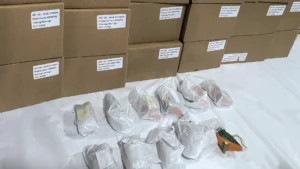
Stock the refills deeper than the pens: in a working pen wall the refill turns faster than the kit, and the carton maths should say so. Our export pack wraps each piece in white paper, 6 to 12 per inner box, and refill cartons consolidate with kit cartons on the same master, which is what keeps a small wall’s replenishment freight sensible.
Three Kit Formats Compared
| Format | Contents | Price role | Display slot |
|---|---|---|---|
| Entry pen | Carved pen on hook, no box | Impulse yes | Open row, tester beside |
| Mid kit | Pen, refill, pouch, kraft sleeve | Considered purchase | Open row end or shelf block |
| Gift box | Pen, refill, pouch, printed card | Occasion purchase | Gifting price block, separate |
| Refill block | 2 standard refill types | Repeat visit | Beside kits, arm’s reach |
The Gift-Box Layer and the Price Ladder
The gift box is where a pen stops being stationery and becomes an event, and it needs its own block, its own card and its own lighting. Mixing boxed kits into the open hook row damages both: the boxes read as unsold stock among loose pens, and the loose pens read as opened boxes.
In corporate and client gifting the boxed kit also carries a documentation life of its own, because business gift expenses sit inside a tax framework with its own limits and records; the US framework is set out in IRS Publication 463, and a gift programme that knows its per-recipient ceiling prices its box accordingly. The box specification itself, custom colour boxes from 500 pieces and the label layer, follows the same logic as any gift programme, covered in our guide to ornament retail packaging.
What We Supply Into a Pen Wall
- We supply: carved animal pens and branch pens in 4 species, basswood, pinewood, rubber wood and birch, plus the 2 standard refill types, faced-ready or boxed.
- We supply: touch-tester units with the order, chained or weighted on request, and the refill-spec card artwork matched to the shipped refills.
- We supply: laser engraving of logos and names on the gift-box layer, as a production step with the list frozen at order date.
- We do not supply: display hardware, hooks, stands or lighting; the fixture is yours, and we quote the facing counts and carton maths that fit it.
Best For / Not For
| Format | Best for | Not for |
|---|---|---|
| Independent gift shop | Full 3-rung wall with testers | Sealed-case-only presentation |
| Museum or zoo shop | Animal designs matched to the collection | Open testers without staffing sightlines |
| Stationery specialist | Deep refill block, wider species range | Starter-only six designs |
| High-theft urban store | Gift-box layer plus one chained tester | Full open row |
What We Check on a Pen Kit Run
- Write test on every sampled pen, with the shipped refill type, before boxing, because a kit that does not write is a returned gift.
- Refill seat and twist action, checked per batch against the retained sample.
- Moisture at 8 to 12 percent recorded per batch, because a thin barrel shows movement at the refill seat first.
- Kit completeness, pen, refill, pouch and card counted at packing, with the card’s refill line matching the carton contents.
- Claims limited to what we hold: CE, UKCA, RoHS, EN71 where it applies, BSCI and ISO 9001.
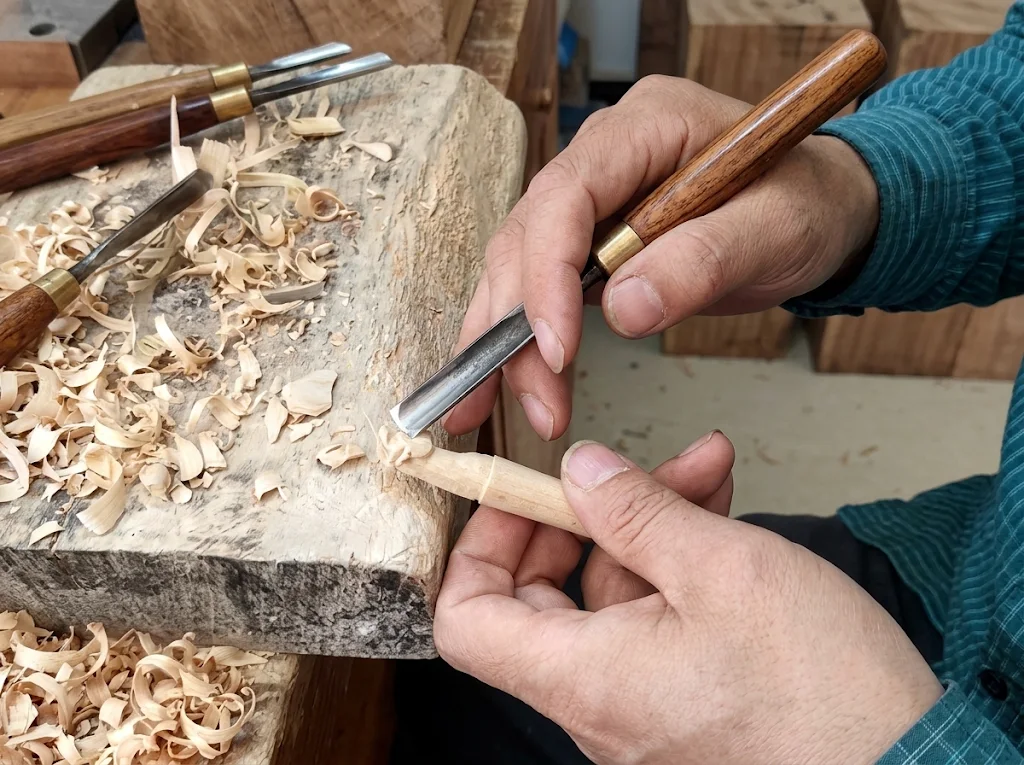
Every figure above is first-party and checkable against an inspection report or a certificate we hold; the hook counts, heights and tester ratios are recommendations to test on your floor. The carving capability behind the wall is described on our wood carving factory page.

End to End: A Gift Shop’s First Pen Wall
A coastal gift shop with a one-metre spare run beside the checkout wants a pen wall for the spring season, and its owner arrives assuming twelve designs will look richer than six.
Cut the wall to the maths. The plan lands at six faced designs in two tones, two chained touch testers, a refill block of the two standard types at arm’s reach, and three gift boxes in the gifting block across the aisle. The owner’s twelve-design draft would have faced each design at half the spacing and hidden the refills behind the counter.
Prove it on the trial tier. The first order runs 100 pieces at a USD 500 minimum order value, air express DDP in 20 to 30 days, with testers and refill cartons consolidated in the same master. Four weeks of POS per design decide which two animals rotate out before the sea-tier order.
Commit the season on the proven six. The replenishment order sits on the wholesale and custom tier at 300 pieces and a USD 3,000 minimum order value, sea freight 60 to 90 days to port counted back from the autumn gift peak, with the refill depth set at twice the pen depth because the first month’s sales said so. The gift-box layer takes the shop’s own logo engraving, list frozen at order date.
Planning your first pen wall?
Send us your run length and your traffic pattern. We will return the six-design two-tone assortment, the tester and refill block layout, and the trial-tier order that proves it before the season commits.
Frequently Asked Questions
Q: How many designs should a starter pen wall carry?
Six, in two wood tones, faced one per design with a touch tester beside each pair. More designs on the same hooks read as clutter and split the refill stock; fewer read as a token gesture. The wall grows by adding tones and species in later seasons, not by adding hooks in the first one.
Q: Should pens be displayed open or boxed?
Open for the carving, boxed for the gift. Faced pieces sell the grain and the animal in the hand, which is the whole reason a wooden pen earns its price against plastic; the boxed kit lives in the gifting block with its own card. A wall of sealed boxes hides the product that justifies the margin.
Q: What belongs on the kit card?
Three lines: species and finish, the refill type the pen takes, and one care line. The refill line is the one retailers forget and the one that turns a kit sale into a repeat visit, because the buyer knows before purchase which refill to ask for, and the block beside the wall is where they find it.
Q: How do refills change the display maths?
They add a second facing requirement: each kit design needs its refill type visible within arm’s reach, so a six-design wall carries two refill types in a small adjacent block. Stock the refills deeper than the pens, because the refill runs out first, and an empty refill hook quietly ends the repeat visit.
Q: Can a starter wall carry engraved pieces?
Yes, as one faced design showing a sample mark, not as a promise at every hook. Engraving is a production step with a frozen list, so the wall demonstrates what is possible on a single piece and routes orders into the custom programme, rather than implying same-day personalisation the bench cannot honour.