Skip to content
Coastal and nautical decor is one of the fastest-moving themes in home furnishings—and hand-carved wooden ocean animal carvings sit at its center. From seaside gift shops in Cornwall to boutique home stores in Cape Cod, retailers report that seabird figurines, whale sculptures, and marine-life ornaments consistently outsell generic décor items because they carry an emotional connection to place. This guide explains how wholesale buyers can build a profitable coastal decor collection using hand-carved wooden ocean animals, from product selection and size assortment to display strategy and seasonal timing.
Key Takeaways for Wholesale Buyers
- Material Dominance: Solid Changbai Mountain basswood is the optimal choice for fine carving details and lower shipping weight.
- Assortment Structure: Build species families across three clear size tiers (Mini 5–10cm, Standard 12–20cm, Statement 25–40cm) to maximize average order value.
- OEM Timeline: Custom designs require 60–90 days for mass production; plan Q1 orders for spring/summer retail delivery.
What Qualifies as an Ocean Animal Carving
In the wholesale wooden craft industry, “ocean animal carvings” covers a broader category than most buyers initially expect. Beyond the obvious marine mammals—whales, dolphins, seals—the category includes seabirds (puffins, seagulls, pelicans, terns, cormorants), coastal creatures (crabs, starfish, sea turtles), and shell-form sculptures that anchor a nautical display. Each of these sub-themes appeals to a slightly different customer segment, and a well-merchandised collection layers several together.
At Jilin Ever Creation (brand: ewoodarts), the carving range spans 3D sculptures from 5 cm to 40 cm, carved from solid Changbai Mountain basswood (Tilia amurensis). Basswood is the preferred material for detailed ocean animal carvings because its fine grain holds delicate features—puffin beaks, whale flukes, crab claws—without splintering, and its light weight makes even large sculptures easy to ship. Pinewood, rubber wood, and birch wood are available for pieces where a different grain pattern or density is desired.
Why Seabird Carvings Anchor Coastal Collections
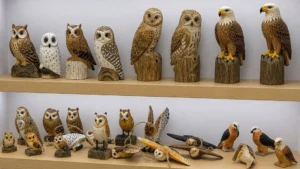
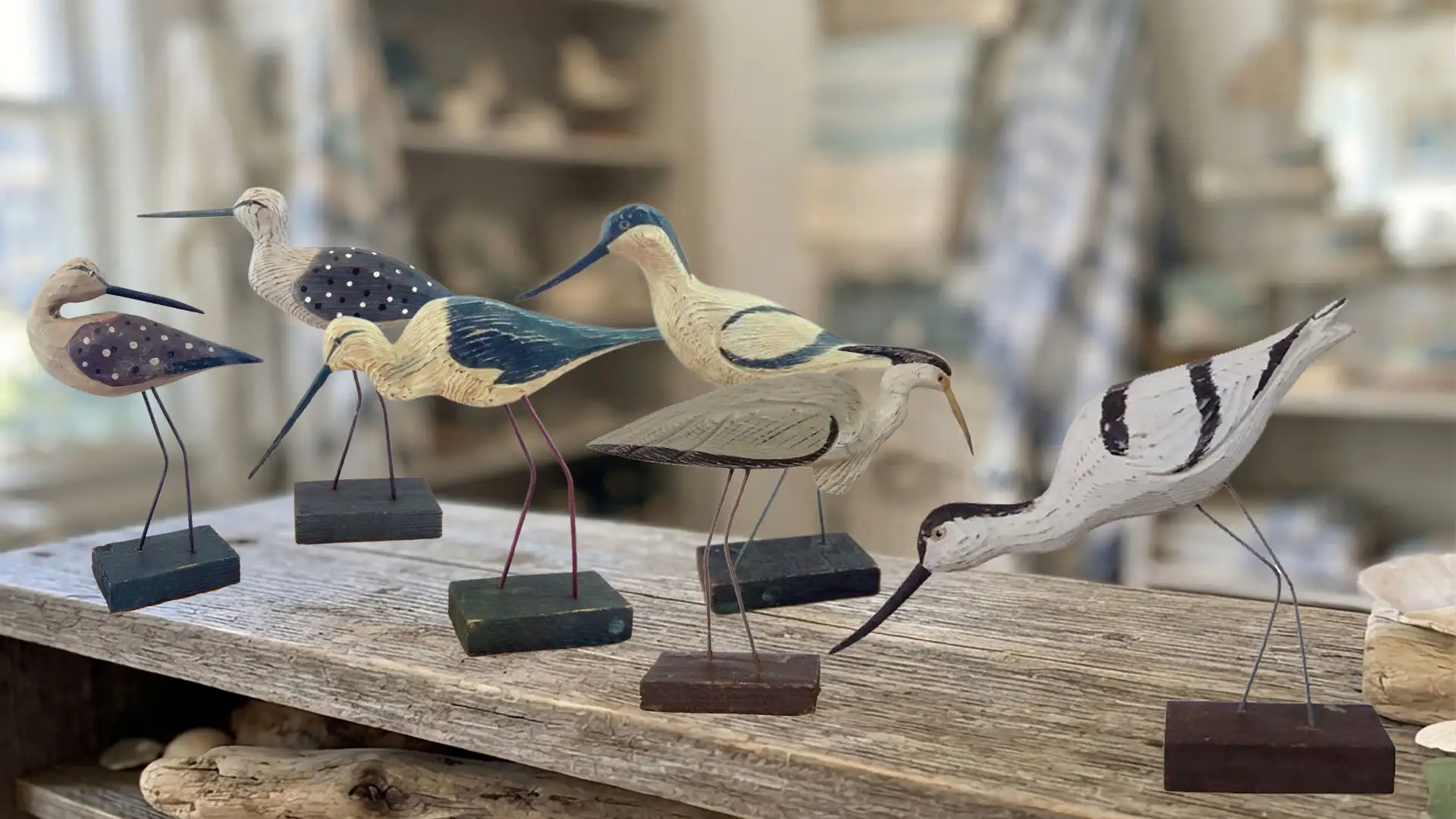
Among ocean-themed wooden carvings, seabirds are the most commercially versatile. Puffins, seagulls, and pelicans translate across cultures and geographies—they resonate with customers in coastal tourist towns, landlocked regions with a fascination for the sea, and international markets where specific marine mammals may carry cultural associations that seabirds do not.
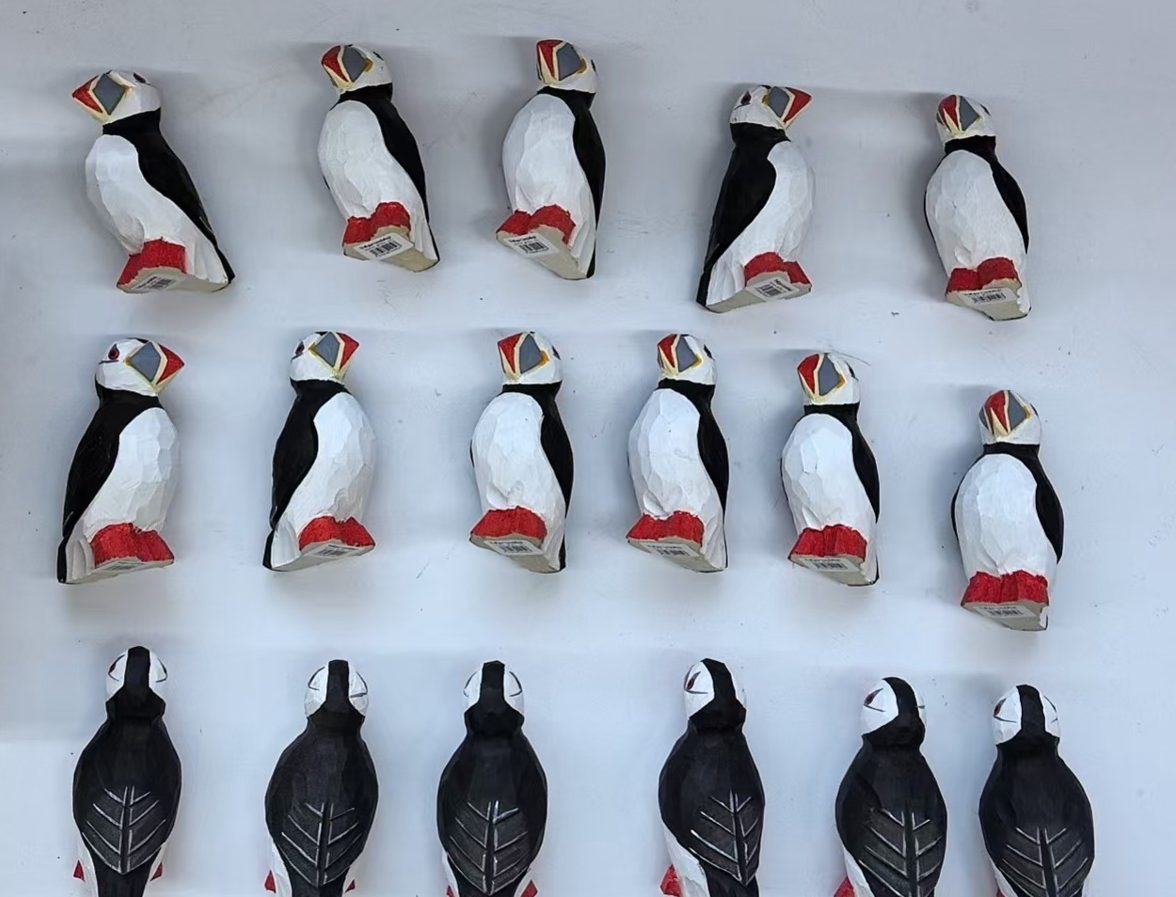
From a production standpoint, seabird carvings also offer the widest size range. A puffin figurine can be carved at 5 cm as a shelf accent, at 12–15 cm as a standalone gift item, or at 25–30 cm as a statement piece for a mantel or entryway table. This size scalability lets buyers build a tiered product line—entry-level, mid-range, and premium—within a single product family, simplifying inventory management while offering customers clear upgrade paths.
Each carving at ewoodarts is 100% hand-carved and hand-painted by artisans with an average of 10+ years of industry experience. No two pieces are identical—a quality the brand calls “Artisanal Variance.” For retailers, this uniqueness is a selling point: customers value knowing their carving is one-of-a-kind, and it reduces the perception of mass production that can undermine handcrafted pricing.
Building a Coastal Collection: Product Assortment Strategy
A successful coastal decor collection is not a random assortment of ocean-themed items. It follows a deliberate structure that gives customers a reason to browse, compare, and buy multiple pieces. Here is how experienced retailers organize their wooden ocean animal collections.
Species Families
Group carvings by species family rather than by size. A “Seabird Collection” shelf featuring puffins, seagulls, pelicans, and owls in varying sizes creates visual depth and invites customers to collect. A “Marine Life” section with whales, dolphins, and seals appeals to a different buyer. Mixing species families on the same shelf dilutes both themes. For buyers sourcing from ewoodarts, the OEM capability means you can commission specific species to fill gaps in your collection—send reference photos, target size, and wood species preference, and the factory’s design team develops a prototype.
Size Tiers
Within each species family, offer three size tiers:
- Mini (5–10 cm): Impulse-buy price point ($5–$12 retail). Ideal for souvenir shops, checkout counters, and collectible displays. Puffins and seagulls work best at this scale.
- Standard (12–20 cm): Core gift range ($15–$35 retail). The most popular size for home décor buyers. Whale, dolphin, and seal carvings perform well here.
- Statement (25–40 cm): Premium display pieces ($40–$90+ retail). Fewer units sold but higher margin per piece. Large seabird sculptures and whale tail carvings anchor the collection visually.
This tiered approach works because it captures three distinct buyer behaviors: the impulse collector, the gift shopper, and the interior design buyer looking for a focal piece. Each tier feeds the next—customers who buy a mini puffin often return for a larger version.
Cross-Category Products
Beyond standalone figurines, ocean animal themes extend into functional products that broaden the collection’s appeal: wooden puffin keychains (souvenir and tourist retail), puffin bottle stoppers (kitchen and gift), puffin door stops (home accessories), and puffin mobiles (nursery and children’s décor). Each product type uses the same carving expertise but occupies a different shelf location and price bracket, multiplying the revenue potential of a single species design.

Merchandising Coastal Carvings in Retail Spaces
How wooden ocean animal carvings are displayed directly affects sell-through rate. The following merchandising principles apply whether the retail space is a seaside gift shop, a home décor chain, or a museum store.
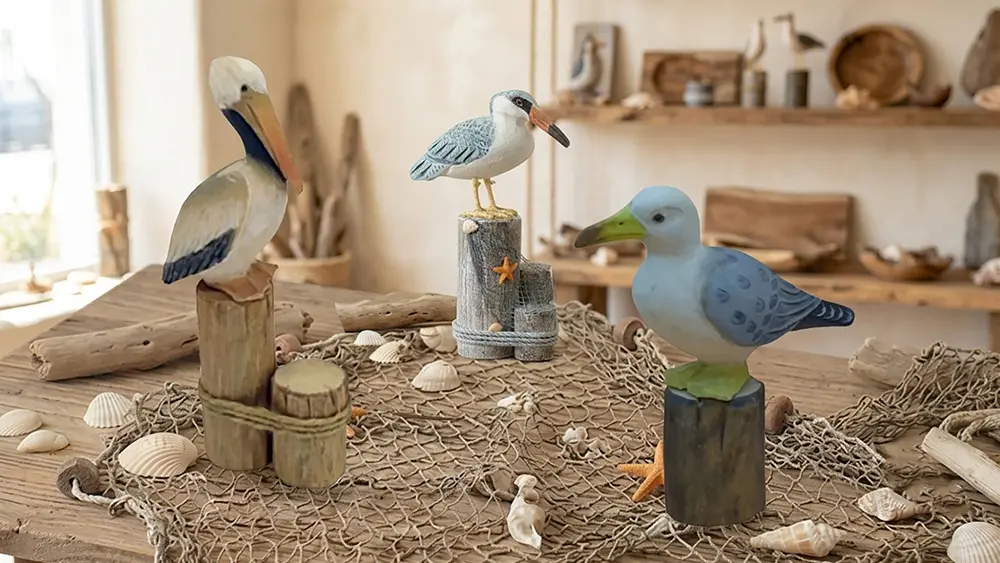
Create a themed zone, not a product grid. Coastal carvings sell best when grouped into an immersive display that evokes the seaside environment. Use natural materials as display props: driftwood, rope, weathered wood planks, sand-colored fabric, and blue-grey linen. A tiered wooden shelf with seabird carvings arranged by size—smallest in front, largest in back—creates a visual “flock” effect that draws the eye and encourages photography (free social media marketing).
Mix species and sizes for visual rhythm. A display that features only one species at one size looks like factory stock. A display that alternates puffins, seagulls, and small whale carvings at varying heights creates the visual rhythm of a natural coastline. Retail buyers who invest in this approach report higher average transaction values because customers browse longer and add complementary pieces.
Use signage to tell the making story. Hand-carved wooden ocean animals carry a provenance narrative that mass-produced resin or ceramic decor cannot match. A small sign explaining that each piece is hand-carved from Changbai Mountain basswood by artisans with decades of experience adds perceived value and justifies premium pricing. For wholesale wooden carving buyers, this narrative is a key differentiator against factory-molded competitors.
Styling Wooden Ocean Animals for Home Interiors
Retail buyers who understand how end customers style wooden ocean animals can make better product selections and create more effective in-store displays. The three most common styling contexts for coastal carvings are:
Entryways and console tables. A pair of medium-sized seabird carvings (15–20 cm) flanking a mirror or framed coastal print is a classic entryway arrangement. The carvings add texture and warmth to a space that often feels impersonal. Basswood’s light natural color complements both coastal white palettes and warmer wood-toned interiors.
Bookshelves and mantels. A single statement carving (25–40 cm) placed among books or on a mantelpiece serves as a conversation piece. Whale sculptures and large seabird carvings work best here because their scale commands attention without overwhelming the surrounding décor.
Children’s rooms and nurseries. Smaller ocean animal carvings (5–12 cm) grouped as a “family” on a shelf or windowsill appeal to parents decorating coastal-themed nurseries. Puffins, dolphins, and sea turtles are the most popular species for this application. The factory’s EN71-1/-2/-3 toy safety certification means carvings marketed for children’s spaces meet European safety standards for paint and material safety.
Customization and OEM Capabilities
For buyers building a branded coastal collection, the factory’s OEM/ODM capability is the critical advantage. The process works as follows:
- Step 1 — Reference submission: The buyer provides multi-angle reference photos of the desired ocean animal, target size, preferred wood species, and any specific paint or finish requirements.
- Step 2 — Prototype development: The factory’s design team (average 10+ years of carving experience) creates a hand-carved prototype. For established species in the factory’s catalog, this step may be skipped in favor of modifying an existing design.
- Step 3 — Approval and pricing: The prototype is photographed and sent to the buyer for approval. Once approved, the factory provides unit pricing based on order quantity, wood species, size, and finish complexity.
- Step 4 — Production: Trial orders start at 100 pieces (USD 500 minimum). Wholesale orders of 300+ pieces qualify for sea-freight pricing. Custom designs require 60–90 days for mass production.
This OEM workflow means a retailer can develop an exclusive coastal collection—species and sizes unavailable from competing suppliers—that carries their brand’s identity. For wooden home décor buyers building a differentiated product line, exclusivity is the single most powerful margin protector.
Wood Selection: Why Basswood Dominates Ocean Carvings
The choice of wood species affects the carving’s detail, weight, color, and price. Basswood (Tilia amurensis, sourced from Changbai Mountain) is the default material for ocean animal carvings for several reasons that matter to wholesale buyers.
Basswood has an exceptionally fine, even grain that holds intricate detail—critical for rendering the texture of feathers on a puffin or the ridges on a whale’s back. It is lightweight (approximately 350–450 kg/m³ dried), which reduces shipping costs per unit, especially important for buyers importing by air or ordering small quantities via DDP express. Its pale cream color accepts eco-friendly paints cleanly, producing vibrant hand-painted finishes without the grain interference that darker woods create.
The factory treats all basswood with an anti-cracking log treatment process that stabilizes the wood for international shipping across climate zones. This treatment is essential for ocean animal carvings destined for humid coastal environments or dry heated interiors, where untreated wood would crack or warp within months. Each batch of raw wood is tested for moisture content and structural integrity before entering production.
For buyers who prefer a different aesthetic, pinewood offers a more visible grain pattern and slightly warmer tone, while birch wood provides a harder surface suited to pieces that will be handled frequently (keychains, small figurines for children). Rubber wood is available for cost-sensitive programs where the grain pattern is less critical.
Seasonal Demand and Ordering Timeline
Coastal decor has a seasonal peak, but it differs from the Christmas ornament cycle. Coastal and nautical themes see increased demand from late spring through summer (April–August in the Northern Hemisphere), driven by tourism, vacation-home furnishing, and the general psychological association of the sea with warm-weather leisure. Retailers in tourist destinations typically stock up in Q1 for the summer season.
For custom OEM designs, the recommended ordering timeline is:
- October–November (Year Before): Finalize species selection, submit reference photos, approve prototypes.
- December–January: Place order with 30% deposit. Production begins.
- February–March: Mass production (60–90 days for custom designs).
- April: Shipment via sea freight (20–35 days to North America/Europe).
- May: Goods arrive and are merchandised for the summer selling season.
For stock items and repeat orders of existing designs, lead times are shorter: 7–15 days for in-stock pieces, 20–30 days for trial orders. Buyers who miss the sea-freight window can use DDP air express for urgent replenishment, though at higher per-unit freight cost.
Quality and Compliance: What Buyers Should Verify
When sourcing hand-carved wooden ocean animals, buyers should confirm the following quality and compliance points with their supplier:
- Anti-cracking treatment: All raw wood must undergo kiln-drying and stabilization treatment to prevent cracking in varying humidity conditions. Ask for the specific process and moisture content target.
- Paint safety: For carvings marketed near children or in toy-adjacent categories, confirm EN71-1/-2/-3 compliance (European toy safety standard covering mechanical, flammability, and chemical migration). Eco-friendly, non-toxic paint is standard at certified factories.
- Wood traceability: Responsible suppliers can provide official timber felling and transport permits documenting the wood’s origin. This documentation supports sustainability claims and is increasingly required by European and North American importers.
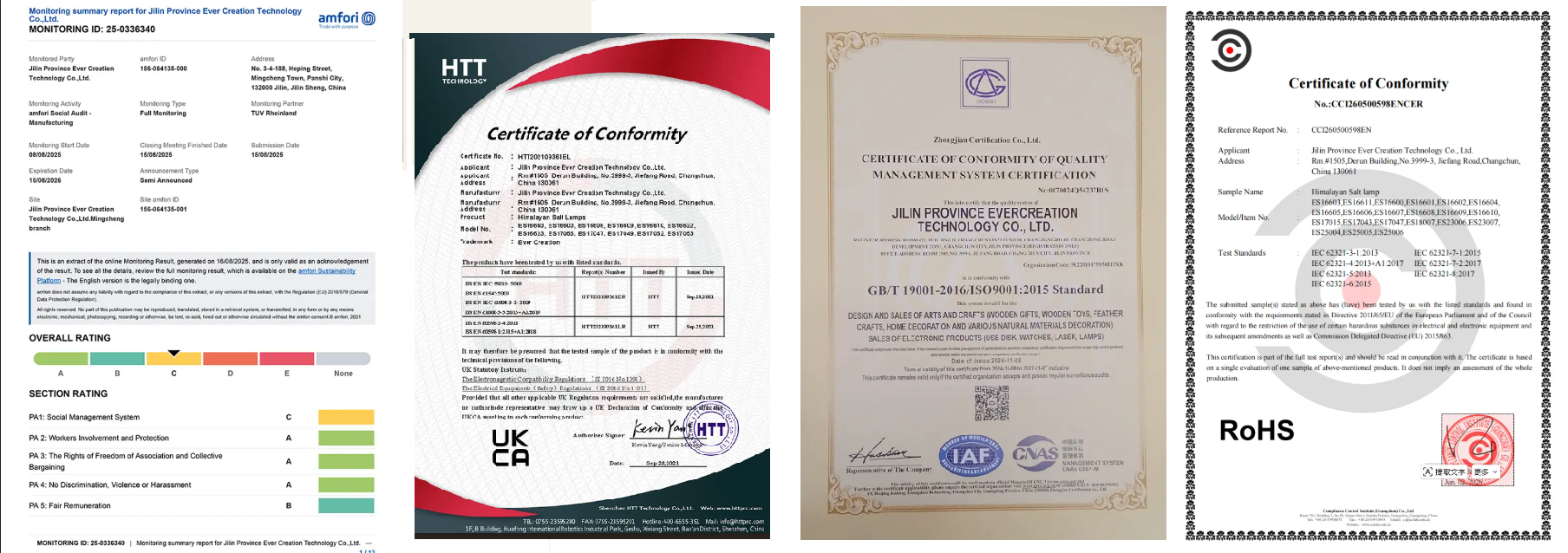
- Social compliance: BSCI (amfori Business Social Compliance Initiative) audit reports verify that the factory meets international labor standards. For retailers with ESG commitments, this documentation is non-negotiable.
Jilin Ever Creation holds ISO 9001 quality management certification, BSCI social compliance audit reports, EN71 toy safety certification, and CE/UKCA marks for applicable products. The factory has operated since 2004, supplying wooden crafts and Himalayan salt products to importers across North America, Europe, and Asia-Pacific.
From Collection Concept to Container: Next Steps
Building a coastal decor collection around wooden ocean animal carvings is a proven strategy for home décor retailers, gift shops, and tourist retailers. The key decisions—species selection, size tiering, display approach, and OEM customization—are all supported by the factory’s standard workflow. With a trial order starting at just 100 pieces, buyers can test a coastal collection before committing to full wholesale volumes.
For buyers ready to explore coastal carving options or commission custom ocean animal designs, the ewoodarts sales team provides prototype development and pricing within one business day of receiving specifications.
Build Your Coastal Decor Collection
Send reference photos or browse existing designs. Trial orders from 100 pieces.
Explore Wooden Carvings →Frequently Asked Questions
What wood species are used for ocean animal carvings?
Basswood (Tilia amurensis from Changbai Mountain) is the primary material due to its fine grain, light weight, and excellent paint absorption. Pinewood, birch wood, and rubber wood are also available for specific design requirements.
What size range is available for 3D wooden carvings?
3D hand-carved sculptures range from 5 cm (miniature collectibles) to 40 cm (statement display pieces). The most popular retail sizes are 8–12 cm for impulse buys and 15–25 cm for gift-range products.
Can I commission a custom ocean animal species not in the catalog?
Yes. The OEM process accepts multi-angle reference photos, target size, wood species preference, and finish requirements. The factory’s design team develops a hand-carved prototype for approval before mass production begins.
What is the minimum order quantity for ocean animal carvings?
Trial orders start at 100 pieces with a USD 500 minimum. Wholesale pricing applies at 300+ pieces. Custom packaging (color boxes, gift boxes) requires 500 pieces per SKU.
Are wooden ocean animal carvings safe for children’s rooms?
Yes. The factory holds EN71-1/-2/-3 certification covering mechanical safety, flammability, and chemical migration. All paints used are eco-friendly and non-toxic, meeting international export standards.