Skip to content
Rose salt lamp sourcing demands a focus on structural resilience rather than just visual appeal. Brittle hand-carved petals often suffer micro-fractures during transit, leading to high return rates and expensive secondary repackaging that can destroy holiday margins.
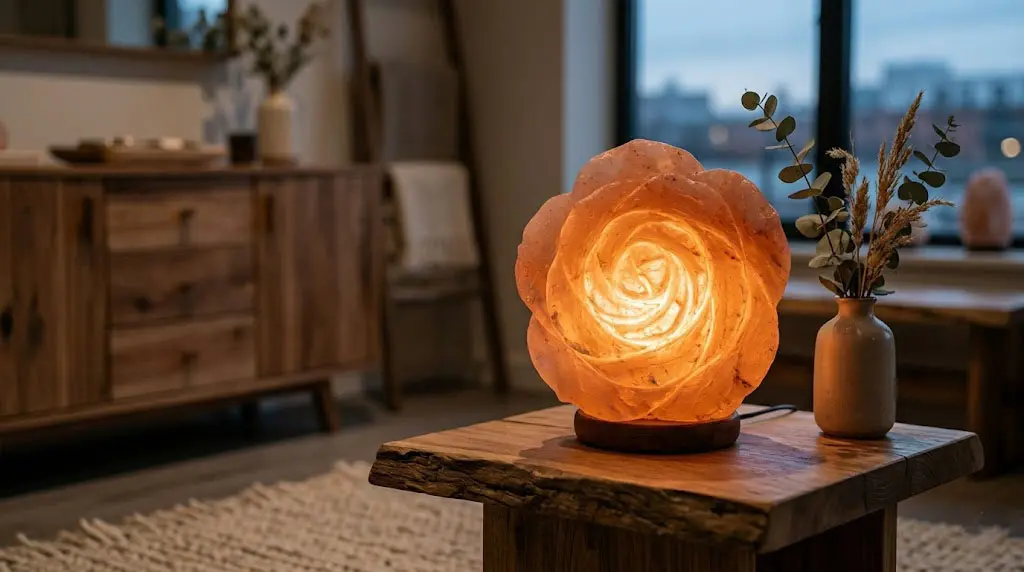
Our solution utilizes export-engineered 5-ply reinforced master cartons and precision foam inserts to stabilize each unit. By aligning with a 50-60 day custom production cycle and Nature’s Geometry standards, we deliver shelf-ready inventory that maintains the geological integrity of authentic Khewra Mine crystals.
Capitalizing on Floral Decor Trends
In 2026, decor trends favor sculptural, mood-driven pieces. This shift creates strong demand for unique, artistic items like hand-carved salt lamps that offer a permanent, warm glow.
The Shift Toward Sculptural and Mood-Based Decor
The decor market has moved beyond conventional arrangements. Today’s consumers want sculptural installations and asymmetrical compositions that function as works of art. They are looking for pieces that create a strong silhouette and offer a dynamic presence in a room, not just fill a space.
Modern buyers are visually aware and selective. They choose decor based on the mood, style, and texture it communicates. The decision is less about simple aesthetics and more about creating a specific atmosphere. There’s also a clear demand for hybrid pieces that merge preserved natural elements with other materials for long-lasting visual interest.
Meeting Market Demand with a Luminous Ambiance
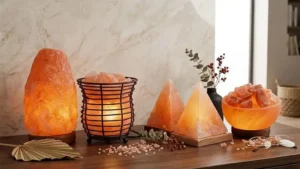
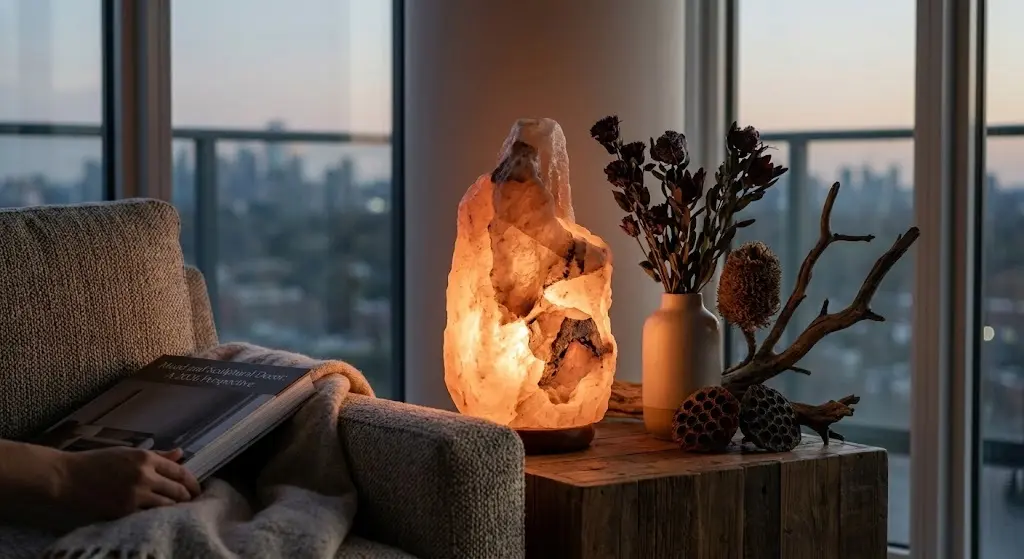
This market is ideal for products with built-in artistic integrity. Each hand-assembled salt lamp delivers ‘Geological Uniqueness,’ satisfying the demand for one-of-a-kind, sculptural items. Because every salt crystal has its own distinct structure and mineral veins, no two lamps are identical.
The ‘Warm Ambient Glow’ emitted by the natural salt creates the exact mood-setting atmosphere that style-conscious consumers seek. It’s an effective way to introduce a feeling of warmth and calm into a space. As a permanent, natural piece, a salt lamp provides the textural complexity and aesthetic longevity that modern buyers value, outlasting temporary decor trends.
The Art of Layered Salt Carving
Layered salt carving is an artisan technique used to shape natural Himalayan salt blocks. The process reveals inherent mineral veins and crystalline structure, creating depth unique to each piece.
Revealing Depth in Natural Salt Crystals
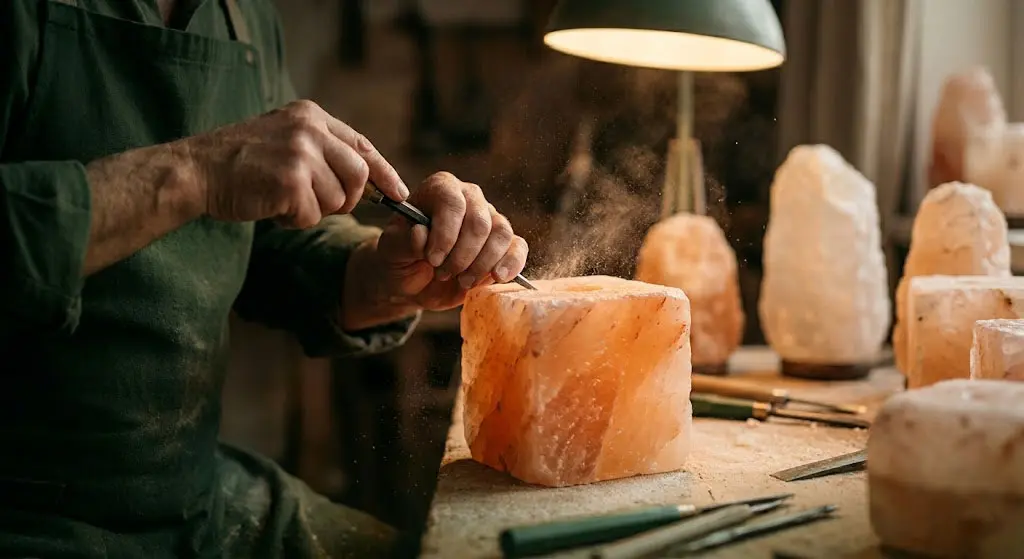
The goal of layered carving is to work with the salt, not against it. Carving techniques follow the natural mineral veins inside each block of authentic Himalayan salt. This approach doesn’t just cut a shape; it highlights the texture and depth formed by the crystal’s unique geological history. The process ensures that every finished piece has its own distinct pattern, making no two lamps identical.
Hand-Assembled Craftsmanship for Unique Designs
Each lamp is shaped from a raw Himalayan salt crystal and then carefully assembled by hand. This preserves the natural integrity of the material. We market this distinct, one-of-a-kind aesthetic as “Nature’s Geometry”—a key selling point for retailers looking to offer products that are genuinely unique.
Scale Your Business With Authentic Salt Lamps
Red vs. Pink Salt for Rose Designs
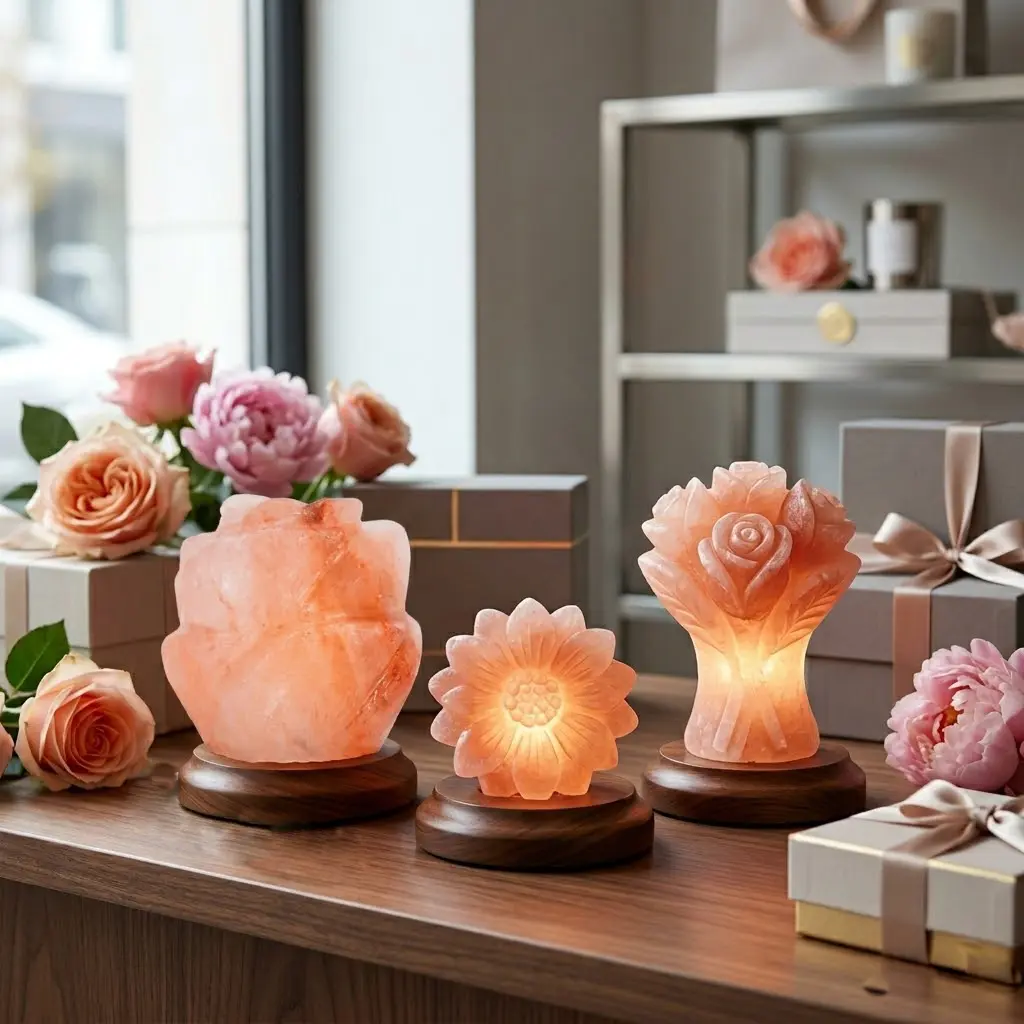
Pink Himalayan salt is the industry standard for rose-shaped lamps due to its warm glow and market demand. Red salt offers a deeper color but is less common for production.
How Mineral Content Affects Color
The color spectrum in Himalayan salt, from pale pink to deep red, is determined by its iron oxide content. Red and brown salt varieties simply have a higher concentration of iron, which results in a deeper, more dramatic hue. While the colors vary, the core mineral composition is largely the same. The visual appearance is the main distinction for any design application, including carved roses.
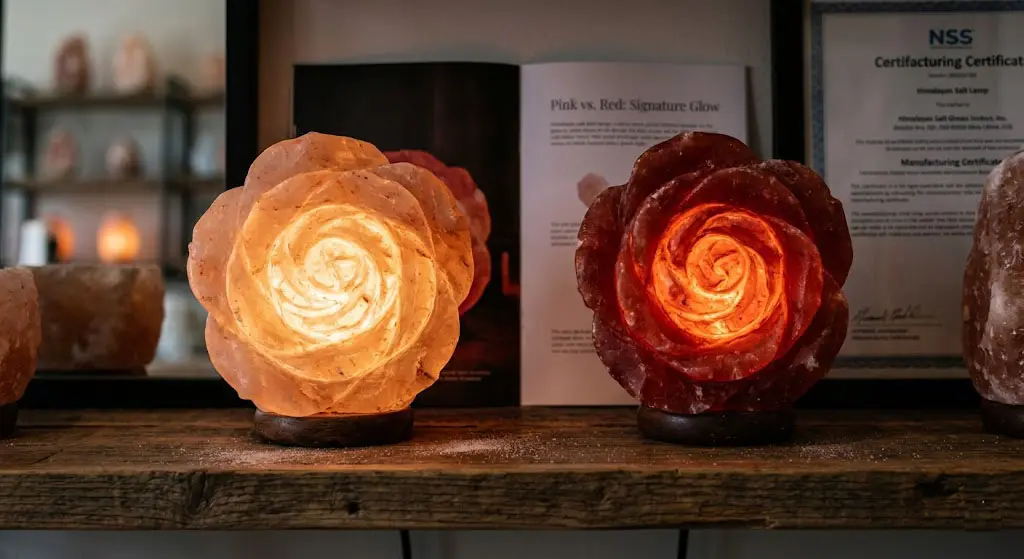
Sourcing Pink Salt for a Signature Glow
Our lamps are made with 100% authentic pink salt crystals sourced directly from the Khewra Mine in Pakistan. We select this specific material because it produces the warm, amber glow that is highly valued in the home decor market. This visual appeal drives retail demand. We market the natural color variations as “Nature’s Geometry,” a key selling point that highlights the unique character of each hand-assembled lamp and reinforces its authenticity.
Gift-Ready Retail Box Packaging
Gift-ready packaging protects fragile salt lamps and makes them shelf-ready. It uses durable materials and custom branding to build consumer trust and drive sales.
What Defines Shelf-Ready Packaging
Shelf-ready packaging isn’t just a box. It has to perform two critical jobs. First, it provides robust protection for a fragile product like a hand-carved salt lamp, ensuring it survives logistics without damage. Second, it acts as a silent salesperson on the retail floor, using clear branding and product information to attract customers. The entire design is built for easy handling, stacking, and display by retail staff.
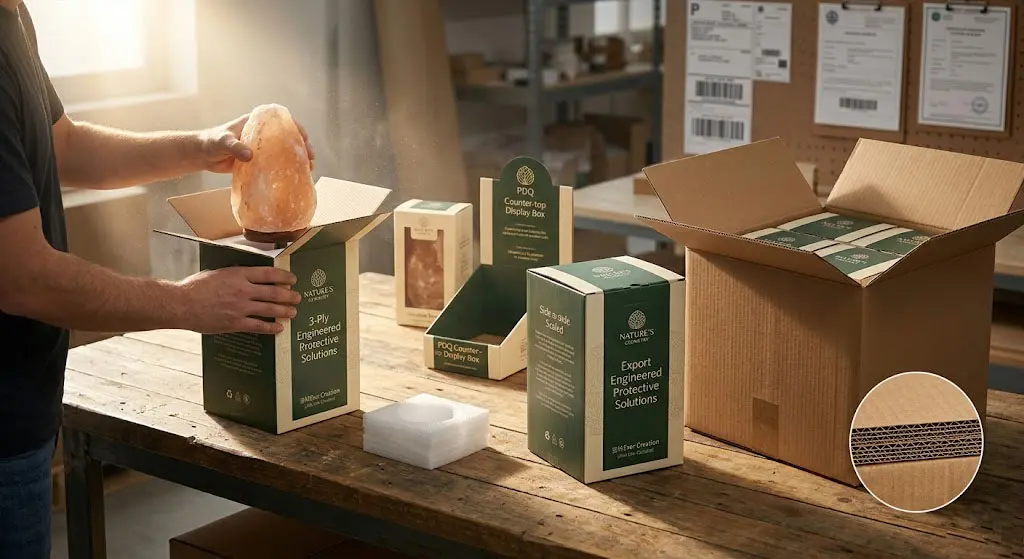
Export-Engineered Protective Solutions
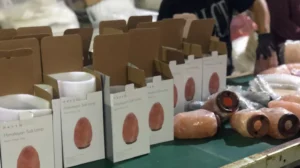
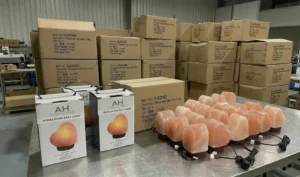
We’ve engineered our packaging to withstand the demands of global shipping. There’s no guesswork involved. Every lamp is secured inside its own box with foam supports to prevent movement and absorb impacts. These individual boxes are then packed into master cartons built for the job.
- Individual Box: Each lamp is packed in a 3-Ply export carton with custom foam inserts for stability.
- Master Carton: We use 5-Ply BC Flute reinforced corrugated cartons, specifically designed to handle the weight and pressure of long-distance sea transport.
- Custom Branding: For private label or retail brands, we offer custom-printed color boxes with a minimum order quantity (MOQ) of 1,000 units.
Forecasting Inventory for Spring Holidays
Analyze past sales for Easter and Mother’s Day. Plan orders using our lead times (50–60 days for custom) and packing specs (e.g., 6 pcs/carton) to prevent stockouts.
| Planning Factor | Key Data | Wholesale Implication |
|---|---|---|
| Lead Time (In-Stock) | 7–15 days | Allows for quick replenishment of fast-moving inventory. |
| Lead Time (Custom) | 50–60 days | Requires advance planning for unique or private-label orders. |
| Packing Rate (Best-Seller) | 6 pcs/carton (2–3kg lamp) | Simplifies bulk order calculations and warehouse planning. |
| Master Carton Spec | 5-Ply Reinforced | Reduces risk of damage during long-distance sea freight. |
Analyzing Seasonal Demand Patterns
The foundation of any good seasonal forecast is your own historical sales data. Look at purchasing patterns from previous years around key dates like Easter and Mother’s Day. This helps you identify which products spike and when. Before you dive into the numbers, set clear objectives. Define exactly which SKUs you’re forecasting and for what time periods in your target markets.
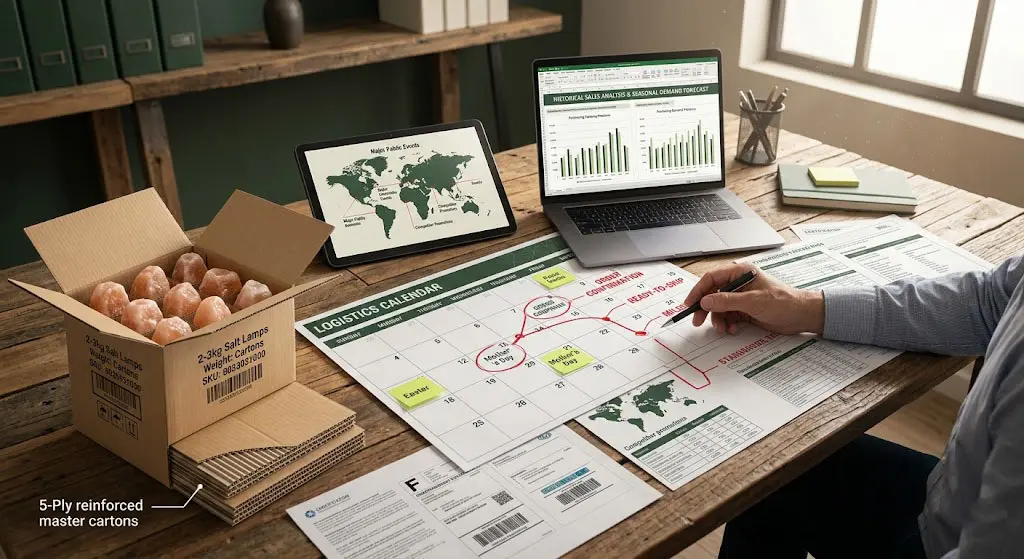
Past performance isn’t the whole story. You also have to consider external factors. A competitor’s big promotion, a shift in consumer spending habits, or even major public events can influence demand. Don’t rely solely on automated forecasts; use your market knowledge to adjust for these variables.
Using Lead Times and Packing Data for Precision Planning
Accurate forecasting means nothing if the product doesn’t arrive on time. You need to factor our production and shipping timelines into your calendar. Allow 7–15 days for orders from our Ready-to-Ship inventory. For any custom production or private-label runs, you must build in a 50–60 day lead time from order confirmation to shipment.
Our standardized packing data makes order planning straightforward. You can calculate exact order volumes and streamline your logistics. For example, our best-selling 2–3kg lamp is packed at 6 pieces per master carton. This consistency helps you optimize container space and manage warehouse intake efficiently. Every order is shipped in 5-Ply reinforced master cartons, specifically designed to protect your goods during long-distance sea freight and minimize transit damage.
Pricing Strategies for Boutique Markets
Effective boutique pricing blends cost-based math with value-driven approaches. Success hinges on leveraging your unique market position to set prices that reflect a product’s perceived worth.
Establishing a Foundational Pricing Model
Your pricing needs a solid base. The simplest approach is cost-based, where you calculate your total cost of goods and apply a standard markup. The keystone model, a 2x markup on your wholesale cost, is a common starting point that ensures healthy margins for retailers. It’s a straightforward way to guarantee every unit is profitable.
Value-based pricing moves beyond pure cost. You set the price based on what your customer believes the product is worth. For Himalayan Salt Lamps, this is critical. You aren’t just selling a rock with a bulb; you’re selling a unique ambiance and a wellness aesthetic. This perceived value allows you to price well above a simple cost-plus calculation.
Finally, look at your competitors. A quick market analysis shows you what similar products are selling for. This doesn’t mean you have to match their price. Instead, use it to position yourself. You can price higher if your product offers superior quality, authentic sourcing, or better craftsmanship—which it should.
Leveraging ‘Nature’s Geometry’ for Premium Positioning

The biggest advantage of a natural product is its inherent uniqueness. We call this “Nature’s Geometry.” No two Himalayan Salt Lamps are identical. Each piece has distinct crystal structures and mineral veins. Frame each lamp not as a commodity, but as a one-of-a-kind natural sculpture. Boutique customers value this exclusivity and will pay for it.
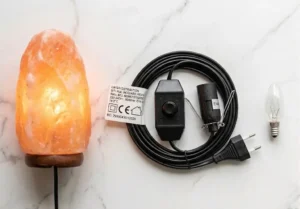
You can justify a premium price point by emphasizing the details. Highlight the hand-assembled craftsmanship that goes into each lamp, from selecting the raw salt rock to fitting it on a stable wooden base. Back it up with proof of authentic sourcing—our salt comes directly from the Khewra Mine in Pakistan. These facts build trust and support a higher retail price.
The product itself enhances its perceived value. The soft, warm amber glow creates an atmosphere that customers connect with emotionally. This isn’t just a light source; it’s a piece of decor that sets a mood. This high-value aesthetic is exactly what boutique shoppers are looking for, making them far less sensitive to price alone.
Frequently Asked Questions
Can we order rose salt lamps in custom gift boxes for wholesale?
Yes. We provide custom gift boxes for wholesale orders, designed for retail display and private labeling. These are ideal for gift shops and wellness retailers looking for a premium product. The minimum order quantity for a custom color box is 1,000 pieces.
How do I care for a carved rose salt lamp to prevent chipping?
To protect the carved petals, keep the lamp out of humid areas like bathrooms. Leaving the lamp on for several hours a day helps evaporate moisture. When cleaning, use a dry cloth or a soft plastic tool to remove dust. Never use water or metal tools, which will damage the salt crystal.
When should we place orders for Mother’s Day 2026?
Mother’s Day is on May 10, 2026. For custom production, which has a 50–60 day lead time, place your order by late February. For in-stock items, which ship in 7–15 days, ordering by early April provides a safe buffer for freight and delivery.
Final Thoughts
Investing in export-engineered packaging eliminates the hidden costs of transit breakage. Choosing authentic Khewra Mine crystals ensures the “Nature’s Geometry” your boutique customers expect for premium gift-giving.
We integrate these quality benchmarks into every ewoodarts order, utilizing 5-ply reinforced cartons and individual foam inserts to safeguard your margin. To see how our artisan quality aligns with global trade standards, consult our [Ultimate Guide to Sourcing Wholesale Himalayan Salt Lamps]
Secure your Q2 inventory now to stay ahead of the 50–60 day lead time for custom orders. We recommend starting with a trial order from our [Salt Lamps Wholesale] collection to evaluate our shelf-ready finish. If you need a current price list or private label specs, please [Reach out to our team] today.