Skip to content


Getting wooden decor import labeling right the first time prevents customs holds, rework, and delayed shelf dates.
Key Takeaways
- Label every wooden product with country of origin, material, and importer details before it clears customs.
- Match the label to the market: CE and importer address for the EU, country-of-origin and care for the US.
- Build the labelling specification into the purchase order so the factory applies it, not your warehouse.
- US origin marking must be on the article itself: legible, permanent, and in English. A mark on the carton, or a peelable sticker on the base, does not satisfy it.
- Wood packaging is a separate obligation. Solid-wood pallets and crates need the ISPM 15 mark, and a non-compliant pallet can hold an otherwise correctly labelled container.
- The commercial invoice has to match the label. A mismatch between invoice and marking is a common reason a correctly labelled shipment is still held.
In This Guide
- EU Labelling Requirements
- US Labelling Requirements
- Marking Methods Compared
- Best For / Not For: Labelling by Destination and Channel
- Building Wooden Decor Import Labeling Into the Purchase Order
- What We Check Before a Labelled Shipment Leaves
- HS Codes & Duty Classification
- End to End: A Labelled Container from Purchase Order to Clearance
- Frequently Asked Questions
A beautifully carved wooden ornament held at customs for a missing label earns no margin. Wooden decor import labeling rules are the least glamorous part of sourcing, and the most expensive when ignored. The EU and the US have different but overlapping requirements, and a shipment labelled for one market can be rejected by the other. This guide explains what must appear on the product, the packaging, and the shipping documents for wooden decor entering both markets.
The rule of thumb is that the label must answer three questions: what is it, where was it made, and who is responsible for it in the destination market. A label that answers all three passes customs; one that misses any invites a hold, a fine, or a re-export order. The requirements are specific, but they are not complicated, and they can be built into the purchase order so the factory applies them before the container leaves.
EU Labelling Requirements
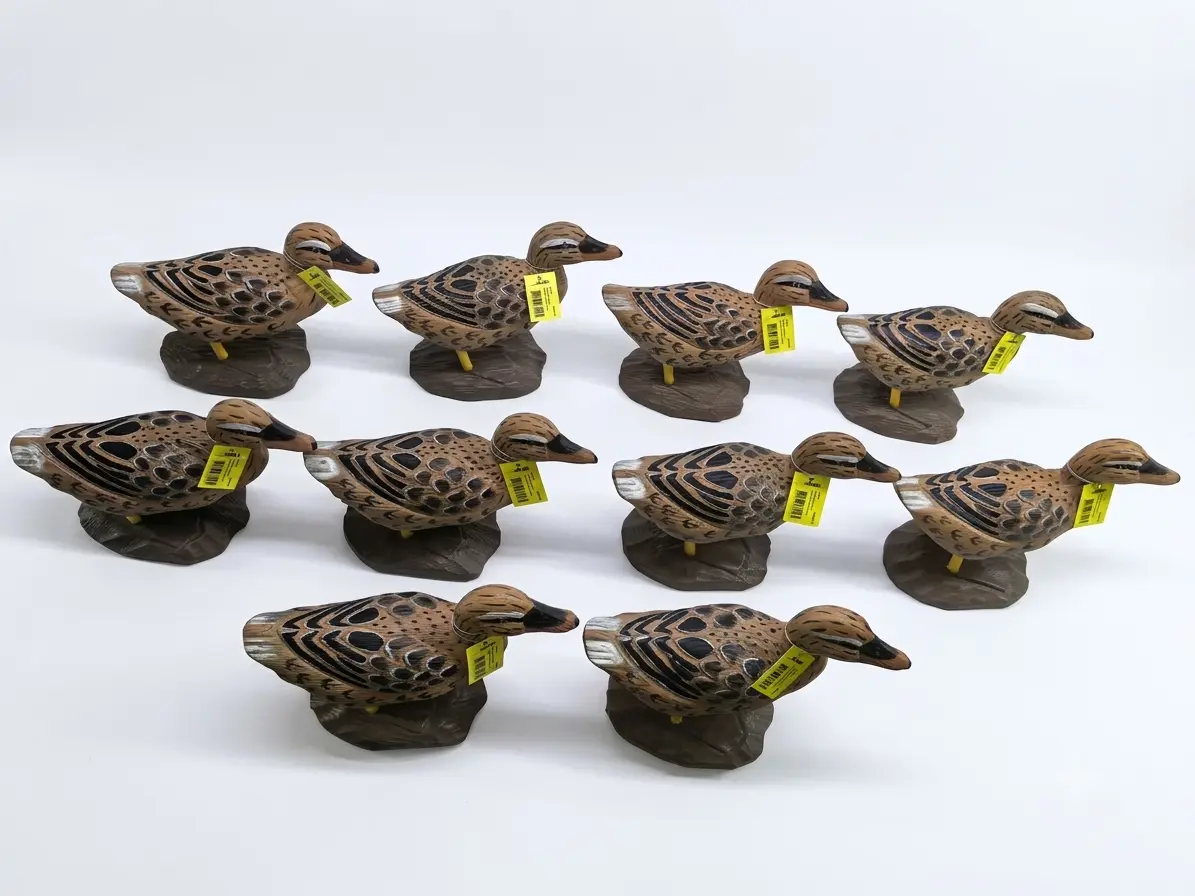
For the EU, wooden decor products must carry the CE mark if they fall under a directive that requires it, the name and address of the EU-based importer or authorised representative, the country of origin, and any safety warnings in the language of the destination member state. For decorative items sold as non-toys, the CE mark may not be required, but the importer details and origin always are. The EU also requires that textile components, if any, carry fibre-content labels, and that packaging carries recycling symbols under the packaging waste directive. Verify the exact requirements for your product category before printing, because the cost of relabelling a container at the port is punitive.
US Labelling Requirements
The US requires country-of-origin marking on the product itself, not just the packaging, and it must be legible, permanent, and in English. The U.S. Customs and Border Protection enforces marking rules strictly, and a shipment that arrives without proper origin marking can be held, re-exported, or assessed a marking duty. For wooden decor, the origin mark can be a printed sticker, a hangtag, or a stamp, provided it is accessible and durable. If the product is packaged in a sealed retail box, the box must also carry the origin mark or the product must be visible through the packaging so the mark is readable without opening.
Marking Methods Compared
The requirement that US origin marking be legible, permanent and in English decides which marking method you may use: a peelable sticker on the base is not a permanent mark, and a hangtag is not a mark on the article at all. The table compares the five methods we apply in production.
| Method | Permanence | Cost Driver | Best For | Watch Out |
|---|---|---|---|---|
| Laser engraving | Permanent; survives handling and humidity | Machine time per piece; no tooling | Origin marking on the article itself, which is what the US rule asks for | Verify depth after the finish cures; pale woods carry contrast better |
| Printed adhesive label | Semi-permanent; can lift in damp | Plate and material; low per unit at volume | Importer details, care text, SKU and barcode on packaging | A lifted label counts as no marking, so adhesion needs a test on the actual finish |
| Hangtag and cord | Removable by design | Print run; cheapest to change seasonally | Retail storytelling, fibre content, price | Never satisfies origin marking on the article, and must not contradict the printed label |
| Pad or screen print | Durable when ink is matched to the substrate | One-time plate or screen per colour | Logos and short repeated text at volume | Adhesion on oily or resinous species needs a trial before committing the run |
| Branded burn or emboss | Permanent; reads as part of the craft | Brass tool, reused across reorders | Premium pieces where the mark is part of the design | Depth removes material, so it can weaken thin sections |
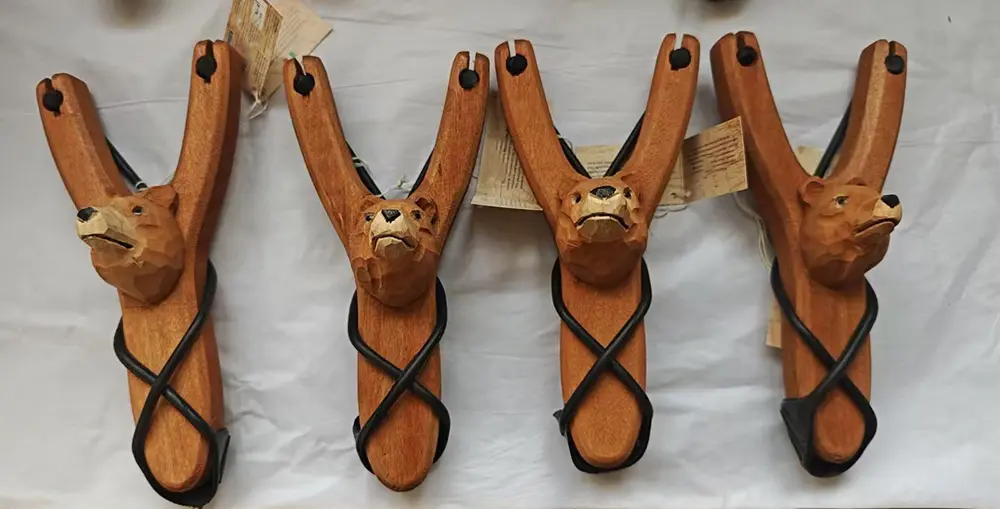
A compliant shipment uses several at once, each doing a different job: origin on the article, importer details on the label, SKU and barcode on the retail pack, shipping marks on the carton. Treating them as one decision produces a container that is technically labelled and still held. The packaging side is covered in our guide to packaging wooden crafts.
Best For / Not For: Labelling by Destination and Channel
The same carving needs a different label set depending on where and how it is sold. This is the matrix we build a labelling schedule from.
| Destination / Channel | On the Article | On Packaging | Most Common Failure |
|---|---|---|---|
| EU retail, decorative non-toy | Country of origin | Importer or authorised representative name and address; recycling symbols under packaging rules | Missing importer address, or applying CE where no directive requires it |
| EU / UK, toy-classified | CE or UKCA mark, age grading, importer details | Warnings and batch or lot number for traceability | Selling as a decoration something a child would play with; classification follows function and appearance, not intent |
| US retail | Country of origin, legible, permanent, in English | Care instructions, and fibre content where any textile is present | Origin only on the carton or on a peelable sticker, which does not count as marking the article |
| Online marketplace | Same as retail for the destination market | SKU or GTIN, plus the safety documentation the platform requires | Assuming e-commerce is exempt because there is no shelf; platforms audit listing documents |
| Private label / OEM | Your brand mark plus the origin marking your market requires | Your importer-of-record details, your barcode, your retail-ready spec | A generic factory label shipping under your brand, leaving your importer details on nobody’s packaging |
Two points get confused often enough to separate. Where CE marking applies it is a declaration route with its own rules; the European Commission’s CE marking guidance sets out which categories are covered, and decorative woodcraft is not automatically one. Where an item is a toy, the requirements behind the mark are the EN71 toy safety standards — a different obligation from labelling, not a substitute for it.
One marking requirement has nothing to do with your product and still holds containers: if the shipment travels on solid wood pallets, crates or dunnage, that packaging must carry the ISPM 15 mark showing heat treatment or fumigation. It applies to the packaging, not the carving, and a non-compliant pallet can stop a perfectly labelled container. EU-bound timber due diligence is a separate exercise — our EUDR wooden decor import checklist covers it.
Building Wooden Decor Import Labeling Into the Purchase Order
The most reliable way to get labelling right is to specify it in the purchase order. Include the exact wording, placement, and format for each market, and provide a visual proof for the factory to follow. A well-specified labelling requirement, combined with the broader quality standards in your wholesale wooden crafts programme, prevents the problem at the source. Verify the labelling on the pre-shipment inspection and photograph it, so the container arrives with documented proof that the marking was correct at the time of export. Confirm the factory’s labelling capability on a factory tour and build it into your custom manufacturing specification.

What We Check Before a Labelled Shipment Leaves
Labelling defects are almost always transcription defects: the right label with a wrong address, or the right address in the wrong place. These checks run at the end of every order.
- Content against the written schedule. Every field is checked character by character against the schedule attached to the purchase order. Importer address and country of origin are the two most commonly mistyped fields in the set.
- Marking permanence. Labels get an adhesion check on the finished surface, and engraved marks are inspected after the topcoat cures, since a finish can drop contrast below legible.
- Legibility at reading distance. The smallest type is read at arm’s length under normal light, not under a loupe — the condition a customs officer works in.
- Placement consistency across the run. Barcode position is held constant unit to unit; a retail chain’s scan station assumes it.
- Carton marks and wood packaging. Shipping marks are confirmed against the booking, and any solid wood packaging carries the ISPM 15 mark.
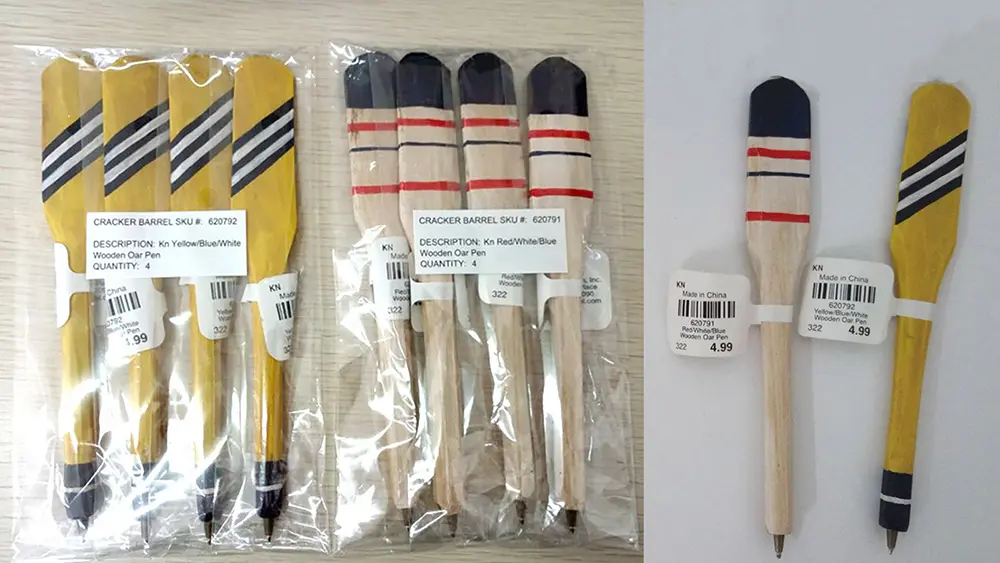
- Photographic evidence before balance payment. Photographs and video of the finished, labelled goods are supplied before the 70% balance falls due, so the buyer holds proof of exactly what shipped.
Buyers who want to audit the whole process rather than just the labels can work through our wood carving factory audit checklist.
HS Codes & Duty Classification
Labelling and duty classification go hand in hand. The HS code determines the duty rate, and the code is driven by the material, the function, and the market classification. Wooden decor items generally fall under Chapter 44 or 95 depending on whether they are classified as wood articles or as toys and ornaments. Misclassifying a product can result in a higher duty, a customs hold, or a retroactive assessment. Work with a customs broker or your freight forwarder to confirm the code before the first shipment, and put the code on the commercial invoice alongside the labelling details.
A consistent classification across the range also simplifies the labelling. If all the wooden decor in a container carries the same HS code and the same origin, the customs entry is cleaner and faster. The wholesale wooden crafts programme should include a standardised customs data sheet that travels with the invoice, so the broker does not have to research each SKU individually.
Labelling is the last thing a buyer thinks about and the first thing customs checks. The importers who build it into the purchase order, verify it at inspection, and keep the documentation current are the ones whose shipments clear without drama. The importers who treat it as an afterthought pay for it at the port, and the bill is never small.
The labelling rules are not complicated, but they are enforced. The buyers who treat them as a specification, not an afterthought, clear customs on time and sell on shelf. The buyers who treat them as someone else’s problem clear customs on a lawyer’s clock.
Confirm marking with your private label partner, and note that our wooden coasters and decor lines ship with a standardised customs data sheet.
Clear wooden decor import labeling expectations in the purchase order mean the factory applies the correct origin, material, and warning marks during production rather than as a costly rework after the containers are sealed.
Electrical and food-contact goods face similar marking rules; UK buyers can cross-check our UK wholesale salt lamps UKCA guidance.
End to End: A Labelled Container from Purchase Order to Clearance
A European home-decor importer places a first wholesale order of carved wooden wall decor for Germany, plus a smaller US-bound run of the same designs for a specialty chain. Here is how the labelling has to travel through the order for both to clear.
- Week 1 — the purchase order carries a labelling schedule. Not a note in an email: a schedule listing article marking, packaging label and carton marks per destination, with the exact importer-of-record address for each run and the HS code confirmed with the broker. Two destinations means two label sets on one run — decided before printing, not at packing.
- Week 2 — proofs on real material. The label is approved as a physical proof on the actual stock and adhesive, and engraving depth on a finished piece rather than a raw one. Approving a PDF is how a label that looks right on screen lifts off a lacquered surface.
- Weeks 3 to 8 — production with labelling inline. Trial orders run 20–30 days and bulk production 60–90 days to port, so label artwork is frozen before production starts, not during it. Labels are applied inline and the two destinations are packed into separate, clearly marked cartons.
- Week 9 — inspection and evidence. Label content is verified against the schedule, photographs and video of the labelled product and cartons are sent before the balance payment. If a field is wrong, this is the last cheap moment to fix it.
- Clearance — the invoice has to match the label. The commercial invoice shows the same HS code, origin and importer details that appear on the goods. A mismatch between invoice and label is one of the most common reasons a correctly labelled shipment is still held, because the two are read against each other.
- After landing — keep the schedule on file. Reorders reuse the same schedule, so a second run is a quantity confirmation; where the product changes, only the changed fields are re-proofed. The ordering mechanics are in our procurement guide for wooden crafts.
Import Wooden Decor with Correct Labelling
Work with a factory that applies EU and US labelling requirements at the source, verified by pre-shipment inspection, so your shipment clears customs without delay.
Source Wholesale Wooden Crafts →Frequently Asked Questions
What must a wooden decor label include for the EU?
CE mark if required, EU importer name and address, country of origin, and safety warnings in the destination language. Packaging also needs recycling symbols.
What must a wooden decor label include for the US?
Country of origin on the product itself, legible, permanent, and in English. Sealed retail packaging must show the origin or allow the product mark to be read without opening.
Can the factory apply the labels?
Yes, and they should. Specify the wording, placement, and format in the purchase order and provide a visual proof. Verify labelling at pre-shipment inspection.
What happens if a shipment arrives without proper labelling?
Customs can hold, fine, or re-export the shipment. Relabelling at the port is expensive and delays the stock. Prevention at the factory is the only cost-effective solution.
Do labelling rules differ between decorative and toy products?
Yes. Toys have additional labelling requirements under toy-safety directives. Decorative items follow general product-safety rules. Classify correctly before labelling.