Skip to content

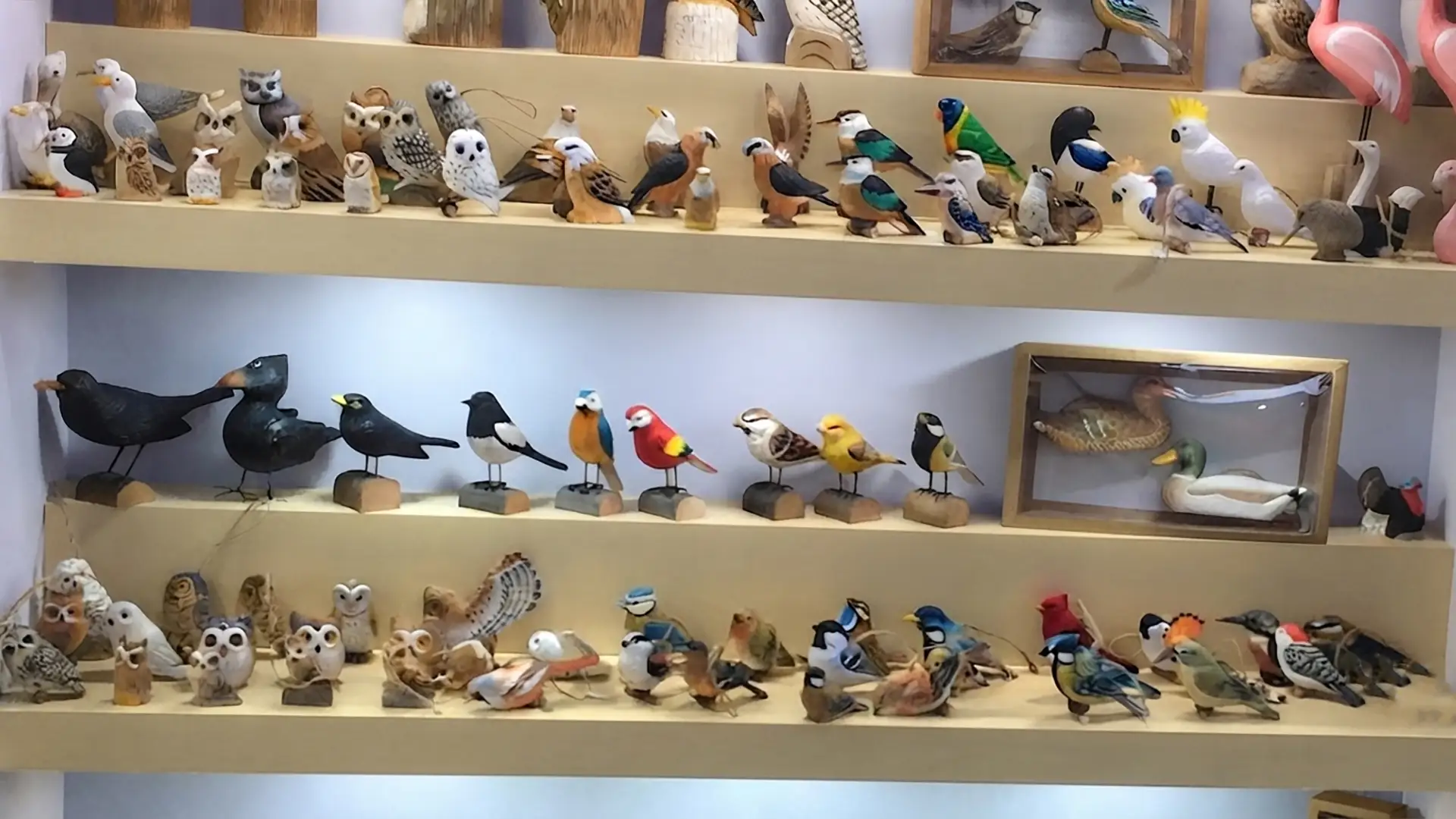 Garden centres that invest in seasonal merchandising know that static displays do not drive repeat visits. Wooden bird carvings offer a unique solution: a product category that naturally rotates through the calendar year, encouraging customers to return each season for fresh designs. This guide covers how to plan, arrange, and source a wooden garden centre bird display programme that keeps your shelves engaging from the first spring robin to the last winter cardinal.
Whether you buy for an independent garden centre, a gift shop chain or a nature-themed outlet, matching bird designs to seasonal shopping behaviour is what lifts sell-through and cuts dead stock.
For retailers already stocking wooden home accents, expanding into wooden home decor collections that include seasonal bird designs is a natural next step that broadens your offering without requiring entirely new supplier relationships.
Key Takeaways
- Seasonal rotation of wooden bird designs drives repeat purchases — match bird species to spring, summer, autumn, and winter shopping patterns
- Robins and bluebirds lead spring sales; owls dominate autumn; cardinals and feeder-themed designs peak during the winter gift-giving season
- Display height variation, strategic grouping, and cross-merchandising with plants significantly increase visual impact and average basket size
- Order against lead time, not against the display date: bulk production runs 60–90 days to port, so a spring zone is a winter decision.
In This Guide
- Why Wooden Birds Work as a Year-Round Garden Centre Category
- Seasonal Wooden Bird Display Planning Guide
- Display Zone Layout: Practical Arrangement Strategies
- Cross-Merchandising Wooden Birds with Garden Centre Products
- Ordering Seasonal Bird Programmes from the Factory
- What We Check Before a Seasonal Bird Order Ships
- Frequently Asked Questions
Why Wooden Birds Work as a Year-Round Garden Centre Category
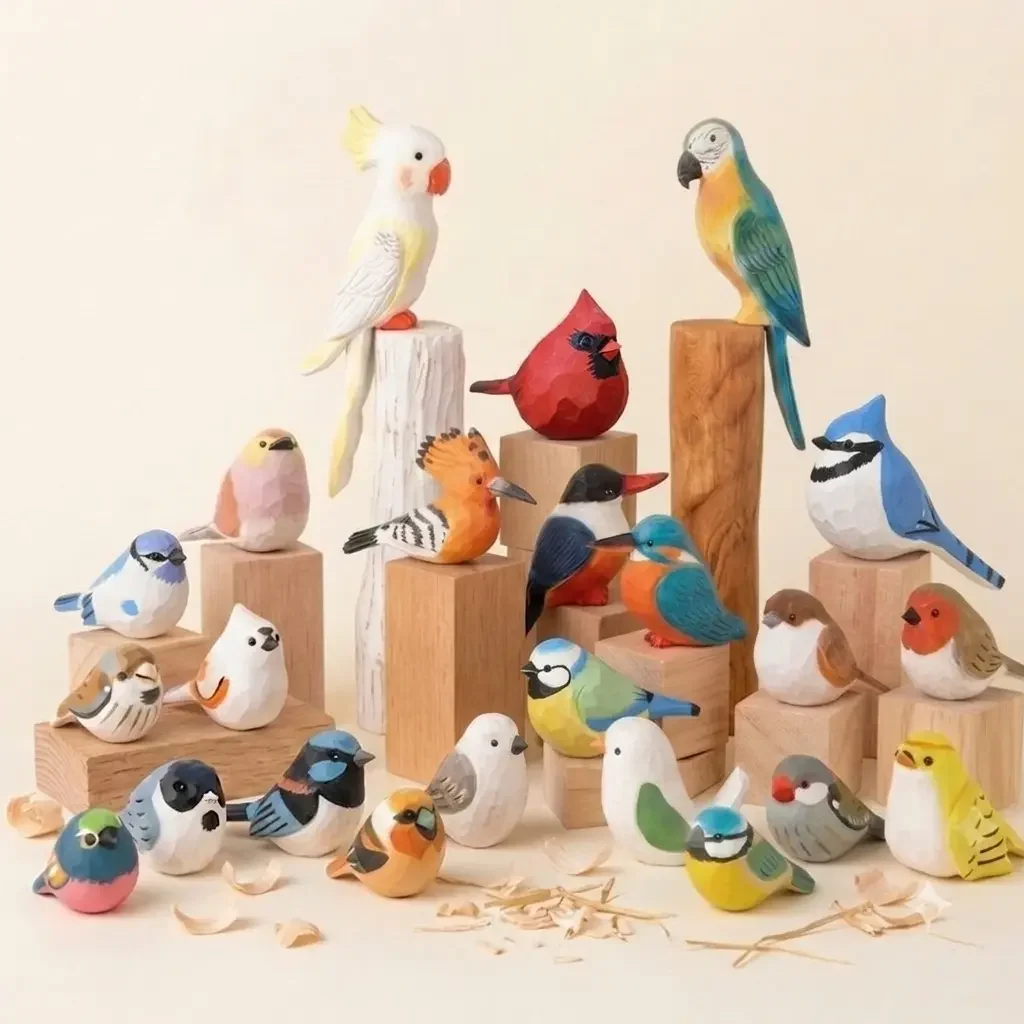
Unlike Christmas-specific decorations that sell in a narrow window, wooden bird carvings span the entire retail calendar. Spring brings nesting robins and pastel-painted bluebirds. Summer calls for bright songbirds and tropical designs. Autumn features owls and harvest-toned pieces. Winter delivers cardinals, chickadees, and birds paired with feeder designs that double as gifts.
The key insight for garden centre buyers is this: wooden birds are not a seasonal product — they are a year-round category that happens to rotate seasonally. Retailers who stock one bird design and leave it on the shelf all year miss the opportunity to capture repeat purchases from customers who return each season expecting something new. The most successful garden centre wooden bird display programmes treat each season as a fresh buying opportunity, with new designs arriving on schedule and the previous season’s stock cleared through targeted promotions.
Hand-carved wooden birds also benefit from strong perceived value. Customers recognise the craftsmanship in a hand-finished robin or a detailed owl carving, which supports healthy retail positioning. Factories with established bird carving programmes — such as Ewoodarts (Jilin Province Ever Creation Technology Co., Ltd.), which has produced wooden birds including robins, owls, eagles, songbirds, hens, and ducks since 2004 — offer the consistency and range that seasonal programmes demand. Their carvings, available in sizes from 5cm to 40cm and crafted from basswood, birch, and rubber wood, provide the variety needed to build distinct seasonal zones within the same retail footprint.
Seasonal product rotation is one of the most reliable ways to keep foot traffic moving through an independent garden centre, and wooden birds fit that model because the category changes with the calendar without changing supplier.
Seasonal Wooden Bird Display Planning Guide
Planning a year-round wooden bird display programme requires aligning your product selection, visual merchandising, and ordering schedule to each season’s retail rhythm. The table below provides a framework for garden centre buyers and gift shop owners who want to build seasonal bird zones that feel fresh and relevant.
| Season | Bird Themes | Display Elements | When to Order | Merchandising Tips |
|---|---|---|---|---|
| Spring | Robins, bluebirds, nesting pairs, baby birds | Pastel accents, moss, faux flowers, small nests | Nov–Jan (bulk); Dec–Feb (stock) | Pair with spring plant arrivals; use Easter-adjacent positioning |
| Summer | Songbirds, bluebirds, tropical species, hummingbirds | Bright colours, garden stakes, succulent containers | Feb–Mar (bulk); Mar–Apr (stock) | Integrate with outdoor living displays; position near garden furniture |
| Autumn | Owls, hawks, eagles, migrating songbirds | Warm amber tones, dried flowers, pine cones, bark | May–Jun (bulk); Jun–Jul (stock) | Use harvest colour palette; pair with pumpkin and plaid accessories |
| Winter | Cardinals, chickadees, birds with feeders, snow perched designs | Evergreen sprigs, white accents, metallic finishes, pinecones | Jul–Aug (bulk); Aug–Sep (stock) | Position as gift items; bundle with cards or candles for gifting |
The ordering timelines above account for standard lead times from wooden craft factories: bulk custom orders typically require 60–90 days, while stock items may be available in 7–15 days. Trial orders (100 pieces minimum) generally ship within 20–30 days. Planning backwards from your display launch date ensures inventory arrives on schedule and gives you time to photograph, tag, and position each piece before the season begins.

Garden Centre Bird Display Layout: Practical Arrangement Strategies
Creating an effective garden centre wooden bird display zone requires more than placing carvings on a shelf. The arrangement itself communicates quality, intentionality, and seasonal relevance to shoppers. Here are the layout principles that consistently perform well in garden retail environments.
Shelf Placement and Height Variation
Start with the principle of visual anchoring. Place your two or three largest bird carvings (25–40cm pieces) at the back or centre of the display to draw the eye from a distance. These anchor pieces establish the seasonal theme before the customer can read any signage. A large carved owl positioned at the back of an autumn display, for example, signals the season instantly.
Build forward with medium-sized pieces (15–20cm) and fill the front edges with smaller birds (5–12cm). This graduated height approach ensures every piece is visible and creates a natural sightline that guides the eye through the display. Use risers, small wooden blocks, or inverted pots to add height variation within each row — flat, uniform shelving looks institutional and fails to create the layered, curated feel that encourages browsing.
Grouping and Thematic Clustering
Group birds by species or design family rather than scattering individual pieces across the shelf. A cluster of three robins with a small nest prop tells a story; a single robin surrounded by empty shelf space does not. Thematic grouping also simplifies restocking — when a customer purchases one robin from a group, you can refill the gap from back stock without disrupting the overall composition.
Create distinct seasonal vignettes within your bird display zone. A spring zone might feature robins and bluebirds with faux cherry blossoms and pastel ribbon. A winter zone pairs cardinals with miniature evergreen sprigs and white-painted pine cones. Each vignette should be self-contained but visually connected to the next, encouraging customers to walk the full length of the display.
Traffic Flow and Placement
Position your featured seasonal bird display near the garden centre entrance or at the endcap of a main aisle. This captures foot traffic immediately and sets the seasonal tone for the entire visit. Secondary displays can be placed near checkout counters, where smaller bird carvings (5–15cm) work well as impulse purchases.
For larger garden centres, consider creating multiple touchpoints: a hero display at the entrance, a mid-store cross-merchandised zone near the plant department, and a gift-oriented display near the till. Each touchpoint should feature different pieces from the same seasonal collection, giving customers multiple opportunities to engage with the product range. For inspiration on how these principles apply across other product categories, the wooden home decor collections guide covers complementary display strategies.

Cross-Merchandising Wooden Birds with Garden Centre Products
One of the strongest advantages of wooden bird displays in a garden centre setting is the natural cross-merchandising opportunity. Unlike standalone gift items, wooden birds exist in an environment already rich with complementary products. Leveraging these adjacencies increases average transaction value and helps customers envision the carvings in their own gardens and homes.
Plant Pairings
Place small wooden birds among live plants — a carved songbird nestled into a herb planter, or a robin perched on the rim of a flowering pot. This contextualises the carving as a garden accessory rather than a standalone ornament, which broadens its appeal to customers who may not visit a dedicated gift section. Seasonal plant pairings reinforce the theme: spring bulbs with robins, summer containers with tropical bird designs, autumn mums with owls, and winter poinsettias with cardinals.
Gift Bundling
Create pre-arranged gift bundles that pair a wooden bird with a related item: a robin with a botanical greeting card, an owl with a scented candle, or a cardinal with a small bag of wild bird seed. Bundle pricing encourages higher spend per transaction while positioning the wooden bird as the centrepiece of a thoughtful, nature-themed gift. This approach works especially well during the winter season, when gift-buying intent peaks across the entire store.
Garden Accessories
Wooden bird carvings pair naturally with garden stakes, plant markers, bird feeders, and outdoor decor items. Create a “garden wildlife” zone that brings these products together, making it easy for customers to shop for a complete outdoor aesthetic. Larger carved birds (25cm and above) work particularly well alongside real bird feeders and bird baths, as the size and visual weight feel proportional to the surrounding products.
Ordering Seasonal Bird Programmes from the Factory
Building a seasonal wooden bird display programme requires reliable factory partnerships and advance planning. Here is what garden centre buyers need to know about sourcing carved birds for seasonal retail programmes.
Lead Times and Seasonal Ordering
Standard lead times from established wooden craft factories follow a predictable pattern: stock items ship within 7–15 days, trial orders (100 pieces or $500 minimum) take 20–30 days, and bulk custom orders require 60–90 days. For a spring collection launching in early March, this means placing bulk orders by December at the latest, or November if custom designs or packaging are involved. Winter and Christmas-season birds should be ordered by late summer to avoid production bottlenecks.
Payment terms across the industry typically follow a T/T structure: 30% deposit at order confirmation, with the remaining 70% due before shipment. This applies to both trial and bulk orders, and buyers should factor this into their seasonal cash flow planning.
Minimum Orders and Scaling
Most factories offer tiered ordering: 100 pieces for a trial order (ideal for testing new designs or starting a new supplier relationship), 300 pieces for standard wholesale, and 500 pieces for custom packaging options. For seasonal bird programmes, consider splitting your order across multiple designs rather than concentrating volume in a single SKU. A mix of robins, bluebirds, and sparrows for spring, for example, gives you flexibility to test which designs resonate with your customers before committing to larger volumes.
When evaluating manufacturers, look for documented quality certifications (BSCI, ISO 9001, CE, UKCA, EN71-1/-2/-3), a proven track record in wooden bird production, and the ability to support custom designs. Factories that have been producing wooden birds for decades — like those profiled on the wood carving factory page — typically offer the design consistency and production capacity needed for reliable seasonal programmes. Explore the full range of available designs through the wholesale wooden birds collection to identify pieces that fit your seasonal plan.
What We Check Before a Seasonal Bird Order Ships
Garden centre stock lives in damp, unheated conditions and is handled outdoors, so the checks weight toward finish durability and packing.
- Finish adhesion and moisture content. Blanks are checked against our wood moisture content standard before painting, because a piece that moves afterwards cracks its finish in a cold greenhouse.
- Paint safety documentation. Water-based non-toxic finishes throughout, with EN71 toy safety testing available where a design could reasonably be treated as a child’s article.
- Consistency across the run. A seasonal zone reads as a collection only if size scale and paint palette hold on every unit; buyers verifying a supplier can work through our factory audit checklist.
- Export packing. Pieces are white-paper wrapped, 6–12 per three-ply inner box and 240–480 per five-ply master carton at 8.0–15.0 kg gross, rated for an ISTA 3A drop test.
Source Seasonal Wooden Birds Direct from the Factory
Plan your year-round bird display programme with a manufacturer that has produced hand-carved wooden birds since 2004. From spring robins to winter cardinals, explore designs built for seasonal garden centre merchandising.
Frequently Asked Questions
How much display space should a garden centre allocate to wooden bird displays?
A dedicated zone of one to two linear metres of shelf is a practical starting point. Smaller shops can begin with a single featured shelf near the entrance; larger centres can add touchpoints in the plant department, gift area and checkout. Consistency matters more than size: a refreshed display each season signals an active category.
How often should seasonal bird displays be rotated?
Plan four refreshes a year, aligned to spring, summer, autumn and winter, each coinciding with new stock arriving from your supplier. Most retailers transition two to four weeks before the seasonal peak. The binding constraint is ordering: with bulk lead times of 60–90 days, the season is planned months before the display goes live.
Which wooden bird designs sell best in garden centres?
Seasonal alignment drives sales. Robins and bluebirds peak in spring, brighter painted songbirds in summer, owls and birds of prey in warm finishes in autumn, and cardinals and gift-friendly designs in winter, the highest-volume season. Neutral-finish sparrows and finches give baseline sales year round. Track sell-through by design and let your own data overrule any generic list.
How can garden centres find reliable wholesale wooden bird suppliers?
Look for documented certifications (BSCI, ISO 9001, CE, UKCA, EN71), a genuine bird-carving specialism and transparent terms: clear lead times, tiered minimums starting at 100 pieces for trials, and support for custom designs. Standard payment is T/T, 30% deposit with 70% before shipment, and photographs of finished goods before the balance falls due.
Are wooden bird carvings only suitable for seasonal retail, or can they sell year-round?
They sell year round when the display is managed as a rotating seasonal category. Spring and summer designs suit garden centres; autumn and winter designs shift naturally toward gift positioning as the weather cools. Neutral-toned birds in natural finishes work across all four seasons and reduce the risk of unsold seasonal stock.