Skip to content


Sustainable Christmas decor, for a retail brand, means product that survives its season, avoids plastic in the display and gift stream, and can be told honestly to the customer. Carved wooden ornaments fit that brief on three practical axes: return rates fall when shoppers can inspect quality by hand, gift tiers lift because wood reads keepsake rather than novelty, and the material story — a managed forest, a workshop, a person who carved it — is one the store can actually stand behind. This guide compares wood and plastic honestly, says when plastic still wins, and gives the sourcing checks that keep a “sustainable” claim defensible instead of marketing decoration.
Key Takeaways
- Switch the giftable tier first. Wood replaces plastic where the product is handed to someone — boxed sets, nativity scenes and personalised pieces — before touching bulk bin decor.
- Touch lowers returns. Ornaments bought after inspection in a market or gift shop return far less than boxed plastic deco bought on a picture; the ornament retail display guide covers the merchandising side.
- Finish decides outdoor use. Plain painted wood is indoor; sealed and varnished finishes carry a porch and window-planter role plastic used to own.
- Sustainability claims need paperwork. Chain-of-custody certificates, finish documentation and honest care labels are what make the claim survive an informed customer.
- Plastic keeps narrow wins. Fully outdoor exposed runs, shatter-safe toddler-adjacent settings and hard price floors — leave those SKUs alone and convert the rest.
- Convert over two seasons. A staged switch protects margin: carry wood into the premium shelves this year, replace volume tiers next year once return data proves out.
In This Guide
- Wood versus Plastic: The Honest Comparison
- Is the Wood Switch Right for Your Store?
- Durability, Finish and Where Outdoor Use Actually Works
- Making the Sustainability Claim Defensible
- Price Positioning for the Switch
- A Two-Season Conversion Programme
- What We Check Before a Wood-Over-Plastic Order Ships
- Frequently Asked Questions
Wood versus Plastic: The Honest Comparison
Neither material wins everywhere, so compare them where each is actually bought: the shelf, the tree, the gift box and the returns counter.
| Dimension | Carved Wood | Moulded Plastic |
|---|---|---|
| Shelf read | Keepsake and gift register; detail invites handling. | Bulk and kids-tier register; shine reads low price from a distance. |
| Returns after purchase | Low when sold on touch (market, gift counter). | Picture-led online and boxed sales return higher. |
| Outdoor exposure | Only sealed or varnished finishes; expect wear over seasons. | Weather-beaten plastic stays the practical choice for fully exposed runs. |
| Breakage behaviour | Densities split on a hard fall; thin limbs are the failure point. | Bounces and survives; better where small children handle stock. |
| End-of-life story | Untreated wood is biodegradable and keeps a repair-and-heirloom narrative. | Mixed plastics and paint layers are hard to recycle through most municipal streams. |
| Price floor | Laser-cut basswood closes the gap; hand-carved never goes to the bottom. | Injection moulding still wins pure unit price at huge volume. |
Is the Wood Switch Right for Your Store?
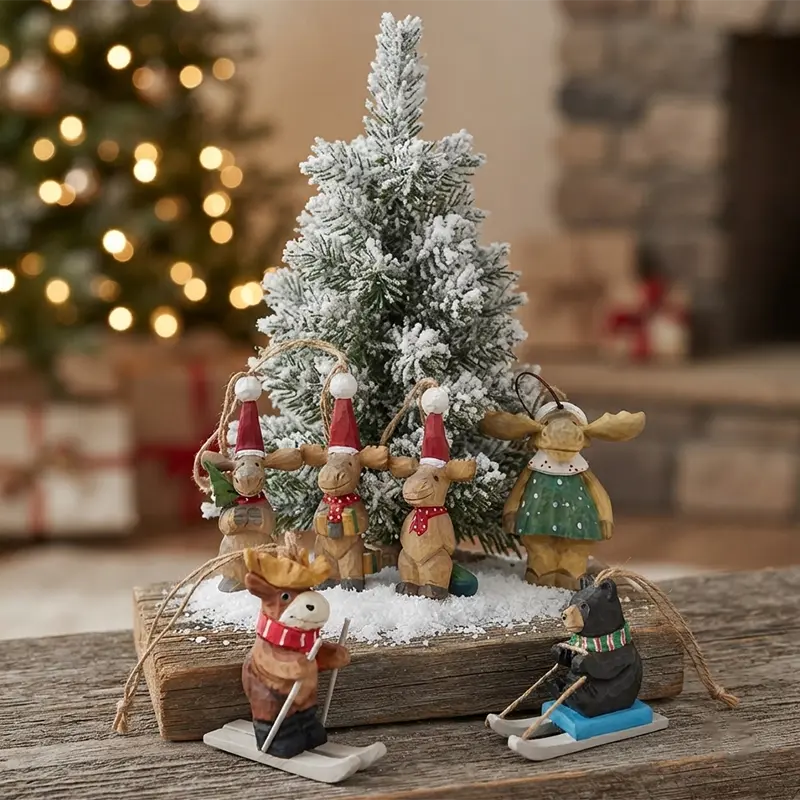
Best for: gift shops, boutiques, bookstores, gallery stores, garden centres and corporate-gifting sellers whose customer buys for someone else. If your Christmas assortment already carries a wholesale ornament table, the wooden line slots in without new fixtures — and the gift-boxed formats that anchor it, from single figures to nativity groupings, convert the exact customers who currently buy plastic gift sets out of habit.
Not for: pure price-floor assortments, high-shrink kid-heavy environments, or outdoor commercial displays that sit under weather all season. Those jobs still belong to plastic, and pretending otherwise costs margin on returns. A credible sustainable switch is a targeted one: move the giftable and visible tiers, keep the workhorse plastic SKUs, and be able to explain the split to any customer who asks.

Durability, Finish and Where Outdoor Use Actually Works
Wood durability in Christmas decor is a finish question, not a material question. Plain painted basswood belongs indoors and on the tree, where it outlasts decades of seasons. Sealed and varnished pieces take on porch, covered-entry and window-planter roles — the settings where plastic stringers used to be the only option — with the honest caveat that a sealed outdoor piece reads weathered after a few winters rather than dead. Care labels are part of the product: the shelf-stable story survives if the customer learns to store pieces dry and dust them instead of washing them, which is where the same construction depth documented in the hand-carved versus laser-cut comparison pays off.
Breakage behaviour also differs by format. Solid-body carvings shrug off a fall from a low branch; thin antler and ribbon details are the parts to design around, which is why serious lines mould those details thicker than the picture suggests.
Making the Sustainability Claim Defensible
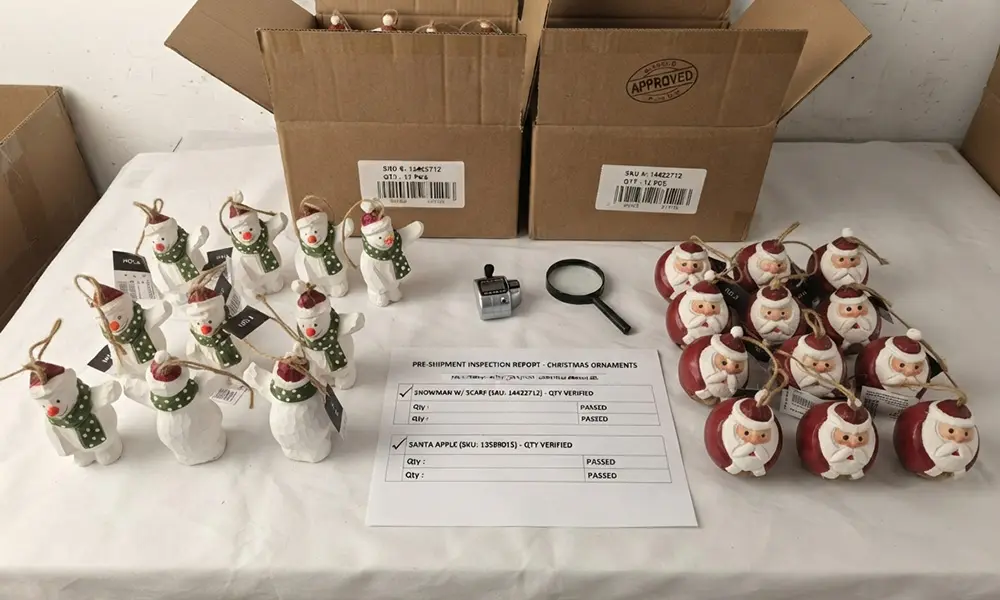
Informed shoppers and, increasingly, marketplaces ask for evidence behind green wording. Three paperwork layers make a claim hold: material provenance, finish documentation and honest end-of-life guidance. Two certification schemes dominate credible sourcing conversations — FSC and PEFC chain-of-custody programmes (see FSC and PEFC for how the schemes work) — and the practical buyer check is simple: ask the supplier which certificate number covers the production unit, and require it in writing on the order confirmation rather than only on a brochure. A certificate claim that cannot be tied to the factory making your order is marketing, not certification.
What we check before calling a wooden line responsibly sourced: the species and origin the supplier states on the purchase order; the finish system used (paint, sealant, varnish) with its documentation for the destination market; printed care labels that match the actual finish; and pack materials — recycled-content board and paper ribbon rather than plastic windows — so the unboxing does not contradict the claim. Requirements shift by market and product type, so confirm current labelling and material rules with your compliance adviser before printing any green statement.
Price Positioning for the Switch
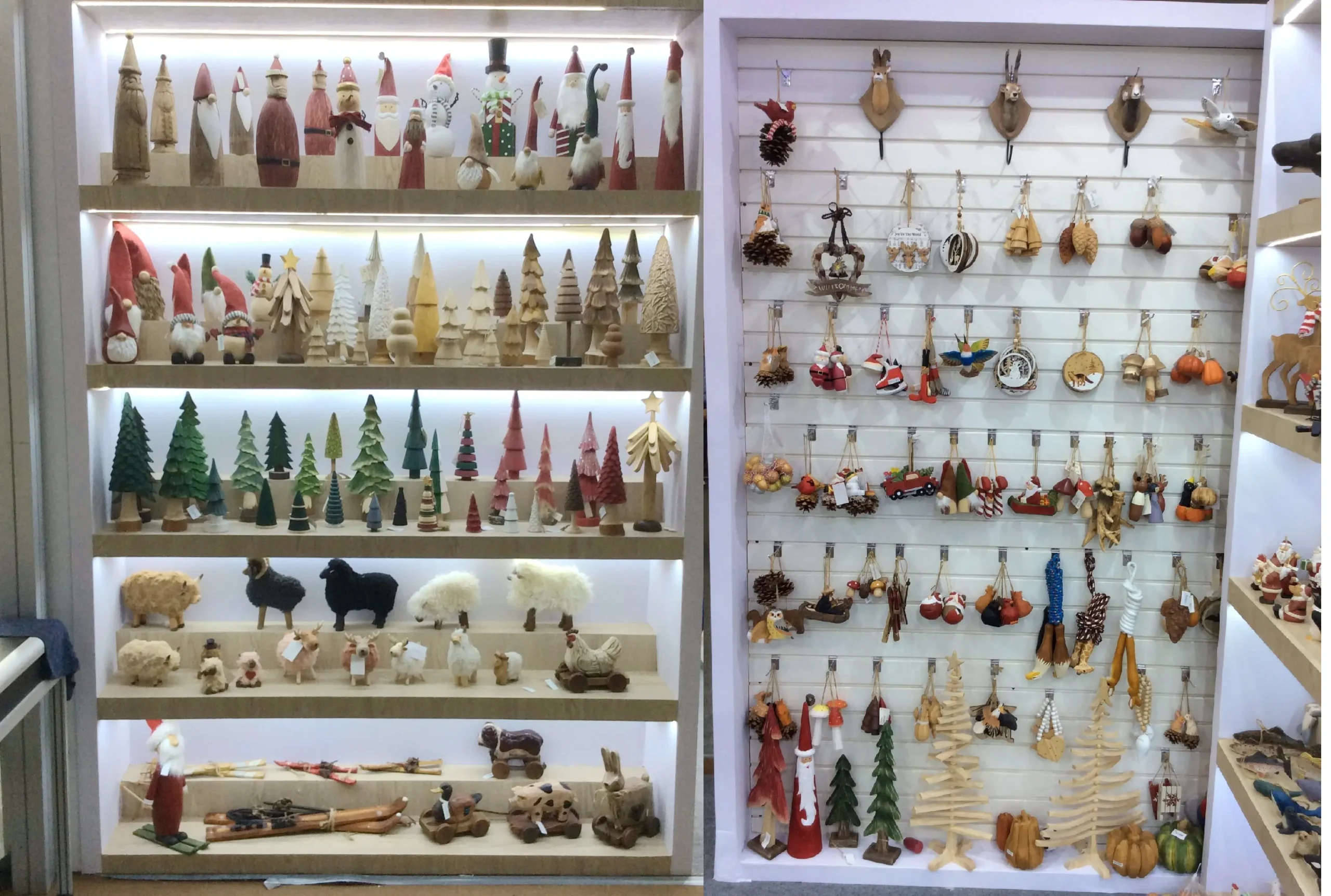
The switch fails when wood is priced as a guilt premium and succeeds when priced on the job it does. Entry tier: laser-cut wood shapes at the price point where plastic novelty used to sit — close enough that the material becomes the reason to choose, not a tax. Mid tier: painted or printed figures and small boxed scenes, positioned where a plastic gift set would have gone, with the box as proof of gift intent. Premium tier: hand-carved anchors, nativity groupings and sculptural centrepieces — here the comparison with plastic is moot, because no moulded piece is doing this job at any price. The year’s colour and format direction is covered in Christmas decor trends for buyers.
A Two-Season Conversion Programme
Illustrative walk-through: a regional gift-shop chain replaces its Christmas assortment over two seasons. Season one, they add a carved-wood gift tier beside existing plastic sets — boxed figures, a small nativity grouping, personalised name pieces — and pull the worst-returning plastic SKUs immediately. The season-end data does the arguing: touch-sold wood tiers show fewer returns and a higher average ticket, while the plastic workhorses keep the price-floor shelf honest. Season two converts the mid tiers and moves the remaining plastic to outdoor-only duty, then re-launches the table as a story customers can repeat: made by hand, kept for decades, repairable. A supplier conversation at the spring review locks the golden samples before autumn capacity closes.
One discipline makes the programme survivable: hold the claim vocabulary in one place — the same wording on tags, signage and staff answers — so the store never oversells what the paperwork supports.
What We Check Before a Wood-Over-Plastic Order Ships
The sourcing checks above protect the claim. These protect the product, and they differ from a plastic programme in three places: wood moves, wood chips at an edge where plastic bends, and the packaging is part of the story a customer is being told.
- Moisture content before finishing. Blanks are checked against our wood moisture content standard, because a piece that moves after painting cracks its own finish — the failure mode plastic does not have, and the one that generates returns on a “kept for decades” promise.
- Finish matched to the duty. Indoor paint, sealed porch stock and varnished outdoor pieces are different specifications; species and finish behaviour are covered in our wood characteristics reference.
- Edge and corner inspection. Carved edges are sanded round and checked for chips, since a chipped corner on a gift-tier piece reads as damaged rather than handmade.
- Packed drop test. Units are dropped in their actual retail box, not a plain carton, so the insert that holds a carved figure is proven rather than assumed.
- Packaging consistent with the claim. Recycled-content board and paper ribbon are verified on the line, because a plastic window on a wood-over-plastic product is the contradiction a customer notices first.
- Palette consistency across the run. A wooden tier has to read as one collection sitting beside remaining plastic SKUs, so colour is matched against the approved sample on every batch.
- Documentation travels with the order. Species and origin as stated on the purchase order, finish documentation for the destination market, and the archive entry that makes season two a reorder rather than a new sampling round — the sequence is set out in our procurement guide for wooden crafts.
Buyers who want to audit a supplier against these points rather than take them on trust can work through our wood carving factory audit checklist.
Frequently Asked Questions
Are wooden Christmas ornaments really more sustainable than plastic?
On the giftable and indoor tiers, usually: wood is durable for decades of seasons, repairs rather than snaps, and untreated pieces biodegrade, while mixed plastic-and-paint ornaments rarely enter municipal recycling. Outdoor exposed runs remain a genuine plastic strength.
Which is the right first tier to switch from plastic to wood?
The gift tier. Boxed figures, scenes and personalised pieces carry the highest price point and the lowest returns when sold on touch, so converting them lifts margin instead of testing it.
How do I verify a supplier’s wood-sustainability claim?
Ask which FSC or PEFC chain-of-custody certificate covers the production unit, and require the certificate reference in writing on the order confirmation. A scheme name without a certificate number tied to the making factory is not a verifiable claim.
Can wooden ornaments be used outdoors?
Sealed and varnished finishes handle covered outdoor settings, with weathering over several seasons as normal wear. Fully exposed weather-boundary displays still suit plastic better, and care labels should match the finish sold.
Does switching to wood raise my assortment cost?
Laser-cut wood closes the gap with plastic novelty at entry tier; hand-carved pieces raise the average ticket but earn it back in returns and gift pricing. A staged two-season switch protects margin while the data proves out.
Sources
Certification scheme context: FSC — Forest Stewardship Council and PEFC Council. Verify current market rules on environmental claims and product labelling with a compliance adviser before printing sustainability statements.