Skip to content

Key Takeaways
- Wooden easter basket stuffers wholesale — small carved eggs, bunnies, chicks, and spring animal figures — occupy a sweet spot between disposable plastic fillers and expensive plush gifts, at a retail price point of $3–$8 per piece that parents and gift-givers accept without hesitation.
- The basket-stuffer category is an add-on sale multiplier: a customer who came in for a plush bunny or chocolate egg walks out with 3–5 wooden miniatures as well, often doubling the transaction value of the Easter purchase.
- Assortable SKUs mean retailers can order a mix of designs within the same minimum quantity — 12 different bunny poses, 6 chick colors, 4 egg patterns — creating a display that rewards browsing and encourages multiple picks.
- Safety is the gate for this category: pieces are sized against the small-parts cylinder and painted with water-based acrylics tested to EN71-3, with test reports available for your own compliance file.
- Order by September for February sea-freight delivery; rush air orders placed through December can still make a mid-February display set at higher freight cost.
In This Guide
- The Wooden Easter Basket Stuffer Product Range
- Retail Strategy: Display, Pricing, and the Add-On Sale
- Materials, Safety, and Durability for Children s Products
- Ordering and Assortment: How to Build Your Mix
- Best For / Not For: Where Wooden Stuffers Win the Basket
- What We Check Before an Easter Miniature Order Ships
- End to End: A 300-Piece First Easter Order
- Margin Structure: How Wooden Stuffers Outperform Seasonal Plush and Candy
- Shipping, Packaging, and Seasonal Logistics for Easter Miniatures
- Frequently Asked Questions
The Wooden Easter Basket Stuffers Wholesale Product Range
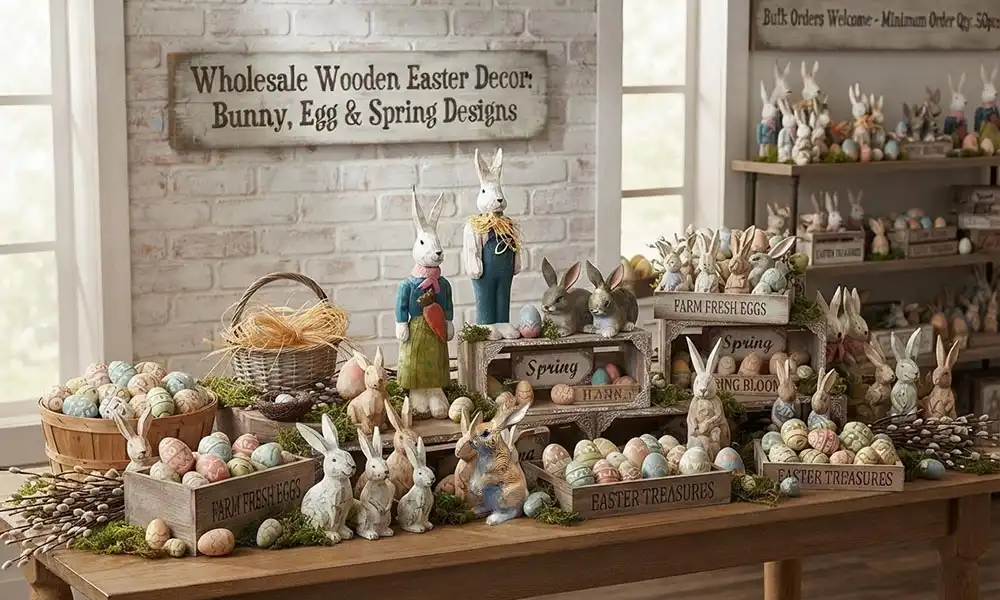
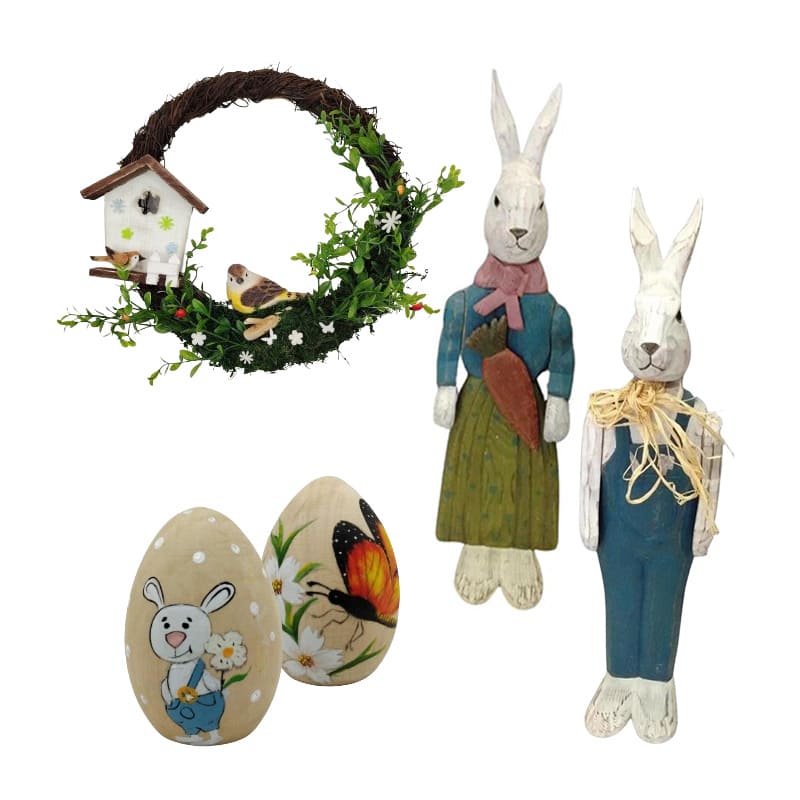
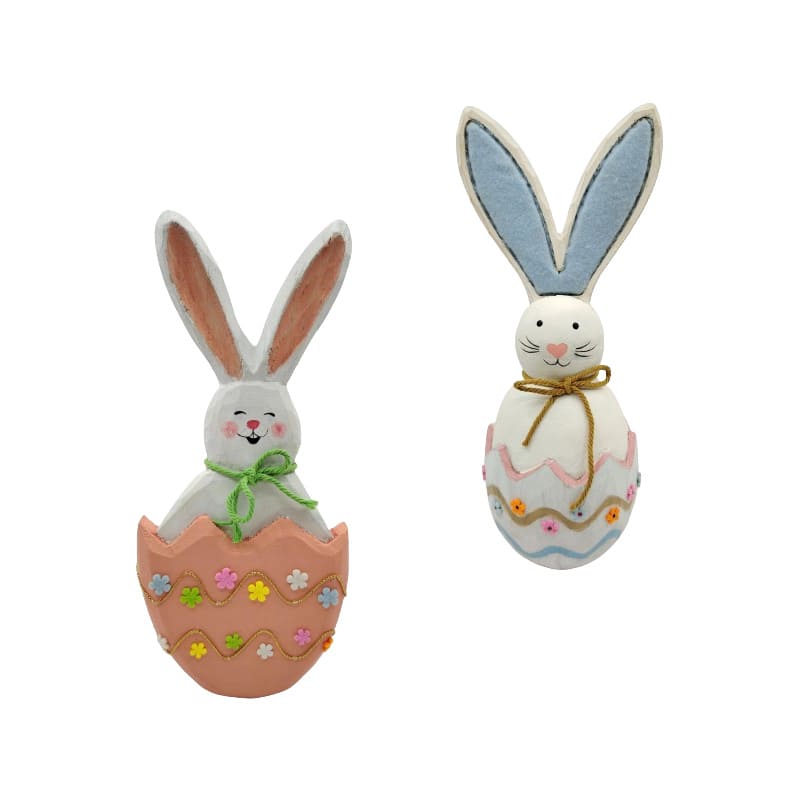
Ewoodarts produces a catalog of over 30 wooden Easter miniature designs, each hand-carved from basswood and hand-painted with non-toxic acrylics. The range spans three categories: classic Easter icons (eggs, bunnies, chicks), spring garden motifs (carrots, flowers, butterflies, lambs), and mix-and-match character sets that encourage collecting and repeat purchases year after year.
| Category | Typical Size | Designs Available | Suggested Retail |
|---|---|---|---|
| Mini Bunnies | 1.5–2.5 inch | Sitting, hopping, holding carrot, floppy ear (12 poses) | $4–$7 |
| Mini Chicks | 1–1.5 inch | Standing, pecking, hatching, sleeping (6 poses) | $3–$5 |
| Decorative Eggs | 1.5–2 inch | Patterned, solid pastels, natural wood (8 styles) | $3–$6 |
| Spring Garden | 1–3 inch | Carrots, tulips, butterflies, lambs (10 designs) | $4–$8 |
Retail Strategy: Display, Pricing, and the Add-On Sale
Wooden basket stuffers sell best when displayed as a “pick and fill” experience — a shallow wicker basket or tiered tray filled with loose miniatures, with a sign reading “Fill Your Easter Basket — $4–$8 each.” This format transforms a product display into a participatory shopping experience. Children point to the bunny they want; parents add matching chicks and eggs. The average transaction includes 4–6 pieces.
The Impulse Zone Advantage
Wooden miniatures at the $3–$8 price point sit squarely in the retail impulse zone — inexpensive enough that the purchase decision requires no deliberation, but substantial enough in perceived quality that the customer feels they have bought “something real” rather than disposable plastic. Placed near the checkout counter in the weeks before Easter, these items consistently outperform higher-priced seasonal decor on unit volume, driving foot traffic and basket size for the entire seasonal department.
Seasonal Display Timing
The Easter basket stuffer display should go up 4–6 weeks before Easter Sunday — mid-February for most years. Early placement captures the first wave of organized shoppers buying basket supplies, while the display remains fully stocked through the late-March rush of last-minute purchasers. Replenishment is key: a half-empty pick-and-fill basket signals scarcity and discourages browsing. Retailers should order enough inventory for at least two full display refills across the selling season.
Materials, Safety, and Durability for Children’s Products
Because Easter basket stuffers frequently end up in children’s hands, material safety is the top priority. Every miniature is carved from traceable, sustainably sourced basswood and finished with water-based, non-toxic acrylic paint that meets EN71-3 heavy-metal migration limits; official timber felling and transport permits are available on request. The paint contains no detectable lead, phthalates, or formaldehyde — essential for products a child might handle during Easter morning excitement.
Size and Choking Hazard Design
All miniature designs are sized so no piece fits entirely inside the CPSC small-parts test cylinder — the 1.25-inch-diameter gauge used to judge choking hazards for children under three. While we recommend labeling the products for ages 3+ as a precaution, the physical dimensions are engineered to pass small-parts cylinder testing. For retailers concerned about the youngest customers, we offer an oversized line with pieces at 2.5+ inches that comfortably exceed all small-parts standards while maintaining the basket-stuffer price point.
Ordering and Assortment: How to Build Your Mix
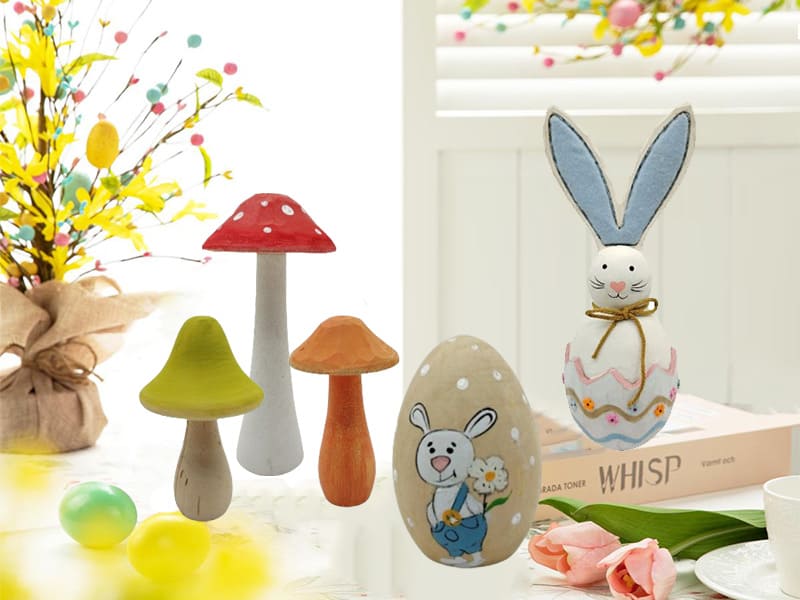
The minimum order for Easter basket stuffers is 300 pieces total, assortable across any combination of designs in our catalog. A typical first order might include 100 bunnies (mixed poses), 100 chicks, 50 decorative eggs, and 50 spring garden pieces — a balanced assortment that fills a display basket with visual variety and gives customers meaningful choices.
Reorder and Annual Refresh
Each year we introduce 6–8 new miniature designs to the catalog, retiring slower sellers. Retailers who reorder annually can refresh their assortment without changing their display format — the wicker basket presentation works with any mix of designs. We recommend ordering by September for February delivery to allow for sea freight transit and customs clearance. Rush orders for air freight delivery are possible through December for late-season planners.
Best For / Not For: Where Wooden Stuffers Win the Basket
Four buying formats cover most Easter miniature orders. The format decision drives the display decision, so it is worth making before the assortment sheet gets filled in.
| Format | Best For | Not For | Order Reality |
|---|---|---|---|
| Loose pick-and-fill miniatures | Wicker-basket displays at the register, $3–$8 impulse add-ons, high-traffic garden centres | Stores without staffed checkout — loose stock shrinks and gets handled into paint damage | 300-piece minimum, assortable across any mix of designs |
| Retail-ready assorted boxes | Shelf-facing sets, gift-with-purchase bundles, stores that want zero repacking labour | Pick-and-fill baskets — the box defeats the handling that drives the add-on sale | Partitioned kraft boxes, each piece tissue-wrapped against paint transfer |
| Oversized line (2.5+ inches) | Stores serving toddlers, spring-decor tables, buyers who want a visible centrepiece rather than a filler | Tight impulse price points — the larger blank moves the unit out of the $3–$8 band | Counts against the same 300-piece assortment minimum |
| Custom colour program | Stores matching a house palette, multi-store groups, retailers building a signature spring look | First orders or single-store tests — the per-colour minimum is higher than the catalogue mix | 500 pieces per colour; fully custom designs need 6–8 weeks development |
The formats are not mutually exclusive, and the strongest spring fixtures combine two: a loose basket for impulse at the register, and a boxed set on the seasonal table. Our planogram basics guide covers how to size each facing, and the spring display calendar sits in our guide to spring garden and Easter bird displays.
What We Check Before an Easter Miniature Order Ships
These pieces end up in children’s hands, so the inspection list is weighted toward safety rather than appearance.
- Small-parts gauge. Sample pieces from every design in the assortment are checked against the small-parts cylinder, not just the designs that changed since last season.
- Paint migration documentation. Water-based acrylic batches are held against EN71 toy safety requirements, with the test report available to the buyer for point-of-sale compliance files.
- Edge and splinter check. Carved ears, beaks, and tails are sanded round; a thin carved point is the most likely defect on a miniature.
- Paint adhesion after handling. Pieces are rubbed and knocked together to confirm colour does not transfer onto tissue, packaging, or a sibling piece.
- Assortment count against the sheet. Mixed-design orders are counted per design, since a short-shipped bunny pose is what leaves a gap in the display basket.
- Carton weight and volume. Confirmed against the shipping estimate so the buyer’s landed cost does not move after the order is placed.
End to End: A 300-Piece First Easter Order
A garden centre with two locations is stocking wooden basket stuffers for the first time and orders the 300-piece minimum: 120 bunnies across four poses, 90 chicks in three colours, 60 painted eggs, and 30 oversized lambs for the tabletop display.
June — design preview. The buyer sees the 6–8 new designs coming into the catalogue and picks around them, rather than discovering the range in September when production slots are already filling.
September — assortment lock and deposit. The design-by-design quantity sheet is confirmed and the order is placed for February delivery, which leaves room for sea freight and customs clearance. Payment runs on the standard T/T structure.
October to December — production. Carving, sanding, painting, and curing run in batches by design so the assortment counts stay accurate. The procedural detail for buyers who want to follow the order is in our procurement guide for wooden crafts.
January — inspection, packing, shipment. The checks above run at final inspection; pieces are tissue-wrapped into partitioned kraft boxes and the 300 units go out in two to three cartons.
Mid-February — display set. The fixture goes up four to six weeks before Easter Sunday, with the loose basket at the register and the boxed sets on the seasonal table.
After Easter — carry-over. Unsold miniatures go into a single shelf bin rather than a markdown rack, and the spring animal figures keep selling alongside year-round lines such as wooden piggy banks and paint-your-own duck blanks. Retailers planning the next season can compare the full wholesale wooden crafts range at the same time.
Stock Your Easter Display This Season
Margin Structure: How Wooden Stuffers Outperform Seasonal Plush and Candy
Wooden Easter basket stuffers offer retailers a structural margin advantage over the two dominant seasonal categories: plush toys and packaged candy. Plush requires large display footprints, compresses poorly in storage, and is subject to trend-driven markdown risk. Candy carries expiration dates, temperature sensitivity, and razor-thin margins from price-conscious grocery competition. Wooden miniatures solve all three problems — they store compactly, never expire, and command a keystone margin at retail.
Inventory Efficiency and Carry-Over Value
Unlike chocolate bunnies that must be marked down 50% on Easter Monday or plush toys that occupy cubic feet of backroom storage, wooden miniatures pack flat in partitioned boxes and carry zero expiration risk. Unsold inventory from one season can be stored until the following February without degradation, and because the designs are refreshed annually, last year’s styles can be sold alongside new arrivals — the collectible nature of the product means customers actively seek older designs to complete sets. This inventory efficiency transforms what would be a seasonal liability for plush or candy into a year-round asset.
The Multi-Year Customer Relationship
The annual design refresh creates a built-in repeat purchase cycle. A customer who bought wooden bunnies and chicks for their child’s Easter basket in 2026 returns in 2027 looking for the new lamb and duckling designs to add to the collection. The wooden basket stuffer is not consumed and discarded — it becomes part of the family’s Easter tradition, stored with the decorations and brought out each spring. This multi-year product relationship generates customer lifetime value that no bag of foil-wrapped chocolate eggs can match, making the basket-stuffer category one of the highest customer-retention product lines a seasonal retailer can invest in.
Shipping, Packaging, and Seasonal Logistics for Easter Miniatures
Easter miniatures present a unique logistics profile: low per-unit volume but high piece counts. A typical 300-piece order ships in 2–3 cartons weighing under 25 kg each — within express courier limits if air freight is needed for last-minute orders. Standard sea freight shipments use LCL (less than container load) consolidation to keep freight costs proportional to order size rather than requiring full container commitments.
Packaging for Retail-Ready Display
Miniatures ship in partitioned kraft boxes with each piece individually wrapped in tissue to prevent paint transfer during transit. For retailers who want a grab-and-go display solution, we offer pre-packed countertop display boxes containing 24 assorted pieces in a branded tray — the retailer opens the lid, removes the top foam layer, and places the entire tray on the counter. This format eliminates the labor cost of stocking individual pieces and ensures a visually balanced assortment even when staff are too busy to maintain the display. The display box itself serves as a point-of-sale merchandiser, with product information and pricing printed on the back panel visible to customers as they browse.
Post-Season Storage and Year-Round Value
After Easter, unsold miniatures store compactly — a full 300-piece order fits in a single shelf bin. Unlike seasonal candy or plush, wooden miniatures have no expiration date and no degradation risk in climate-controlled storage. Retailers who carry wooden Easter items often find that displaying a small selection year-round in a “spring decor” or “woodland animals” section generates off-season sales to collectors and gift shoppers, effectively turning a seasonal SKU into a year-round revenue stream with zero additional inventory investment.
Frequently Asked Questions
Can I mix different designs within one order?
Yes. The 300-piece minimum can include any combination of bunnies, chicks, eggs, and spring garden pieces. You specify quantities per design, and we pack accordingly. There is no minimum per design.
Are the paints safe for children?
All paints are water-based acrylics tested to EN71-3 standards with no detectable heavy-metal migration. They contain no lead, phthalates, or formaldehyde. Full test reports are available with wholesale orders.
When should I order for Easter season delivery?
Order by September for February sea freight delivery. Rush air freight orders placed by December can still arrive for mid-February display setup at higher per-unit shipping cost.
Do you introduce new designs each year?
Yes. We add 6–8 new miniature designs annually and retire slower sellers. Reordering retailers receive a preview of new designs in June before the September order deadline.
Can I get custom colors or designs for my store?
Custom paint colors are available with a 500-piece minimum per color. Fully custom designs require 6–8 week development. Most retailers start with our standard catalog, then add custom items in year two.