Skip to content
Designing an effective wooden animal figurines retail display is essential because carved animal pieces are the rare decor category that sells on two instincts at once — the customer recognises the animal before the price, and recognises the handwork the moment they pick it up. That combination rewards displays built for handling, not for looking. This guide covers the grouping logic that makes a figurine wall read as a collection instead of clutter, the shelf-height and sightline decisions, the species-family structure buyers actually shop by, and the resets that keep one inventory earning every month of the year in gift shops, museum stores, garden centres and boutiques — none of which needs a fixture purchase.
Key Takeaways
- Sell by family, not by size. A bear shelf, a bird shelf and a woodland shelf out-earn one big mixed animal table; shoppers browse species the way they buy stories.
- Hand reach is the conversion zone. Figurines placed between 70 cm and 140 cm off the floor get picked up most, and pickup is what closes the sale on carved work.
- Three tiers per family. A register-size piece, a mid shelf piece and one statement carving per species group carries the whole price ladder without crowding.
- Light for grain, not for sparkle. Carved wood reads texture under warm side light; overhead single-source light flattens exactly the detail customers pay for.
- Resets follow calendar families. Birds and garden animals lead spring, woodland leads autumn and winter, and the same stock rotates without new purchasing.
- Pair with the shelf story. A printed card naming the species and the carving origin converts better than a price sticker alone — the story is part of the product.
Species Families: The Way Shoppers Sort the Category
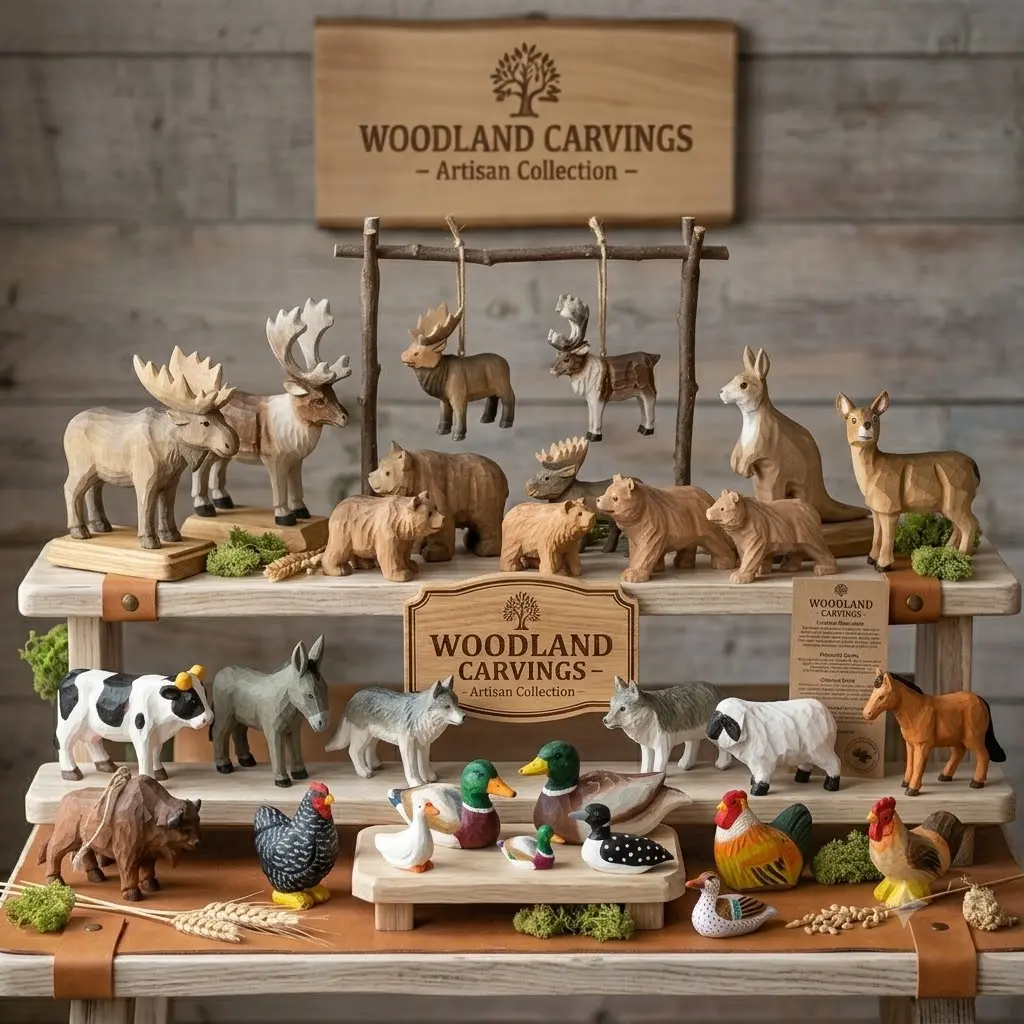
Customers do not walk a figurine wall thinking animals — they think the robin they feed, the bear cabin they associate with holidays, the horse or dog connected to a person in their life. Merchandising that follows those mental groups means the assortment plan is organised by family first and size within each family: birds as their own table, woodland animals as another, farm and domestic animals as a third, exotic or sculptural statement pieces as the top tier. The carved shorebird line is a working model of family focus — one habitat theme carried across sizes and finishes, which reads as depth rather than leftovers. Illustrative layout for a 3-metre wall: left third birds and garden families with the feeder-adjacent card copy, centre third woodland in the reach zone with one bear statement piece above it, right third farm and domestic animals angled toward the register lane, and the exotic sculptural tier on the top shelf as the recognition row. Four families, one sightline, and every shelf answers a different gift story the customer is already carrying.
Heights, Sightlines and the Hand-Reach Zone
Carved pieces sell through inspection, so placement follows pickup physics. Between roughly 70 cm and 140 cm off the floor sits the hand-reach zone where most contact happens; that band carries the mid-tier and the strongest sellers. Above eye level, place statement carvings for recognition — they advertise the tier below rather than selling themselves. Below the reach zone, register items and small format pieces wait for impulse. The common failure is the opposite structure: a beautiful top shelf over a table of small pieces nobody touched. Rebuild the reach zone first when sales stall; it costs an afternoon. A second-order detail: keep 15 to 20 cm of breathing room between pieces inside the reach zone. Carved figures pressed shoulder to shoulder read as a bin, and customers skip the whole row rather than risk knocking the stack — spacing is a sales decision, not decoration.
Building the Three-Tier Price Ladder per Family
Each family earns three price points, no more: a small piece at gift-with-any-purchase price, a mid shelf piece as the core seller, and one large or highly detailed carving that makes the mid tier look reasonable by comparison. This is the same ladder logic from gift-shop planogram basics, applied to a category where detail is visible. Stock depth follows sales velocity, but display always shows the full ladder — the top piece is merchandise even when it sells slowly, because it prices the shelf. Reorder the ladder with the same logic: small tiers can be bought in twos and threes at a time, the mid tier carries the standard design quantities, and the statement piece is ordered in single digits per reset season — a buying rhythm that matches how the wall actually turns.
Fixtures, Light and Surface Choices
Natural materials carry the category: linen runners, wood blocks, birch branches and stone-effect risers keep the eye on the carving. Chrome and glass read wrong against handwork. Risers of two or three heights within a family stop the row effect and create foreground for the mid tier. On light, warm sources placed to the side and slightly above make grain and chisel marks visible; a single overhead source flattens both texture and paint depth. For painted families, one cooler accent on the feature shelf keeps colours honest under warm room light. Dust and handling marks also show faster on carved texture than on flat glassware, so build a weekly finger-mark wipe-down into opening duties with a dry cloth — painted detail under fingertip oils dulls within a season, and the reset only works if the pieces look new.
Seasonal Resets on the Same Inventory
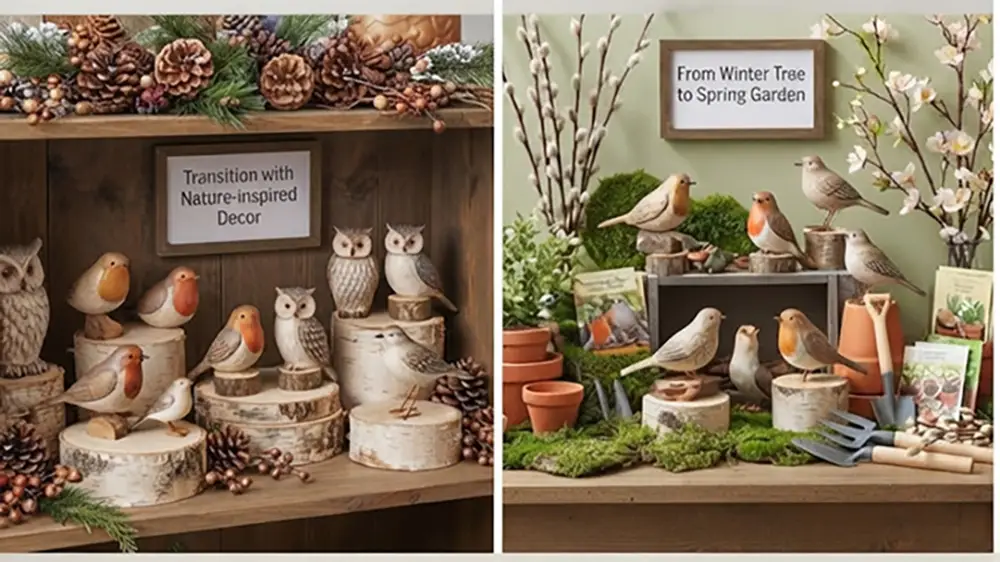
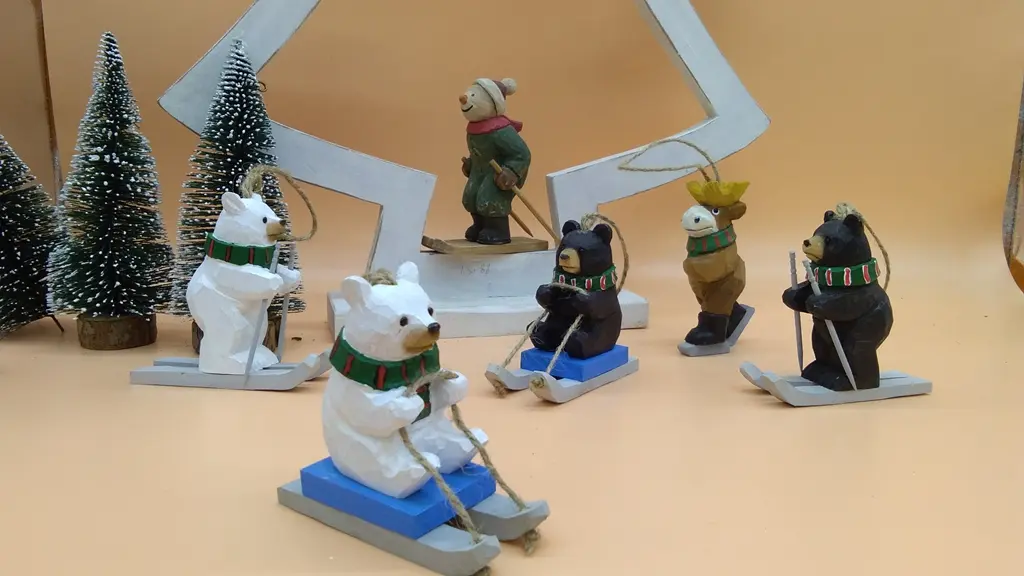
The figurine wall should never need new purchases to change seasons — only regrouping — the inventory never leaves the store, only the emphasis moves, and the labour is one evening plus a box of replacement cards. Plan the reset on the same day you receive spring stock, not when the shelf already looks stale, because customers register a tired wall long before the owner does. Spring: birds and garden families take the reach zone, nest eggs and chick pairings come forward; this is the same transition the spring garden and Easter display guide walks through. Autumn and winter: woodland and bear families move up, snow-dusted vignettes and the gift-boxed nativity sets join the top tier as gifting pieces. The reset is card text plus placement, which is why the family structure pays rent all twelve months.
What the Carving Floor Produces
Retail buyers asking where the quality difference lives get a concrete answer from the wood carving factory side: species selection and seasoning, one-block versus laminated construction, rough carving, finishing and paint in defined stages, then golden-sample inspection before packing — the same process discipline behind the technical detail in the basswood carving guide. For stores that want exclusivity on a shape, standard custom runs start at 300 units per design, and the development path from sketch to signed sample follows the sequence described in the custom product manufacturing overview. Card copy about origin and maker process is free merchandising; ask for the process facts worth printing — block species, one-piece construction, hours of handwork, the finishing standard — because each is a verifiable sentence a card can carry and a sales associate can repeat when a customer asks the only question carved work reliably provokes: how was this made?
If you want a figurine wall planned by family and tier for your own floor plan — quantities, riser logic and reset calendar included — our team can draft that display sheet with you.
Frequently Asked Questions
How should wooden animal figurines be grouped on a shelf?
By species family first — birds, woodland, farm and domestic, statement sculpturals — then by size within each family. Shoppers browse animals as stories, and family grouping makes the assortment read as depth instead of leftovers.
What shelf height sells carved figurines best?
The hand-reach band roughly 70 to 140 cm off the floor gets the most pickups, and carved work sells through handling. Statement pieces belong above eye level to advertise the tier below.
How many price points should each family carry?
Three: a small register price, a mid core seller and one large or highly detailed piece that anchors the tier. Display shows all three even when depth follows velocity.
Can the figurine display change seasons without new stock?
Yes — that is the point of family structure. Birds lead spring, woodland leads winter; the reset is placement plus card text on the same inventory.
What lighting works for carved wood?
Warm side light placed slightly above shows grain and chisel texture; single overhead sources flatten exactly the detail customers are paying for. Painted families benefit from one cooler accent on the feature shelf.
Sources
Sourcing and timber-scheme context for wood decor lines: FSC. Import classification and marking questions for carved wooden articles: U.S. Customs and Border Protection; verify current rules with your broker.