Skip to content


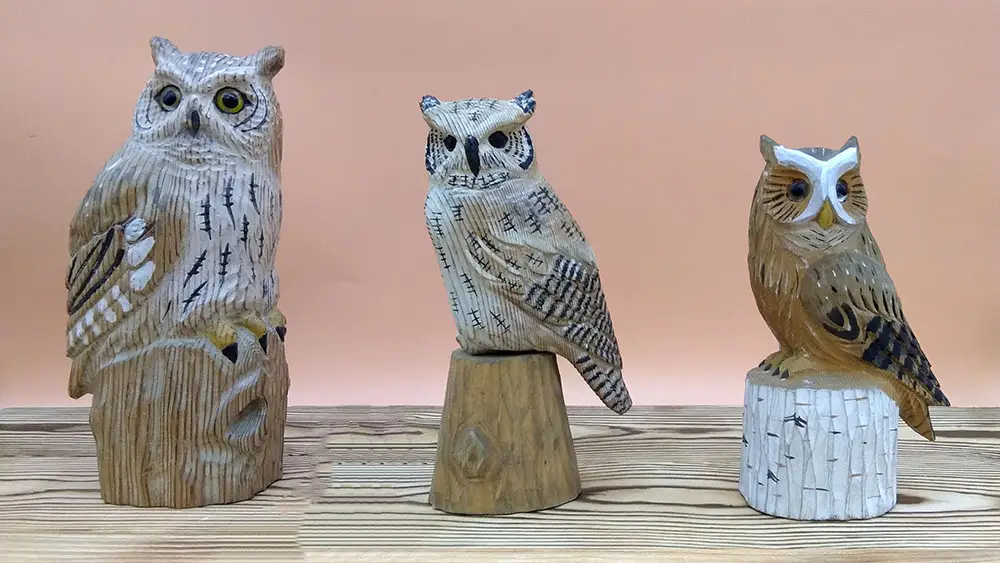
Carved raptor decor holds a strange position in lodge and cabin interiors: it is the one ornament category that reads as architecture. An owl on a mantel or an eagle on a newel post belongs to the timber around it in a way a ceramic vase never will, because both were made by a tool from a tree, and the room can tell.
This guide is for lodge groups, cabin retailers and property stylists ranging carved owls and eagles: how they read in timber rooms, which sizes and finishes suit each zone, and how to keep a raptor range from tipping into novelty. Every production figure is our own first-party number; the placement distances are recommendations for your rooms.
Key Takeaways
- Raptor decor works in timber interiors by contrast of craft, not colour: a carved owl against a sawn beam reads as made, while a bright painted piece reads as imported; keep 1 paint family per room.
- Size follows viewing distance: a mantel piece viewed at 1 to 2 m wants 15 to 25 cm, an entry statement on a pedestal wants 30 to 40 cm, and anything above 40 cm belongs to flat wall work rather than a shelf.
- Lodge light is warm and low: natural finishes and open-eyed carvings hold their read under warm 2700 K bulbs, while dark-stained raptors vanish against a stone fireplace after dusk.
- Wood-heated rooms swing humidity hard: pieces held at 8 to 12 percent moisture at packing still move in a stove-heated cabin, so specify relieved bases and keep raptors off the stove wall.
- Range raptors in 3 zones, not one shelf: an entry statement, a great-room mantel group of 3, and guest-room smalls at 5 to 12 cm; a single shelf of nine owls reads as stock, not as a collection.
- Order the range like any seasonal line: the trial tier at 100 pieces and a USD 500 minimum order value proves the zones, then the wholesale and custom tier at 300 pieces and USD 3,000 carries the property group.
In This Guide
- Why Raptors Read as Architecture
- Carved Raptor Decor: How Owls and Eagles Read in a Room
- Size Against Viewing Distance
- Finish: Natural, Stained or Painted Under Lodge Light
- The 3 Zones of a Lodge Raptor Range
- Room Against Piece Against Size Against Finish
- Stove Heat, Dry Air and the Moisture Swing
- What We Carve Into a Raptor Range
- Best For / Not For
- What We Check on a Raptor Run
- End to End: A 12-Room Lodge Group Refresh
- Frequently Asked Questions
Why Raptors Read as Architecture
A lodge interior is a conversation between heavy materials: sawn beams, stone, plank floors, leather. Most decor enters that room as an interruption, but a carved raptor enters as a participant, because its surfaces carry the same vocabulary of tool marks and grain. The owl’s carved feather rows echo the beam’s saw marks; the eagle’s stained plumage echoes the floor’s wear.
That is also why the category fails loudly when it is treated as novelty: a bright poly-coloured raptor on a stone mantel reads as a souvenir that escaped a gift shop, and the room downgrades it instantly. The range we carve for this use is described on our wholesale wooden bird page, and the lodge programme below draws only from its natural and stained finishes.
Carved Raptor Decor: How Owls and Eagles Read in a Room
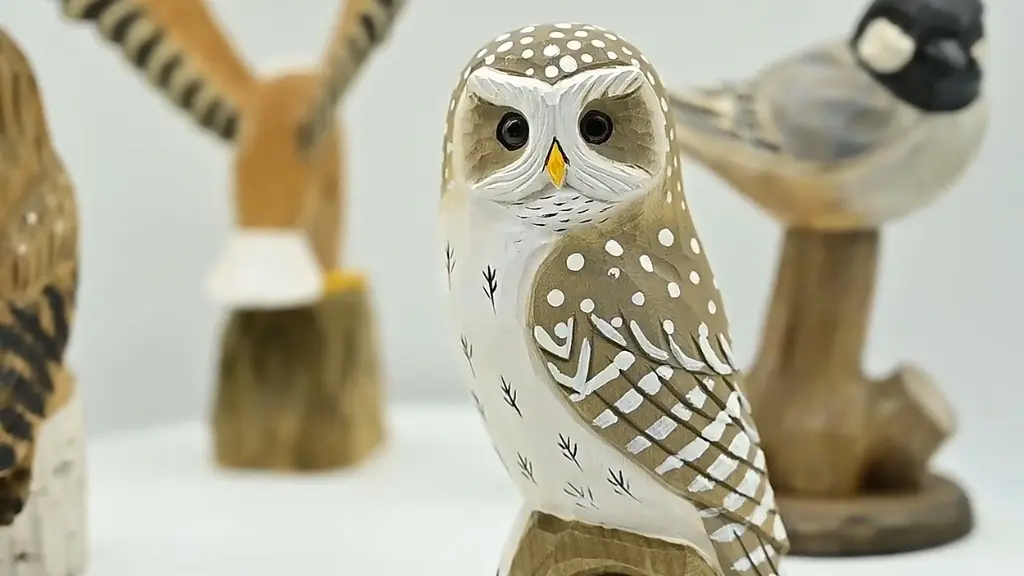
Owls and eagles do different work. An owl is frontal and static: two eyes and a face plane that meet the viewer head-on, which makes it a mantel and shelf piece, read from a seated position across a room. An eagle is lateral and directional: a beak line and a wing plane that point, which makes it an entry and stair piece, read in passing and from below.
Placing them against their grain is the commonest styling error: an owl on a newel post shows its profile and loses the face that carries it, while an eagle on a mantel points out of the room and pulls the eye to the door. Face the owl into the seating, face the eagle along the path, and both pieces do their job without competing. The company and its specification library sit at ewoodarts.com.
Size Against Viewing Distance
Carved detail has a minimum reading distance, and lodge rooms are deep. A 10 cm owl on a mantel viewed from a sofa 4 m away is a shape, not a carving; its feather rows and face plane dissolve. The working bands are 15 to 25 cm for mantel and shelf pieces viewed at 1 to 2 m, and 30 to 40 cm for entry statements on pedestals viewed in passing.
Above 40 cm in the round, a raptor stops being decor and becomes a sculpture with its own floor space and insurance conversation; our three-dimensional carving range runs 5 cm to 40 cm, with flat and relief work to 80 cm for the wall pieces a great room sometimes needs above a stone fireplace. Guest rooms take the other end: smalls at 5 to 12 cm on a desk or window shelf, where the viewing distance is an arm’s length and the detail finally pays.
Finish: Natural, Stained or Painted Under Lodge Light
Lodge lighting is warm, low and directional: wall sconces, lamp pools and fireplace glow rather than even ceiling light. Under that light a natural or lightly stained carving holds its read, because the grain and the tool marks catch what little light arrives. A dark stain on a dark stone background disappears after dusk, and a bright painted piece reflects the lamp pool as a flat colour patch.
The practical rule is one paint family per room at most, and none at all in the great room if the fireplace is stone. Where a property’s brand demands colour, put it in the guest-room smalls where a lamp reaches, and keep the entry and mantel pieces in natural or tobacco stain. Our finishes are eco-friendly and non-toxic, specified for indoor display, which is exactly where a lodge raptor lives.

The 3 Zones of a Lodge Raptor Range
Zone 1 is the entry: one eagle or owl at 30 to 40 cm on a pedestal or newel, facing the door path, natural finish, relieved base against door-slam vibration. Zone 2 is the great room: a mantel group of 3 graded owls, or a single flat relief above stone, never both at once. Zone 3 is the guest rooms: smalls at 5 to 12 cm, one per room, on a desk or window shelf, the only zone where painted finishes earn their place.
Three zones also solve the retail version of the same problem: a shop ranging raptors for lodge buyers should present them in these groupings rather than in a species row, because the buyer is buying the room, not the bird. The grouping logic for graded carved groups in a curated setting is set out in our piece on rustic wooden decor merchandising in boutiques.
Room Against Piece Against Size Against Finish
| Room | Piece | Size band | Finish |
|---|---|---|---|
| Entry | Eagle or owl on pedestal, facing path | 30 to 40 cm | Natural or light stain |
| Great room mantel | Owl group of 3, graded | 15 to 25 cm | Natural, tobacco stain |
| Great room stone wall | Flat relief, single piece | To 80 cm flat work | Stain matched to stone |
| Guest room | Small owl or eagle, desk or shelf | 5 to 12 cm | One paint family allowed |
| Stair and landing | Lateral eagle on newel | 20 to 30 cm | Natural, relieved base |
Stove Heat, Dry Air and the Moisture Swing
A wood stove turns a cabin into a drying oven: indoor humidity can fall far below the band a carving was finished at, and the movement shows first at thin points, wing tips, ear tufts and beaks. Pieces ship at 8 to 12 percent moisture, recorded per batch, and the standard we hold that band to is described in our wood moisture content standard.
Two placement rules do most of the protection: keep carved raptors off the stove wall and out of the direct flue path, and keep them off surfaces that reach heat, stone hearths included. A relieved base, a shallow groove cut across the underside, gives a flat-based piece somewhere to move that is not the visible face, and it is specified at sampling rather than added later.

What We Carve Into a Raptor Range
- We carve: owls and eagles across 4 species, basswood, pinewood, rubber wood and birch, from 5 cm smalls to 40 cm statements, plus flat and relief raptor work to 80 cm.
- We carve: custom property marks on pedestal bases or back planes, and custom stain families matched to a property’s timber, from 300 pieces on the wholesale and custom tier.
- We do not carve: protected-species likenesses beyond our standard range, and no live-edge or bark-on raptor bases for stove-adjacent placement.
- We do not supply: pedestals, plinths, mounting hardware or lighting; a relief above stone needs a fixer’s specification, not a carving shop’s guess.
On sourcing claims for a lodge programme: our facility holds an FSC chain-of-custody certificate, but certified basswood is not currently available to us, so raptor ranges ship with official timber felling and transport permits rather than an FSC-certified wood claim, and the wider framework for credible forest claims is published by the FAO forestry programme.
Best For / Not For
| Property or store | Best for | Not for |
|---|---|---|
| Timber lodge group | 3-zone range, natural finishes, property mark | Bright paint in the great room |
| Cabin rental fleet | Guest-room smalls, one per room | Entry statements guests can knock |
| Lodge-adjacent retail | Zone groupings, not species rows | Nine owls on one shelf |
| Modern minimalist interior | Single natural owl, one room | Full raptor programme |
What We Check on a Raptor Run
- Thin-point integrity: wing tips, ear tufts and beaks inspected piece by piece on the sampling plan, because stove rooms attack them first.
- Base flatness and relief groove on every flat-based piece, gauged at sampling and checked through the run.
- Moisture at 8 to 12 percent recorded per batch before wrapping.
- Stain match across a group, the 3 owls of a mantel set drawn from one stain batch so the group reads as one commission.
- Claims limited to what we hold: CE, UKCA, RoHS, EN71 where it applies, BSCI and ISO 9001.
Every figure above is first-party and checkable against an inspection report or a certificate we hold; the size bands, zones and light guidance are recommendations for your rooms, not test results. The range behind a lodge programme sits in our wholesale wooden crafts guide.
End to End: A 12-Room Lodge Group Refresh
A three-property lodge group, 12 rooms in total, wants a consistent raptor story before the winter season, with each property keeping its own timber character.
Zone first, per property. The stylist maps the 3 zones in each property: entry pedestal, great-room mantel or stone relief, guest-room smalls. Two properties take mantel groups of 3 graded owls; the third, with a full-height stone fireplace, takes one flat relief at 70 cm above the hearth line and no mantel piece.
Match stain to timber, not to brochure. Samples go out in 3 stain families plus natural; each property selects against its own beam offcuts in its own lighting, at dusk, because that is when the room will actually be seen. The guest-room smalls take one painted family in the property with pale pine, and none in the two dark-timber lodges.
Order on the tier the count allows. Consolidated across three properties the run clears the wholesale and custom tier at 300 pieces and a USD 3,000 minimum order value, sea freight 60 to 90 days to port counted back from the October set-in, with the property mark carved on pedestal bases and relief back planes. The retained samples from the stain approval become the inspection reference, and each property’s zone map is filed with its photos for the next refresh.
Ranging raptors for a lodge programme?
Send us your room list, your timber photos and your light temperature. We will return the 3-zone range per property, the stain families to sample against your own offcuts, and the order date the freight legs allow.
Frequently Asked Questions
Q: Which raptor suits a lodge entry?
An eagle or owl at 30 to 40 cm on a pedestal or newel post, natural or lightly stained, facing the door path rather than the wall. Entries carry drafts and door-slam vibration, so the piece needs a relieved base and real mass; small painted pieces chip where boots and bags pass them daily.
Q: Do painted or natural finishes suit cabins better?
Natural and lightly stained pieces hold their read in warm low light and age with the timber around them; painted raptors suit bright gift-shop shelves more than stove-lit rooms. If a property wants paint, keep it to one family per room and away from the stove wall, where heat checks finishes first.
Q: How many raptors should one room carry?
One statement or one group of 3, never a row. A mantel group of 3 graded sizes reads as a collection, while nine similar owls on one shelf read as unsold stock. The great room takes the statement, guest rooms take smalls at 5 to 12 cm, and the entry keeps its own pedestal piece apart from both.
Q: Will stove heat damage carved raptors?
Sustained radiant heat checks finishes and dries thin points unevenly, so keep carved pieces off the stove wall and out of the direct flue path, with the same discipline as candles on a dining table. A wood-heated room also swings humidity, which is why a relieved base matters more than the species choice.
Q: Can a lodge programme carry a branded raptor?
Yes. Custom labels and marks are part of our standard offering, and a carved property mark on a pedestal base or a relief’s back plane keeps the brand out of the carving’s face. Marks follow the specification freeze like any other element, and guest-room smalls usually carry the mark on the base, where hands do not polish it away.