Skip to content

Most advice on pricing wooden ornaments starts with a number. That is the wrong start, because the number is the output. What sets a shelf price is a chain of decisions made before anyone quotes: format and thickness, how much hand work the piece carries, packaging, quantity and freight term.
This guide works through that chain for retailers, gift shops and private-label brands setting a first shelf price or repricing a line that is not earning: the cost build-up, the arithmetic turning a supplier term into landed unit cost, and the margin method turning landed cost into a price your shelf plan can hold. We publish no unit price list, because cost follows specification; the commercial terms we do publish are stated here. For seasonal ranges specifically, see our guide to Christmas ornament retail pricing.

Key Takeaways
- Price the chain, not the piece. Format, thickness, carving complexity, paint layers, personalisation, hardware and packaging tier move cost more than the subject does.
- Quantity is the largest lever you control. Our minimums imply an order-value floor of USD 5.00 per piece at the 100-piece trial tier and USD 10.00 at 300 — floors, not quotes.
- Freight term moves landed cost more than buyers expect: the same goods on EXW, FOB, CIF and DDP land at different numbers, and only DDP has no surprises after it.
- Amortise one-off costs across the run — sampling, compliance testing, custom box artwork — real per-piece costs at low volume, negligible at high volume.
- Set margin from landed cost, not goods cost. A keystone markup applied to the wrong base is the most common pricing error here.
- Build a price ladder: impulse, mid and statement pieces let a customer trade up and give you three margins instead of one.
In This Guide
- What Actually Drives Unit Cost
- Quantity, Minimums and the Order-Value Floor
- Turning a Supplier Term Into a Landed Unit Cost
- A Method for Pricing Wooden Ornaments From Landed Cost
- Best For / Not For: Pricing Approach by Business Type
- What We Provide So You Can Cost an Order
- End to End: Costing a First Custom Ornament Line
- Frequently Asked Questions
What Actually Drives Unit Cost
Seven variables move cost more than anything else; two designs of one subject can differ several-fold on how they are set.
- Species. We carve in basswood, pinewood, rubber wood and birch. Basswood is pale and fine-grained, the standard for fine detail; pine carries visible figure that suits rustic work. Species moves both material cost and finishing labour.
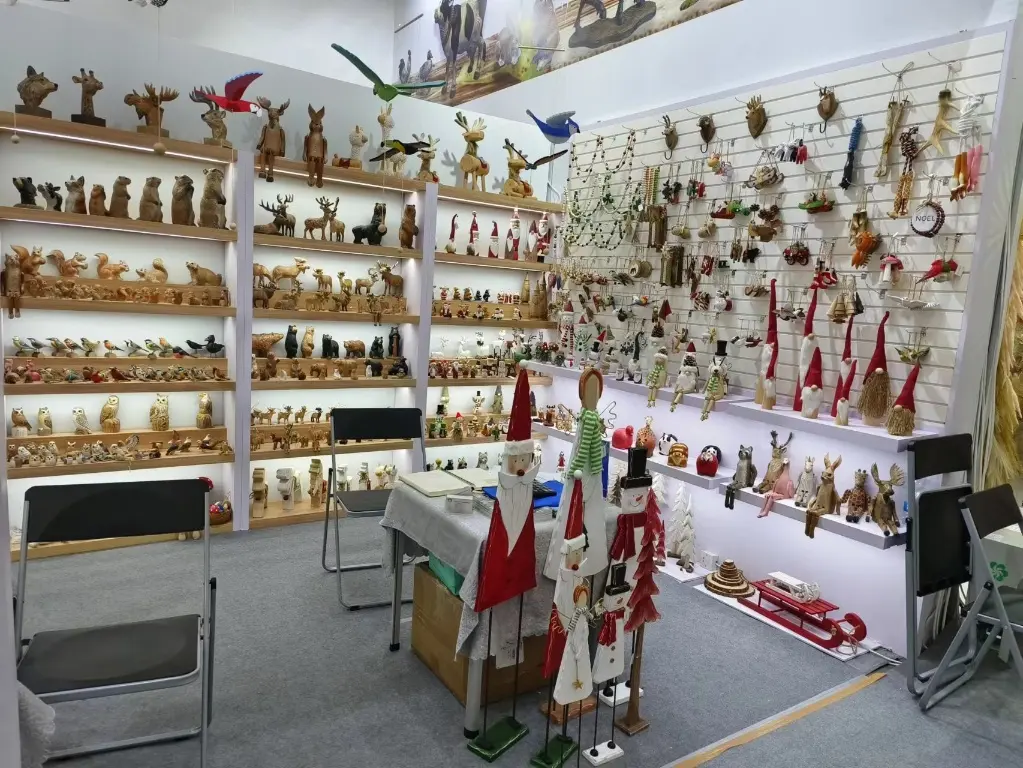
- Size and format. Our three-dimensional carving runs from 5 cm miniatures to 40 cm pieces, with flat carving up to 80 cm. A flat-cut piece and a fully modelled carving of the same silhouette are not the same work.
- Carving complexity. Depth of modelling, undercutting and thin projecting detail such as beaks and tails add hand time and breakage risk — a cost even when nothing breaks.
- Paint layers and detail. Every piece is carved and painted by hand. A single wash, a four-colour realistic finish and fine linework are three labour figures on the same blank.
- Personalisation. Engraving or printing a name, date or logo adds a setup step and a per-piece step, and makes unsold stock unsaleable elsewhere — a risk cost that belongs in the price.
- Hardware. Cord, eyelet, ribbon, hook or base. Small per piece, but it is also the fitting most likely to fail in a customer’s home, so it should be specified rather than left to the factory.
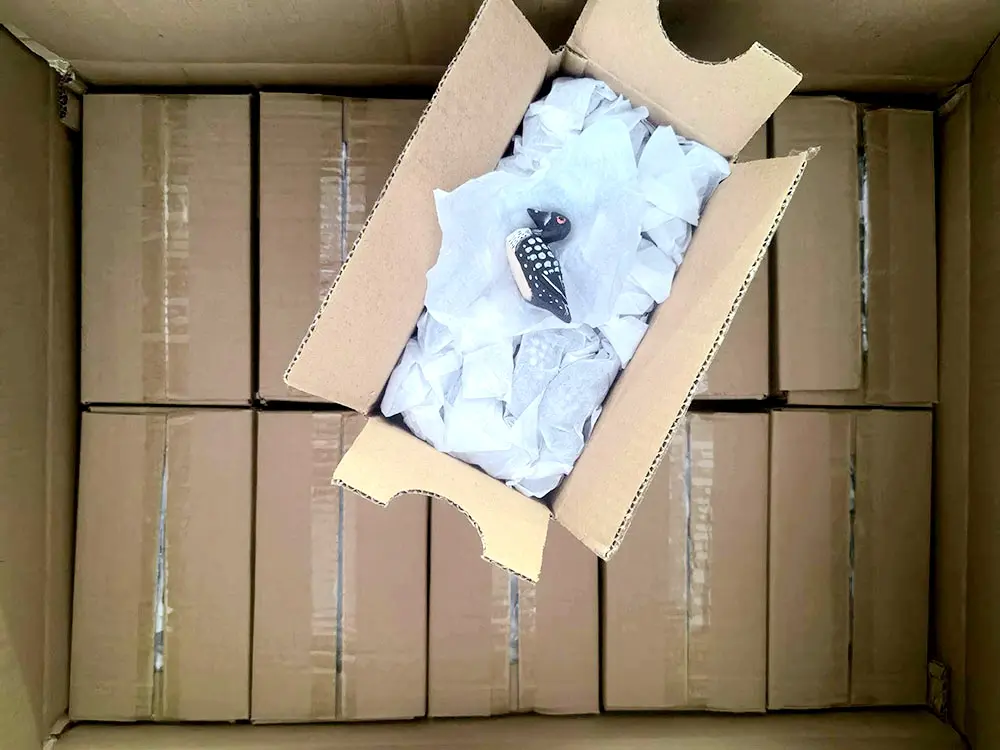
- Packaging tier. Polybag, white-paper wrap, printed insert card, custom colour box or gift box — the line retailers most often under-cost. Standard export packing is built into an order: white-paper wrap per piece, 6 to 12 per three-ply inner box at 21 × 11 × 14 cm, 240 to 480 per five-ply master carton at 58 × 44 × 31 cm, gross 8.0 to 15.0 kg, rated to pass an ISTA 3A drop test. Retail-ready packaging costs extra, and custom boxes carry a 500-piece minimum. Two price effects are routinely missed: a printed box removes repacking labour in your stockroom, so it may pay for itself; and carton dimensions decide how many pieces fit a container, so a few extra millimetres can add a freight line. Both are covered in our guides to ornament retail packaging and B2B export packaging for wood carvings.
Quantity, Minimums and the Order-Value Floor
Quantity is the lever you control, and our terms make its arithmetic visible:
- Trial. 100 pieces minimum with a USD 500 minimum order value, from in-stock designs, air express DDP, 20–30 days.
- Wholesale and custom. 300 pieces minimum with a USD 3,000 minimum order value, full catalogue access and OEM/ODM manufacturing, sea freight, 60–90 days to port.
- Custom printed box. 500 pieces minimum.
The two minimums do different jobs: the piece minimum stops an order being uneconomic to set up, the order-value minimum stops it being uneconomic to run. Dividing value by pieces gives USD 5.00 per piece at trial and USD 10.00 at wholesale. Those are floors on order value, not prices — a fully modelled 30 cm painted carving sits well above the second, a small flat-cut piece at volume below it. At the minimums your order must average above those figures, so more pieces of a simpler design is often a better use of the same money than fewer complex ones.
There is negotiating room on both sides; the tactics are in our guide to MOQ negotiation for wooden gifts. If your volume cannot reach 300, see our guide for low MOQ hand-carved wood crafts. Buying blanks and finishing them yourself changes the cost stack entirely — see unfinished wooden ornament blanks.
Turning a Supplier Term Into a Landed Unit Cost
A quoted goods price is not your cost. Landed unit cost adds everything between the factory door and your shelf; the freight term decides which lines are already inside it.
| Cost line | What to include | Notes for wooden ornaments |
|---|---|---|
| Goods | Unit price at your volume, on a stated incoterm | Record the term the quote uses: one number means different things on EXW and DDP |
| Freight | Sea or air, plus inland haulage at both ends if not covered | Ornaments are light but bulky, so a container fills by volume before weight |
| Duty | Applied to customs value at your declared HS code | Our wooden crafts are declared under 4420.1990, 9505.1000 or 9608.1000 by article; confirm with your broker |
| Compliance | Coating test reports, labelling artwork, market-specific testing | Amortise across the run, not as a per-piece charge |
| Packaging | Retail pack, insert card, hang tag, barcode label, carton share | Custom boxes carry a 500-piece minimum; amortise plate cost too |
| Loss allowance | Transit breakage, handling damage, shrink and markdown | Set this from your own history; a drop-tested carton reduces, not removes, it |
Incoterms define who pays and who carries risk at each leg, so choosing one is a pricing decision, not a logistics detail. Definitions come from the International Chamber of Commerce, and what each means for a wooden decor import is worked through in our guide to incoterms for wooden decor imports. United States importers should check entry and valuation with Customs and Border Protection before relying on any landed-cost figure.
A Method for Pricing Wooden Ornaments From Landed Cost
Once landed unit cost is real, the shelf price is arithmetic plus one judgement — your target margin. Fill in your own numbers — a figure invented here would be wrong for your channel and your basket.
| Step | Calculation |
|---|---|
| 1. Landed unit cost | (goods + freight + duty + compliance + packaging + loss allowance) ÷ units received |
| 2. Target margin | A percentage of selling price, not of cost — the two are not interchangeable |
| 3. Shelf price | landed unit cost ÷ (1 − target margin), then rounded to your price point |
| 4. Ladder check | Confirm the rung separates cleanly from the pieces above and below |
| 5. Promotion headroom | Subtract your deepest expected discount; if the remainder falls below floor margin, reprice now |
Step 2 is where most errors happen: a keystone markup doubles cost, which is a 50% margin on selling price rather than a 100% markup on retail. Decide which convention your accounts use and stay inside it.
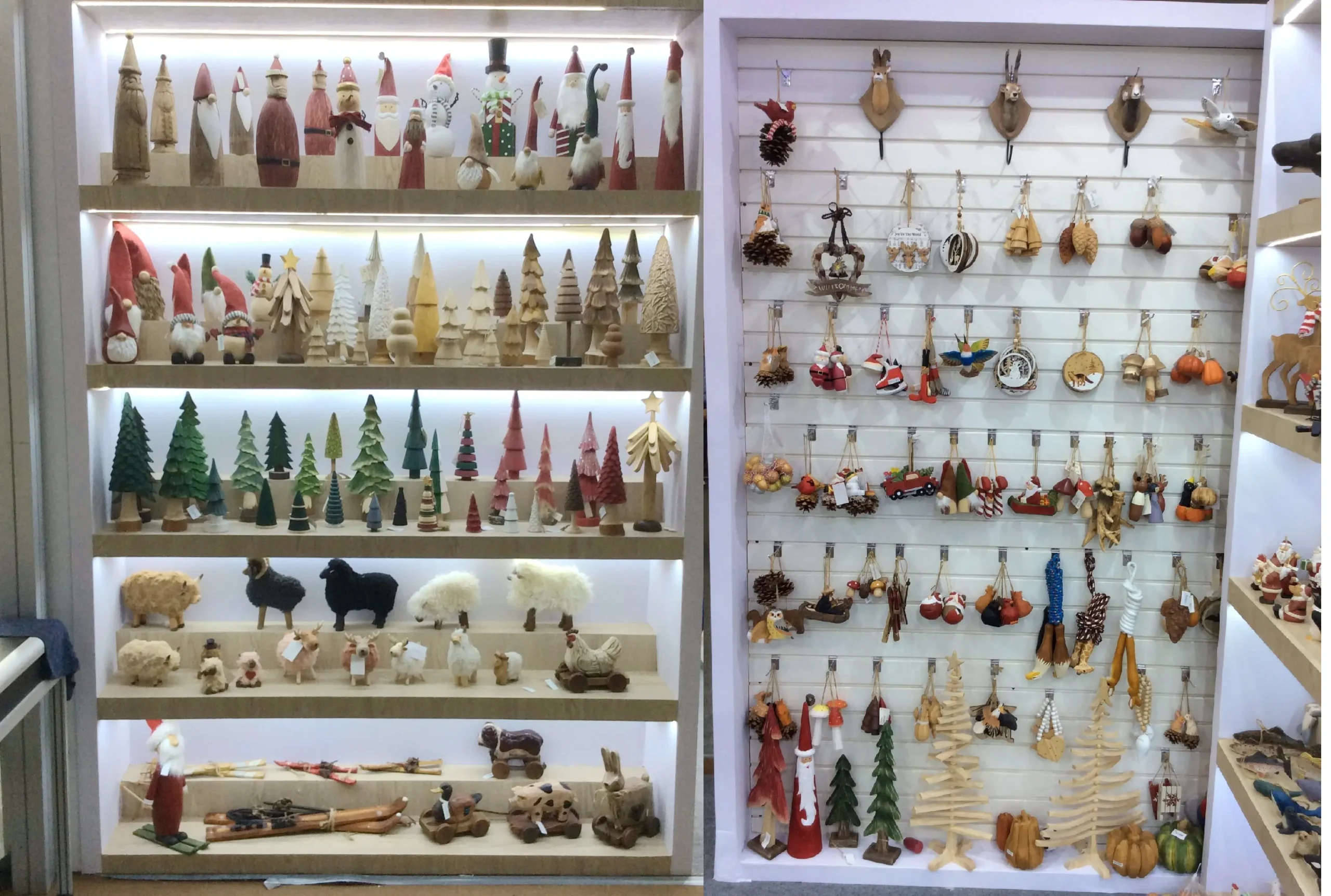
Step 4 matters more here than in most categories. Ornaments are bought as gifts and small treats, so customers read a range as a ladder and trade along it. Three rungs give three margins and a reason to face the range together. Planogram mechanics are in our guide to gift shop planogram basics.
Best For / Not For: Pricing Approach by Business Type
| Business type | Approach that works | Approach that fails |
|---|---|---|
| Independent gift shop | Three-rung ladder on a narrow range; trial tier first to prove the subject | Matching marketplace prices you cannot reach on 100 pieces |
| Garden centre or seasonal retailer | One strong mid-price piece plus an impulse piece; reorder timed against the 60–90 day sea lead time | A deep range that must be marked down together at season end |
| Private-label brand | Cost packaging and personalisation in from the start; they are the brand | Quoting wholesale before landed cost includes compliance amortisation |
| Marketplace seller | Add platform fees, fulfilment and returns to landed cost before setting margin | Treating the platform fee as a deduction from profit rather than a cost line |
What We Provide So You Can Cost an Order
A quotation is only as good as the specification behind it. These are the inputs we ask for and the outputs to expect back.
- You provide: multi-angle references, target size, species, finish and paint level, personalisation, hanging hardware, packaging tier, destination market and target quantity.
- We return: a unit price against a stated incoterm, carton quantity and dimensions for computing freight and cube, gross weight per carton, HS code and lead time for your tier.
- Commercial terms: T/T at 30% deposit and 70% balance before shipment, with photographs and video of finished goods supplied before the balance falls due. Trial runs 20–30 days air express DDP; wholesale 60–90 days to port.
- Compliance: our facility operates under ISO 9001 and BSCI and holds FSC chain-of-custody certification, with CE, RoHS and UKCA on electrical lines and EN71 coating routes for articles children may handle.
Two honesty notes. We publish no unit price list, because a price detached from specification is meaningless in hand-carved work — a 5 cm flat-cut piece and a 40 cm modelled carving are not comparable numbers. And although we hold FSC chain-of-custody certification, certified basswood is not currently available to us, so our carvings are not marketed as FSC-certified wood; official timber felling and transport permits are available for traceability. Settle any certification claim before sampling — see the wood OEM timeline from sample to first order.
End to End: Costing a First Custom Ornament Line
A gift retailer wants a three-piece custom line for autumn and needs a shelf price before committing volume.
Specify before asking. Three designs are drawn up with target sizes, basswood for the detailed piece and pine for the rustic one, paint level stated, cord hardware specified, and an insert card rather than a full colour box. Written down, the quote is comparable across all three designs instead of being three unrelated numbers.
Prove it on the trial tier. 100 pieces at a USD 500 minimum order value, air express DDP, 20–30 days. DDP matters: the retailer is testing a price, and a term leaving duty and inland haulage open would make that test unreliable.
Build landed cost from the trial. Goods, freight inside the DDP term, duty at the declared HS code, insert card cost and a loss allowance from the shop’s own last two seasons. Divide by units received, not units ordered.
Set the ladder. The three designs go on three rungs, checked against the fixture so each separates cleanly from its neighbour. Target margin is applied to landed cost, then the deepest expected seasonal discount subtracted to confirm the floor holds.
Scale and re-cost. The reorder moves to 300 pieces at a USD 3,000 minimum order value, sea freight, 60–90 days to port. Freight per piece falls, so the ladder can tighten or the margin widen — a choice made with six weeks of sell-through data behind it. At 500 pieces the custom box becomes viable. Options are in our wholesale wooden ornaments guide.
If you want a quotation you can actually cost from — unit price against a stated incoterm, carton quantity and dimensions, gross weight, HS code and lead time for your tier — send us your references and target quantity and we will build it with you.
Frequently Asked Questions
Q: Why is there no published price list for wooden ornaments?
Because cost follows specification. Species, size, flat-cut versus fully modelled construction, paint layers, personalisation, hardware and packaging tier each move the number, so two designs of the same subject can differ several-fold. A price detached from those variables is wrong for most buyers.
Q: What is the minimum order, and what does it imply per piece?
Trial runs at 100 pieces with a USD 500 minimum order value; wholesale and custom at 300 pieces with USD 3,000; custom printed boxes at 500 pieces. Dividing value by pieces gives order-value floors of USD 5.00 and USD 10.00 per piece — floors, not prices.
Q: Should I set margin on cost or on selling price?
Pick one and stay inside it. A keystone markup doubles cost and yields a 50% margin on selling price, not a 100% markup on retail. Confusing the two is the most common pricing error here, and it shows up as a range that sells but does not earn.
Q: Does retail packaging raise or lower my unit cost?
It raises goods cost and can lower total cost. A printed box or insert card adds a per-piece line and, at custom level, a 500-piece minimum with plate cost to amortise — but it removes repacking labour. Cost both sides.
Q: Which freight term makes a price test reliable?
DDP, because duty, freight and inland delivery sit inside the term and nothing arrives as a surprise. Our trial tier ships air express DDP in 20–30 days, which is why it suits a first price test. On EXW or FOB you must add the remaining legs before comparing.
Sources
Incoterms definitions are published by the International Chamber of Commerce, and United States entry and valuation requirements by Customs and Border Protection. Our minimums, order values, carton specifications, ISTA 3A rating, HS codes, species list, size range, lead times, payment terms and certifications are our own published first-party terms. No FOB unit price and no retail price is stated in this guide: the per-piece figures are arithmetic on our published minimum order values — floors, not quotations. Duty rates, platform fees and loss allowances must come from your own broker and accounts.