Skip to content

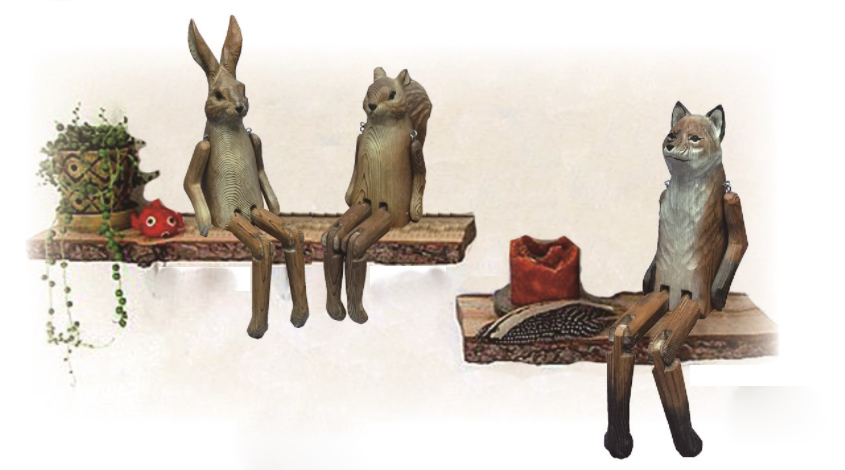
Farmhouse has been declared finished roughly once a year for a decade, and it keeps selling. That is the first thing a retail buyer needs to understand about wooden farmhouse decor: it stopped behaving like a trend and started behaving like a category, with a stable set of forms, finishes and price points that customers recognise without being shown.
This guide is for gift shops, garden centres, home decor retailers and wholesalers deciding what to stock. It covers what the farmhouse look actually consists of as a buying specification, where wooden animal figurines sit inside it, how to read demand signals from your own data instead of buying a market report, and how the style differs from the adjacent looks it is often confused with. For the broader picture see our wooden home decor market trends overview, and for range-building across categories our wholesale wooden crafts guide.
Key Takeaways
- Farmhouse is now a standing category rather than a spike. Stock it as a permanent sub-range with seasonal rotations, not as a promotional bet.
- The specification is three things: natural or muted finish, visible grain, and a hand-made read. Anything glossy, saturated or machine-perfect drifts out of the style.
- Wooden animal figurines are the anchor piece. They carry the storytelling that justifies a higher shelf price than a generic bowl or tray.
- Read demand from your own numbers — sell-through by style, return reasons, basket pairings — rather than from a headline growth figure you cannot act on.
- Basswood takes the fine detail farmhouse animals need; pine gives the visible grain and rustic warmth the style also asks for. Most ranges want both.
- Trial terms start at 100 pieces with a USD 500 minimum order value on in-stock designs, which is low enough to test a farmhouse sub-range before committing to 300.
In This Guide
- What Wooden Farmhouse Decor Means as a Buying Specification
- Where Wooden Animal Figurines Sit in the Range
- Finish, Palette and Material Choices That Hold the Style
- Farmhouse Against Adjacent Styles
- Reading Demand From Your Own Data
- Best For / Not For: Which Retailers Should Stock It
- What We Check on a Farmhouse Decor Order
- End to End: Adding a Farmhouse Sub-Range
- Frequently Asked Questions
What Wooden Farmhouse Decor Means as a Buying Specification
Farmhouse is easy to recognise and easy to get wrong, which makes it worth specifying precisely before you order. Three properties define it. First, the finish reads as natural: bare wood, a wash, a muted paint, or a lightly distressed surface — never a high-gloss film. Second, the grain stays visible, because the style is selling the material as much as the object. Third, the piece reads as made by hand rather than moulded, which for carved work means tool marks, slight asymmetry and painted detail that varies a little from piece to piece.
That third property is commercial, not sentimental. A customer buying a farmhouse piece is buying the implication that someone made it, and a run that is too uniform loses the thing that supports the price. This is also why injected resin reproductions struggle in the category — the comparison is in our article on wooden animal carvings versus ceramic figurines.

Where Wooden Animal Figurines Sit in the Range
Animal figurines are the anchor of a farmhouse line. Trays, bowls and signs fill shelf space, but a carved fox, owl, deer or songbird gives the display a focal point and a story, and it is the piece customers pick up. In practice that means animals carry a higher price per unit of shelf space than the surrounding accessories, and they are what a shopper photographs.
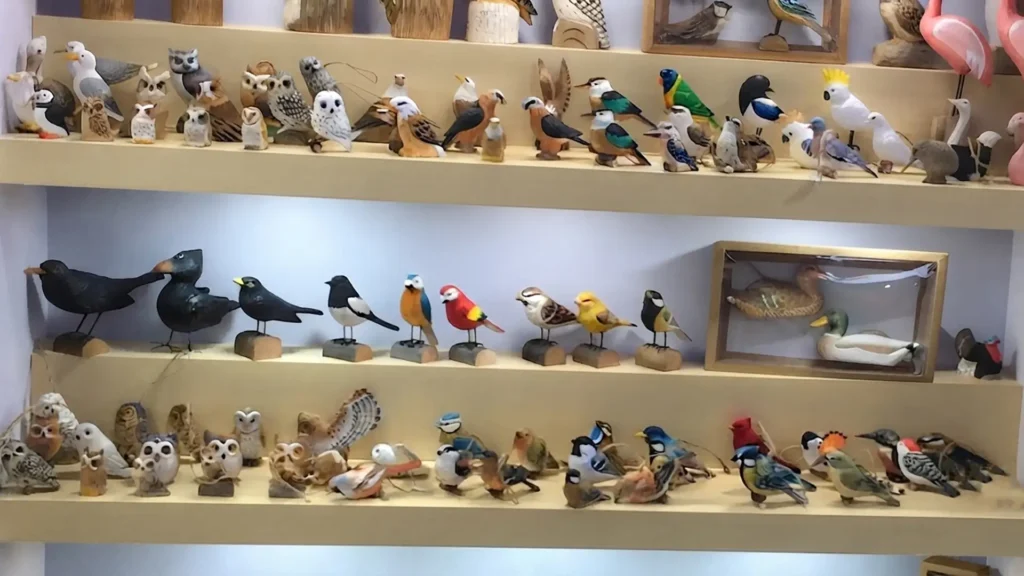
Two buying decisions follow. The first is species: basswood is fine-grained and pale, so it holds facial detail and takes an even wash of colour, which is what a realistic songbird needs. Pine is coarser and warmer, and its visible figure suits the rustic end of the style — a chunky deer or a barn owl where character matters more than accuracy. We carve in basswood, pinewood, rubber wood and birch, and most farmhouse ranges want at least two of those rather than one.
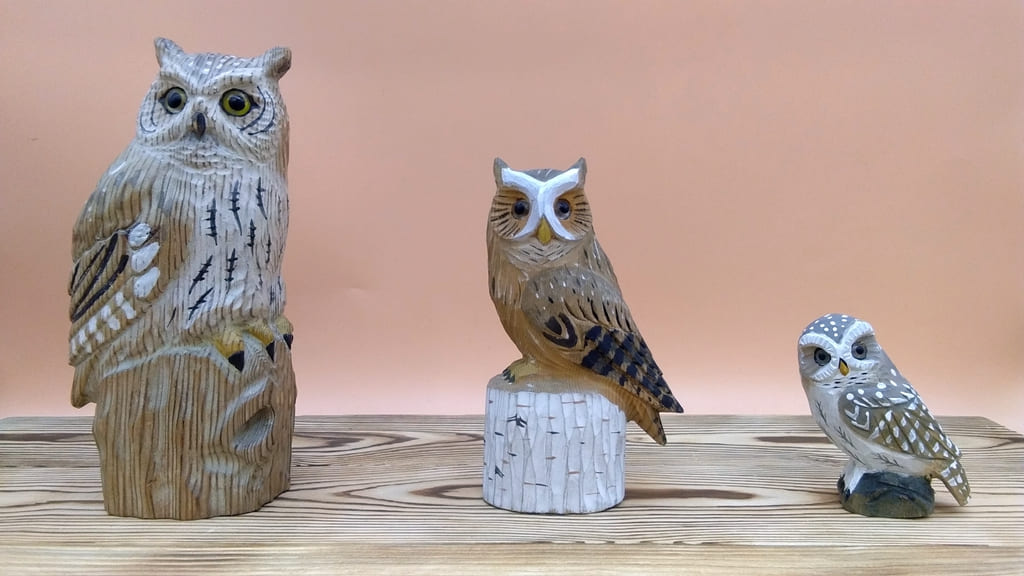
The second is size architecture. Our three-dimensional carving runs from 5 cm miniatures to 40 cm pieces, with flat carving up to 80 cm. A working farmhouse sub-range usually needs a small impulse piece at the till, a mid piece for shelving, and one larger statement piece for a table or window — three price steps a customer can move through. Merchandising those steps is covered in our guide to wooden animal figurines retail display, and shelf styling in styling wooden animal carvings.

Finish, Palette and Material Choices That Hold the Style
The palette is narrow and that is a stocking advantage: fewer finishes means fewer dead SKUs. Expect natural wood tones, whites and off-whites, soft greys, muted sage and clay, and black used sparingly as an accent. Saturated primary colour, metallics and glossy lacquer all read outside the style and tend to sit on the shelf.
Every piece in our range is carved and painted by hand, using eco-friendly non-toxic paint systems, so a muted farmhouse palette is a straightforward brief rather than a compromise. Where a piece may be handled by children, the coating has to meet the EN71 toy safety standards as well as looking right — see our guide to EN71 and toy safety for wooden animal figurines.
On material provenance, buyers increasingly ask. Our facility holds FSC chain-of-custody certification and operates under ISO 9001 and BSCI social compliance, but certified basswood is not currently available to us, so we do not market our carvings as made from FSC-certified wood. What we can provide is official timber felling and transport permits for traceability. If your shelf story depends on a certification claim, settle that before sampling. The framework behind such claims is set out by FSC for businesses and the FAO forestry division.

Farmhouse Against Adjacent Styles
Farmhouse gets merged into coastal, Scandinavian and rustic-industrial ranges on retail floors, and the three are not interchangeable. Knowing which one your customers actually buy prevents a range that looks coherent in a photo and incoherent on a shelf.
| Style | Finish and palette | Typical anchor piece | Best stockist |
|---|---|---|---|
| Farmhouse | Natural wood, washes, muted whites and greys, light distressing | Carved animal figurine — fox, owl, deer, songbird | Gift shops, garden centres, rural and suburban retail |
| Coastal | Weathered and bleached tones, sand neutrals, sea blues | Shorebirds and marine subjects | Seaside and tourist retail; see our coastal decor guide |
| Scandinavian | Pale bare wood, minimal paint, clean silhouettes | Simplified bird or single-object form | Design-led independents and concept stores |
| Rustic-industrial | Dark stains, mixed metal, heavy grain | Larger statement carving on a metal stand | Urban homeware and hospitality supply |
Reading Demand From Your Own Data
Published market-size figures are of limited use to a single shop, because they describe a whole category rather than your catchment. Five signals from your own numbers are more actionable:
- Sell-through by style, not by SKU. Group your stock into farmhouse, coastal, modern and seasonal, then compare weeks-to-clear. A style clearing consistently faster than your average is telling you something a report cannot.
- Basket pairings. Which pieces leave together? If an animal figurine regularly sells with a tray or a candle holder, you have a natural bundle and a reason to face them together.
- Handling and hesitation. What customers pick up and put back is demand that your price or finish is losing. Watch the shelf rather than the till.
- Return and damage reasons. A finish that marks in transit or a hanging fitting that fails shows up here first.
- Repeat enquiry. Customers asking whether you have “more like that” is the cheapest reorder signal available, and it usually names a subject — owls, deer, songbirds — rather than a style.
Run those five against last season before you commit volume. The sourcing mechanics behind a test order are in our guide to dropshipping versus bulk sourcing for home accents.
Best For / Not For: Which Retailers Should Stock It
| Retailer type | Strong fit | Poor fit |
|---|---|---|
| Gift shop, rural or suburban | Year-round sub-range with seasonal rotation; animal figurines as the anchor | A deep range of one subject — customers want variety, not volume |
| Garden centre | Bird and wildlife subjects alongside plants; spring and autumn peaks | Fine-detail pieces left outdoors without a stated finish rating |
| Design-led independent | The Scandinavian edge of the style — bare wood, simplified forms | Distressed or painted-rustic finishes, which read as dated to this shopper |
| Chain or marketplace seller | A tight, repeatable set with documented tolerances and labelling | Broad artisanal variance left undefined in the specification |
What We Check on a Farmhouse Decor Order
- Species matched to the design intent — basswood where facial detail carries the piece, pine where visible grain carries it, agreed before carving rather than after.
- Finish approved against a physical sample under consistent light, so a wash or distressed effect is reproducible across the run rather than reinterpreted by each painter.
- Size bands held per tolerance across the 5 cm to 40 cm three-dimensional range, so a three-step size architecture still fits your fixtures.
- Coating documentation confirmed for the destination market, including EN71 reports where a piece may be handled by a child.
- Export packing verified — white paper wrap per piece, 6–12 per three-ply inner box at 21 × 11 × 14 cm, 240–480 per five-ply master carton at 58 × 44 × 31 cm, 8.0–15.0 kg gross, rated to pass ISTA 3A. Freight terms are explained in our guide to incoterms for wooden decor imports.
End to End: Adding a Farmhouse Sub-Range
A garden centre with three shops wants a farmhouse wildlife line for spring, alongside its existing seasonal stock.
Test. A trial order of 100 pieces at a USD 500 minimum order value, drawn from in-stock designs, ships air express on DDP terms and arrives in 20–30 days. Three subjects — songbird, owl, deer — go into two shops only, so the third acts as a control.
Read. After six weeks the centre compares weeks-to-clear by subject, notes which pieces were picked up and put back, and checks whether any sold alongside existing lines. Deer outperforms; songbird underperforms against the control shop.
Specify. The winning subjects get a written specification: species, size band and tolerance, finish approved against a retained sample, hanging or base format, and labelling for the market. From here the range is measured against something rather than against a memory.
Scale. The reorder moves to the wholesale tier at 300 pieces with a USD 3,000 minimum order value, by sea freight at 60–90 days to port — which is why the reorder is placed six weeks before the spring fixtures are dressed, not when the shelf empties. Payment runs T/T at 30% deposit and 70% before shipment, with photographs and video of the finished goods supplied before the balance falls due.
Rotate. Custom printed boxes become worth the 500-piece minimum once the line runs across all three shops. Autumn brings a subject swap rather than a new project, because the specification, files and sample are already archived against the order.
If you are building a farmhouse sub-range and want to see subjects, sizes and finishes against your own shelf plan — with trial quantities and carton counts worked out — send us your store profile and we will put a range together with you.
Frequently Asked Questions
Q: Is farmhouse decor still selling, or is it past its peak?
It has moved from trend to category. Heavily distressed, slogan-led rustic goods faded, while natural finishes, muted palettes and hand-carved animal subjects kept selling. Stock it as a permanent sub-range with seasonal rotation and judge it on your own weeks-to-clear.
Q: What wood is best for farmhouse-style carvings?
Basswood is pale and fine-grained, so it holds facial detail and takes an even wash — the choice for realistic songbirds. Pine is coarser and warmer, with visible figure that suits chunkier rustic subjects. We also carve in rubber wood and birch.
Q: What is the minimum order to test a farmhouse range?
A trial order runs at 100 pieces with a USD 500 minimum order value on in-stock designs, air express DDP in 20–30 days. Wholesale and custom run at 300 pieces with a USD 3,000 minimum order value, sea freight, 60–90 days to port. Custom printed boxes require 500 pieces.
Q: How many pieces should a first farmhouse sub-range have?
Two or three subjects across three size steps: an impulse piece, a mid shelf piece and one statement piece. That gives a price ladder to walk and clean sell-through data per subject.
Q: Can I claim the wood is sustainably certified?
Only if the claim matches the material supplied. Our facility holds FSC chain-of-custody certification with ISO 9001 and BSCI, but certified basswood is not currently available, so our carvings are not marketed as FSC-certified wood. Official timber felling and transport permits are available for traceability.
Sources
Forest certification frameworks are described by FSC for businesses and the FAO forestry division. Our species list, carving size range, hand-carved and hand-painted construction, non-toxic paint systems, minimums and order values, lead times, payment terms, carton specifications, ISTA 3A rating and certification holdings are our own published first-party terms. No market-size, growth-rate or consumer-spending figure is quoted in this guide, because those numbers describe a whole category and cannot be applied to an individual shop’s catchment — the demand signals in the section above come from your own sales data instead.