Skip to content
For importers sourcing hand-carved wooden decorations, wildlife figurines, or seasonal ornaments from China, consistent product quality is the single greatest variable between a profitable order and a costly return. Unlike injection-moulded plastics, every piece of basswood that leaves a craftsman’s bench carries the natural variation inherent in hand work—subtle differences in grain texture, paint coverage, and dimensional tolerance that must be managed through a structured acceptance framework. This is where aql inspection wooden crafts protocols become essential for any serious buyer.
Acceptable Quality Level inspection gives importers a statistically defensible method for deciding whether a production batch meets agreed-upon standards—or whether it should be rejected before it ever reaches a container. For businesses purchasing hand-carved wooden crafts in bulk, understanding AQL sampling is not optional compliance paperwork; it is the operational backbone of source-to-shelf integrity.
This guide walks through how AQL sampling works, how defect categories should be defined for hand-carved products, and how buyers can negotiate realistic acceptance criteria with their factory partners. Whether you are placing your first trial order or scaling an established supply chain, the principles outlined here will help you protect both your margins and your brand reputation.
What Is AQL Sampling and How Does It Apply to Handmade Products?
AQL—Acceptable Quality Level—is a quality management metric defined in the ANSI/ASQ Z1.4 standard (harmonised with ISO 2859-1 internationally). It represents the maximum percentage of defective units in a batch that can be considered satisfactory as a process average. In practical terms, AQL sampling involves randomly selecting a defined number of units from a production lot, inspecting each against pre-agreed criteria, and then accepting or rejecting the entire lot based on the number of defects found.
The standard defines sampling plans according to lot size and inspection level. For a shipment of 5,000 hand-carved wooden owl keychains, for example, the sampling table might direct your inspector to examine 200 units chosen at random. If the number of defects found falls below the acceptance number (Ac), the lot passes. If it meets or exceeds the rejection number (Re), the lot fails and must be reworked or rejected.
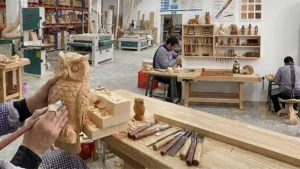
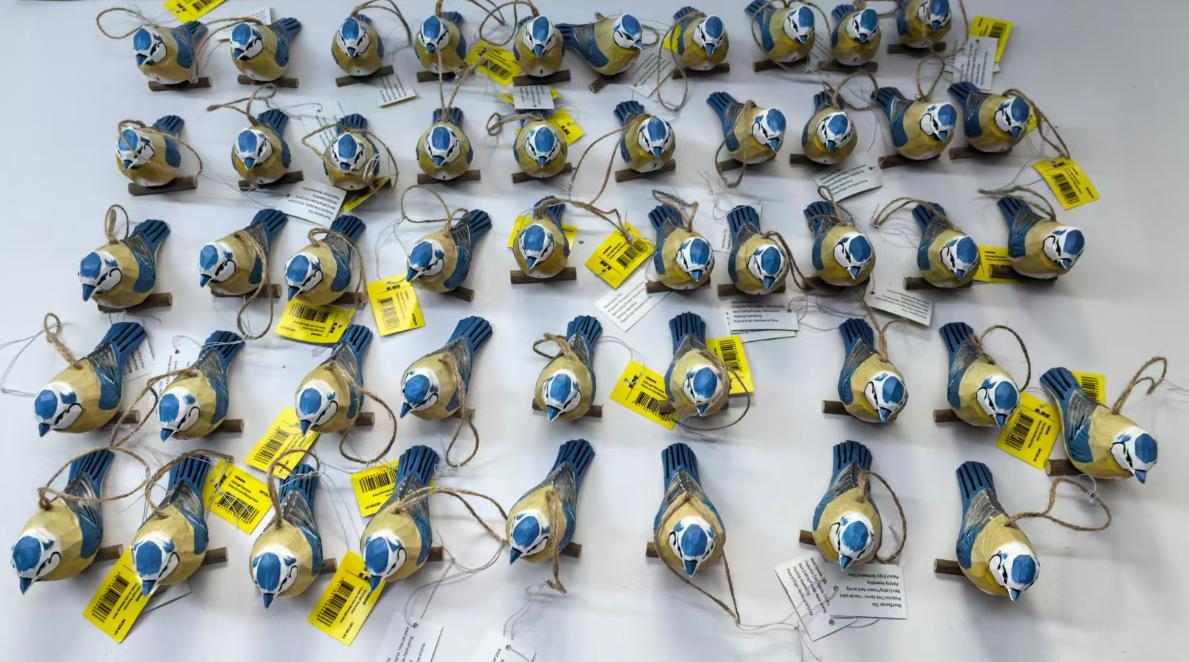
Applying AQL to handmade wooden crafts requires thoughtful adaptation. Unlike machine-produced goods where every unit is virtually identical, hand-carved basswood pieces will always show minor artisanal variation. The key is distinguishing between acceptable character marks—the natural tool marks that signal genuine hand work—and genuine defects that compromise safety, function, or salability. This distinction must be documented in your product specification sheet before any inspection takes place, ideally referencing physical approval samples sealed by both buyer and factory.
Understanding the Three Defect Categories for Wooden Crafts
AQL inspection classifies defects into three severity tiers. Each tier carries a different AQL threshold, meaning the tolerance for critical defects is far stricter than for minor cosmetic issues. For importers of hand-carved wooden crafts, defining these categories with precision is the most important step in the entire process.
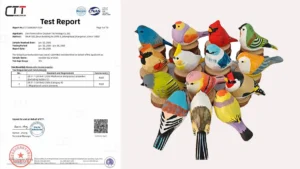
Critical Defects (AQL 0) are defects that could cause harm to the user or violate mandatory regulatory requirements. For wooden crafts, critical defects include: structural failure where a small part detaches and creates a choking hazard (particularly relevant for items marketed as children’s toys under EN71-1), toxic paint or finish exceeding heavy metal migration limits defined in EN71-3, and sharp points or edges left from incomplete sanding. Any critical defect found in the sample typically results in immediate lot rejection regardless of the AQL threshold.
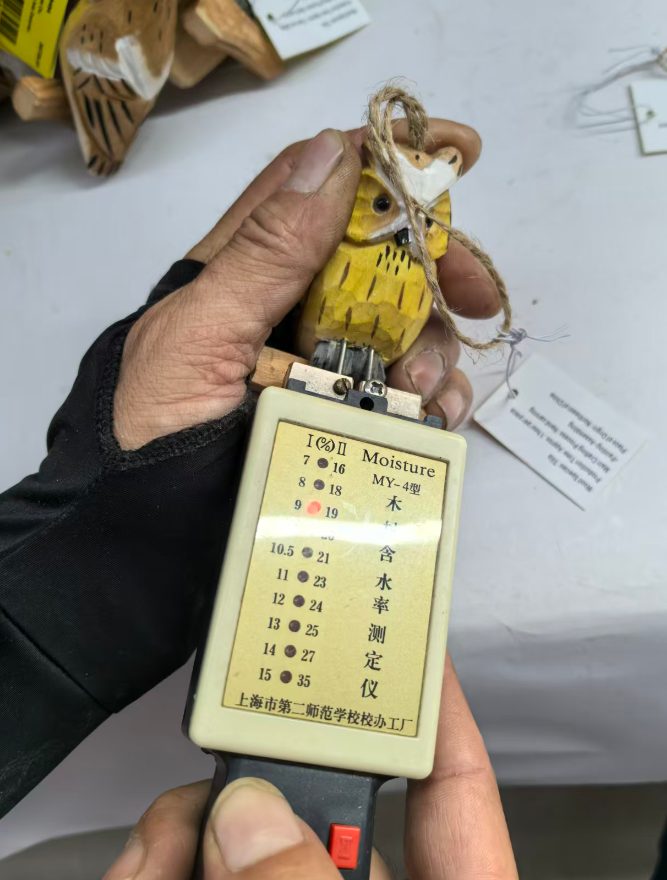
Major Defects (AQL 1.5–2.5) are issues that would likely cause the end consumer to return the product or that significantly reduce its commercial value. Examples in wooden crafts include: visible wood cracking that propagates beyond the surface grain, paint colour that deviates noticeably from the approved sample, missing assembly components such as bases or hanging hardware, and moisture content readings outside the 8–12% range specified for export-grade products. Major defects directly affect your brand reputation and retailer relationships.
Minor Defects (AQL 4.0) are deviations from the specification that most consumers would not notice or would not consider grounds for return. In hand-carved wooden crafts, minor defects might include: slight tool mark variations between units in the same batch, minor colour shading differences on non-prominent surfaces, small natural grain features visible through the finish, and packaging print alignment issues. These are the defects where the handmade nature of the product must be factored into your tolerance expectations.
Choosing the Right Inspection Level for Your Order
The ANSI/ASQ Z1.4 standard defines three General Inspection Levels—Level I, Level II, and Level III—each requiring a different sample size from the same lot. The inspection level you choose determines how many units are pulled for examination and, consequently, how much statistical confidence you have in the result.
General Inspection Level I requires the smallest sample size and offers the least discrimination. It is appropriate when inspection costs are high relative to the value of each unit, or when the historical quality performance of the supplier is well established. For repeat orders of simple wooden craft designs from a factory with a proven track record, Level I may be sufficient.
General Inspection Level II is the default for most consumer goods inspection and is the level most third-party inspection companies use unless instructed otherwise. It provides a balanced sample size that is suitable for the majority of wooden craft orders. If you are sourcing from a new supplier, launching a new product design, or purchasing a high-value hand-carved collection, Level II should be your baseline.
General Inspection Level III requires the largest sample size and provides the tightest quality discrimination. It is appropriate for high-value orders, products with a history of quality disputes, or items destined for demanding retail channels with strict compliance requirements. For importers buying hand-carved wooden crafts for major European or North American retailers, Level III offers the rigour those channels expect.
At Ever Creation, our factory applies rigorous quality control across all inspection levels, and we work with buyers to agree on the appropriate level before production begins. The choice is not about distrust—it is about aligning the inspection intensity with the commercial risk profile of each order.
Common Defects Found in Hand-Carved Wooden Crafts
Understanding the specific defects that occur in hand-carved basswood products allows buyers to build more accurate inspection checklists. Drawing on two decades of production experience, the following defect categories are the ones most frequently encountered in wooden craft manufacturing.
Paint and Finish Defects. Hand-painted wooden crafts are subject to brush marks, paint runs, incomplete coverage in recessed carving details, and colour inconsistency between production batches. While minor brush texture is inherent to hand painting, runs and drips that alter the intended visual profile constitute major defects. Eco-friendly non-toxic paint, as used in our production lines, requires careful application technique because its formulation behaves differently from solvent-based alternatives during drying. For a detailed look at how finishes affect both appearance and durability, see our guide to wood carving finish options.
Wood Cracking and Splitting. Basswood is valued for its fine, even grain and excellent carving properties, but it is susceptible to cracking if not properly dried before carving. Kiln-dried basswood must reach the target moisture content of 8–12% before work begins. Cracks that appear after shipping usually indicate either insufficient drying or exposure to extreme humidity changes during transit. Anti-cracking log treatment during raw material preparation is the first line of defence, but inspection must also verify moisture content at the pre-shipment stage.
Dimensional Variance. Because each piece is hand-carved, exact dimensional consistency across a batch of 5,000 units is neither achievable nor desirable—some variation is the hallmark of genuine craftsmanship. However, variance beyond agreed tolerances (typically ±2–3mm for pieces in the 5–15cm range) can cause problems with packaging fit and retail display consistency. Inspection should verify critical dimensions against the approved specification drawing.
Assembly and Attachment Issues. Many wooden crafts involve multiple components—animal figurines mounted on bases, ornaments with hanging hardware, multi-piece decorative sets. Loose joints, misaligned components, inadequate adhesive bonding, and missing hardware are all assembly defects that must be caught before packing. These issues are particularly important for 3D carvings in the 5cm–40cm range where structural integrity affects both safety and perceived quality.
Setting Acceptance Criteria for Your Wooden Craft Order
Negotiating AQL acceptance criteria with your factory should happen before production begins—not after defects are discovered. The process starts with a detailed product specification document that covers materials, dimensions, finish requirements, packaging standards, and the agreed AQL levels for each defect category. Both parties should sign off on sealed approval samples that serve as the physical benchmark for all inspections.
For hand-carved wooden crafts, we recommend the following AQL framework as a starting point for negotiation:
- Critical defects: AQL 0 (zero tolerance)—any critical defect results in lot rejection
- Major defects: AQL 1.5 or 2.5 depending on the retail channel and product price point
- Minor defects: AQL 4.0—allowing for the natural variation inherent in hand work
These thresholds should be adjusted based on your specific market requirements. Products sold through premium gift retailers may warrant tighter major defect AQLs (1.0), while promotional items or bulk-ready precision giveaways might accept slightly more lenient minor defect thresholds. The important principle is that both buyer and factory agree on the numbers before the first unit is carved.
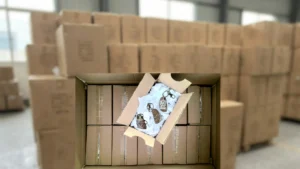
Your specification should also address hand carving quality control checkpoints at each production stage—not just at final inspection. Raw material acceptance, in-process carving checks, post-painting verification, and pre-shipment audit all contribute to the overall quality picture. Packaging must meet ISTA 3A drop test standards using 5-ply reinforced master cartons to protect the products during international transit.
When you browse our wholesale wooden crafts collection, you are viewing products that have been developed within this rigorous quality framework. Every design has passed through our complete source-to-shelf integrity process, from basswood selection through final audit.
The Inspection Workflow: Three Stages That Protect Your Order
Effective aql inspection wooden crafts quality assurance does not happen only at the end of production. A three-stage inspection workflow catches defects at the point where they are cheapest to correct and prevents small issues from compounding across an entire production run.
Stage 1: Pre-Production Inspection (PPI). Conducted before mass production begins, PPI verifies that raw materials meet specification (correct wood species, moisture content within 8–12% range, paint batch colour match to approval sample), that production tooling and jigs are set correctly, and that the first-off samples match the sealed approval. For hand-carved products, PPI also confirms that the assigned carving artisans have the skill level appropriate for the design complexity. At our factory, PPI includes verification of timber documentation—official logging permits and phytosanitary certificates that support full timber traceability from forest to finished product.
Stage 2: During Production Inspection (DPI). Conducted when 20–50% of the order is completed, DPI catches process-level defects before the full batch is finished. The inspector checks semi-finished units for carving accuracy, joint integrity, and early-stage paint application. DPI is particularly valuable for large orders of hand-carved items because it allows corrective action—additional artisan training, tool adjustment, or paint batch replacement—while there is still time to rework affected units.
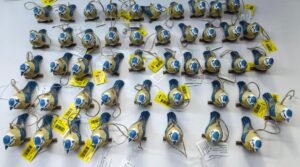
Stage 3: Pre-Shipment Inspection (PSI). This is the formal AQL sampling inspection conducted on 100% finished, packed goods ready for shipment. The inspector pulls random samples according to the agreed inspection level, examines each unit against the full defect checklist, and records findings in a structured report. The lot is accepted or rejected based on the AQL thresholds defined in your purchase agreement. PSI is the final gate before goods leave the factory, and it is the stage most commonly associated with the term “AQL inspection.”
Each stage serves a distinct purpose, and together they form the master craftsmanship assurance framework that separates professional supply chains from unreliable ones. Importers who invest in all three stages consistently report fewer chargebacks, lower return rates, and stronger relationships with their retail buyers.
Source Handcrafted Wooden Crafts with Confidence
Ever Creation applies rigorous quality control across every production stage. From basswood selection to final AQL inspection, each piece meets international safety and finish standards.
Explore Wooden Crafts →Frequently Asked Questions
What AQL level is recommended for hand-carved wooden crafts?
Most importers use AQL 0 for critical defects, AQL 1.5–2.5 for major defects, and AQL 4.0 for minor defects. These thresholds balance the natural variation of hand work with commercial quality expectations.
How many units are inspected under AQL sampling for wooden crafts?
Sample size depends on lot size and inspection level per ANSI/ASQ Z1.4. A 5,000-unit lot at General Inspection Level II typically requires examining 200 randomly selected units.
What are the most common defects found in hand-carved basswood products?
Common defects include paint runs or incomplete coverage, wood cracking from insufficient drying, dimensional variance beyond tolerance, and loose assembly joints. Moisture content should be 8–12%.
Should AQL inspection be conducted before or after packing?
Formal AQL pre-shipment inspection is conducted on finished, packed goods. However, during-production inspection should occur earlier to catch process defects while rework is still possible.
How do buyers account for natural hand-carved variation in AQL criteria?
Define acceptance samples sealed by both parties, set clear tolerance ranges for dimensions and colour, and classify natural tool marks as minor rather than major defects in your specification sheet.