Skip to content
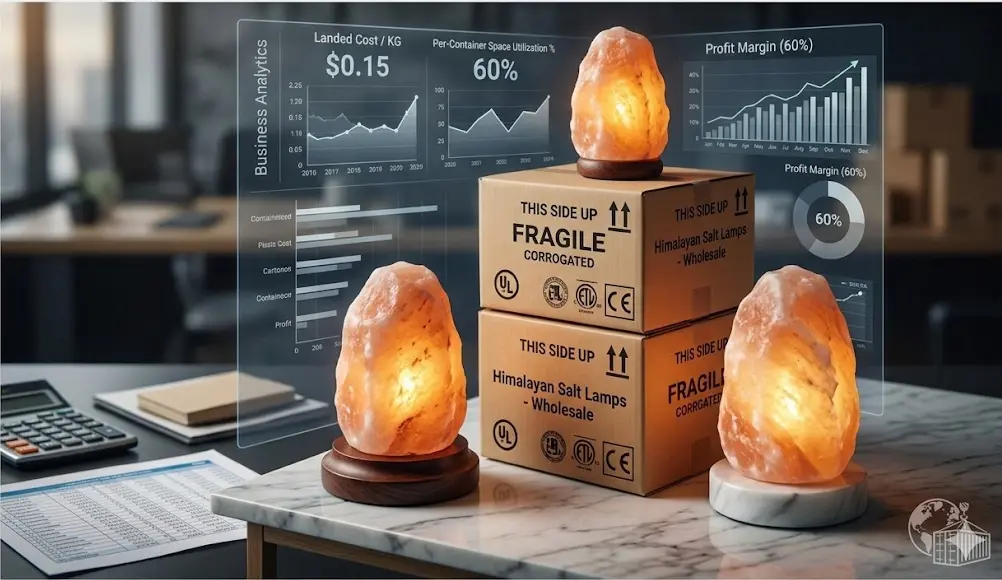
Sourcing salt lamps wholesale requires a strict focus on per-kilogram landed costs to maintain sustainable profit margins. While new retailers often target a 2.5x markup, veterans recognize that poor container space utilization or high breakage rates during sea freight can quickly erase a 60% margin and compromise business growth.
This analysis benchmarks manufacturing standards against 5-ply reinforced corrugated cartons and UL/ETL/CE electrical safety compliance. We evaluate how optimizing for 2-3kg weight classes and selecting between natural rose wood or premium marble bases directly influences your total cost of goods sold and retail ROI.
The Economics of Salt Lamp Retailing
Salt lamp retailing shows strong growth driven by wellness trends. Retailers benefit from direct sourcing, flexible MOQs, certified products, and export-ready packaging to maximize market reach and profit.Combine light and scent with [Aromatherapy Himalayan Salt Lamps: Diffuser Wholesale].
Market Dynamics and Growth Projections
The global sea salt lamp market is expanding significantly, projected to reach $9.93 billion by 2026. The wider Himalayan salt market, which includes lamps, will grow from $12.8 billion to $20.8 billion by 2035, showing a 5% compound annual growth rate.
Retail channels are split. Offline sales currently hold 65% market share. Online retailing continues to gain traction. The USA leads as the fastest-growing market at a 6.1% CAGR from 2026-2035. Premium culinary trends, natural wellness preferences, and rising demand for decorative salt lamps drive this growth.
Strategic Sourcing for Retailer Profitability
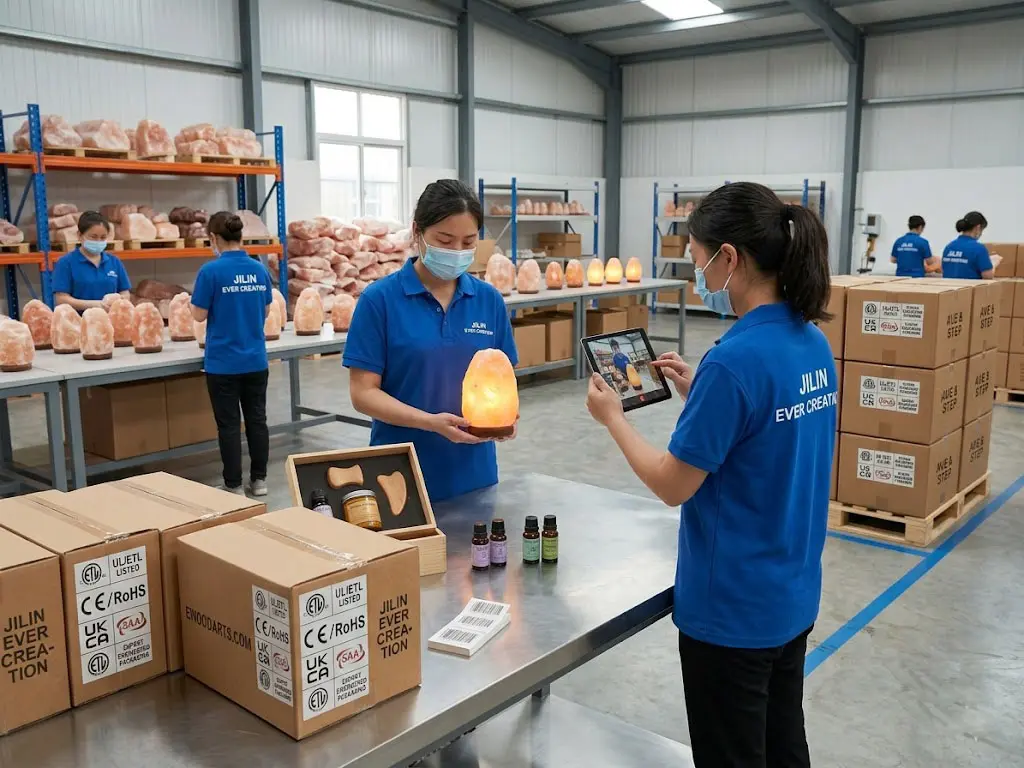
Jilin Ever Creation’s B2B model gives dealers, retailers, wholesalers, and brand owners direct manufacturer pricing. We offer a flexible Minimum Order Quantity (MOQ) starting at 100 pieces for trial orders, allowing for accessible entry and efficient inventory management.Depending on your business scale, you can evaluate [Bulk Wholesale vs. Dropshipping Salt Lamps: B2B Comparison] to optimize your capital flow.
Our export-engineered packaging uses 5-ply reinforced corrugated cartons. This minimizes breakage and transit costs during long-distance shipping, protecting your investment. We ensure global compliance with certifications like UL/ETL, CE/RoHS/ERP, UKCA, and SAA. This means seamless market entry and fewer regulatory hurdles for international retailers.This level of certification is a hallmark of [Choosing a Reliable Salt Lamp Factory: QC & Sourcing Guide].
We build trust with high-resolution pre-shipment photos and videos. You verify quality before balance payments, protecting your cash flow and ensuring goods meet expectations.
Understanding Weight Classes (1-50kg)
Salt lamp weight categories influence size, light, and retail fit. We offer 1-150kg, 2-3kg is our top seller, with optimized packaging for diverse retail needs.
Defining Salt Lamp Weight Categories
Salt lamps are categorized by weight. This directly influences their physical size and luminous output. For retailers, weight categories help manage inventory, set price points, and guide customer selection based on desired ambiance.For a complete technical breakdown, see our [Himalayan Salt Lamp Size & Weight Chart for Retailers].
Understanding these classifications is crucial for efficient logistics. It ensures proper packaging and shipping for different lamp sizes, minimizing transit issues.
Jilin Ever Creation’s Optimized Weight Range for Retailers
We offer a customizable weight range for salt lamps, from 1kg up to 150kg. This range accommodates diverse market demands, giving our partners flexibility in their product lineup.High-end hotel lobbies often feature [Giant & Massive Himalayan Salt Lamps: 30kg+ B2B Sourcing] for maximum impact.
The 2–3kg lamp is our best-selling size. Retailers favor it for balanced dimensions, competitive pricing, and strong consumer demand. It strikes a good balance for most retail environments.
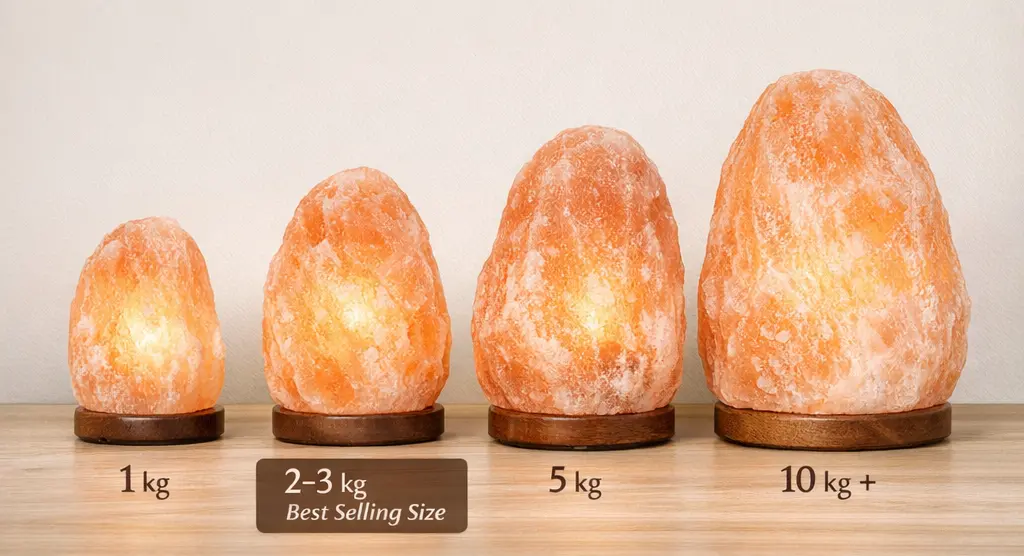
Our packaging is optimized by weight category, ensuring secure and efficient bulk transportation. We have specific packing rates for common sizes:
- 1–2kg: 8 pieces per carton. Carton Size: 58 × 29 × 23 cm. Gross Weight: ~16 kg.
- 2–3kg (Best Seller): 6 pieces per carton. Carton Size: 44 × 30 × 25 cm. Gross Weight: ~18 kg.
- 3–5kg: 4 pieces per carton. Carton Size: 33 × 33 × 27 cm. Gross Weight: ~16 kg.
- 5–7kg: 3 pieces per carton. Carton Size: 59 × 20 × 29 cm. Gross Weight: ~18 kg.
Fast-moving inventory often includes [Mini Himalayan Salt Lamps (1-2kg): High Volume Retail Guide] for checkout displays.
Premium Factory-Direct Himalayan Salt Lamps Wholesale
Wholesale Pricing vs. Retail Markup
Wholesale prices offer bulk savings for businesses. Retailers add 50-100% markup (2.5-4x for salt lamps) to cover costs and earn profit, aligning with market value.
Understanding the financial models for wholesale and retail is straightforward once you see how they’re structured. Wholesale targets businesses for bulk orders. Retail handles individual consumer sales with a markup built in.
| Aspect | Wholesale | Retail |
|---|---|---|
| Target Audience | Retailers and businesses | Individual consumers |
| Price Per Unit | Lower due to bulk purchasing | Higher with markup applied |
| Profit Margin | Narrower per unit | Higher per unit |
| Revenue Model | Consistent bulk turnover | Consumer demand and brand perception |
| Pricing Flexibility | Often customized by volume | Fixed or promotional |
Core Differences in Pricing Models
Wholesale pricing is for businesses buying in volume. This model gives you a lower unit cost, making it feasible to stock and resell at scale. It focuses on moving consistent, large quantities of product.
Retail prices are what end-consumers pay. They include a markup over the wholesale cost. This markup covers operational expenses, marketing, and the profit margin you need to run your business.
For most consumer products, retail markups sit between 50% and 100%. Specialty items often see even higher percentages. Retail success depends on direct consumer demand and how your brand is perceived.
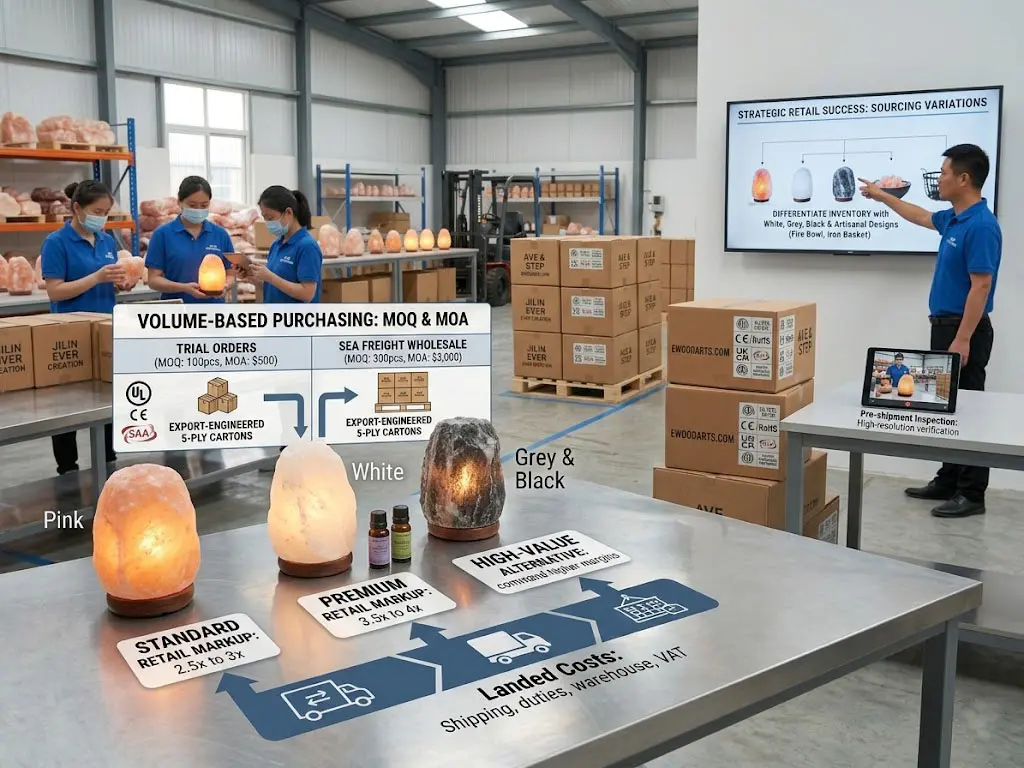
While standard pink lamps are market staples, savvy retailers command higher margins by offering rare aesthetic variations. To capture the minimalist and modern decor market, consider [Sourcing White Himalayan Salt Lamps: Premium Wholesale]. Additionally, for clients seeking a bold, industrial look, the dark tones of [Grey & Black Himalayan Salt Lamps: Industrial Decor Trends] provide a high-value alternative that differentiates your inventory from competitors.
Design Variations & Market Trends
Beyond the natural rough-cut look, specific designs consistently drive higher engagement in wellness and home decor sectors. For instance, the artisanal appeal of [Himalayan Salt Fire Bowl Lamps: B2B Sourcing Guide] offers a sophisticated light-scattering effect that consumers love. Similarly, the industrial and rustic aesthetic of [Iron Basket Himalayan Salt Lamps: Wholesale Trends] remains a top-tier choice for retailers looking to offer modern, texture-rich decorative pieces.
Strategic Markup and Volume-Based Opportunities for Salt Lamps
For Himalayan salt lamps, retailers commonly apply markups of 2.5 to 4 times the wholesale cost. Your specific markup depends on your market position and the perceived value of your products. We structure our pricing to help you maximize profitability.
We use a tiered, volume-based pricing model. This means larger orders get better per-unit costs, directly boosting your profit margins.
- Trial Orders: Start with a Minimum Order Quantity (MOQ) of 100 pieces and a Minimum Order Amount (MOA) of USD $500.
- Standard Wholesale & Custom Orders: For sea freight, the MOQ is 300 pieces and the MOA is USD $3,000.
Always account for landed costs. This includes shipping, import duties, warehousing fees, and any applicable VAT. Our payment terms require a 30% deposit, with the remaining 70% balance due before shipment. We provide high-resolution pre-shipment inspections for your verification.
Container Space Optimization
Container space optimization means smart planning and packaging to fit more products per shipment, cutting costs and speeding deliveries. We leverage advanced logistics and optimized packaging for maximum fill rates.
Strategic Approaches to Container Loading for 2026
Efficient container loading uses advanced planning algorithms to maximize truck and container capacity. This strategy minimizes operational costs, reduces environmental impact, and boosts overall supply chain efficiency.
We replace old manual loading methods with data-driven optimization. Businesses using this approach often see loading rates increase by 7-15%, often exceeding 95%, which cuts transportation costs by 20-30%.
Our Export-Engineered Packaging for Optimized Space
We design our packaging to facilitate efficient and secure container loading specifically for wholesale clients. Our products use 5-Ply Reinforced Corrugated Cartons with precision-cut foam inserts. These withstand the rigors of long-distance sea and air logistics.
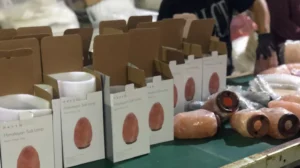
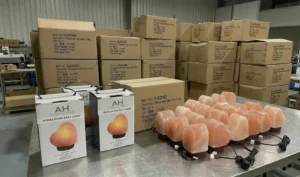
Each salt lamp is individually packed in a protective color box with foam support. This ensures product stability and integrity during transit. We optimize master cartons for bulk consistency, allowing for efficient stacking and maximum container fill rates.
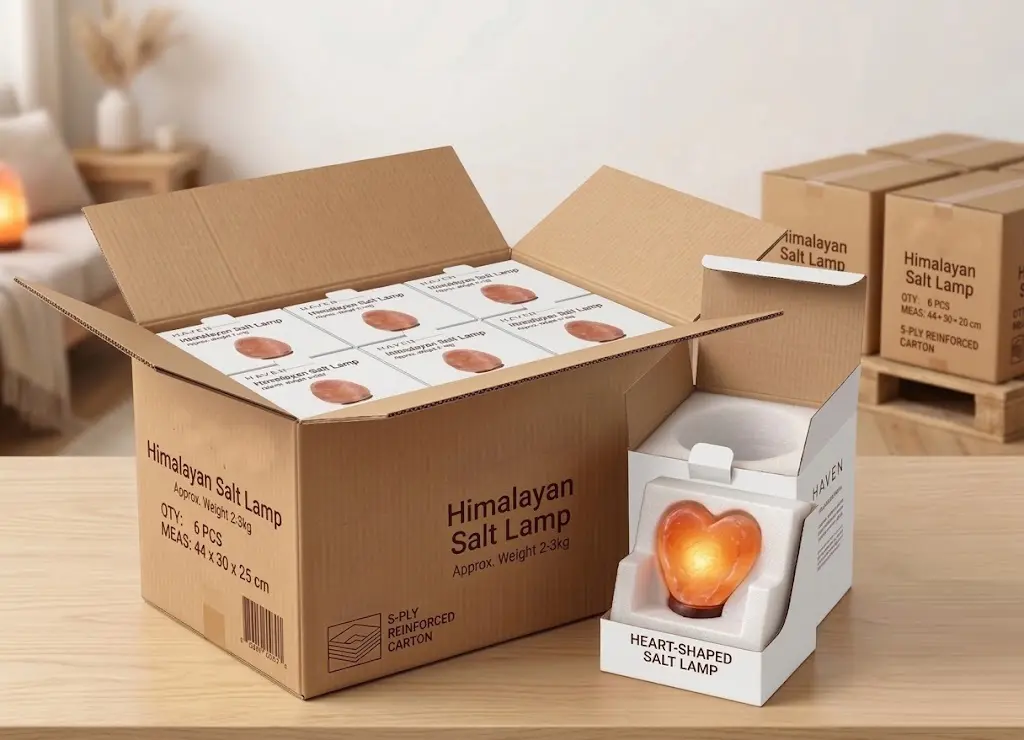
For example, our best-selling 2-3kg salt lamps are packed 6 pieces per carton. Each carton measures 44 × 30 × 25 cm, showing precise dimensional planning for container loading.
The Impact of Base Materials on Price
Base material choice drives salt lamp pricing. Our Natural Rose Wooden Bases are cost-effective for standard wholesale. Premium Marble bases command higher points, targeting elevated retail with a 2-3x price multiplier.Prevent mold and enhance luxury with [Himalayan Salt Lamp Bases: Wood, Onyx & Marble Wholesale].
Material Value in Salt Lamp Production
Base material selection significantly influences salt lamp pricing. It is a key differentiator in the wholesale market and directly shapes product tier differentiation within the retail landscape.
Premium materials can command 2–3x price multipliers compared to standard options. This impacts the perceived value and market positioning for our wholesale clients.
Wood and Marble Base Pricing Tiers
We offer Natural Rose Wooden Bases and Premium Marble as base material options for our salt lamps.
Natural Rose Wooden Bases represent the standard and economy option for wholesale offerings. These, with electrical components, typically fall within the $15–$23 range for wholesale buyers.
Source only certified [Salt Lamp Bulbs & Electrical Parts: A Wholesaler’s Guide] to ensure consumer safety.
Premium Marble bases, conversely, command a substantial premium. They target higher-end retail segments with an original MSRP significantly above wooden bases.
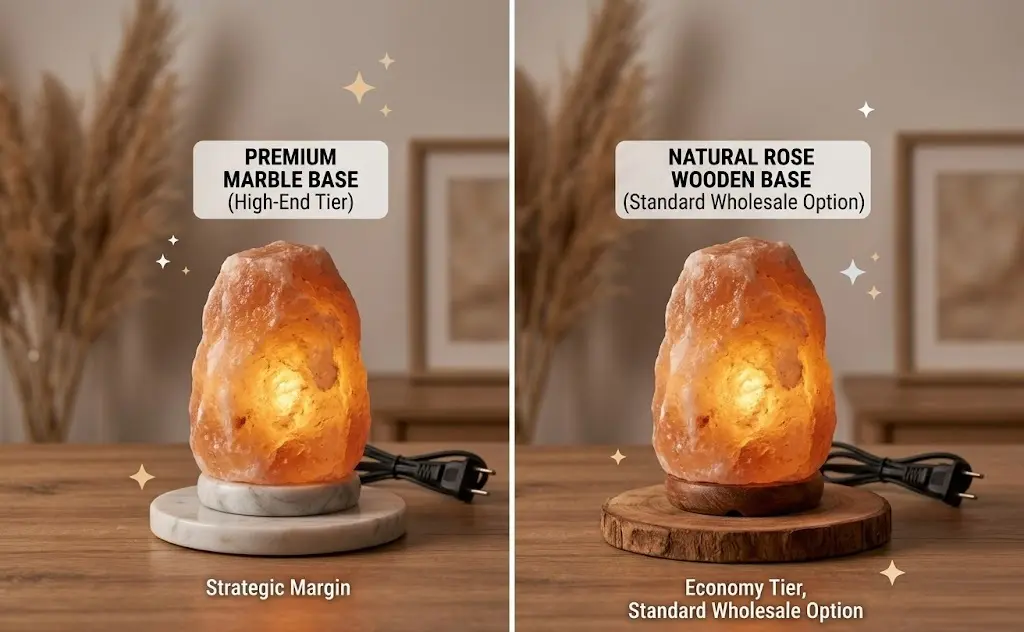
The substantial margin between our marble base original pricing and wooden base pricing shows our strategic market positioning.
Reducing Breakage Costs in Transit
Minimizing transit breakage needs robust packaging. Ewoodarts uses export-engineered individual foam-protected boxes and reinforced 5-ply master cartons, ensuring safe global delivery.
Strategic Packaging to Minimize Transit Damage
Protecting goods during shipping comes down to intelligent packaging design. Here are the core principles we follow to prevent damage.
- Use durable pallets, crates, and void fillers to absorb impact and prevent shifting. Product shifting is a primary cause of freight damage.
- Implement dunnage and cushioning materials like airbags and protective padding to stabilize loads and reduce crushing.
- Conduct pre-transit packaging tests. This includes drop and multi-condition evaluations to identify any weaknesses before mass production.
Ewoodarts’ Reinforced Packaging for Global Shipments
We understand the demands of international logistics. Our packaging solutions are built for secure, compliant global delivery, protecting your investment from our factory to your warehouse.Our [Retail-Ready Packaging for Wholesale Himalayan Salt Lamps] ensures 0% breakage during the “last mile.”
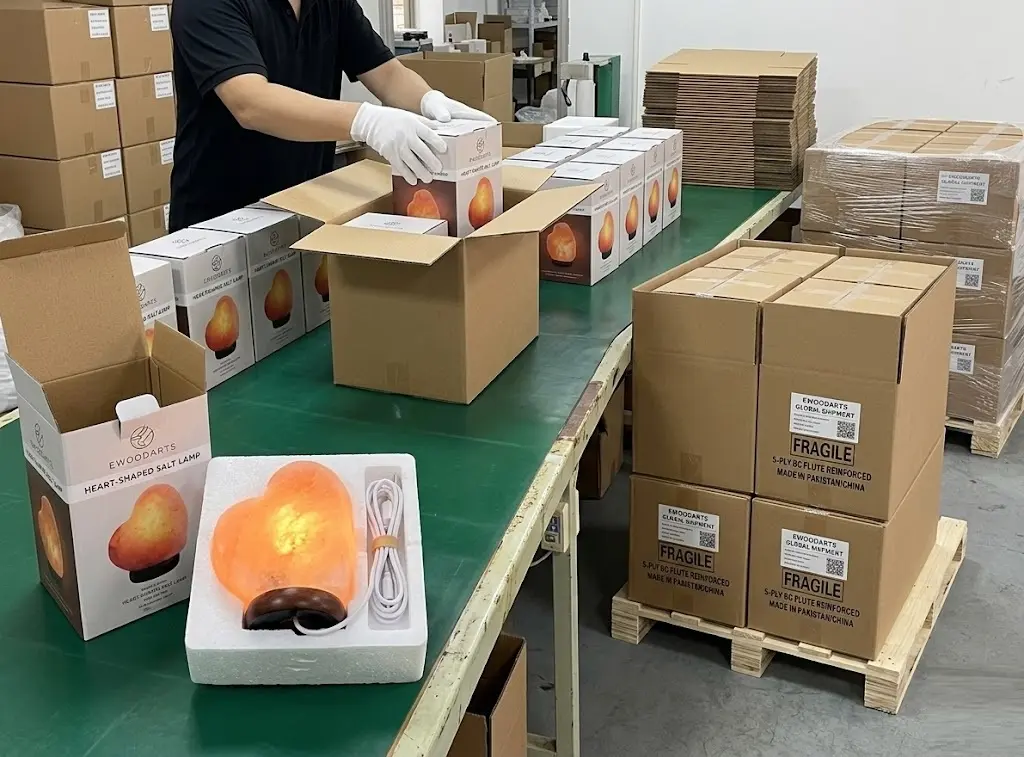
- Each salt lamp is individually packed in a protective color box with foam support. This ensures stability and protection for every unit during transit.
- Products are then secured in 5-Ply BC Flute export master cartons. These are specifically reinforced to withstand the rigors of long-distance sea and air freight.
- For brand owners or e-commerce sellers, we offer custom individual packaging, color boxes, or specialized gift packaging options. The custom color box MOQ is 1,000 pcs.
Bundling Strategies for Retailers
Bundling strategies help retailers combine products, increasing average order value and customer satisfaction. Analyze purchase patterns to create offers, from complementary pairings to mix-and-match. Partners like Jilin Ever Creation provide custom packaging and logistics for unique bundles by 2026.
The Core of Retail Bundling Strategies
Product bundling drives up average order value. It also moves inventory and keeps customers happy when you group complementary or strategically paired items.
You have several ways to bundle: complementary, mixed, cross-sell, price-based, mix-and-match, subscription, and even dynamic visual recommendations.

To make bundling work, analyze customer purchase patterns. Find what they buy together. Then, structure offers that fit their buying habits and boost your profit.
Diversifying Your Product Portfolio
To successfully differentiate your retail brand, offering a mix of classic and artisanal shapes is key. Sophisticated buyers often gravitate toward the clean lines of [Geometric Himalayan Salt Lamps: Pyramids & Spheres], which fit perfectly in modern minimalist offices. For gift-oriented boutiques, adding whimsical elements like [Hand-Carved Animal Salt Lamps: Cat, Elephant & Bird Shapes] can significantly boost emotional engagement with customers. Furthermore, seasonal demand can be captured by stocking specialized designs such as [Rose & Flower Salt Lamps: Boutique Wholesale], which are ideal for Valentine’s Day and Mother’s Day promotions.
Custom Solutions from Your Manufacturing Partner
Jilin Ever Creation provides custom individual packaging, specific color boxes, and gift packaging options. This lets retailers create unique bundled product experiences.
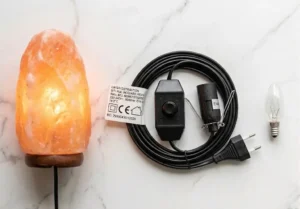
For instance, you could offer a ‘Wellness Lamp Kit’. This combines our authentic Himalayan salt lamp, featuring a natural rose wooden or premium marble base, with a precision dimmer switch. We’d package it in bespoke custom packaging.
Our export-engineered packaging uses 5-ply reinforced corrugated cartons. This ensures your custom bundles withstand long-distance sea and air logistics for safe global distribution.
We also provide complimentary labeling services, including barcode stickers and inner box labels. This streamlines inventory management and retail integration for your bundled products upon arrival.
Building a Targeted Portfolio
To truly maximize the impact of your inventory, align your product selection with your specific commercial environment. For instance, creating a serene, warm glow is essential for wellness centers, making [Himalayan Salt Lamps for Spas: Ambient Lighting Wholesale] a primary choice for professional therapists. If you are catering to high-end hospitality projects, incorporating [Himalayan Salt Decor for Hotels & Resorts: Bulk Sourcing] can elevate the guest experience with a sense of ‘Quiet Luxury’. Finally, for niche gift shops focusing on spiritual wellness, [Sourcing Salt Lamps for Feng Shui & Metaphysical Boutiques] provides the specialized energy and aesthetic that these dedicated collectors seek.
Final Thoughts: Your Partner in Global Salt Lamp Sourcing
Navigating the complexities of wholesale sourcing—from verifying mineral purity to ensuring international safety compliance—requires a transparent and experienced manufacturing partner. This guide serves as a foundation for building a successful, high-margin wellness brand backed by authentic Himalayan salt products.
We integrate these quality benchmarks into every ewoodarts order, maintaining rigorous ISO-certified standards and export-grade packaging for every shipment that leaves our factory. Whether you are scaling an existing inventory or launching a custom private label line, our [Salt Lamps Wholesale] collection offers the consistency and variety your business demands.
Ready to discuss your specific requirements or need a tailored logistics solution? Please [Reach out to our team] today to start a professional partnership.
Frequently Asked Questions
What are the typical retail markup and profit margins for Himalayan salt lamps?
Himalayan salt lamps often have retail markups of 200-400%, leading to profit margins of 60-75%. For example, 1–2 kg lamps might wholesale around $8 and retail for $25–$40. Profitability changes based on the product design, sourcing directly from manufacturers ($5–$12 per unit), and the retail channel. Specialty stores often achieve higher markups.
Which size of Himalayan salt lamp sells fastest in retail?
Specific retail sales data by size is not widely available. However, our internal data shows 2–3kg lamps are the best-selling size for retail due to balanced size, price point, and strong consumer demand. Generally, 5-11 pound (approximately 2-5kg) lamps are popular among consumers. They balance portability, affordability, and versatility. Smaller lamps (5-7 lbs) suit bedrooms or offices, while 7-11 lb lamps work for larger living spaces. Mid-range prices, often between $50-$110, usually offer good value for customers.
What are the wholesale prices for 2-3kg Himalayan salt lamps?
Wholesale prices for 2-3kg lamps vary significantly, from $2.85 to $28.63 per unit, depending on order volume and supplier location. Factory-direct prices can be $2.85–$3.80 for large orders, or $8.51–$10.99 for higher volumes. European wholesalers might list them around $16–$28. Small retail orders can reach $29.99 or more per unit. As a manufacturer, we offer competitive wholesale pricing; trial orders begin at 100 pcs or USD $500, with wholesale and custom orders starting at 300 pcs or USD $3,000. Products typically include cords and bulbs.
Do heavier Himalayan salt lamps typically have higher profit margins?
The available data does not specifically indicate that heavier salt lamps consistently generate higher profit margins. Manufacturers generally have minimal margins, even with substantial retail markups. Overall profitability is more driven by market demand for perceived health benefits than by physical weight. A conclusive answer would require detailed comparisons of manufacturing costs and retail pricing across different weight categories. We produce lamps from 1kg to 150kg, and base material choice, such as natural rose wood or premium marble, can influence pricing and perceived value.
How many Himalayan salt lamps can fit on a standard retail shelf?
The precise number of salt lamps that fit on a shelf depends entirely on the specific dimensions (length, width, height, weight) of the individual lamps, along with the shelf’s type (e.g., wall-mounted, island), depth, and load capacity. Standard retail shelves vary significantly in size and weight support, so product specifications and shelf configuration are both needed for an accurate calculation. Our 2-3kg lamps are popular, but individual unit dimensions are crucial for shelf planning, not just weight.
Are carved Himalayan salt lamps more profitable than natural chunk lamps?
Carved shapes generally offer higher profit margins due to greater retail pricing potential and customization appeal, despite their increased manufacturing complexity. Natural chunks have lower production costs because they require less processing. Carved designs, such as pyramids or fire bowls, involve more labor and precision but appeal to modern aesthetics and act as focal pieces, justifying premium pricing. Both types appeal to consumers seeking natural and eco-friendly products, but the higher perceived value of carved designs often supports better retail margins.